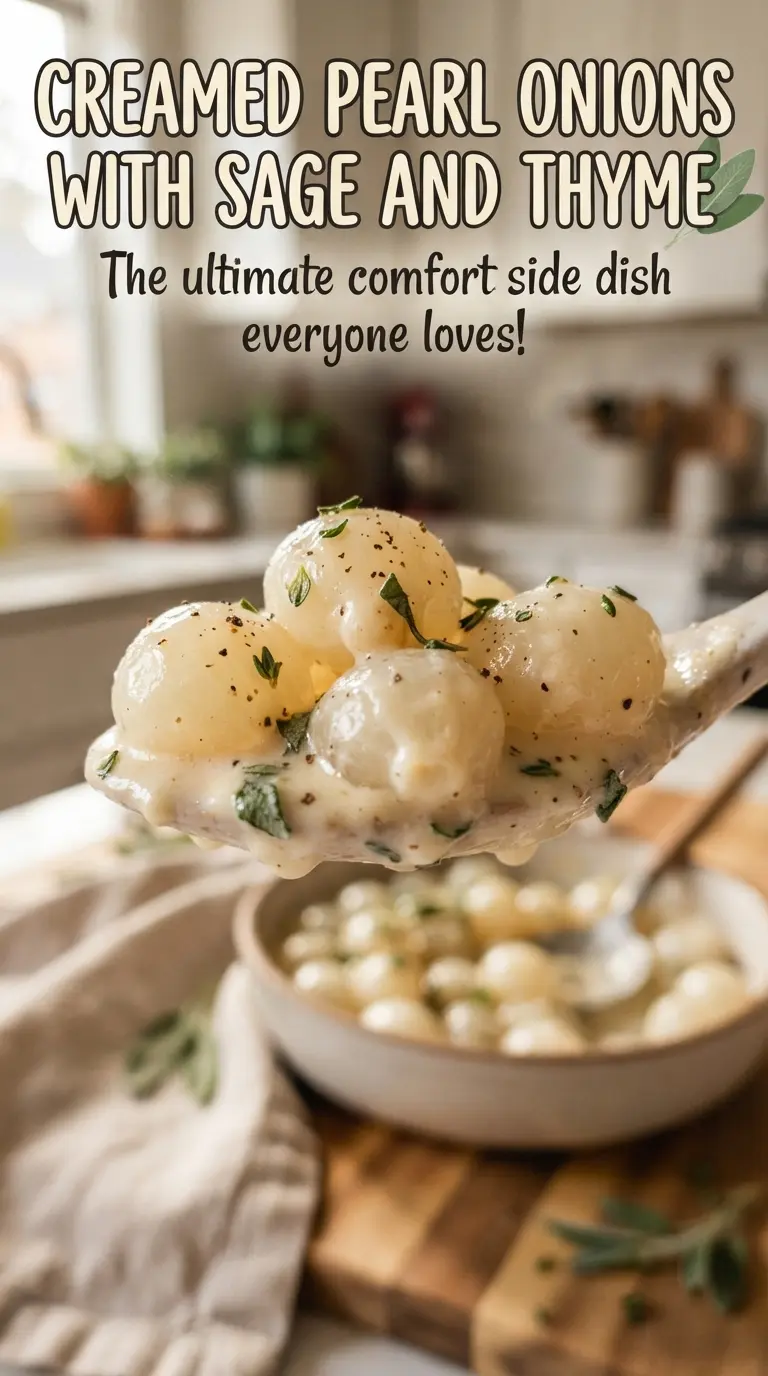
Creamed pearl onions turn into one of those side dishes people remember because the onions stay tender without falling apart and the sauce clings in a glossy, spoon-coating layer. The sage and thyme keep it from tasting heavy, and the fried sage on top gives you that sharp, crackly finish that makes each bite feel finished, not just rich.
The trick is giving the onions time to pick up a little color before the cream goes in. That first stage builds sweetness, and the flour has a chance to cook out for a sauce that thickens smoothly instead of tasting pasty. Frozen pearl onions work beautifully here because they’re already peeled and their texture stays steady once they’re thawed and cooked through.
Below, I’ve included the exact cue I watch for when the sauce is ready, plus a few smart swaps if you need to work with what’s in the fridge.
The sauce thickened into that perfect velvety coating, and the crispy sage on top made it taste like something from a holiday table at a good restaurant.
Save these creamed pearl onions with sage and thyme for the side dish that brings a silky sauce and crispy sage together in one pan.
The Part That Keeps the Sauce Smooth Instead of Gluey
The flour needs a full minute in the butter with the herbs before the broth goes in. That short cook removes the raw starch taste and helps the sauce thicken evenly, which matters because pearl onions can throw off just enough moisture to make a sauce seem thin right until the last minute. If you add the liquid too fast, the flour can clump and leave you with a lumpy finish that never fully smooths out.
The other thing that matters here is the heat level once the cream is in. A gentle simmer is enough. A hard boil can tighten the sauce too quickly and make the dairy taste flat, especially once the Parmesan goes in. You want the sauce to coat the onions in a slow, glossy wave, not seize around them.
What Each Ingredient Is Actually Doing in This Dish
- Frozen pearl onions — These save the peeling work and give you consistent size, which means they cook evenly. Thaw them first so the pan can start browning them instead of steaming off extra water.
- Butter — This carries the sage flavor and gives the sauce a round, rich base. If you use salted butter, cut back a little on the added salt at the end.
- Fresh sage and thyme — Fresh herbs matter here because they stay fragrant through the cream. Dried herbs can work in a pinch, but use less and expect a softer, less vivid flavor.
- Heavy cream — This is what gives the sauce its body and that velvety finish. Half-and-half will work, but the sauce will be looser and a little less luxurious.
- Parmesan — It adds salt, depth, and a little extra thickness. Grate it finely so it melts into the sauce instead of hanging in strings or clumps.
- Chicken broth — It keeps the sauce savory and helps the cream stretch without turning heavy. Use a low-sodium broth if you want more control over the final seasoning.
Getting the Onions Golden Before the Cream Goes In
Crisping the Sage First
Melt the butter in a large skillet and fry the whole sage leaves for about 30 seconds, just until they darken and go crisp. Pull them out right away and set them aside on a paper towel, because they’ll burn fast once they’re thin and brittle. That infused butter is the start of the whole dish, and the crisp leaves give you the texture contrast that makes the final plate pop.
Building Sweetness on the Stove
Add the thawed pearl onions and cook them for 8 to 10 minutes, stirring occasionally, until they pick up light golden spots. You’re not trying to deeply brown them; you’re coaxing out sweetness and driving off extra moisture. If the pan looks crowded or watery, keep cooking until the liquid evaporates and the onions start to sizzle again.
Thickening Without Lumps
Stir in the chopped sage, thyme, and flour and cook for 1 minute. The mixture will look a little pasty at first, and that’s fine as long as the flour is coated in fat and smells nutty, not raw. Whisk in the broth and cream slowly, scraping the bottom of the skillet so the flour disperses before it can seize.
Finishing to a Velvet Coat
Simmer for 6 to 8 minutes until the sauce thickens and the onions are tender all the way through. Stir in the Parmesan, salt, white pepper, and nutmeg, then let it sit over low heat for a minute so everything melts together. If the sauce gets thicker than you want, loosen it with a splash of broth; if it seems thin, give it another minute or two, because it will tighten as it cools.
Three Useful Ways to Adapt These Creamed Pearl Onions
Dairy-Free Version with Coconut Cream
Use full-fat coconut cream in place of the heavy cream and swap in a dairy-free butter. The sauce will be a little sweeter and the coconut note will show up faintly, so keep the Parmesan out and add a splash more broth plus a touch of extra salt to balance it.
Gluten-Free Thickeners That Actually Work
Replace the flour with 1 tablespoon of cornstarch mixed into the cold broth before it hits the pan. Cornstarch thickens faster and a little more sharply than flour, so keep the simmer gentle and stop as soon as the sauce coats the onions instead of waiting for it to reduce much further.
Making It Ahead for a Holiday Table
Cook the onions and sauce through the Parmesan step, then cool and refrigerate. Reheat gently with a splash of broth or cream, because the sauce will thicken as it sits and can tighten too much if you blast it over high heat. Fry the sage leaves fresh right before serving so they stay crisp.
Storage and Reheating
- Refrigerator: Store in an airtight container for up to 4 days. The sauce will thicken and the onions will soften a bit more.
- Freezer: Not my first choice. Cream sauces can separate after freezing, and the onions lose some of their texture.
- Reheating: Warm gently on the stove over low heat with a splash of broth or cream, stirring often. High heat is what breaks the sauce and turns the texture grainy.
Questions I Get Asked About This Recipe

Creamed Pearl Onions with Sage and Thyme
Ingredients
Equipment
Method
- Melt the butter in a large skillet over medium heat, then fry a few whole sage leaves for 30 seconds until crisp and set aside.
- Add the pearl onions and cook for 8-10 minutes, stirring occasionally, until lightly golden.
- Stir in the chopped sage, thyme, and flour, then cook for 1 minute to remove the raw flour taste.
- Whisk in the chicken broth and heavy cream, then simmer for 6-8 minutes until thickened and the onions are tender.
- Stir in the grated Parmesan, salt, white pepper, and nutmeg until fully melted and smooth.
- Top with the crispy sage leaves and serve warm.