Cranberry Brie Stuffed Chicken lands on the plate with crisp, golden chicken on the outside and a soft, molten center that spills out when you cut in. The brie turns the filling creamy without tasting heavy, and the cranberry sauce cuts through it with a sharp-sweet bite that keeps every forkful moving. It looks restaurant-level, but the method is straightforward enough for a weeknight.
The key is building flavor in layers instead of stuffing everything into the pocket and hoping for the best. A quick sear gives the chicken color and helps the breast hold its shape, while the oven finishes the meat gently so the brie melts before the chicken dries out. The pan sauce matters just as much as the filling: broth, cranberry, honey, balsamic, and rosemary turn the browned bits in the skillet into something glossy and bright.
Below, I’ve included the little details that keep the filling in place, the chicken juicy, and the sauce balanced. If you’ve ever had stuffed chicken leak all over the pan or come out bland in the middle, this version fixes both problems.
The brie melted into the cranberry sauce just enough, and the chicken stayed juicy all the way through. I seared it for the full 4 minutes per side and the skillet sauce came out glossy and not too sweet.
Save this Cranberry Brie Stuffed Chicken for when you want a seared, cheesy dinner with a glossy cranberry rosemary pan sauce.
The Part That Keeps the Brie Inside Instead of All Over the Pan
Stuffed chicken fails for two reasons: the pocket gets cut too shallow, or the pan gets crowded and the seams never have a chance to set. A deep pocket gives you room for the filling without splitting the breast open, and the toothpicks do more than hold things together — they buy you time while the outside sears and firms up.
The other detail that matters here is heat. The chicken should go into a hot skillet, but not a smoky one, and it only needs a few minutes per side. You’re looking for a deep golden crust, not a fully cooked center. The oven handles the rest more gently, which keeps the brie soft instead of oiling out and keeps the chicken from turning stringy.
- Chicken breasts — Use even-sized breasts if you can. Thick ones are easier to stuff cleanly and less likely to overcook before the cheese melts.
- Brie — A wheel with a soft rind and a creamy center melts best. If you use a very cold brie straight from the fridge, slice it thin so it warms through before the chicken is done.
- Cranberry sauce — Whole berry sauce gives you little pops of tart fruit instead of a smooth jammy filling. That texture keeps the center from tasting flat.
- Spinach — Use a small handful, not a mound. It wilts down fast, and too much will push the filling back out of the pocket.
What Each Ingredient Is Actually Doing in This Recipe

- Primary ingredient (the star) — Quality matters most. Choose the best you can find.
- Cooking medium (oil, butter, or broth) — This carries flavors and prevents dryness.
- Seasonings (salt, pepper, spices, herbs) — Layer flavors so nothing overpowers. Build depth gradually.
- Aromatics (garlic, onion, herbs) — Cook with fat to bloom flavors. Become the foundation.
- Supporting ingredients — Complement the main ingredient without overpowering it.
- Sauce or liquid (if applicable) — Brings flavors together. Balance richness with acid.
- Acid (lemon, vinegar, wine, or other) — Brightens and prevents flat-tasting results.
- Final finish (garnish, glaze, or sauce) — Prevents one-dimensional taste and adds visual appeal.
How to Build the Chicken So the Filling Melts at the Right Time
Cutting and Seasoning the Pockets
Slice a deep pocket into the thick side of each chicken breast, then season the outside well with salt, pepper, garlic powder, and thyme. The seasoning on the exterior matters because the filling won’t season the meat all the way through. If the pocket tears through the back or side, the brie will escape as soon as it softens, so keep the knife parallel to the cutting board and stop before you reach the opposite edge.
Stuffing Without Overpacking
Layer in the spinach first, then the brie, then a spoonful of cranberry sauce. The spinach acts like a little cushion and helps keep the cheese from running out before the chicken sets. Don’t jam the pocket full; if it looks strained before you even cook it, it’s already too much. Close the opening with toothpicks so the seam stays shut while the chicken sears.
Searing for Color, Not Doneness
Heat the olive oil in an oven-safe skillet until it shimmers, then sear the chicken for 3 to 4 minutes per side. You want a crust that releases from the pan on its own and a chestnut-brown color on the outside. If the chicken sticks, it isn’t ready to turn yet. Pull it too early and you’ll tear the coating; leave it alone until it naturally loosens.
Finishing in the Oven and Making the Pan Sauce
Move the skillet to a 400°F oven and bake until the chicken hits 165°F in the thickest part. Once the chicken comes out, use the same pan for the sauce so the browned bits dissolve into the broth, cranberry sauce, honey, balsamic, and rosemary. Simmer just long enough for it to turn glossy and lightly thickened. If it reduces too far, add a splash more broth; if it looks thin, give it another minute or two over medium heat.
The Swaps That Still Keep This Dinner Worth Making
Dairy-Free Stuffed Chicken
Swap the brie for a dairy-free soft cheese that melts, then keep the cranberry and spinach the same. The filling won’t have the same buttery richness, but the sweet-tart contrast still works. Choose a brand that melts smoothly; a firm vegan slice will just sit inside the pocket instead of becoming creamy.
Lower-Sugar Version
Use unsweetened or lightly sweetened cranberry sauce and cut the honey in the pan sauce in half. You’ll get a sharper, more savory finish that leans a little less glossy but still tastes balanced. If the sauce ends up too tart, add the honey back in a teaspoon at a time.
Gluten-Free Dinner
This recipe is naturally gluten-free as written, as long as your chicken broth is certified gluten-free. The sauce thickens from reduction, not flour, so there’s no tradeoff in texture. Just check the cranberry sauce label if you’re using a store-bought brand.
Make It With Turkey Cutlets
Thin turkey cutlets can work, but they need a lighter hand with the stuffing and a shorter oven time. Because they cook faster than chicken breasts, the cheese can escape before the meat is set if you overfill them. Use less filling, sear quickly, and check the temperature early.
Storage and Reheating
- Refrigerator: Store leftovers in an airtight container for up to 3 days. The brie will firm up, but the flavor stays good.
- Freezer: Freeze tightly wrapped portions for up to 2 months. The texture of the brie changes a bit after thawing, but the dish still reheats well enough for a second dinner.
- Reheating: Warm covered in a 325°F oven until heated through, then spoon the pan sauce over the top. The common mistake is blasting it in the microwave, which makes the chicken dry and separates the cheese.
Questions I Get Asked About This Recipe
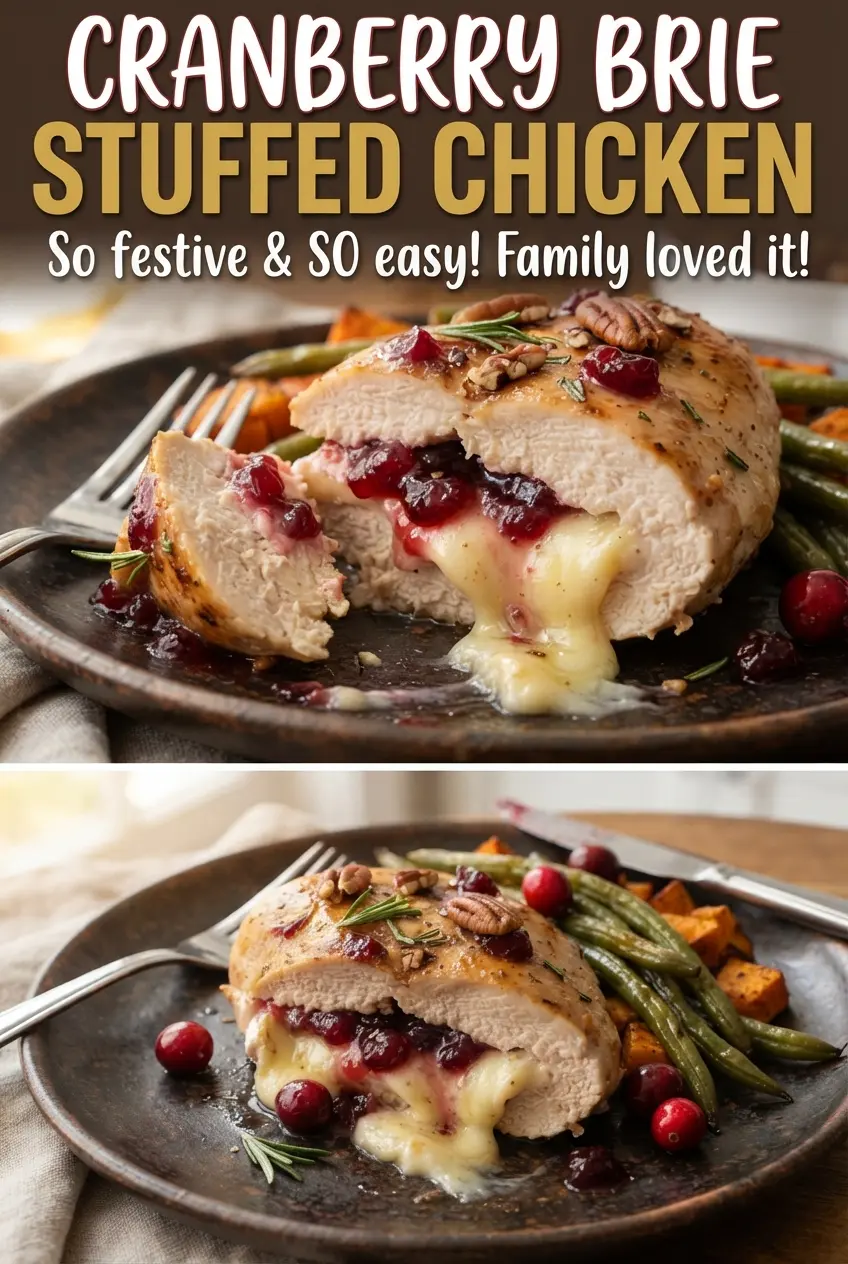
Cranberry Brie Stuffed Chicken
Ingredients
Equipment
Method
- Preheat the oven to 400F.
- Cut a deep pocket into the side of each chicken breast, then season the outside with salt, black pepper, garlic powder, and dried thyme.
- Stuff each pocket with baby spinach, sliced brie, and 1 tablespoon cranberry sauce, then secure with toothpicks.
- Heat olive oil in an oven-safe cast iron skillet over hot heat, then sear the chicken for 3-4 minutes per side until golden.
- Transfer the skillet to the oven and bake for 15-18 minutes, until the chicken reaches 165F.
- Remove the chicken, then add chicken broth, remaining cranberry sauce, honey, balsamic vinegar, and chopped rosemary to the skillet and simmer for 3 minutes.
- Spoon the pan sauce over the chicken and serve.