Penne tangled with shredded chicken, crispy bacon, and a thick ranch cream cheese sauce has a way of disappearing fast. The sauce clings to every tube instead of pooling at the bottom of the bowl, and the salty bacon plus sharp cheddar keep each bite from tasting heavy. It’s the kind of dinner that feels indulgent without asking for much more than one skillet and a pot of pasta.
What makes this version work is the way the cream cheese melts down with broth before the ranch and cream go in. That gives you a smooth base instead of a grainy sauce, and it also helps the ranch seasoning disperse evenly. I also like adding most of the bacon near the end so some stays crisp for the top instead of disappearing into the sauce.
Below you’ll find the exact point where the sauce comes together, which ingredient matters most for a silky finish, and a few smart swaps if you need to work with what’s in the fridge.
The sauce turned out silky and coated the penne instead of getting clumpy. I used the full amount of bacon and the balance of ranch, cheddar, and cream cheese was spot on.
Creamy crack chicken penne with bacon, cheddar, and ranch is worth saving for the next night you need a fast skillet dinner.
The Step That Keeps the Sauce Smooth Instead of Grainy
The biggest mistake with a cream cheese pasta is rushing the heat. Cream cheese needs time to soften into the broth before the ranch seasoning and cream go in, or you end up with little lumps that never fully dissolve. Medium-low heat is the right lane here. The sauce should look glossy and loose before it thickens; if it looks tight too early, the pasta will steal the last of the moisture and leave you with a clumpy skillet.
Another thing worth knowing: bacon adds more than crunch. It seasons the whole dish, so save some of the crisp bits for the finish and use the rest to season the sauce from within. That balance keeps the pasta rich instead of one-note.
What Each Ingredient Is Actually Doing in This Dish
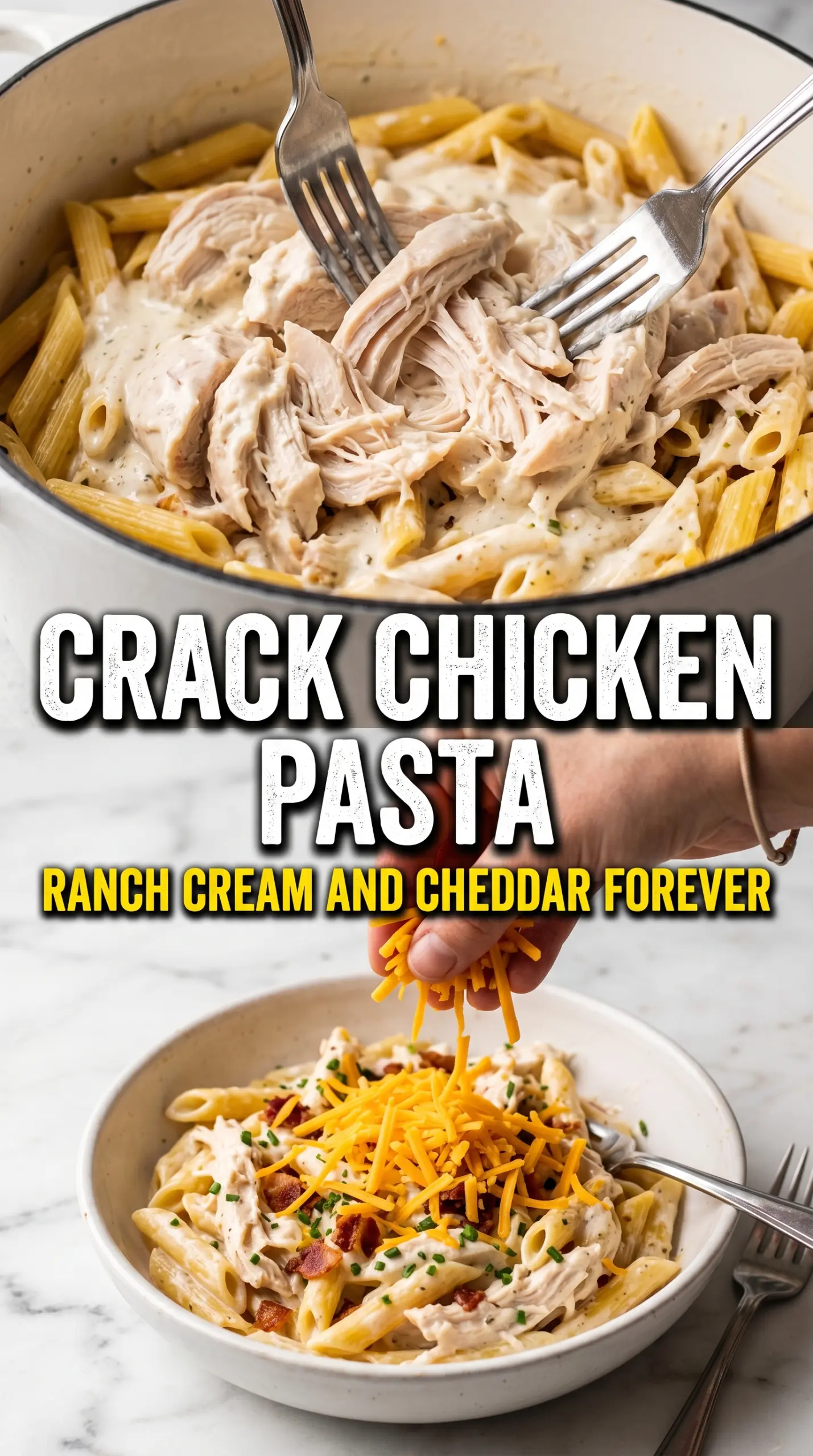
- Penne — The tube shape holds onto the sauce better than long noodles. If you swap shapes, use something with ridges or pockets so the ranch cream cheese has somewhere to stick.
- Cream cheese — This is the backbone of the sauce. Full-fat cream cheese melts the smoothest, and softening it first helps prevent stubborn lumps. Low-fat versions can work, but they’re more likely to break or taste thinner.
- Chicken broth — It loosens the cream cheese before the cream goes in, which is what keeps the sauce from turning pasty. Use a broth you’d actually drink; bland broth makes the whole pan taste flat.
- Heavy cream — It rounds out the sauce and gives it that silky finish. Half-and-half can work in a pinch, but the sauce won’t be as rich and it may not coat the pasta quite as well.
- Ranch seasoning — This brings the salty herb flavor that gives the dish its name. A homemade blend can stand in, but the packet gives you the exact punch this recipe is built around.
- Cheddar — Sharp cheddar cuts through the richness. Pre-shredded cheese is fine if that’s what you have, but freshly shredded melts cleaner and gives you a smoother top.
Getting the Sauce to Coat Every Piece of Penne
Softening the Garlic Without Browning It
Start the garlic in olive oil over medium heat and cook it just until fragrant, about a minute. You want it softened, not browned, because browned garlic takes on a bitter edge that fights the ranch and cream. If your skillet runs hot, pull it off the burner for a few seconds before adding the garlic. Burnt garlic will carry through the entire sauce.
Melting the Cream Cheese Into the Broth
Add the broth first, then the cream cheese cubes, and stir over medium-low heat until the cubes disappear into a smooth base. This is the part that decides whether the sauce feels silky or chalky. If the cream cheese sits in the pan too cold or the heat is too high, it can seize into soft clumps instead of melting evenly. Keep stirring and give it a minute longer than you think it needs.
Finishing the Sauce and Bringing It All Together
Once the base is smooth, stir in the ranch seasoning and heavy cream, then let it simmer until slightly thickened. The sauce should coat a spoon without looking stiff. Add the chicken, most of the bacon, and cooked penne, then toss until every piece is coated. If the sauce seems too thick at this point, splash in a little extra broth; if it seems thin, give it another minute on the heat before you add the cheese.
Melting the Cheddar on Top
Scatter the cheddar over the skillet, cover it, and let the residual heat melt it for 2 to 3 minutes. Don’t crank the burner up to speed this along or the sauce can separate underneath while the cheese on top gets oily. The lid traps enough heat to melt the cheddar evenly and keep the pasta underneath creamy. Finish with the remaining bacon and chives so the top tastes as good as the center of the pan.
How to Adapt This for the Ingredients in Your Kitchen
Make It Gluten-Free
Use a gluten-free penne and check that your ranch seasoning is certified gluten-free. The sauce itself doesn’t rely on flour, so the swap is mostly about the pasta and seasoning packet. Keep an eye on the pasta as it cooks, because gluten-free shapes can go soft faster.
Swap in Turkey Bacon or Skip the Bacon
Turkey bacon works if you want a lighter pan, but it won’t bring the same smoky richness. If you leave the bacon out entirely, add a pinch of smoked paprika and a little extra salt to keep the sauce from tasting flat. You’ll lose some crunch, but the dish still comes together nicely.
Use Rotisserie Chicken for a Faster Dinner
Rotisserie chicken is one of the best shortcuts here because it’s already seasoned and tender. Shred it into bite-size pieces so it blends into the sauce instead of sitting in big chunks. Since the chicken is already cooked, just warm it through at the end so it doesn’t dry out.
Storage and Reheating
- Refrigerator: Store leftovers in an airtight container for up to 4 days. The sauce will thicken as it chills.
- Freezer: It freezes, but the dairy sauce can turn a little grainy when thawed. If you freeze it, cool it completely first and pack it in a freezer-safe container for up to 2 months.
- Reheating: Reheat gently on the stove or in the microwave with a splash of broth or milk. High heat is what breaks this kind of sauce, so warm it slowly and stir as it loosens.
Answers to the Questions Worth Asking

Crack Chicken Penne
Ingredients
Equipment
Method
- Heat olive oil in a large skillet over medium heat. Cook the minced garlic for 1 minute, stirring, until fragrant (visible bubbles at the oil’s surface).
- Add chicken broth and cream cheese cubes to the skillet. Stir over medium-low heat until the cream cheese melts completely and the mixture turns smooth and glossy (no visible cream cheese chunks).
- Stir in the ranch seasoning mix and heavy cream. Simmer for 3-4 minutes over medium-low heat until slightly thickened, with a slow, coating consistency on the spoon.
- Add the shredded chicken, most of the bacon, and the cooked penne. Toss until the penne is evenly coated and the chicken is warmed through (everything looks sauced, not dry).
- Top with shredded cheddar and cover the skillet for 2-3 minutes. Keep the heat at medium-low until the cheddar melts into a smooth layer with light bubbling at the edges.
- Uncover and garnish with the remaining bacon and fresh chives. Serve immediately while the sauce is creamy and steaming.