Chicken piccata earns its place in the regular rotation because it hits the plate with contrast: crisp-edged cutlets, a bright lemony sauce, and that salty caper bite that keeps every forkful lively. The sauce is silky without feeling heavy, and it clings to the chicken instead of running off into a puddle on the plate.
What makes this version work is the order of operations. The chicken gets a light flour coating for color and just enough body to help the sauce grab on. Then the pan does double duty: first for browning the cutlets, then for building the sauce from the browned bits left behind. That’s where the real flavor lives.
Below you’ll find the exact point where the sauce comes together, why cold butter at the end matters, and a few smart swaps if you need to adjust the recipe without losing what makes chicken piccata taste like chicken piccata.
The sauce thickened up beautifully and the lemon-caper flavor was spot on. I used the cold butter at the end like you said and it came out glossy instead of greasy.
Love a bright lemon-butter sauce with crispy chicken cutlets? Save this chicken piccata for the nights when you want something fast, elegant, and full of pan sauce.
The Sauce Breaks When the Pan Is Too Hot
Chicken piccata looks simple, but the sauce only stays smooth if you respect the heat. The lemon juice goes in after the wine has simmered and the browned bits have been loosened, not before. If the pan is raging hot when you add the butter at the end, the sauce turns oily and thin instead of glossy.
The other common failure is crowding the skillet. If the cutlets steam, they never brown properly, and those pale bits on the bottom don’t give you the same deep base for the sauce. Cook in batches and keep the chicken moving once the crust sets. You want color, not a heavy flour shell.
What Each Ingredient Is Doing in the Pan
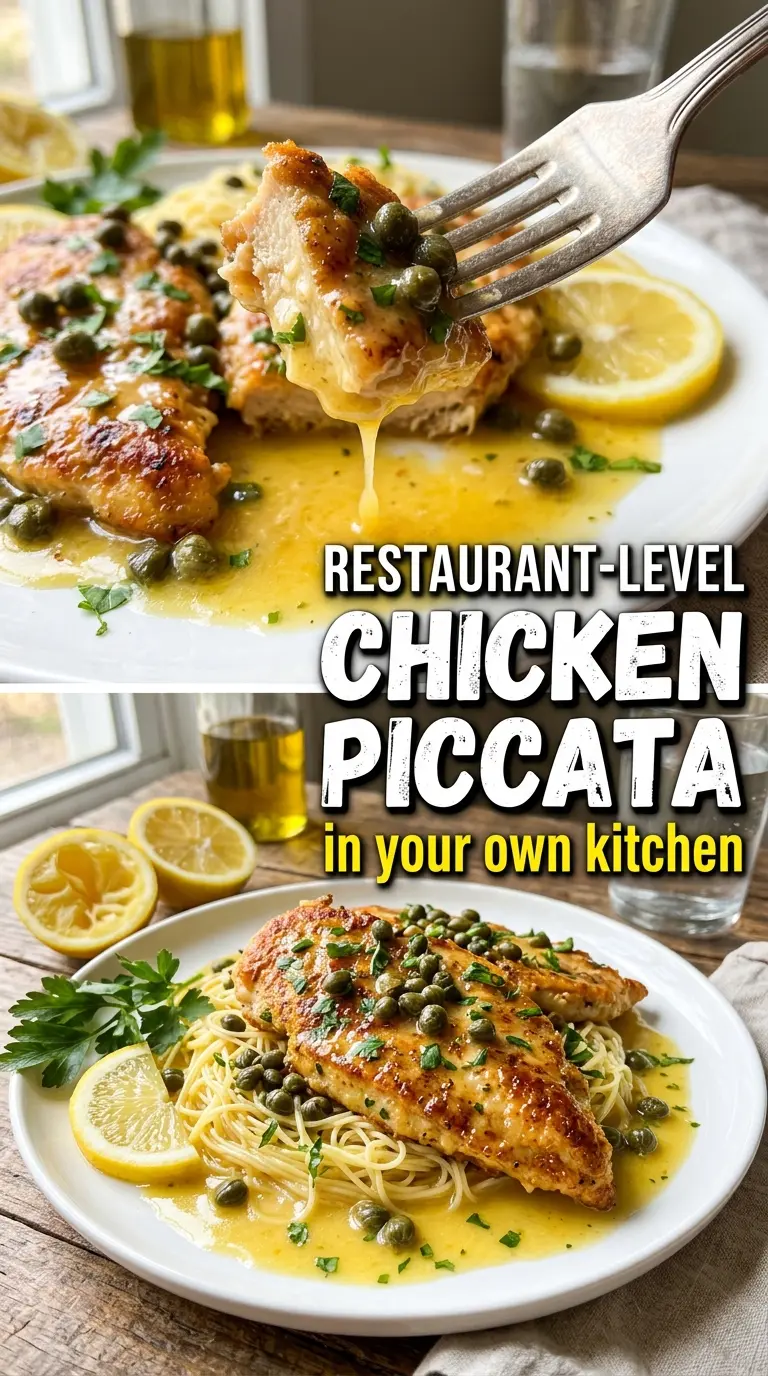
- Chicken breasts — Halving them into thin cutlets is what gets you tender meat that cooks fast without drying out. If you leave them thick, the outside will overcook before the center is done.
- Flour — The light dredge helps the chicken brown and gives the sauce enough body to cling. You only need a thin coating; a heavy crust turns gummy in the sauce.
- Dry white wine — This adds sharpness and depth that plain broth can’t fully replace. If you skip it, use extra broth plus a small splash of white wine vinegar or lemon juice, but the sauce will taste flatter.
- Lemon juice and capers — These are the signature flavors. Use fresh lemon juice here; bottled lemon juice tastes harsh and can make the sauce taste one-note.
- Butter — The final cold butter swirl is what makes the sauce look silky instead of broken. Add it off the heat so it melts into the liquid instead of separating.
Building the Cutlets Before the Sauce
Coating and Browning the Chicken
Season the cutlets well before they hit the flour so the flavor starts in the meat, not just in the sauce. Shake off the excess flour; you want a dusting, not a thick paste. When the cutlets go into the hot skillet, they should sizzle right away. If the pan is too cool, the flour absorbs oil and turns pasty instead of crisping.
Making the Pan Do the Work
After the chicken comes out, keep the browned bits in the skillet. Add the garlic just long enough to smell fragrant, then pour in the wine and scrape the bottom until the pan looks clean. That step carries the crust flavor straight into the sauce. If you rush it, you leave the best part stuck to the pan.
Finishing the Sauce
Let the broth, lemon juice, capers, and lemon slices simmer until the liquid reduces by about a third. The sauce should look a little looser than you want on the plate because it tightens as it rests. Pull the pan off the heat before you swirl in the cold butter. That keeps the sauce glossy and smooth instead of separated.
Ways to Adjust Chicken Piccata Without Losing the Point
Gluten-Free Piccata
Swap the all-purpose flour for a gluten-free flour blend or finely milled rice flour. You still get the light coating that helps browning and sauce cling, but rice flour gives a slightly crisper finish. Don’t skip the dusting entirely or the sauce will slide off the chicken.
Dairy-Free Version
Use olive oil in place of the butter for frying, then finish the sauce with a small extra drizzle of olive oil instead of the final butter swirl. The sauce won’t be quite as velvety, but it will still be bright and balanced. If you want a little more richness, add a spoonful of unsweetened dairy-free butter at the very end.
No Wine, Still Good
Replace the wine with extra chicken broth plus 1 tablespoon of lemon juice or white wine vinegar. That keeps the sauce bright, though it loses a little of the rounded flavor wine brings. Let it simmer long enough for the broth to concentrate or the sauce can taste thin.
Make It with Chicken Thighs
Boneless thighs work if you want a richer, juicier result. They take a few minutes longer than thin breast cutlets, and they won’t give you quite the same delicate presentation, but the sauce pairs beautifully with them. Keep the heat moderate so the outside doesn’t brown before the thicker pieces cook through.
Storage and Reheating
- Refrigerator: Store leftovers in an airtight container for up to 3 days. The coating softens in the fridge, but the flavor holds up well.
- Freezer: It freezes, but the sauce may separate a bit when thawed. If you freeze it, wrap the chicken tightly and freeze the sauce separately when possible.
- Reheating: Warm gently in a covered skillet over low heat with a splash of broth or water. High heat dries out the chicken and can make the sauce look broken, so keep the simmer very low.
Answers to the Questions Worth Asking
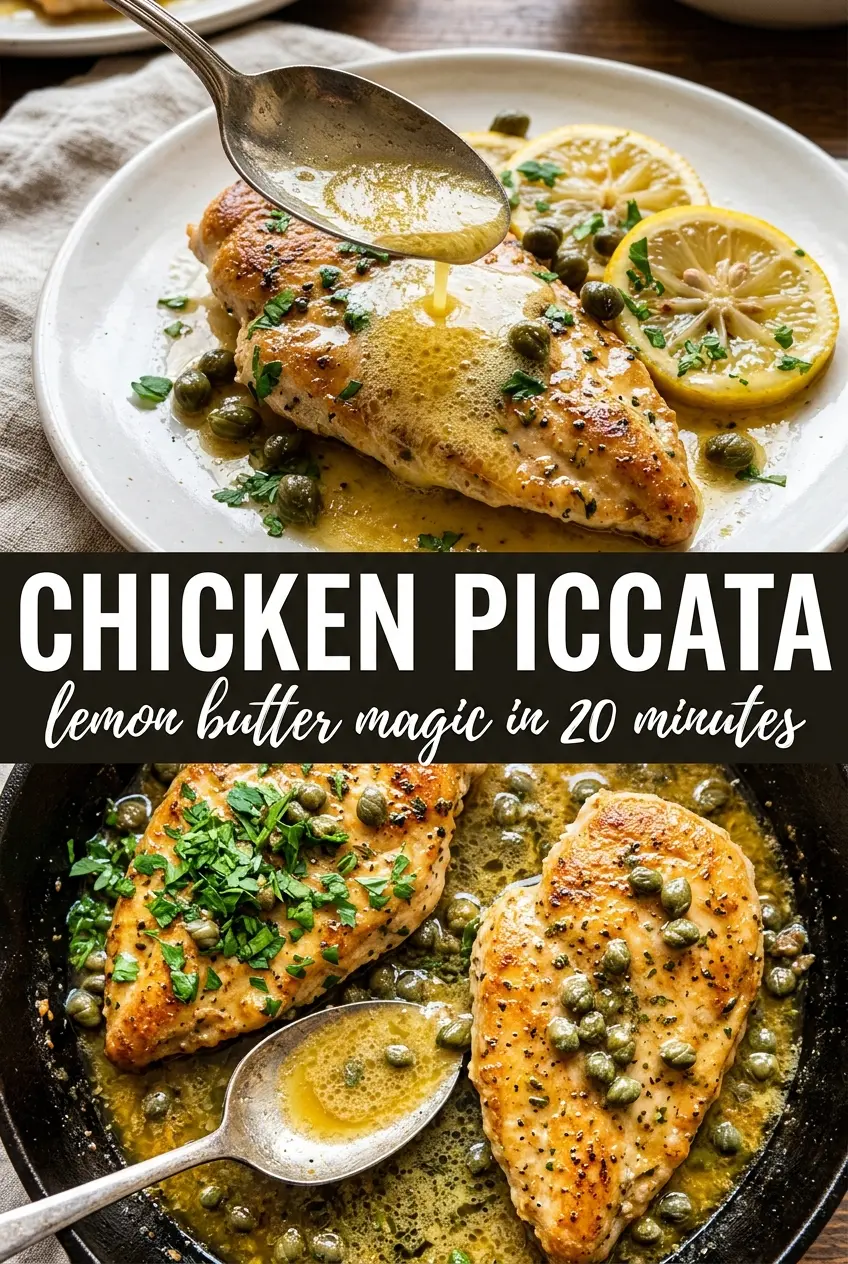
Chicken Piccata
Ingredients
Equipment
Method
- Season the chicken cutlets with salt and pepper, then dredge lightly in flour and shake off any excess.
- Lay the dredged cutlets on a sheet pan so they’re ready to cook in batches.
- Heat the olive oil and 2 tablespoons butter in a large skillet over medium-high heat until hot.
- Cook the chicken in batches for 3-4 minutes per side, until golden and cooked through, then remove and set aside.
- Add the garlic and cook for 30 seconds, stirring until fragrant.
- Pour in the white wine and scrape up the browned bits, then simmer for 2 minutes.
- Add the chicken broth, lemon juice, capers, and lemon slices, then simmer for 4-5 minutes until the sauce reduces by about a third.
- Remove the skillet from the heat and swirl in the remaining 2 tablespoons cold butter until the sauce is glossy.
- Return the chicken to the skillet, spoon sauce over each cutlet, and garnish with fresh parsley.