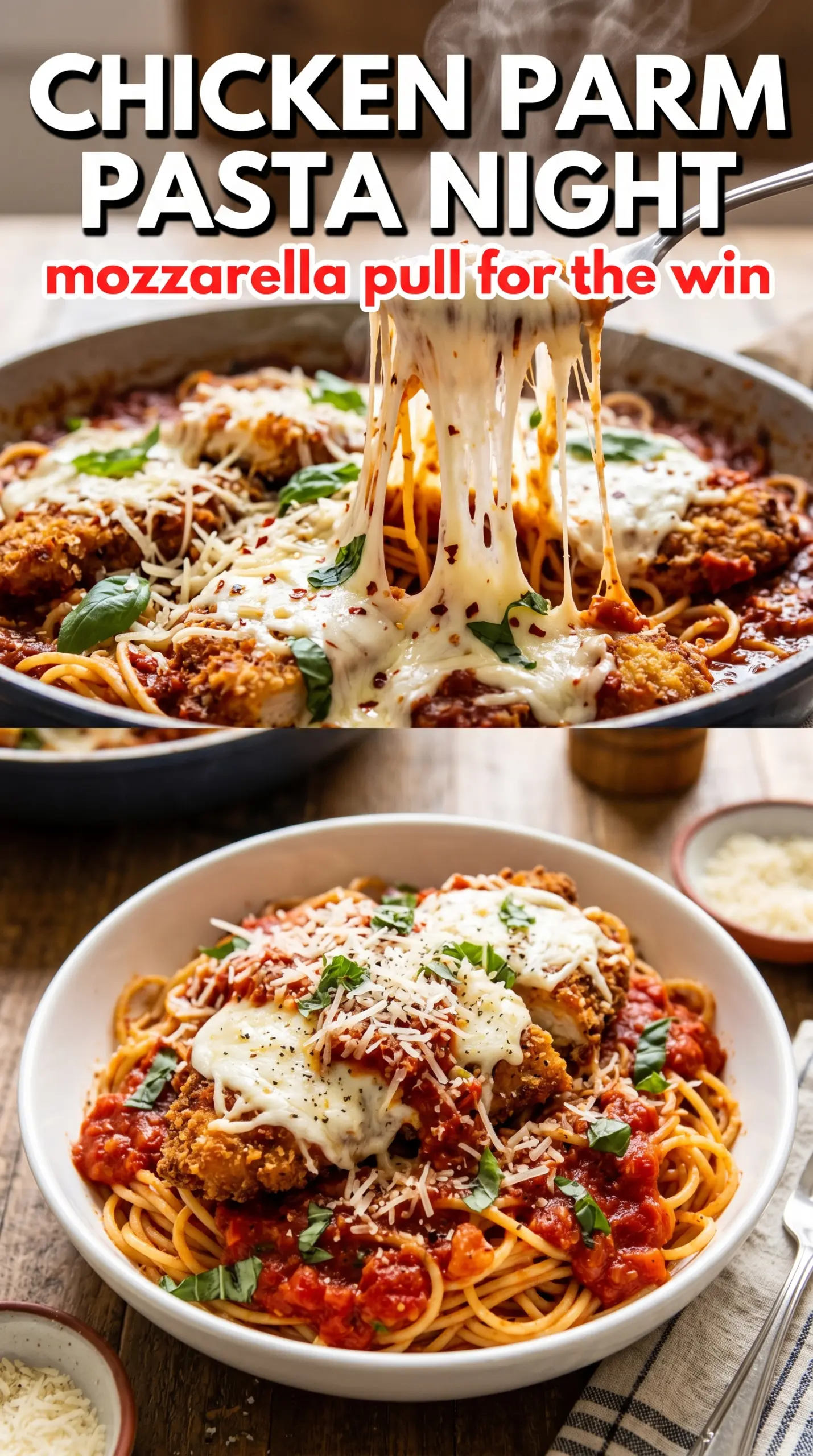
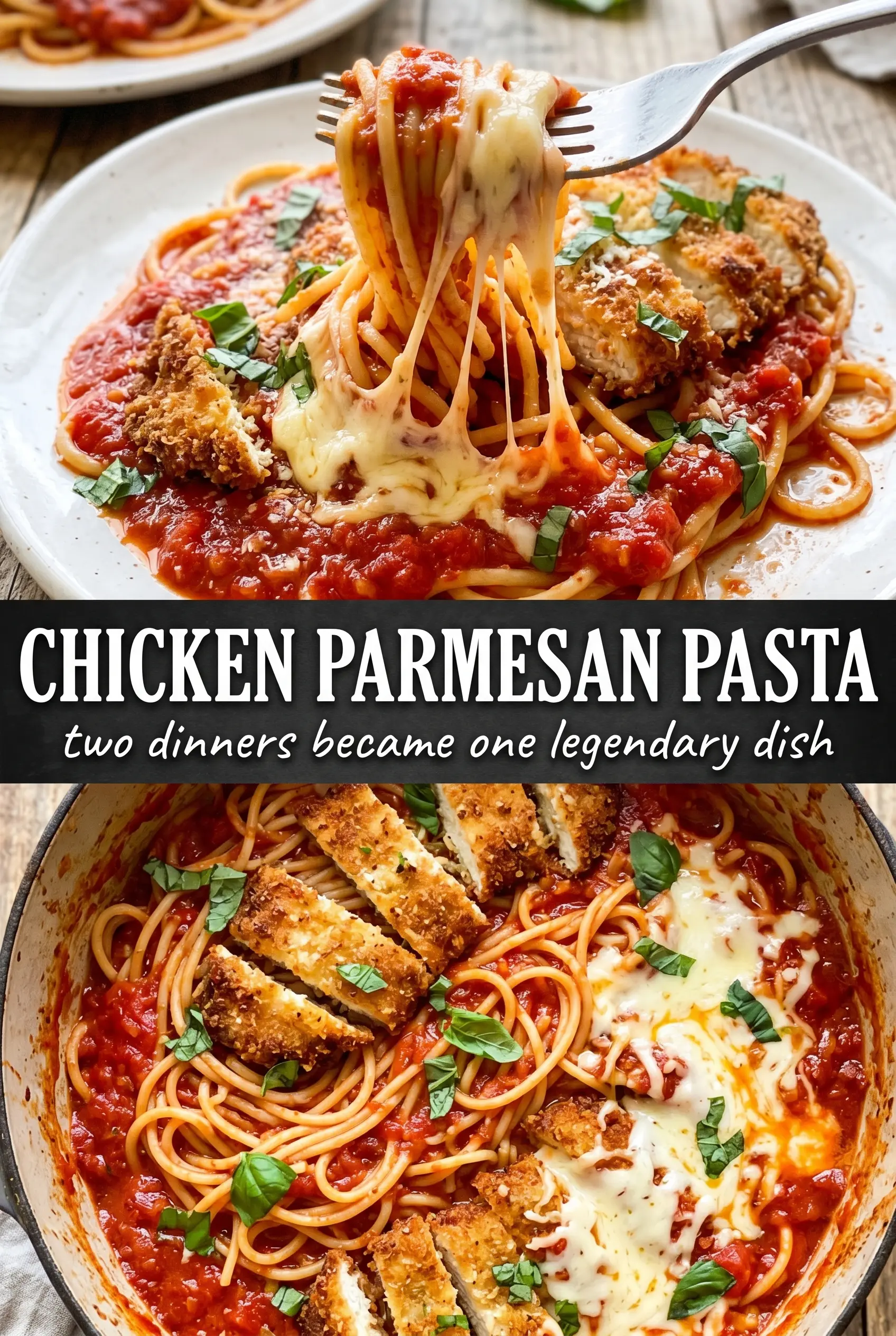
Chicken Parmesan pasta brings the best parts of chicken parm into one bubbling baking dish: crisp breaded chicken, saucy penne, and a blanket of melted mozzarella that pulls into long strands when you scoop it up. It lands somewhere between a weeknight pasta bake and the comfort of a restaurant-style chicken parmesan dinner, but without the extra juggling of separate pans and timing.
The trick is keeping the chicken crisp long enough to survive the oven. That starts with a dry dredge, a solid egg coating, and breadcrumbs that cling in a thin, even layer instead of turning pasty. The pasta gets tossed with marinara before it goes into the dish, which keeps every noodle seasoned and prevents the bake from drying out around the edges.
Below, I’ll walk through the part that matters most: how to get the chicken golden before it bakes, how to keep the sauce from swallowing the crust, and the small changes that help this work with what you already have in the kitchen.
The chicken stayed crisp on top even after baking, and the marinara coated the pasta without turning it watery. My husband went back for seconds before I even sat down.
Save this chicken Parmesan pasta for the night you want crispy chicken, saucy penne, and a baked mozzarella top without making two separate dinners.
The Part That Keeps the Chicken Crispy Under All That Sauce
The biggest mistake with chicken Parmesan pasta is treating the chicken like it can handle the same moisture as the pasta. It can’t. If the chicken goes into the dish soggy or under-browned, the oven will steam it and the breading turns soft before the cheese even melts.
That’s why the chicken needs to be cooked until it’s fully golden in the pan first. You’re not trying to finish it there; you’re building a crust that can stand up to the marinara and the bake. The other quiet win is coating the chicken pieces in flour before the egg. That extra dry layer helps the egg cling evenly, which keeps the breadcrumb coating from sliding off in the pan.
- Chicken breasts — Bite-sized pieces cook fast and stay easier to portion than whole cutlets. Cut them evenly so the smallest pieces don’t dry out before the larger ones are done.
- Italian breadcrumbs — These bring seasoning and texture. Plain breadcrumbs work, but you’ll need to season them more aggressively or the coating tastes flat.
- Parmesan in the breading — This adds salt and a nutty edge that browns well. Don’t skip it; it helps the crust taste like chicken parm instead of just breaded chicken.
- Marinara sauce — Use one you actually like, because it’s the backbone of the dish. A thin sauce is fine here as long as it isn’t watery; a loose jarred marinara can be simmered for a few minutes first to tighten it up.
What Each Layer Is Doing in the Pan
- Flour — This is the first grip the egg needs. If you skip it, the breading tends to patch rather than coat.
- Eggs — The egg creates the glue between the flour and breadcrumbs. Beat them until the whites are fully blended so you don’t get slick spots on the chicken.
- Breadcrumb-Parmesan mixture — This is where the crunch lives. Grate the Parmesan finely so it mixes evenly and doesn’t clump in the coating.
- Penne — The ridges catch sauce and the shape holds up under baking. Overcook it by even a minute and it turns soft in the oven, so pull it at al dente.
- Mozzarella — Shredded mozzarella melts into a stretchy top layer. Use a low-moisture block if you can; pre-shredded works, but it won’t melt quite as smoothly.
Building the Bake So Nothing Turns Mushy
Coating the Chicken Evenly
Set up the flour, egg, and breadcrumb mixture in separate shallow bowls. Work with one piece at a time and press the crumbs on gently but firmly so they actually stick. If the chicken looks wet when it hits the flour, pat it dry first; excess surface moisture is what causes the coating to slip off in the pan.
Pan-Frying for Color, Not Full Completion
Cook the chicken over medium-high heat in a thin layer of olive oil until the crust is deep golden on both sides. The centers should be cooked through, but the real goal is color and texture. If the pan is crowded, the chicken steams instead of browns, so cook in batches and give the pieces space.
Tossing the Pasta with the Sauce
Mix the cooked penne with the marinara before it goes into the baking dish. That keeps the pasta seasoned all the way through and helps every bite carry sauce. If the sauce looks too loose, let the pasta sit in it for a minute or two so it clings instead of pooling at the bottom.
Finishing Under the Cheese
Lay the chicken over the pasta, then cover it with mozzarella and Parmesan. Bake just until the cheese melts and the edges start to brown in spots. If you leave it in too long, the chicken crust loses its snap and the pasta starts to dry out around the rim of the dish.
Three Ways to Adjust It Without Losing the Point
Gluten-Free Chicken Parmesan Pasta
Swap the flour for a gluten-free all-purpose blend and use gluten-free breadcrumbs. The texture stays close to the original, but the crumbs can brown a little faster, so watch the skillet closely and keep the heat at medium rather than pushing it higher.
Lighter Baked Version
If you want less frying, spray the breaded chicken generously with oil and bake it on a wire rack until crisp, then finish the recipe as written. You’ll lose a little of that pan-fried depth, but you keep the crunch and cut down on oil.
Spicy Chicken Parm Pasta
Stir red pepper flakes into the marinara or add a pinch to the breadcrumb mixture. That gives the dish a little heat without changing the structure, and it cuts through the richness of the cheese in a nice way.
Make-Ahead for Busy Nights
You can bread and pan-cook the chicken a few hours ahead, then assemble and bake right before dinner. Don’t assemble the full dish too early or the crumbs soften in the sauce before they ever reach the oven.
Storage and Reheating
- Refrigerator: Store leftovers in an airtight container for up to 4 days. The chicken coating softens, but the flavor holds up well.
- Freezer: It freezes best in individual portions for up to 2 months. The pasta texture gets softer after thawing, so I treat this as a decent backup meal rather than a perfect freezer dish.
- Reheating: Reheat covered at 350°F until hot, then uncover for the last few minutes to wake up the cheese. The common mistake is blasting it in the microwave from cold, which makes the chicken rubbery and the sauce separate.
Answers to the Questions Worth Asking
Chicken Parmesan Pasta
Ingredients
Equipment
Method
- Dredge the chicken pieces in all-purpose flour, then dip them into the beaten eggs.
- Coat the egg-dipped chicken in Italian breadcrumbs mixed with 1/2 cup grated Parmesan.
- Pan-fry the breaded chicken in olive oil over medium-high heat for 3-4 minutes per side, until golden and cooked through.
- Drain the fried chicken on paper towels until ready to assemble.
- Toss the cooked penne with marinara sauce, then pour into a greased 9x13 baking dish.
- Arrange the crispy chicken pieces over the sauced penne in an even layer.
- Top with shredded mozzarella cheese and sprinkle with the remaining 1/2 cup Parmesan.
- Bake at 375°F for 20-22 minutes, until the cheese is melted and golden.
- Garnish with fresh basil immediately after baking for a bright finish.