Golden, bubbly chicken casserole earns its place in the rotation because it lands in that sweet spot between creamy and crisp. The filling stays rich and spoonable, the rice gives it enough body to slice into clean portions, and the Ritz cracker topping turns deeply savory and crackly in the oven. Every scoop has a little bit of everything: tender chicken, soft vegetables, melted cheddar, and that buttery crust on top.
What makes this version work is the balance. Canned soups and sour cream build a sauce that holds up without drying out, while cooked rice keeps the casserole from turning soupy. The cracker layer goes on last with melted butter, which helps it brown instead of disappearing into the cheese. That little detail is what gives you a real casserole finish instead of a soft, flat top.
Below, I’ve included the texture clues I watch for, the swaps that still keep the bake creamy, and the storage notes that matter if you want leftovers to taste as good the next day.
The Ritz topping stayed crisp all the way through, and the rice soaked up the sauce without getting mushy. I used rotisserie chicken and it came together fast, but still tasted like I’d spent all afternoon on it.
Save this chicken casserole with its creamy rice filling and buttery Ritz topping for the nights when you want comfort food that still bakes up with a real crunch.
The Difference Between Creamy and Heavy in a Chicken Casserole
The trap with casseroles like this is overloading the filling until it turns dense and pasty. You want enough sauce to coat the chicken and rice, not bury them. The two canned soups do the thickening work, but the sour cream and broth loosen the mixture just enough so it bakes into a spoonable casserole instead of a brick.
Cooked rice matters here because uncooked rice would pull too much liquid from the filling and stay uneven. Long-grain rice keeps its shape better than short-grain, which helps each serving hold together when you scoop it. If your casserole ever comes out dry around the edges, it usually means the mixture went into the oven too tight or the dish baked uncovered for too long.
What Each Ingredient Is Actually Doing in the Dish
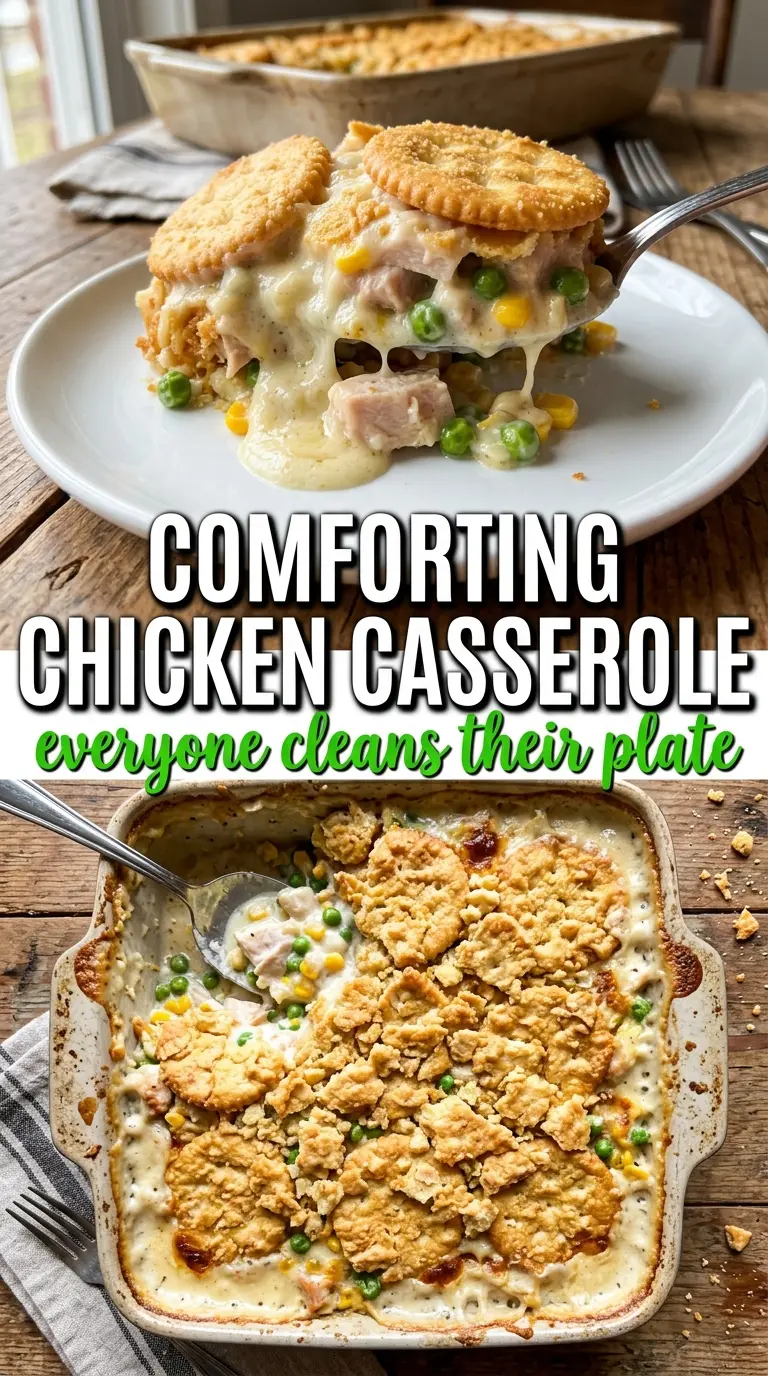
- Cooked chicken — Rotisserie chicken, leftover roast chicken, or any shredded cooked chicken all work. The important part is that it’s already seasoned and moist, since this recipe doesn’t spend long enough in the oven to cook raw chicken from scratch.
- Cooked long-grain rice — This gives the casserole body and keeps the filling from turning loose. If you swap in brown rice, expect a firmer bite and a slightly nuttier finish; just make sure it’s fully cooked before mixing it in.
- Cream of chicken and cream of mushroom soup — These create the backbone of the sauce. Homemade cream sauce can work, but the canned soups bring salt, thickness, and stability that help the casserole bake up evenly without splitting.
- Sour cream — This adds tang and richness and keeps the filling from tasting flat. Full-fat sour cream gives the best texture; low-fat can work, but the sauce won’t feel as plush.
- Frozen peas and carrots — No need to thaw them first. They soften in the oven and keep their shape better than fresh vegetables that need a longer cook time.
- Cheddar cheese — Sharp cheddar gives the filling a stronger savory edge, while mild cheddar melts a little softer. Freshly shredded cheese melts better than pre-shredded because it doesn’t carry the anti-caking coating.
- Ritz crackers and butter — This is the crunch factor. The butter helps the crumbs toast instead of just drying out, and Ritz crackers bring a salty, almost pastry-like finish that plain breadcrumbs can’t match.
Building the Bake So the Topping Stays Crisp
Mix the filling until it looks evenly coated
Stir the chicken, rice, soups, sour cream, broth, vegetables, and seasonings until every grain of rice has some sauce clinging to it. The mixture should look creamy and thick, but still loose enough to spread without pressing it down hard. If it looks stiff in the bowl, add a splash more broth before it goes into the baking dish. A filling that starts too tight will bake up dry at the edges.
Spread it gently, then add the cheese layer
Use the back of a spoon to level the mixture in the dish without packing it down. The cheese goes on before the cracker topping so it can melt into the filling and give the casserole a little stretch underneath. If you toss the cheese with the crackers, the top bakes unevenly and you lose that clean, bubbly layer between creamy filling and crisp crust.
Finish with buttered cracker crumbs
Mix the crushed Ritz crackers with melted butter until the crumbs look evenly moistened. Dry crumbs won’t brown the same way, and they can stay sandy instead of crisp. Scatter them over the cheese all the way to the edges so the whole top gets some texture. Bake until the filling is bubbling at the sides and the topping looks deeply golden, not pale blond. That bubbling edge is your signal that the center is hot enough.
Use Rotisserie Chicken for the Fastest Version
Rotisserie chicken gives you the best shortcut because it’s already seasoned and tender. Shred it while it’s still warm so it pulls apart easily, and remove the skin unless you want extra richness in the filling. This keeps the casserole quick without sacrificing flavor.
Make It Gluten-Free Without Losing the Creamy Texture
Use certified gluten-free cream soups and swap the Ritz crackers for a gluten-free buttery cracker or crushed gluten-free crackers with melted butter. The topping won’t have the exact same flaky crunch, but it will still brown and add the crisp contrast this casserole needs.
Add Extra Vegetables Without Watering It Down
Frozen mixed vegetables, chopped steamed broccoli, or sautéed mushrooms all fit here, but keep the total add-ins modest so the sauce still coats everything well. Raw watery vegetables like zucchini need to be cooked first or they’ll thin the filling. The casserole should be creamy, not soupy.
Make Ahead and Bake Later
Assemble the casserole up to a day ahead, but hold the cracker topping until right before baking if you want the crunchiest finish. If you add the topping early, it softens as it sits on the filling. Refrigerate the assembled casserole covered, then add the buttery crumbs and bake straight from the fridge, adding a few extra minutes if needed.
Storage and Reheating
- Refrigerator: Store covered for up to 4 days. The topping softens a bit, but the filling stays creamy.
- Freezer: It freezes well without the cracker topping. Freeze the baked or unbaked casserole tightly wrapped for up to 2 months, then add fresh buttered crumbs before baking or reheating.
- Reheating: Warm covered in a 325°F oven until hot in the center. The biggest mistake is microwaving it too long, which makes the rice dry and turns the sauce grainy.
Questions I Get Asked About This Casserole
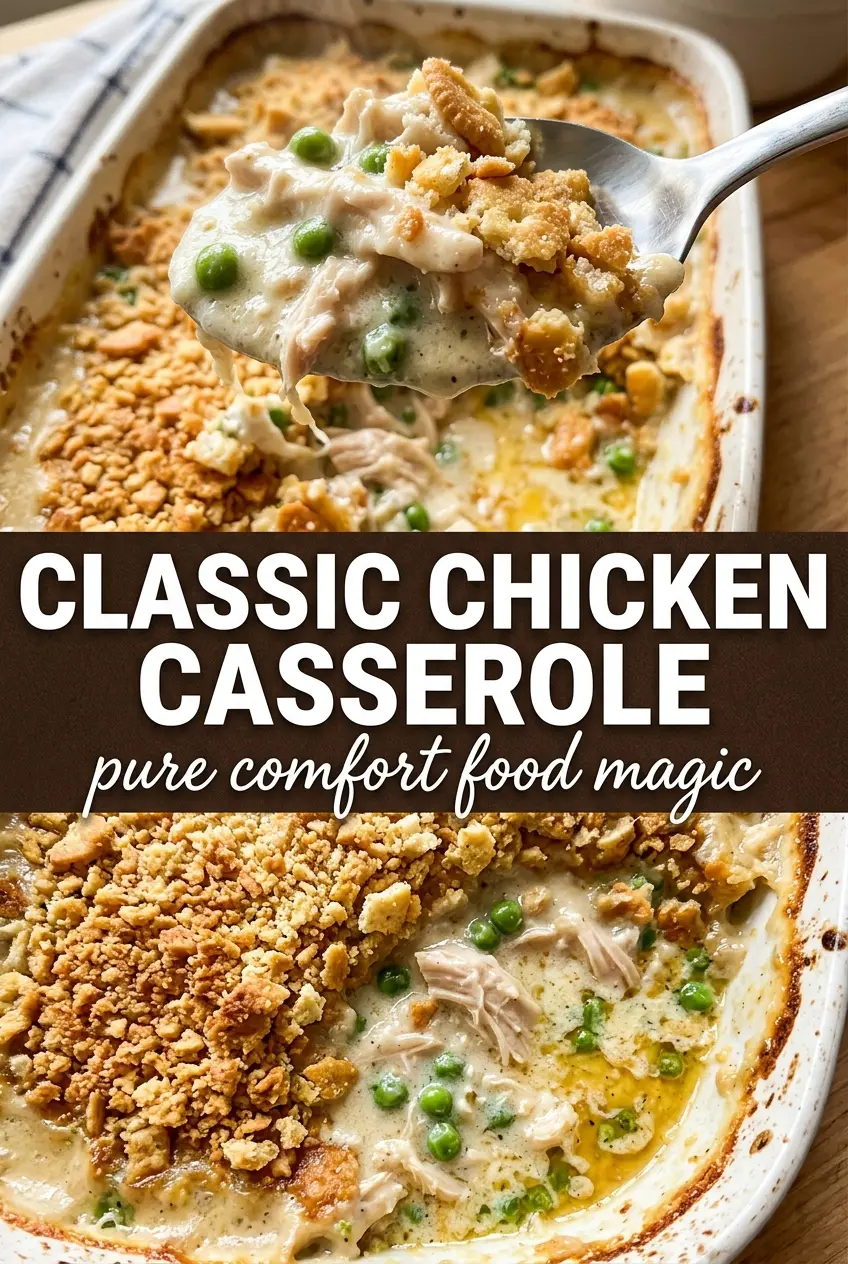
Chicken Casserole
Ingredients
Equipment
Method
- Preheat the oven to 350°F and grease a 9x13 baking dish. This sets the temperature for a bubbly, golden bake.
- Combine shredded cooked chicken, cooked long-grain white rice, both soups, sour cream, chicken broth, frozen peas and carrots, garlic powder, onion powder, salt, and pepper in one bowl and stir until well mixed. The mixture should look creamy and evenly distributed.
- Spread the chicken mixture into the prepared baking dish in an even layer. Flatten the top so the casserole bakes uniformly.
- Top the casserole with shredded cheddar cheese. Cover the surface so the cheese melts into the base as it bakes.
- Mix the crushed Ritz crackers with melted butter and sprinkle them over the cheese. Aim for an even layer so the topping caramelizes and crunch-crackles.
- Bake at 350°F for 35-40 minutes, until bubbly and the cracker topping is golden brown. Look for steam rising and a crisp, crackled surface.