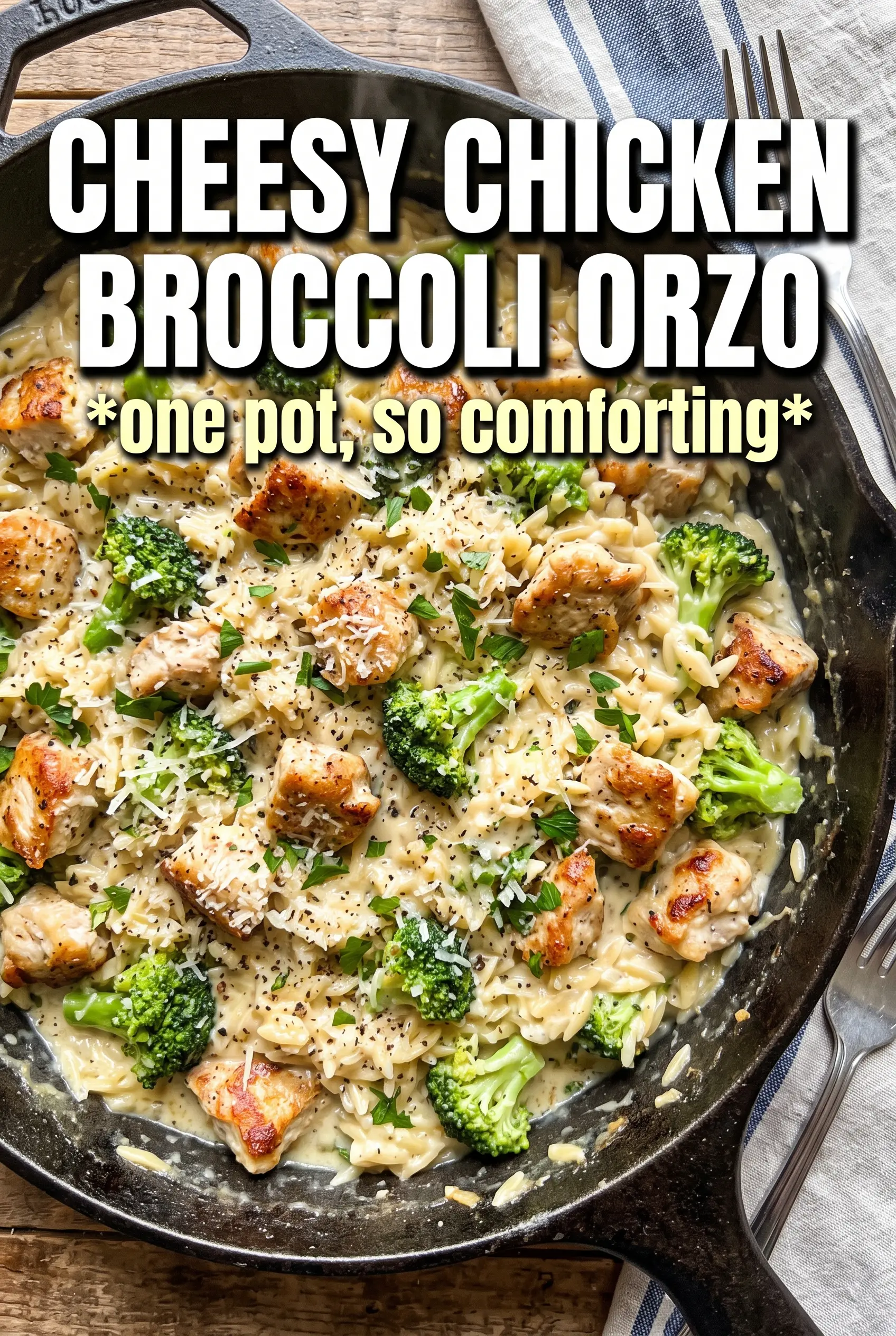
Cheesy chicken broccoli orzo hits that sweet spot between comforting and practical: creamy enough to feel like a treat, sturdy enough to count as dinner, and fast enough to land on a busy weeknight table without a fight. The orzo turns silky as it cooks in the broth and cream, the broccoli stays bright instead of going mushy, and the chicken brings enough heft to make every bowl feel complete.
The trick is building the sauce in layers. Browning the chicken first leaves flavorful bits in the pan, and those bits melt right into the orzo as it simmers. Adding the broccoli near the end keeps it vivid and just tender, which matters here because overcooked broccoli can make the whole dish taste flat. Sharp cheddar gives you the bold cheese pull, while Parmesan adds salt and a little depth so the sauce tastes rounded instead of one-note.
Below, I’ll walk through the part that matters most: how to keep the orzo creamy without letting it clamp up or go dry. I’ve also included a few swaps for making it fit what you have on hand.
The cheddar melted into a super smooth sauce, and the broccoli stayed bright green with a little bite instead of turning soft. My husband went back for seconds before I even sat down.
Save this cheesy chicken broccoli orzo for the nights when you want a one-pan dinner with a creamy cheddar sauce and plenty of broccoli in every bite.
The Part Where Creamy Orzo Usually Turns Heavy
Orzo can go from silky to gluey fast if it’s left alone in a thick sauce for too long. The difference here is that the pasta cooks uncovered in enough liquid to move around, and the broccoli comes in late enough to keep its color and shape. That gives the cheese something smooth to coat instead of trapping it in a tight, starchy mass.
The other mistake that ruins dishes like this is dumping the cheese into a sauce that’s boiling hard. Heat makes cheddar seize and turn grainy. Pull the pan to a lower simmer before stirring in the cheese, and add it in handfuls so it melts evenly into the orzo instead of clumping on top.
- Chicken breast — Bite-sized pieces cook quickly and stay tender when they’re removed from the pan before the sauce goes in. Thighs work too if you want a little more richness, and they’re more forgiving if your heat runs a little high.
- Orzo — This pasta is what gives the dish its creamy body without needing a separate roux. Regular orzo is the right choice here; if you swap in another small pasta, you may need a different amount of liquid and a slightly longer simmer.
- Sharp cheddar — Sharp cheddar gives the sauce its main flavor and that unmistakable cheese pull. Mild cheddar melts fine but tastes flatter, so I only use it if I’m mixing in extra Parmesan or another stronger cheese.
- Broccoli florets — Cut them small so they soften at the same pace as the pasta. Large florets stay too firm unless you blanch them first, which adds another pot and another step you don’t need.
- Heavy cream — This keeps the sauce lush and helps the cheddar melt smoothly. Half-and-half will work in a pinch, but the sauce will be looser and a little less velvety.
What Each Ingredient Is Actually Doing in This Recipe

- Primary ingredient (the star) — Quality matters most. Choose the best you can find.
- Cooking medium (oil, butter, or broth) — This carries flavors and prevents dryness.
- Seasonings (salt, pepper, spices, herbs) — Layer flavors so nothing overpowers. Build depth gradually.
- Aromatics (garlic, onion, herbs) — Cook with fat to bloom flavors. Become the foundation.
- Supporting ingredients — Complement the main ingredient without overpowering it.
- Sauce or liquid (if applicable) — Brings flavors together. Balance richness with acid.
- Acid (lemon, vinegar, wine, or other) — Brightens and prevents flat-tasting results.
- Final finish (garnish, glaze, or sauce) — Prevents one-dimensional taste and adds visual appeal.
Building the Chicken, Pasta, and Cheese in the Right Order
Browning the Chicken First
Season the chicken well and cook it in olive oil over medium-high heat until the pieces are golden on the outside and cooked through, about 5 to 6 minutes. Don’t crowd the pan or the chicken will steam and stay pale. You’re looking for color on the edges and juices that run clear, then move it out of the pan so it doesn’t overcook while the orzo finishes.
Starting the Orzo in the Same Pan
Add the garlic to the pan and cook it just until fragrant, about 30 seconds, then stir in the orzo and let it toast briefly. That quick toast gives the pasta a little nutty depth and helps it keep its shape as it simmers. Pour in the broth and cream, scrape up the browned bits, and keep the liquid at a steady simmer rather than a hard boil.
Letting the Broccoli Finish at the End
Stir the pot often as the orzo cooks uncovered, then add the broccoli during the last 4 minutes. If it goes in too early, the florets soften into the sauce and lose their color. By the end, the broccoli should be bright green and just tender when pierced with a fork.
Melting in the Cheese Without Breaking the Sauce
Turn the heat down before adding the cheddar and Parmesan. Stir until everything melts and the sauce turns creamy and glossy. If the pan is too hot, the cheese can go stringy or oily instead of smooth, and once that happens it’s hard to pull it back.
Bringing the Chicken Back
Return the chicken to the skillet and stir until it’s heated through and coated in the sauce. Taste at this point, because the cheese can change how salty the dish tastes. A final pinch of salt or a crack of black pepper is often all it needs.
How to Adapt It When You Need a Different Dinner Plan
Make It Gluten-Free
Use a gluten-free orzo or another small gluten-free pasta with a similar cook time. Keep an eye on the liquid because some gluten-free pastas absorb more slowly and can go from underdone to soft in a hurry. Stir often and stop cooking when the pasta is just tender and the sauce still looks loose enough to settle.
Go Dairy-Free
Use unsweetened plain oat cream or a dairy-free cooking cream, plus a meltable plant-based cheddar-style shred. The sauce won’t have the same sharp tang or stretch, but it will still coat the pasta nicely if you keep the heat low when the cheese substitute goes in. Add a little extra salt and a squeeze of lemon if the sauce tastes flat.
Swap in Chicken Thighs
Chicken thighs bring a richer flavor and stay juicy even if they sit in the pan a minute longer. Cut them into the same bite-sized pieces so they cook at the same pace as the breasts. The dish will taste a little deeper and the sauce will feel even more luxurious.
Storage and Reheating
- Refrigerator: Store leftovers in an airtight container for up to 4 days. The sauce thickens as it chills, and the broccoli softens a bit more.
- Freezer: It freezes, but the cream sauce can turn a little grainy after thawing. If you do freeze it, pack it tightly and thaw overnight in the fridge before reheating.
- Reheating: Warm it gently on the stove or in the microwave with a splash of broth or cream to loosen the sauce. High heat is the mistake here — it can make the cheese separate and the pasta dry out before the center is hot.
Answers to the Questions Worth Asking
Cheesy Chicken Broccoli Orzo
Ingredients
Equipment
Method
- Season the bite-sized chicken pieces with salt, pepper, garlic powder, and smoked paprika. Heat olive oil in a large skillet over medium-high heat and cook the chicken for 5-6 minutes, stirring occasionally, until golden and cooked through.
- Transfer the cooked chicken to a plate or bowl and set aside while you start the orzo. Leave any browned bits in the skillet for flavor.
- Cook the minced garlic in the same pan for 30 seconds over medium heat until fragrant. Add the orzo and toast for 1 minute, stirring, until lightly golden.
- Pour in the chicken broth and heavy cream, then bring the mixture to a simmer. Keep the heat at a steady simmer so the liquid reduces as the orzo cooks.
- Cook the orzo uncovered for 8-10 minutes, stirring often, until tender and creamy. If the mixture gets too thick before the orzo is done, splash in a bit of broth or cream to keep it saucy.
- Add the broccoli florets in the last 4 minutes of cooking and stir until bright green and just tender. Keep the skillet uncovered so the sauce stays thick and glossy.
- Stir in the shredded sharp cheddar and grated Parmesan until melted and the orzo is creamy. Scrape the bottom and sides to fully incorporate the cheese.
- Return the cooked chicken to the pan and stir to combine until evenly coated. Taste and adjust seasoning with more salt and pepper if needed.
- Garnish with fresh parsley and serve right away while the cheddar sauce is stretchy and thick.