Glossy cranberry sauce from the pantry has a way of making an ordinary meal feel cared for. The berries hold their shape just long enough to give you that classic whole-fruit texture, then they burst into a sauce that sets up beautifully in the jar. Orange juice rounds out the sharp cranberry edge, and the zest added at the end keeps the citrus bright instead of cooked flat.
This version works because the sugar base is fully dissolved before the berries go in, which helps the fruit cook evenly without scorching on the bottom of the pot. Bottled lemon juice gives you the acid you need for safe water bath canning, and the final 5-minute rest in the canner helps reduce siphoning when the jars come out. It’s a straightforward process, but the order matters.
Below, I’m covering the little details that keep the sauce thick, the jars sealed, and the flavor clean all the way to the last spoonful. If you’ve ever ended up with a watery cranberry sauce or a jar that didn’t seal, those fixes are in here.
The sauce thickened up perfectly and the orange zest kept it from tasting flat. Every jar sealed, and the whole kitchen smelled amazing while the berries burst.
Save this canned cranberry sauce for holiday trays, turkey dinners, and the pantry shelf when you want bright, whole-berry cranberry flavor all year.
The Part That Keeps Cranberry Sauce Thick Instead of Syrupy
Most cranberry sauce gets watery for one simple reason: the fruit is boiled too hard for too long after the berries burst. Cranberries contain natural pectin, and they’ll thicken as they simmer, but if you keep blasting them at a rolling boil, you can drive off too much liquid and end up with a jammy layer at the top and loose liquid underneath. Gentle boiling is enough here. You want steady bubbling, not a violent churn.
The other thing that matters is the order. Dissolving the sugar into the water and orange juice first gives you an even cooking base, so the cranberries don’t stick or scorch before they start releasing their juice. Once the sauce looks thick enough to coat a spoon and the berries have mostly popped, stop there. It firms up more as it cools in the jars.
What Each Ingredient Is Doing in the Jar
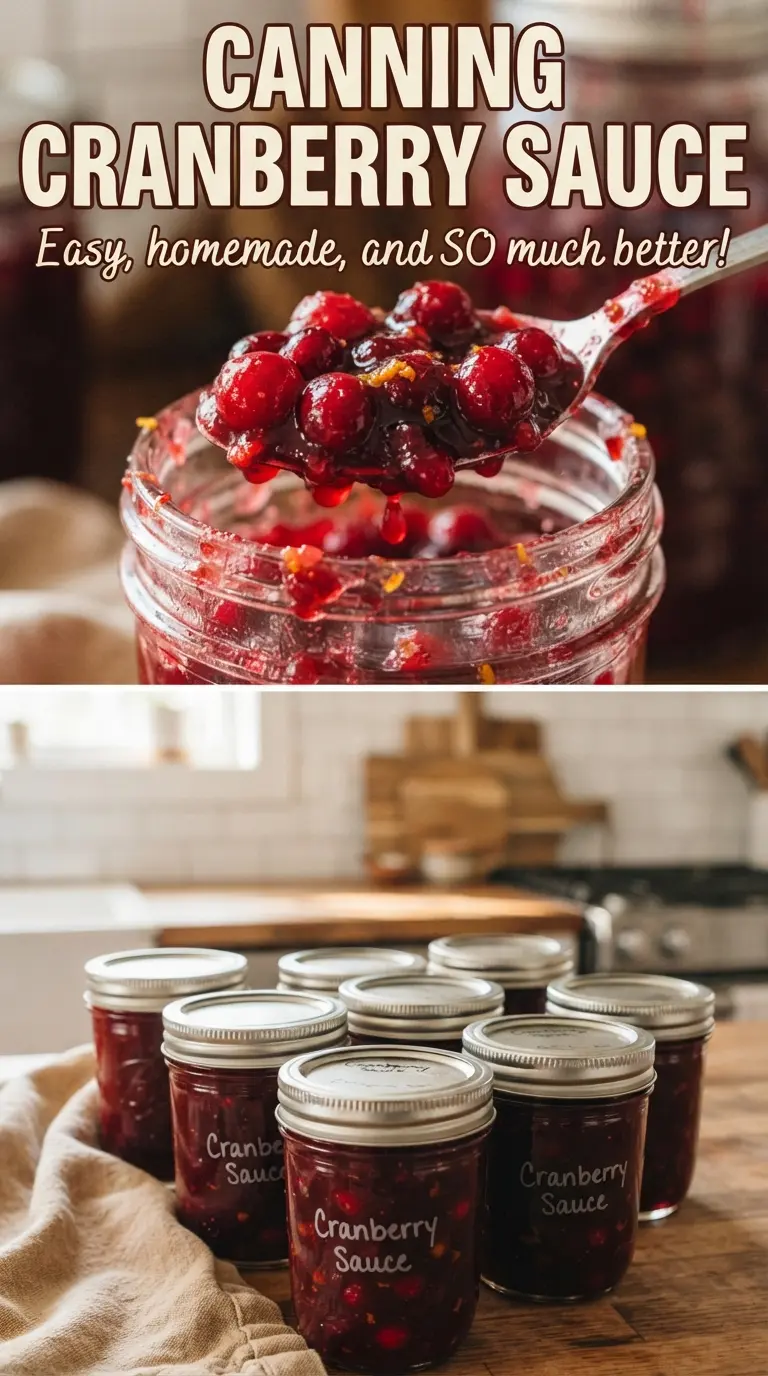
- Fresh cranberries — These are the backbone of the recipe. Fresh berries give you the best pop and the cleanest tart flavor, and they break down into a sauce that still has body after processing. Frozen cranberries can work in a pinch; use them straight from frozen and expect a slightly softer finish.
- Sugar — This isn’t just sweetness. It balances the cranberries’ sharpness and helps the sauce set with a glossy texture. Cutting it too far changes both the flavor and the way the sauce thickens.
- Water and orange juice — Together they create the cooking liquid that keeps the fruit from scorching and gives the sauce a brighter flavor than water alone. Fresh-squeezed juice is nice, but bottled orange juice works fine here because it’s being cooked into the sauce anyway.
- Bottled lemon juice — This is the safety ingredient, not optional garnish. Bottled lemon juice has a consistent acidity level for water bath canning, while fresh lemon juice can vary more than you want in a preserved recipe.
- Orange zest — Add it at the end so the citrus stays fragrant. If you cook zest for the full processing time, it turns dull and can taste bitter instead of bright.
Cooking the Sauce, Filling the Jars, and Getting a Safe Seal
Building the Sweet Citrus Base
Bring the sugar, water, and orange juice to a boil first and stir until the sugar disappears completely. That base should look clear and glossy before the cranberries go in. If you add the fruit before the sugar dissolves, the bottom can catch and the sauce can taste cooked before the berries even break down.
Cooking the Cranberries Until the Sauce Thickens
Once the cranberries and lemon juice go in, keep the heat at a gentle boil for 10 to 12 minutes. You’ll hear the berries start to pop, and the mixture will change from foamy and loose to noticeably thicker. Stir often enough to keep the bottom moving, but don’t mash the berries unless you want a finer sauce.
Filling the Hot Jars
Ladle the sauce into hot half-pint jars while it’s still boiling hot, leaving 1/4-inch headspace. Wipe the rims carefully so no sticky sauce interferes with the seal, then apply the lids and bands fingertip tight. Too-tight bands can trap air unevenly; too-loose bands can let jars leak during processing.
Processing and Cooling Without Disturbance
Process the jars in a boiling water bath for 15 minutes, adjusting for altitude if needed. When the time is up, turn off the heat and let the jars rest in the canner for 5 minutes before lifting them out. That short pause helps prevent sudden pressure changes that can push liquid out of the jars, and the jars should then cool completely undisturbed for 24 hours.
How to Adjust This Cranberry Sauce for Different Kitchens and Pantry Needs
Frozen cranberries instead of fresh
Frozen cranberries work well here, and you can add them straight to the pot without thawing. The sauce may take a minute or two longer to return to a boil, but the finished texture is nearly the same. Don’t thaw them first or they’ll release extra liquid and throw off the cook time.
Lower-sugar version for serving fresh, not canning
If you’re making cranberry sauce for the table and not for canning, you can cut the sugar back to taste. The sauce will be tarter and a little looser, which is fine for serving right away but not what you want in a shelf-stable preserve. Keep the bottled lemon juice in any canned batch.
Orange-forward variation
For a stronger orange note, add a little more zest, not more juice. Extra juice makes the sauce thinner and pushes the balance toward sweet liquid instead of concentrated citrus aroma. Zest gives you the bright top note without changing the texture.
Storage and Reheating
- Refrigerator: Unsealed jars or opened jars keep for about 2 to 3 weeks. The sauce may firm up more after chilling.
- Freezer: This sauce can be frozen if you leave headspace in freezer-safe containers, though canned jars should go to the pantry, not the freezer. The texture softens a little after thawing, but the flavor stays good.
- Reheating: For serving, warm it gently on low heat or bring it to room temperature. High heat can thin the sauce and make the fruit break down too much, especially if it has already thickened in the fridge.
Questions I Get Asked About This Recipe
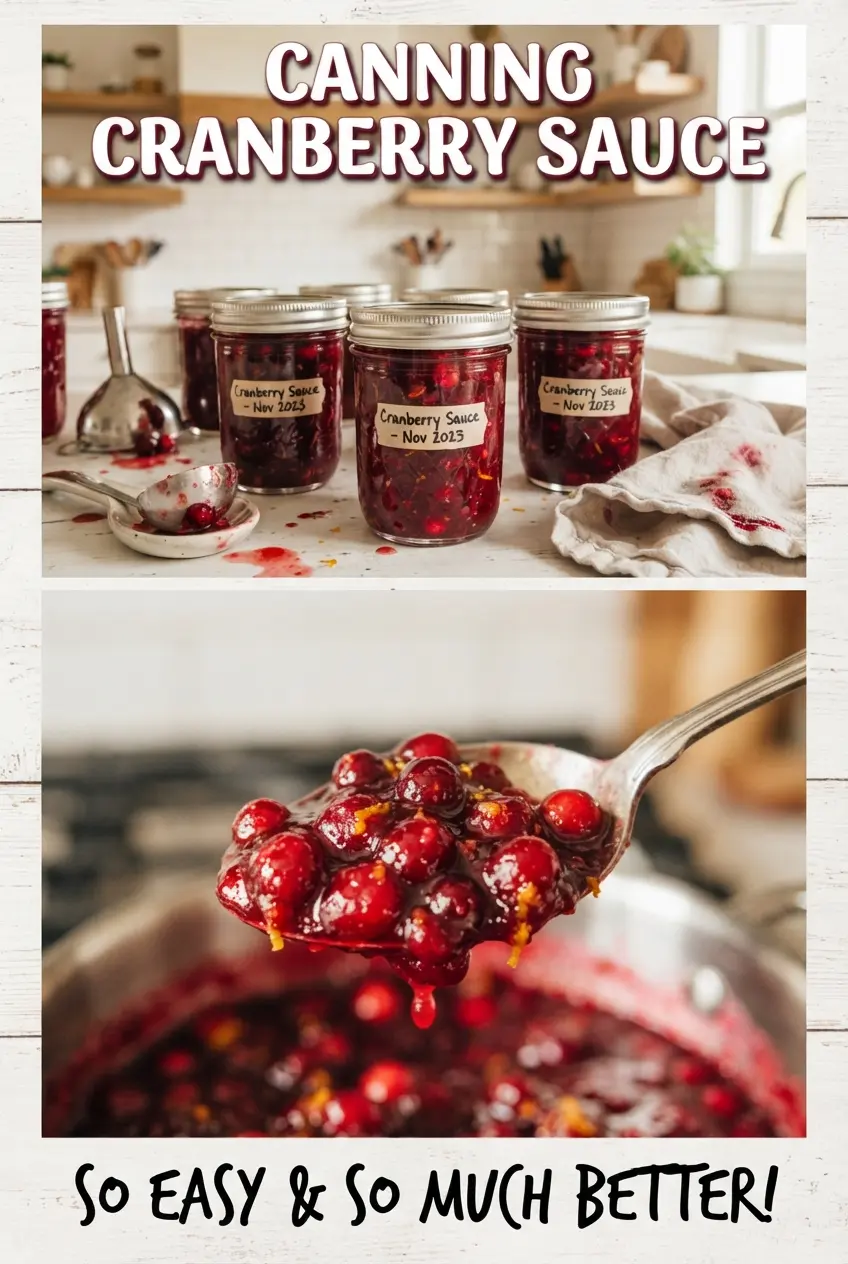
Canning Cranberry Sauce
Ingredients
Equipment
Method
- Wash 12 half-pint jars, lids, and bands, then keep the jars hot in simmering water. Use a visible gentle simmer (not a hard boil) to keep jars ready for hot filling.
- Bring sugar, water, and orange juice to a boil in a large pot, stirring until the sugar dissolves. Continue boiling until you see rolling bubbles that keep flowing across the surface.
- Add cranberries and bottled lemon juice, then boil gently for 10-12 minutes until the berries burst and the sauce thickens. Watch for skins splitting and a thicker, glossy consistency.
- Stir in orange zest after the thickening stage. Keep the mixture hot so it pours easily and stays glossy.
- Ladle the hot sauce into the hot jars, leaving 1/4-inch headspace. Fill each jar the same level so lids seat properly.
- Wipe the jar rims clean, then apply lids and bands fingertip tight. Stop tightening once you feel resistance so bands sit evenly.
- Process in a boiling water bath canner for 15 minutes, adjusting time for altitude. Start timing once the canner returns to a steady boil.
- Turn off the heat, rest the jars in the canner for 5 minutes, then lift them out carefully. Keep jars undisturbed so seals form without disturbance.
- Cool the jars undisturbed for 24 hours. Wait for the lids to fully seal before moving jars.
- Check that the lids have sealed, then store sealed jars in a cool dark place up to 1 year. If any lid did not seal, refrigerate and use first.