Calabacitas hit the skillet fast, stay bright, and land on the plate with a mix of tender zucchini, sweet corn, smoky poblano, and just enough cheese to pull everything together. The best versions don’t drown the vegetables; they let each one keep its shape and still taste like they belong in the same bite. That balance is what makes this dish worth making again and again.
This version leans on a hot pan and a short cook time. Zucchini needs enough heat to pick up a little color before it turns watery, and the corn goes in late so it stays sweet instead of soft and dull. Roasted poblano adds depth without making the dish heavy, while a small handful of cotija or queso fresco gives you salty finish without turning the vegetables into a casserole.
Below, I’ve included the little details that make calabacitas taste clean and fresh instead of soggy. If you’ve ever had zucchini that steamed itself into mush, the timing here will help.
The zucchini stayed tender but never mushy, and the corn kept its sweetness even after I reheated it for lunch the next day. The cotija on top made it taste finished without overpowering the vegetables.
Save these calabacitas for the nights when you want zucchini, corn, and roasted poblano in one fast skillet side.
The Trick to Keeping Calabacitas From Turning Watery
The biggest mistake with calabacitas is crowding the pan and waiting too long to season. Zucchini gives off moisture as it cooks, and if the skillet isn’t hot enough, that moisture stays in the pan and the vegetables steam instead of sauté. You want enough heat to get a little color on the zucchini before the tomatoes go in.
Salt matters here too. Add it after the zucchini starts to take on color, not at the beginning, or you’ll draw out moisture too early. The tomatoes go in near the end because they collapse fast and can push the whole dish into a softer, saucier texture than calabacitas should have.
What Each Ingredient Is Actually Doing in This Dish
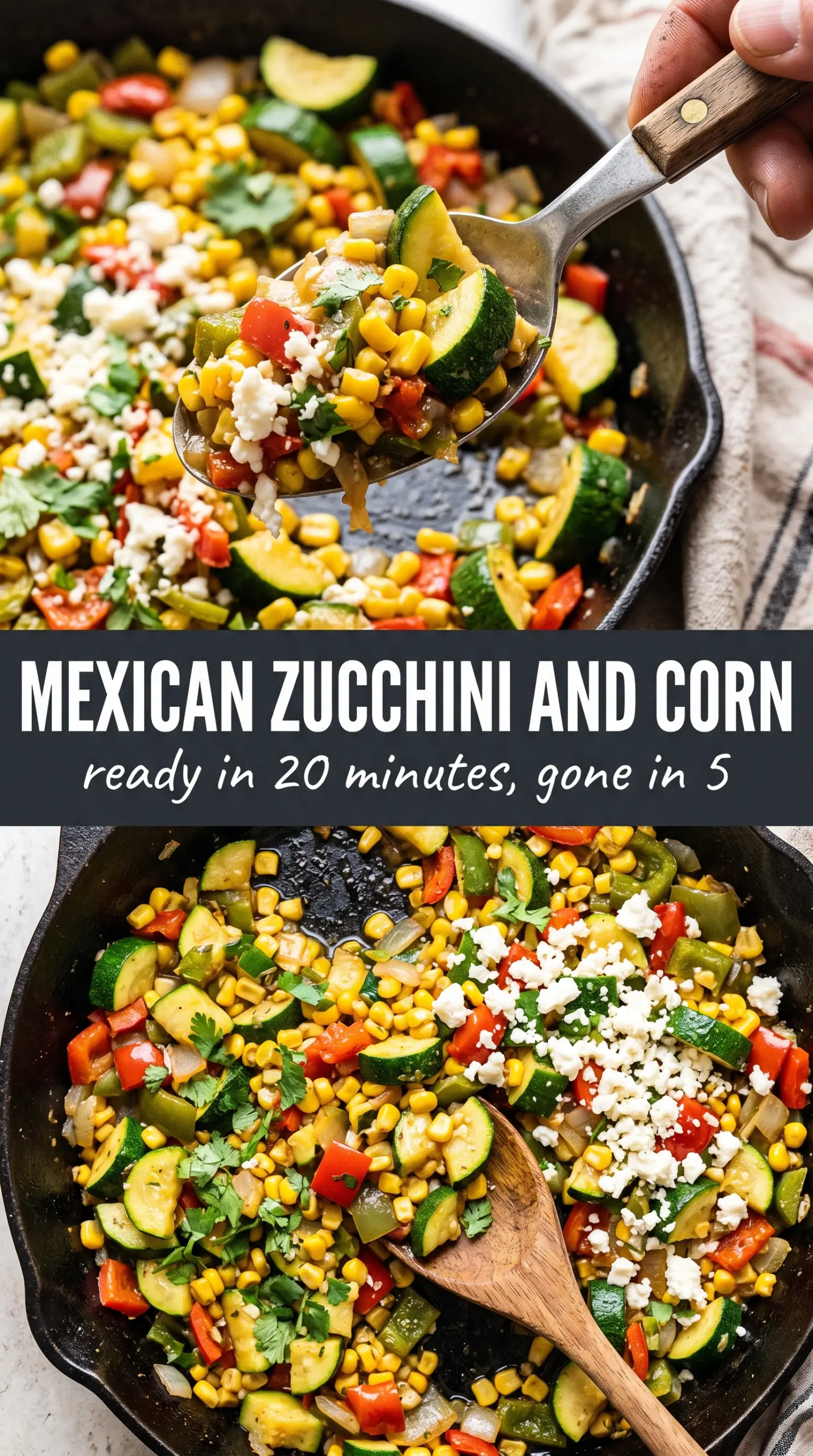
- Zucchini — This is the bulk of the dish, so cut it into pieces that are all about the same size. Smaller dice softens faster and can go mushy if you wander away from the stove, while larger chunks hold their shape and give you better texture.
- Corn — Fresh corn gives the sweetest pop and the best bite, but frozen corn works well if you thaw it first and dry it off a little. If you add frozen kernels straight from the bag, they release extra water and slow down the browning.
- Roasted poblano — This is where the smoky depth comes from. Jarred roasted peppers can work in a pinch, but freshly roasted poblano has a cleaner flavor and better texture, especially if you peel it well after charring.
- Cotija or queso fresco — Cotija brings salt and a firmer crumble; queso fresco is milder and softer. Either one works, but don’t cook it into the skillet or it loses the fresh, finishing note that makes the dish feel complete.
- Butter and olive oil — Butter adds flavor, while olive oil keeps the butter from scorching as the pan heats. That combination gives you enough richness to coat the vegetables without making them greasy.
Getting the Vegetables Tender Without Losing the Bite
Start With the Onion and Aromatics
Warm the butter and olive oil in a large skillet over medium-high heat, then add the onion and cook until it softens and turns translucent at the edges. Once the garlic and cumin go in, the pan should smell warm and toasty within seconds. If the garlic starts browning fast, the heat is too high and the cumin will taste harsh instead of rounded.
Let the Zucchini Pick Up Color
Add the zucchini and leave it alone long enough to make contact with the pan. Stirring constantly keeps it pale and soft, which is the opposite of what you want here. After 4 to 5 minutes, the edges should look lightly golden and the zucchini should still have a little firmness in the center.
Add the Corn, Poblano, and Tomatoes at the End
Once the zucchini has some color, stir in the corn, roasted poblano, and tomatoes. The corn just needs to heat through, the poblano needs to warm back up, and the tomatoes should soften without dissolving completely. Pull the skillet off the heat as soon as the vegetables look glossy and evenly mixed, then season with salt and pepper and finish with cotija, cilantro, and lime.
How to Adapt Calabacitas When You Need a Different Version
Make It Dairy-Free
Skip the butter and cotija, then use all olive oil and finish with extra lime and cilantro. You lose the salty dairy finish, so a final pinch of flaky salt matters more here than it does in the original version.
Use Frozen Corn Without Softening the Dish
Thaw the corn first and pat it dry before it goes into the skillet. That small step keeps the pan hot enough to sauté instead of steaming, which matters more than the brand of corn you buy.
Turn It Into a Fuller Vegetarian Main
Stir in black beans at the end and serve the calabacitas over rice or warm tortillas. The beans make it hearty without changing the flavor balance, and they work especially well if you’re leaning on this for a meatless dinner.
Make It Spicier
Add a diced jalapeño with the onion or finish with a pinch of crushed red pepper. The poblano stays gentle, so this is the easiest way to bring heat without changing the rest of the dish.
Storage and Reheating
- Refrigerator: Store for up to 3 days in an airtight container. The zucchini will soften a little as it sits, but the flavor holds up well.
- Freezer: I don’t recommend freezing this dish. Zucchini gets soft and watery after thawing, and the whole skillet loses the texture that makes it good.
- Reheating: Warm it in a skillet over medium heat until hot, not in a microwave if you can avoid it. A skillet lets extra moisture cook off again, while the microwave tends to make the vegetables limp.
Questions I Get Asked About This Recipe
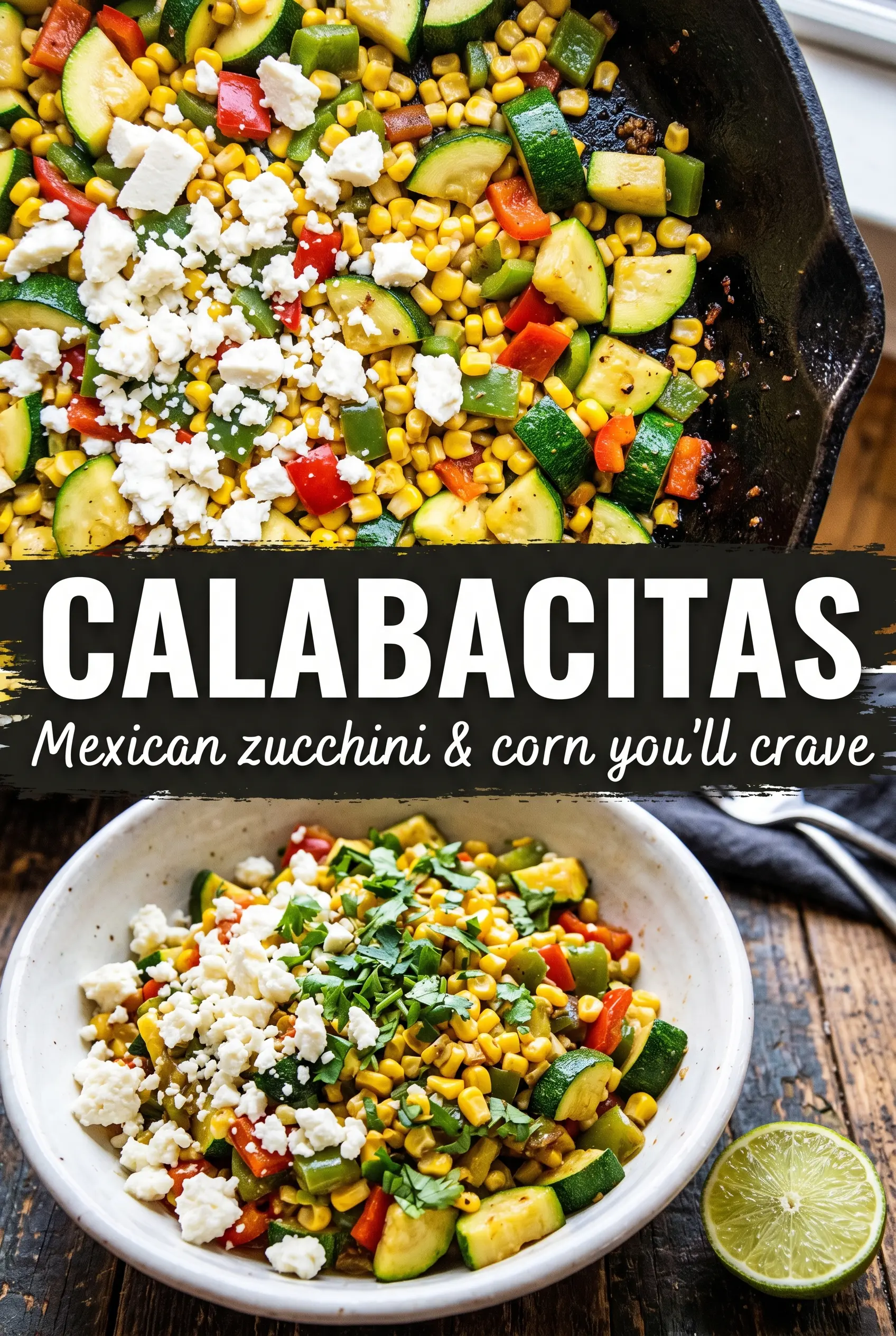
Calabacitas (Mexican Zucchini and Corn)
Ingredients
Equipment
Method
- Heat the butter and olive oil in a large skillet over medium-high heat until the butter melts and the oil shimmers.
- Sauté the onion for 3 minutes until softened, then add the garlic and cumin and cook for 30 seconds.
- Add the diced zucchini and cook for 4–5 minutes until lightly golden.
- Stir in the corn, roasted poblano, and diced tomatoes, then cook for 3–4 minutes until the corn is heated through and the tomatoes have softened.
- Season generously with salt and pepper until the flavors pop.
- Remove from the heat and top with crumbled cotija or queso fresco.
- Sprinkle with fresh cilantro, then serve with lime wedges.