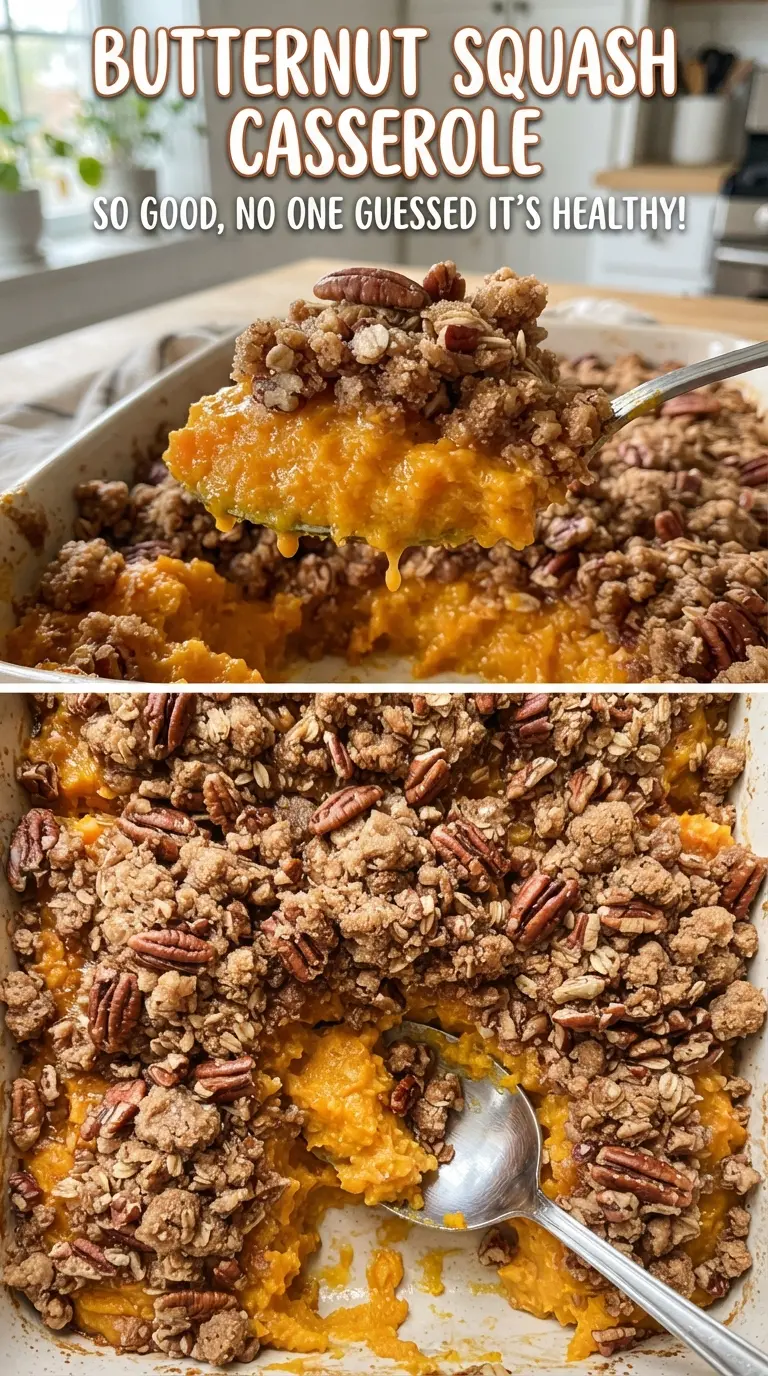
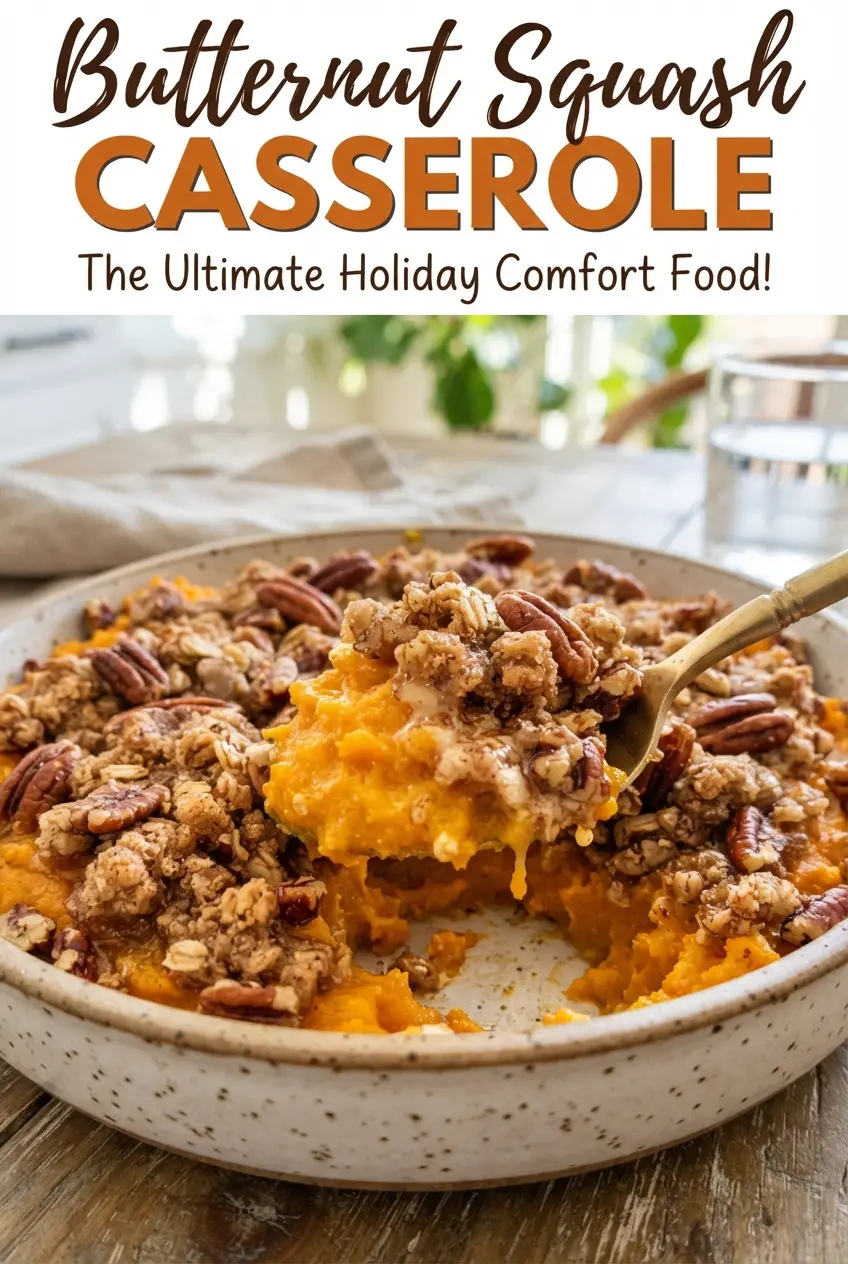
Butternut squash casserole lands somewhere between a side dish and dessert in the best possible way: creamy, softly sweet, and crowned with a buttery pecan streusel that stays crisp long enough to get a good spoonful in every serving. The squash bakes down into a smooth, custard-like base, then the topping gives you that salty-sweet crunch that keeps people coming back for seconds.
The trick is starting with squash that’s cooked until genuinely tender and drained well. If there’s extra water left in the pot, the casserole turns loose and the topping can sink instead of staying crumbly. The other part that matters is balance: a little brown sugar and vanilla in the filling, just enough cinnamon to warm it up, and pecans for texture instead of another layer of sweetness.
Below you’ll find the easiest way to keep the filling smooth, the topping crisp, and the casserole from turning watery. I’ve also added a few smart swaps for anyone who needs to adjust the dairy or make it ahead.
The squash baked up smooth and creamy, and the pecan topping stayed crunchy even after it sat on the table for a while. My husband kept sneaking spoonfuls straight from the dish.
Save this butternut squash casserole for the crisp pecan topping and creamy sweet filling that hold up beautifully at the table.
The Small Mistake That Makes Squash Casserole Watery
The biggest reason butternut squash casserole turns loose is excess moisture, not the topping. Once the squash is boiled, it needs to drain well and sit for a minute so the steam can escape. If you mash it while it’s still dripping wet, the eggs and milk can’t set the way they should, and the finished casserole comes out soft instead of spoonable.
The other place this recipe succeeds is in the balance between richness and structure. The eggs give the filling body, the butter carries the flavor, and the flour in the topping absorbs just enough of the melted butter to bake into crumbs instead of a paste. That crumbly texture is what keeps the pecans from disappearing into the filling.
- Butternut squash — Use a squash that feels heavy for its size and cut the cubes evenly so they cook at the same pace. If you use pre-cut squash, check it carefully for dry, firm pieces; the drier the squash, the better the casserole holds.
- Butter — This is doing two jobs: enriching the filling and binding the streusel. If you cut it with oil, the topping won’t clump and brown the same way.
- Brown sugar — White sugar will sweeten the dish, but brown sugar gives the filling and topping a deeper, molasses note that fits the squash. The darker the brown sugar, the richer the result.
- Pecans — Toasting isn’t required, but fresh pecans matter here because stale nuts taste flat once baked. Chop them fairly small so they distribute through the topping instead of falling off in big shards.
What Each Ingredient Is Actually Doing in This Recipe
- Primary ingredient (the star) — Quality matters most. Choose the best you can find.
- Cooking medium (oil, butter, or broth) — This carries flavors and prevents dryness.
- Seasonings (salt, pepper, spices, herbs) — Layer flavors so nothing overpowers. Build depth gradually.
- Aromatics (garlic, onion, herbs) — Cook with fat to bloom flavors. Become the foundation.
- Supporting ingredients — Complement the main ingredient without overpowering it.
- Sauce or liquid (if applicable) — Brings flavors together. Balance richness with acid.
- Acid (lemon, vinegar, wine, or other) — Brightens and prevents flat-tasting results.
- Final finish (garnish, glaze, or sauce) — Prevents one-dimensional taste and adds visual appeal.
Building the Filling So It Bakes Up Creamy, Not Loose
Cooking the Squash Until It’s Truly Tender
Boil the squash until a fork slips through with no resistance, not just until it looks cooked on the outside. Undercooked squash leaves little firm bits in the filling that never smooth out, and overcooking isn’t the problem here as long as you drain it well. After draining, let it sit in the colander for a minute so the steam can leave before you mash it.
Mashing the Base Into a Smooth Casserole
Mash the squash with the butter, sugar, eggs, milk, vanilla, cinnamon, and salt until the mixture looks cohesive and creamy. A few small lumps won’t ruin it, but big chunks mean the eggs won’t distribute evenly, and you’ll get uneven pockets in the baked casserole. The mixture should spread easily in the dish without looking soupy.
Adding the Topping Without Sinking It
Mix the flour, pecans, remaining butter, and remaining brown sugar until the texture looks like damp crumbs. Sprinkle it evenly over the squash instead of pressing it down; packing it on top makes it dense and keeps the edges from crisping. In the oven, the butter melts into the flour and sugar, and that’s what gives you the golden, craggy top.
What to Change When You Need a Different Version
Dairy-Free But Still Rich
Use plant-based butter and an unsweetened non-dairy milk with some body, like oat milk. The casserole will still bake into a creamy filling, but the topping may brown a little less deeply, so keep an eye on the last 10 minutes.
Gluten-Free Topping
Swap the all-purpose flour for a 1:1 gluten-free baking blend. You want a blend that already includes starch, because plain almond flour will make the topping sandy instead of crisp and crumbly.
Make-Ahead For Busy Tables
Assemble the filling and topping separately up to one day ahead, then keep them covered in the fridge. Put the topping on just before baking so it stays crumbly instead of soaking into the squash.
Storage and Reheating
- Refrigerator: Store covered for up to 4 days. The topping softens a little in the fridge, but the flavor holds up well.
- Freezer: Freeze baked casserole in tightly wrapped portions for up to 2 months. The texture gets softer after thawing, but it still works well for a make-ahead side.
- Reheating: Warm in a 325F oven, covered loosely with foil, until heated through. Microwaving makes the topping soggy fast, so use the oven if you want any crunch left.
Answers to the Questions Worth Asking
Butternut Squash Casserole
Ingredients
Equipment
Method
- Boil the butternut squash for 15 minutes until very tender, then drain well. The squash should yield easily when pressed.
- Preheat the oven to 350°F and grease a 9x13-inch baking dish. Lightly coat all corners so the casserole releases cleanly.
- Mash the butternut squash with 1/4 cup butter, 1/4 cup brown sugar, eggs, milk, vanilla, cinnamon, and salt until smooth. Stop mashing when no lumps remain.
- Spread the smooth squash mixture into the baking dish. Level the top so it bakes evenly.
- Mix flour, chopped pecans, remaining butter, and remaining brown sugar into a crumbly topping. Squeeze a handful to form clumps, then let it crumble back.
- Sprinkle the crumbly topping over the squash in an even layer. Make sure the surface is fully covered.
- Bake for 35 to 40 minutes at 350°F until the topping is golden and the edges bubble. Look for bubbling around the perimeter and a crisp, browned top.