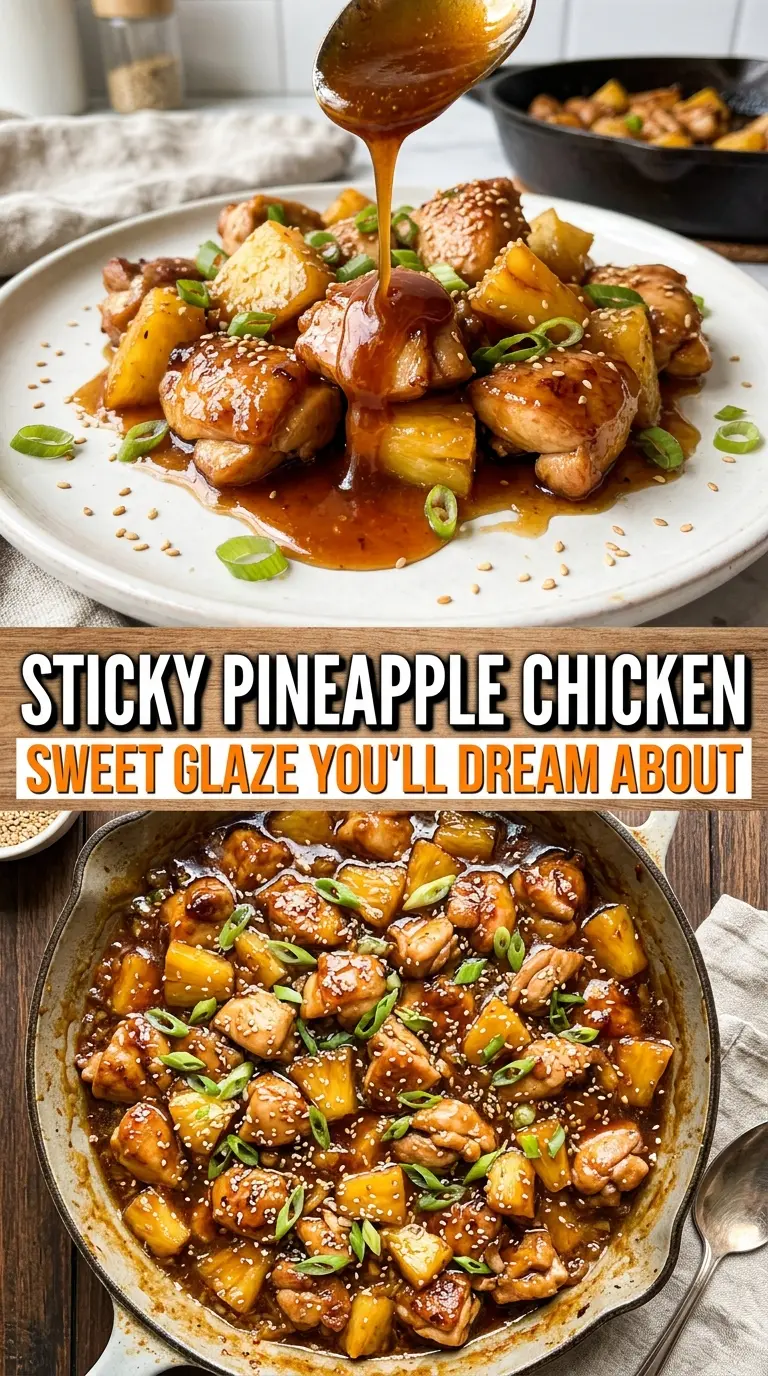
Sticky, glossy brown sugar pineapple chicken is the kind of skillet dinner that disappears fast because every bite hits sweet, tangy, salty, and savory at once. The chicken stays juicy under a thick amber glaze, and the pineapple chunks soften just enough to taste jammy without turning mushy. It’s the sort of weeknight main that looks like it took more effort than it did.
What makes this version work is the balance in the sauce. Pineapple juice brings the brightness, brown sugar gives the caramel note, soy sauce keeps the sweetness from getting flat, and a little ketchup adds body and a gentle tomato depth that helps the glaze cling to the chicken. The cornstarch slurry goes in after the sauce has simmered for a minute, so it thickens into something spoon-coating instead of turning gummy.
Below, I’ll walk through the sear that builds flavor, the exact moment the glaze should thicken, and the small finish that keeps the chicken tasting fresh instead of heavy.
The glaze thickened up exactly like you said, and the pineapple stayed in little caramelized pieces instead of dissolving. My husband kept spooning extra sauce over the rice.
Brown sugar pineapple chicken with that thick, sticky glaze is one to keep for busy nights when you want big flavor from one skillet.
The Sear Is What Keeps the Chicken from Turning Bland Under the Glaze
The mistake most people make with glazed chicken is rushing straight to the sauce and skipping color on the meat. That leaves you with cooked chicken in a sweet coating, but not much depth underneath it. A good sear gives you those browned bits in the skillet, and those bits melt into the sauce when the pineapple juice hits the pan.
Cook the chicken over medium-high heat until it releases easily and the first side has a deep golden crust. If it sticks, it’s not ready yet. Once it’s turned and cooked through to 165°F, pull it out before building the glaze so it stays juicy while the sauce comes together.
What the Glaze Needs to Thicken Cleanly
- Pineapple juice — This is the backbone of the glaze, and bottled juice works fine here as long as it’s 100% juice. Fresh juice is brighter, but either way you need the natural acidity and sweetness to balance the brown sugar.
- Brown sugar — Packed brown sugar gives the sauce its molasses note and helps it turn glossy instead of thin. Don’t swap in white sugar unless you want a flatter, sharper glaze.
- Soy sauce — This keeps the whole dish from tasting like candy. Low-sodium soy sauce is the best choice if you’re sensitive to salt, because the sauce reduces and concentrates quickly.
- Ketchup — It sounds small, but it adds body and helps the glaze cling to the chicken. I wouldn’t leave it out; the sauce gets thinner and less rounded without it.
- Cornstarch slurry — Mix it with cold water before it goes into the pan. If you add dry cornstarch straight to hot liquid, it clumps fast and you’ll spend the next few minutes chasing little white lumps around the skillet.
- Pineapple chunks — Add these at the end so they hold their shape and stay juicy. If they simmer the whole time, they break down and disappear into the sauce.
Building the Glaze Without Letting It Break
Season and Sear the Chicken
Pat the chicken dry first, then season it well with salt, pepper, garlic powder, and smoked paprika. The dry surface helps it brown instead of steam. Sear it in olive oil over medium-high heat for 5 to 6 minutes per side, and don’t move it around while it’s forming that crust. If the pan starts smoking hard, lower the heat a touch; you want browning, not burnt spices.
Reduce the Pineapple Base
Use the same skillet so the sauce picks up the browned chicken bits left behind. Whisk in the pineapple juice, brown sugar, soy sauce, ketchup, garlic, and ginger, then bring it to a steady simmer. Let it bubble for a minute before adding the slurry. That short simmer concentrates the flavor, and it’s the difference between a sauce that tastes cooked and one that tastes watery.
Thicken, Then Glaze
Stir in the cornstarch mixture and keep the sauce moving for 2 to 3 minutes until it turns shiny and lightly coats the back of a spoon. It should look like a loose glaze, not pudding. Add the pineapple chunks once it thickens so they warm through without falling apart. Return the chicken to the pan and spoon the sauce over it until every piece is lacquered.
Finish with the Fresh Garnish
The sesame seeds and green onions matter more than they look like they should. The seeds add a little nutty crunch, and the green onions cut through the sweetness so the dish tastes balanced right at the end. Add them just before serving, ideally over steamed rice while the glaze is still glossy and hot.
How to Adapt This Brown Sugar Pineapple Chicken for Different Nights
Make It with Chicken Thighs
Boneless skinless thighs work beautifully here and stay a little juicier than breasts. Use the same sauce, but cook them a few minutes longer on the first side until they develop a deep brown crust and reach temperature through the thickest part.
Gluten-Free Version
Use a certified gluten-free soy sauce or tamari. Everything else in the recipe already fits naturally, and the flavor stays just as bold because the reduction does most of the work.
Lower-Sugar Adjustment
Cut the brown sugar to 2 tablespoons if you want a less sweet glaze. The sauce will be a little sharper and less sticky, so let it simmer a minute longer before adding the slurry to concentrate the pineapple flavor.
Storage and Reheating
- Refrigerator: Store leftovers for up to 4 days. The sauce thickens as it chills, and the pineapple softens a bit more, but the flavor holds well.
- Freezer: Freeze in an airtight container for up to 2 months. The sauce may lose a little gloss after thawing, but it comes back once reheated gently.
- Reheating: Warm it in a covered skillet over low heat with a splash of water or pineapple juice. High heat can tighten the chicken and make the glaze stick too hard to the pan before it loosens again.
Answers to the Questions Worth Asking
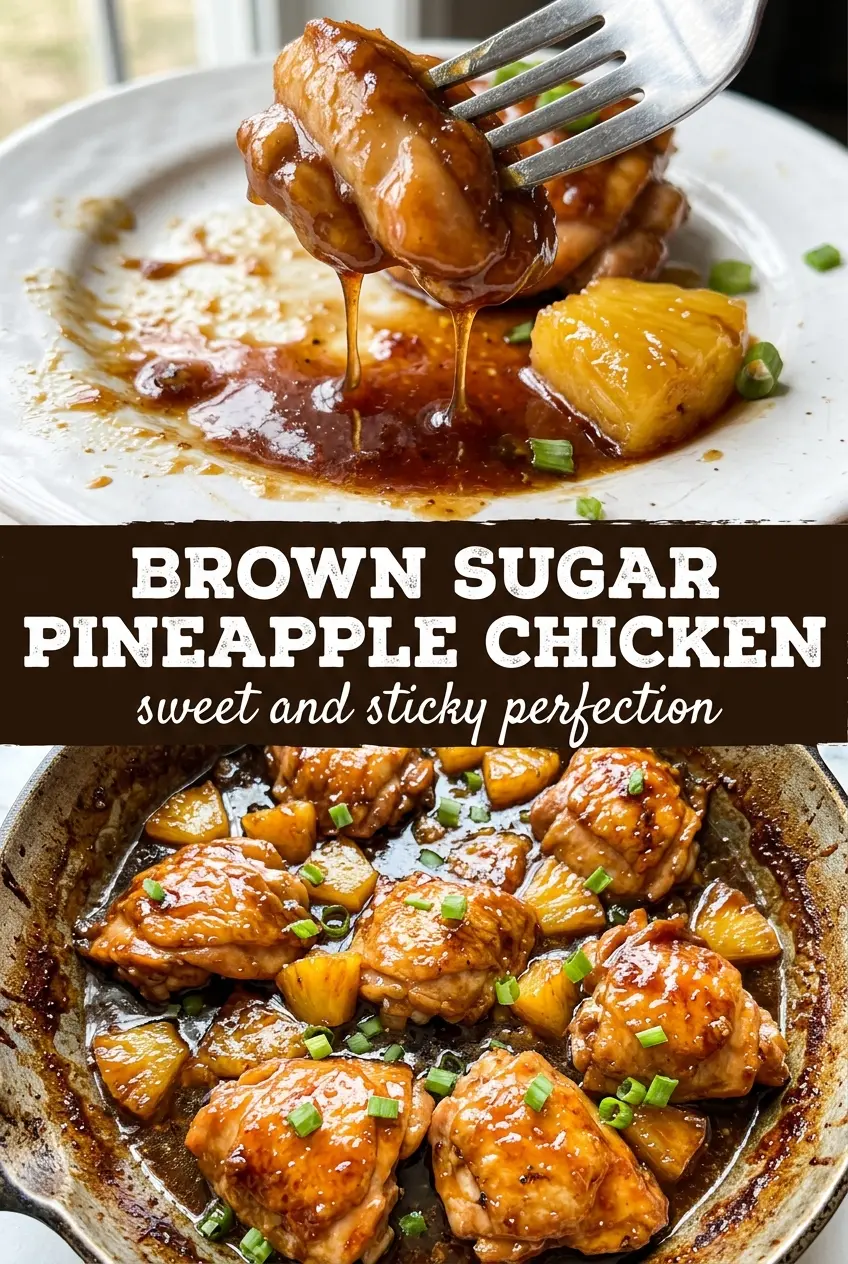
Brown Sugar Pineapple Chicken
Ingredients
Equipment
Method
- Season the chicken breasts with salt, pepper, garlic powder, and smoked paprika, then let them marinate for 20 minutes to enhance flavor and help browning.
- Heat 2 tablespoons olive oil in a large cast iron skillet over medium-high heat and sear the chicken for 5–6 minutes per side, until golden and cooked through to 165°F, then remove to a plate.
- Whisk pineapple juice, brown sugar, soy sauce, ketchup, minced garlic, and grated ginger in the same skillet and bring to a simmer over medium heat.
- Stir in the cornstarch slurry and cook 2–3 minutes until the sauce thickens to a glaze, then add the pineapple chunks.
- Return the chicken to the pan, turn to coat in the glaze, and cook for 2 more minutes so the edges caramelize and the sauce clings.
- Garnish with sesame seeds and sliced green onions, then serve the caramelized brown sugar pineapple chicken over steamed rice.