Golden potatoes, crisped right on the griddle, are what make Blackstone breakfast hash worth getting out the pan for. When the potatoes get enough contact with the hot surface, they pick up crunchy edges while the sausage, peppers, and onions bring the savory side of breakfast into the same skillet-sized pile. Add the eggs on top and you get the best part: a runny yolk that slips through the hash and ties everything together.
The key is spacing and timing. The potatoes need room to brown instead of steam, and the sausage needs to be broken up as it cooks so it can mix evenly through the hash later. I also like adding the peppers and onions after the potatoes have started to color, because they soften faster and can turn watery if they go in too early. The result is a hash with real texture, not a soft jumble.
Below you’ll find the simple order that keeps everything crisp, plus a few easy swaps if you’re cooking for different tastes or trying to use what you already have on hand.
The potatoes got those crispy edges I was chasing, and the eggs set perfectly under the cheese without overcooking the yolks. My husband kept going back for more straight from the griddle.
Save this Blackstone Breakfast Hash for the mornings when you want crispy potatoes, savory sausage, and runny yolks all in one griddle meal.
The Part That Keeps the Potatoes Crispy Instead of Soft
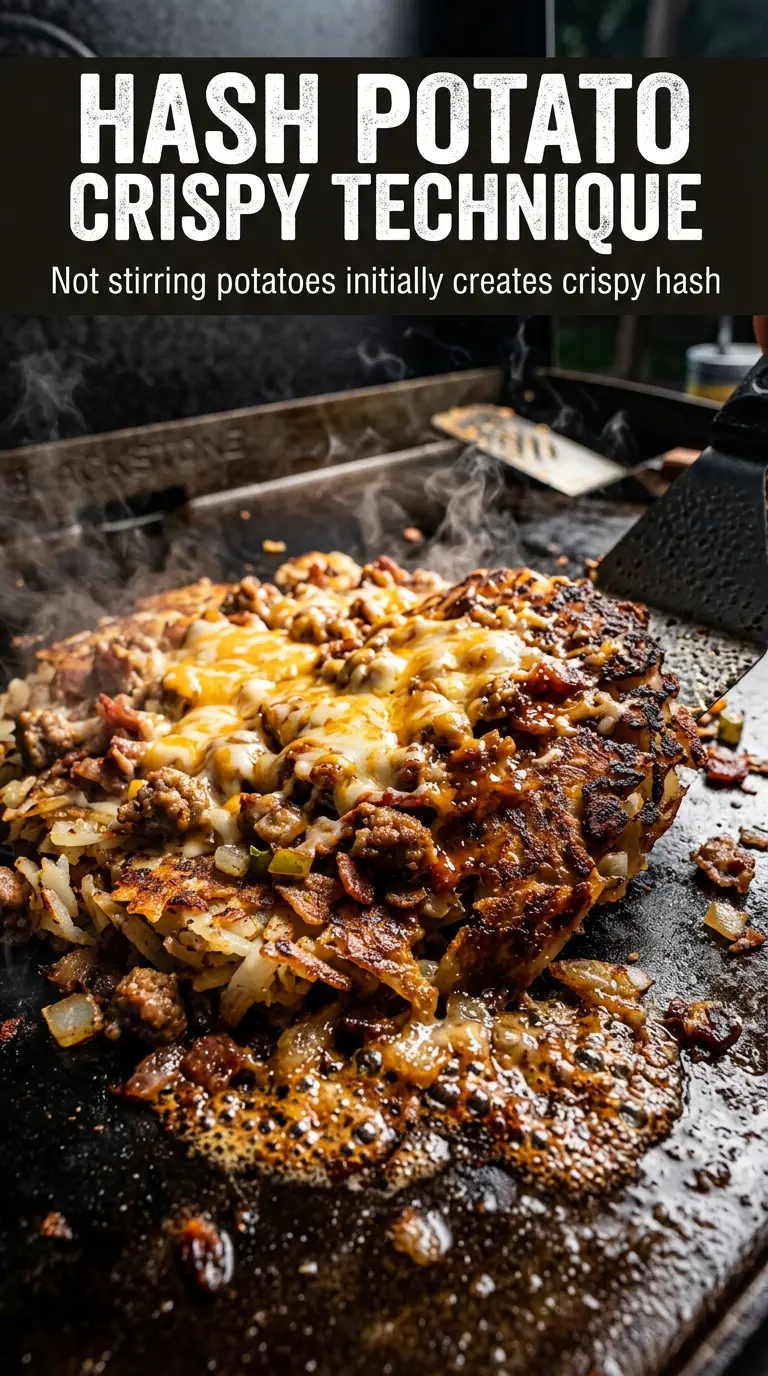
The difference between a great breakfast hash and a soggy one usually comes down to the potatoes. They need direct heat and enough time undisturbed to form a crust before you start stirring them around too much. If you move them constantly, they never get the chance to brown; if you crowd them, they steam and turn soft.
The griddle works in your favor here because you can spread everything out in a wide layer. Medium-high heat is hot enough to brown the potatoes without scorching the sausage, and that balance matters. Once the potatoes are golden on the outside and tender in the middle, they’re ready to join the rest of the hash.
What Each Ingredient Is Doing in the Pan
- Potatoes — Small dice matters here. Bigger chunks take too long to cook through before the outsides brown, so keep them evenly cut for the best crisp-to-tender balance. Yukon golds hold their shape nicely, but russets work too if you want a fluffier center.
- Breakfast sausage — This gives the hash its built-in seasoning and richness. Use bulk sausage if you can, because it breaks apart fast and coats the potatoes better than links. If you swap in turkey sausage, expect a leaner result and add a little extra oil for browning.
- Bell peppers and onion — These add sweetness and a little moisture, which keeps the hash from eating heavy. Dice them small so they soften at about the same pace. If you use only one pepper, the hash still works; just keep the onion in there for depth.
- Cheddar cheese — Sharp cheddar melts over the top and helps pull the whole hash together. Pre-shredded works fine, but block-grated cheese melts cleaner if you want the eggs to stay visible under the blanket of cheese.
- Eggs — The wells matter. They keep the eggs nestled in place so the whites set before the yolks overcook. If your griddle doesn’t have a cover, a metal bowl or inverted pan lid creates enough trapped heat to finish them.
- Hot sauce and parsley — Both are finishing touches, but they matter more than they look. Hot sauce brightens the rich sausage and cheese, and parsley gives the plate a fresh edge so the whole dish doesn’t taste flat.
How to Build the Hash So Everything Finishes Together
Getting the Potatoes Started First
Heat the griddle to medium-high and let the oil get shimmery before the potatoes hit the surface. Spread them out in a single layer and leave them alone long enough to brown on the bottom. Stir only occasionally, and use the color as your guide; pale potatoes need more time, while deeply golden ones are ready for the next round of ingredients.
Cooking the Sausage Without Breaking the Rhythm
Move the sausage to a separate section so it can brown while the potatoes keep working. Break it up as it cooks so you get small, crisp bits instead of one soft mass. If a lot of grease renders out, that’s fine, but if the pan starts looking flooded, push some aside so the vegetables don’t end up greasy.
Softening the Vegetables at the Right Time
Add the onion and peppers after the potatoes have some color and the sausage is mostly cooked. That timing keeps the vegetables from going limp before the rest of the hash is ready. They should soften and pick up a little browning at the edges, not turn watery. If the onions still look sharp and glossy, they need a few more minutes.
Finishing with Eggs and Cheese
Combine everything, then make six wells with the back of a spoon or spatula. Crack an egg into each one, top with cheese, and cover the griddle if you can so the whites set without overcooking the yolks. If the cheese is browning before the eggs are done, the heat is too high; lower it and let trapped steam finish the job.
How to Adapt This for Different Pans and Different Eaters
Make It Dairy-Free
Skip the cheddar and finish with extra hot sauce and herbs for brightness. You’ll lose the creamy melt over the top, but the hash still feels complete because the sausage fat and crispy potatoes carry the dish.
Make It Vegetarian
Leave out the sausage and add extra peppers, onions, or diced mushrooms for a more vegetable-forward hash. You’ll want to season the potatoes more assertively and add a little smoked paprika or garlic powder so the dish keeps some of that savory depth.
Use Hash Browns Instead of Diced Potatoes
If you’re short on prep time, shredded hash browns work on the griddle and get even crispier around the edges. The texture changes from chunky to lacy, and you’ll need to watch them closely because they brown faster than diced potatoes.
Storage and Reheating
- Refrigerator: Store leftovers in an airtight container for up to 3 days. The potatoes soften a little, but the flavor holds up well.
- Freezer: The hash base freezes okay without the eggs, but the eggs and cheese are better added fresh. Freeze the cooked potato-sausage mixture flat, then reheat before topping with new eggs.
- Reheating: Reheat in a skillet or on the griddle over medium heat so the potatoes can crisp again. The microwave will warm it, but it leaves the potatoes soft and the sausage a little rubbery.
Answers to the Questions Worth Asking
Blackstone Breakfast Hash
Ingredients
Equipment
Method
- Heat a Blackstone griddle to medium-high and add 2 tablespoons oil. Let the oil shimmer before adding potatoes.
- Cook diced potatoes for 12-15 minutes, stirring occasionally, until golden and crispy. Keep the heat steady so the edges brown instead of steaming.
- Cook the breakfast sausage on another section of the griddle, breaking it up as it cooks. Cook until browned through.
- Add the remaining oil, onions, and peppers to the griddle and cook until softened. Stir occasionally so nothing burns on the hot surface.
- Combine potatoes, sausage, and vegetables on the griddle. Mix well so the crispy potatoes coat evenly with the savory bits.
- Create 6 wells in the hash and crack an egg into each well. Make sure each egg sits in its own space for even doneness.
- Top with shredded cheddar cheese and cover if possible, then cook until eggs reach your desired doneness. Watch for set whites and a yolk texture you like.
- Season with salt and pepper, garnish with parsley, and serve with hot sauce. Add hot sauce at the table for adjustable heat.