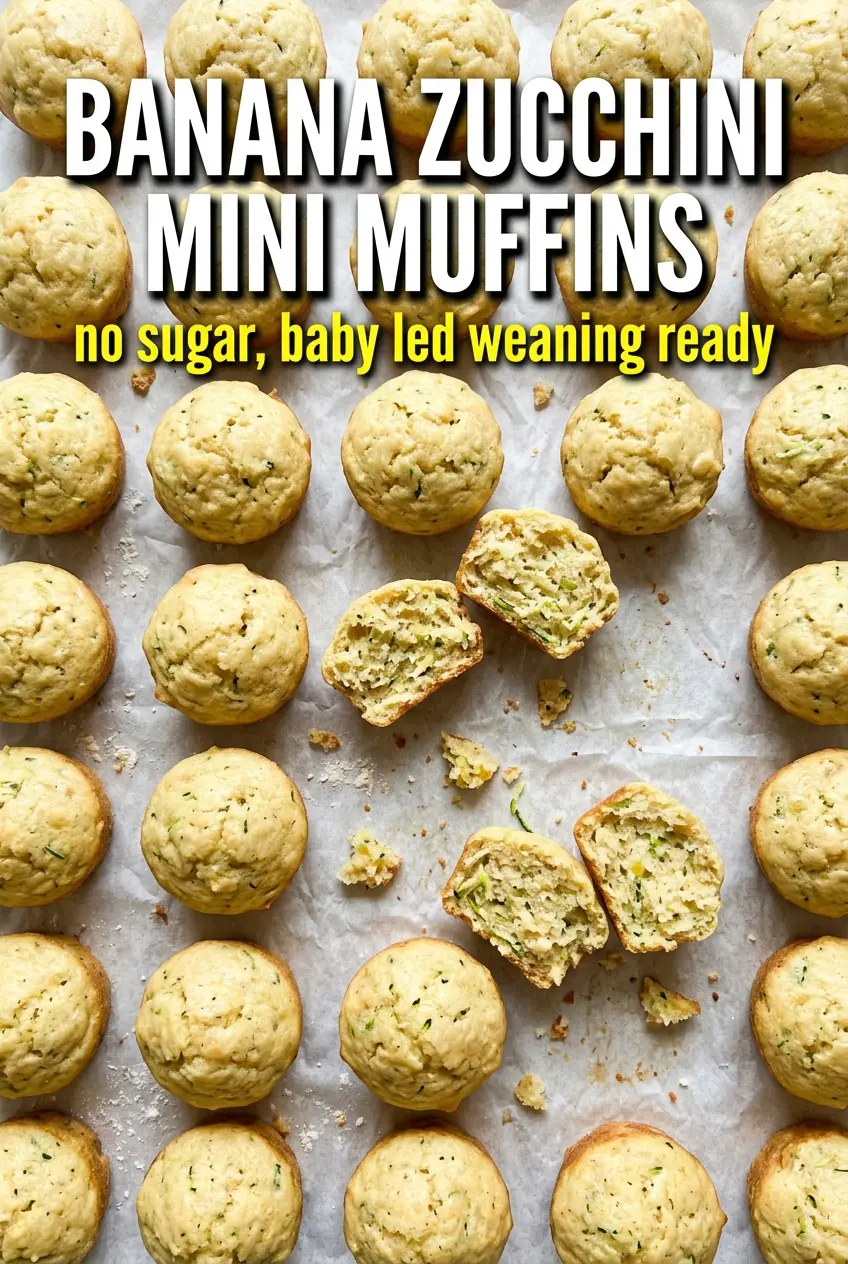
Soft mini muffins with a tender crumb are exactly what you want when you’re baking for babies and toddlers. These banana zucchini mini muffins stay moist without turning gummy, and the natural sweetness from ripe banana carries the flavor without needing added sugar. They’re small enough for little hands, sturdy enough to hold, and tender enough to squish between fingers the way baby-led weaning snacks should be.
The trick is keeping the zucchini dry and not overmixing the batter. Once the grated zucchini is squeezed well, it disappears into the muffins instead of weighing them down. The mashed bananas do most of the sweetening and also help the crumb stay soft, while the eggs and coconut oil give enough structure that the muffins bake up with clean edges and a gentle, even center.
Below, I’m sharing the details that matter most: how dry the zucchini needs to be, why mini muffin tins work better than standard ones here, and the swaps that still keep these muffins baby-friendly.
I was worried the zucchini would make them soggy, but squeezing it dry fixed that. The muffins came out soft, not wet, and my 10-month-old could hold them easily without them falling apart.
Save these banana zucchini mini muffins for baby led weaning when you need a soft, no-sugar snack that fits tiny hands.
Why These Mini Muffins Stay Soft Without Getting Wet
Baby muffins can go wrong fast when the batter is too loose. Zucchini brings a lot of water, and bananas add even more moisture, so if you skip the squeeze step the muffins bake up heavy and sometimes collapse in the middle. The goal here is a batter that looks thick and scoopable, not pourable. That’s what gives you a tender crumb that holds together in a mini muffin tin and still breaks apart easily when little ones gum it.
Mini muffin wells matter too. The smaller size bakes the centers through quickly, which keeps the texture soft instead of rubbery. Overbaking is the other common problem. Pull them when the tops spring back lightly and the edges are set; if you wait for deep browning, they’ll dry out before they cool.
What Each Ingredient Is Actually Doing in These Muffins

- Whole wheat flour or oat flour — Whole wheat gives a little more structure and a mild nuttiness; oat flour makes the muffins softer and a bit more delicate. If you need gluten-free, use certified gluten-free oat flour by weight if possible, since packed cups can vary a lot.
- Bananas — Use very ripe bananas with plenty of brown spots. They sweeten the muffins naturally and keep the crumb tender, and underripe bananas won’t mash smoothly enough or add the same moisture.
- Zucchini — This is there for softness and nutrition, not texture. Grate it finely and squeeze it hard in a clean towel or your hands; if it still feels damp, keep squeezing. That one step is the difference between a fluffy muffin and a soggy one.
- Applesauce and coconut oil — Applesauce adds gentle moisture without making the batter greasy, while melted coconut oil helps the muffins stay soft after cooling. Neutral oil works if that’s what you have, but coconut oil gives a slightly firmer set once the muffins cool completely.
- Eggs — They hold everything together and help the muffins rise a little in the oven. I wouldn’t skip them in this version unless you’re using a tested egg-free swap, because the structure matters more here than it would in a standard snack cake.
Getting the Batter Right and Baking It Small
Mix the dry ingredients first
Whisk the flour, baking soda, and cinnamon in one bowl so the leavening is evenly distributed. If the baking soda lands in one spot, you can get bitter pockets or uneven rise. This takes a few extra seconds and keeps the muffins consistent from cup to cup.
Build the wet base until the bananas are smooth
Mash the bananas very well before adding the eggs, oil, applesauce, and vanilla. You want the banana mostly broken down so the batter doesn’t have wet streaks or chunks that bake unevenly. A few tiny bits are fine, but a thick, lumpy mash makes it harder to judge the texture.
Fold, don’t beat, once the flour goes in
Stir the wet and dry together just until the flour disappears, then fold in the zucchini. Overmixing tightens the crumb and can make these feel rubbery instead of soft. The batter should look thick and spoonable, with the zucchini evenly distributed but not whipped into oblivion.
Watch the tops, not just the clock
Fill the mini muffin cups about three-quarters full and bake at 350°F until the tops spring back when touched and a toothpick comes out clean. Start checking at 12 minutes because mini muffins can go from perfect to dry quickly. Let them cool completely in the pan before removing them; that final rest helps the crumb set and keeps them from tearing apart.
How to Adapt These for Different Ages and Pantry Swaps
Gluten-Free With Oat Flour
Use certified gluten-free oat flour in place of the whole wheat flour. The muffins will be a little more tender and less bready, which works well for babies, but they may need the full bake time to set in the center.
Dairy-Free as Written
These muffins are already dairy-free if you use coconut oil. That makes them an easy option for families avoiding milk, with no tradeoff in texture because the bananas and applesauce keep the crumb soft.
For Older Toddlers, Add Warm Spice
A pinch of extra cinnamon works well for toddlers and older kids who want a little more flavor. Keep the texture the same, but don’t add sugar on top; the bananas already do the job.
Freezer-Friendly Snack Batches
These freeze well once fully cooled. Freeze them in a single layer first, then move them to a bag or container so they don’t stick together; thaw at room temperature or warm gently before serving. Overheating dries out the crumb, so use short bursts if you rewarm them.
Storage and Reheating
- Refrigerator: Store in an airtight container for up to 4 days. They stay soft, though the crumb firms up a bit when chilled.
- Freezer: Freeze for up to 2 months. Cool completely first, then freeze in a single layer before transferring to a container or bag.
- Reheating: Warm briefly in the microwave or let thaw at room temperature. Don’t overheat them, or the bananas can make the centers feel gummy and the edges dry out.