Roasted zucchini and tomatoes turn into something far better than the sum of their parts when they get a hot oven and a little balsamic. The tomatoes collapse into jammy little pockets, the zucchini edges go golden, and the glaze pulls everything together with a sharp-sweet finish that keeps the whole dish from tasting flat. This is the kind of side that disappears fast because it lands somewhere between fresh and deeply savory.
The key is high heat and enough space on the pan. Zucchini throws off moisture, and if the pieces are crowded, they steam instead of browning. The balsamic mixture also needs a touch of honey to soften the vinegar’s bite and help it cling to the vegetables while they roast. Parmesan goes on at the end, not the beginning, so it melts onto the hot vegetables instead of burning in the oven.
Below you’ll find the small details that matter most: how thick to slice the zucchini, how to keep the tomatoes from turning mushy too soon, and a few smart swaps if you want to change the cheese or make it dairy-free.
The zucchini actually browned instead of turning soggy, and the tomatoes got jammy with those dark balsamic edges. I served it with grilled chicken and my husband went back for seconds before I sat down.
Like this balsamic zucchini tomato bake? Save it for the nights when you want glossy roasted vegetables with almost no cleanup.
The Trick to Getting Zucchini Browned Instead of Watery
Most vegetable bakes miss the mark because the pan is too crowded or the heat is too low. Zucchini has a lot of moisture, and if the slices are layered on top of each other, they soften before they ever have a chance to color. A hot oven at 425°F gives you a better shot at evaporation and caramelization at the same time.
The other thing that matters here is the size of the slices. Half-inch rounds hold their shape without turning leathery, but they’re still thin enough to roast in the same window as the tomatoes. If you cut them too thin, they collapse. Too thick, and they stay pale in the middle while the tomatoes go past perfect.
- Single layer on the pan — This is the difference between roasted vegetables and steamed vegetables. If you need a second pan, use it.
- Cherry tomatoes — Their skins hold together long enough to blister, then burst into a juicy sauce that coats the zucchini.
- Balsamic vinegar — It reduces in the oven and leaves those dark, sweet-tart edges. A good vinegar matters here because there’s nowhere for a harsh, thin one to hide.
- Honey — Just enough to round out the acidity and help the glaze cling. Skip it and the dish can taste sharp instead of balanced.
What Each Ingredient Is Actually Doing in the Pan
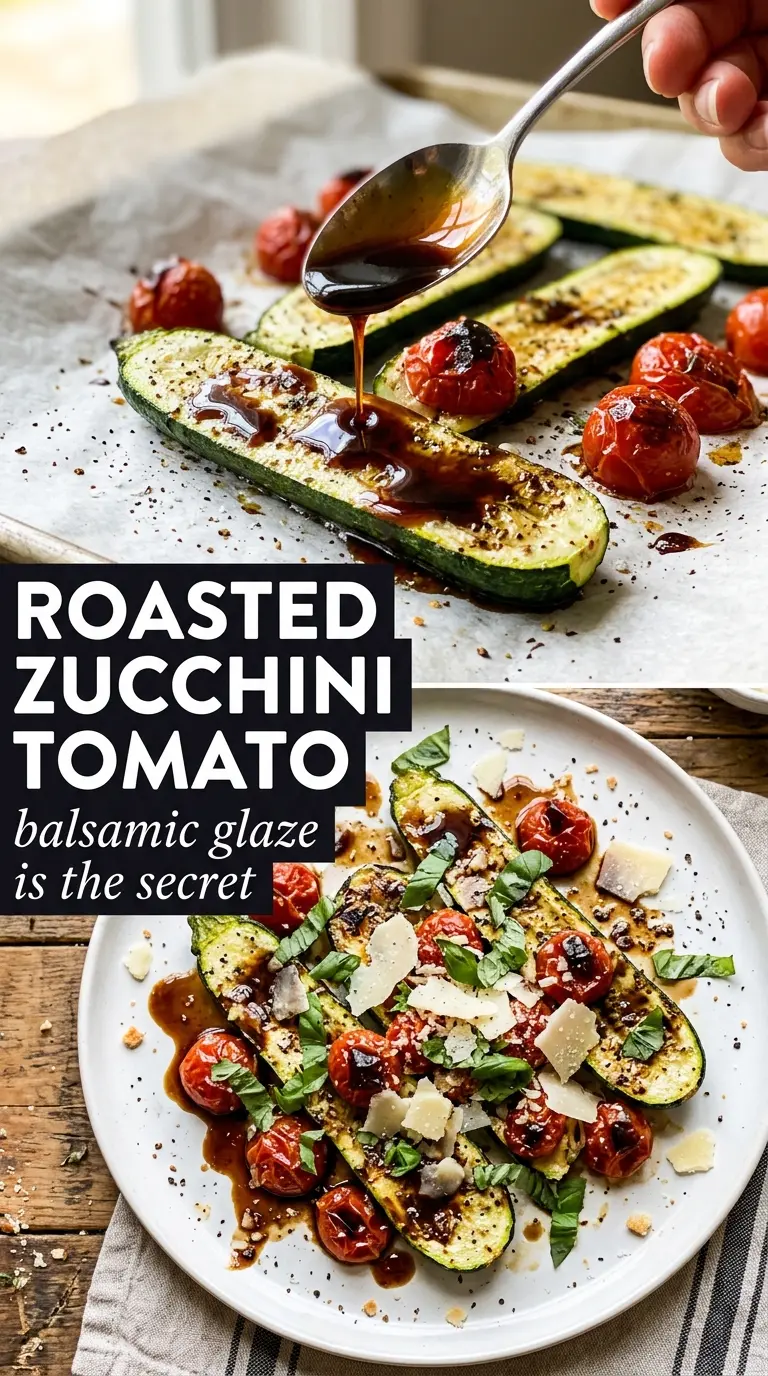
Olive oil coats the vegetables so they roast instead of dry out, and it helps carry the garlic and seasoning across every piece. Use a decent one, but not your fanciest bottle; the oven does most of the work here.
Garlic and Italian seasoning give the bake its savory backbone. Minced garlic cooks fast, so it perfumes the oil without needing a separate sauté step, while the seasoning adds herbs that taste like they belong with tomatoes.
Parmesan finishes the dish with saltiness and a little nuttiness. Add it after roasting while the vegetables are still hot, or it will clump and dry out instead of melting into the glaze. If you need a dairy-free version, leave it off and finish with a pinch of flaky salt and extra basil.
How to Roast the Vegetables So They Caramelize, Not Steam
Mix the Glaze First
Whisk the olive oil, balsamic vinegar, garlic, Italian seasoning, honey, salt, and pepper before the vegetables go in. That keeps the seasoning evenly distributed and prevents dry spots on the pan. The mixture should look loose and glossy, not thick like dressing. If the garlic sits in one clump, it can burn on the sheet pan before the vegetables are done.
Coat and Spread Everything Out
Toss the zucchini and tomatoes until every piece is lightly coated, then spread them out with space between pieces. You want the vegetables touching the pan, not piled up. The first sign you’re on track is the sound when they hit the hot sheet pan: a soft sizzle, not a wet hiss. If there’s a puddle of liquid under them before they go into the oven, the pan is overcrowded.
Roast Until the Edges Turn Dark
Roast for 20 to 25 minutes, checking for golden zucchini edges and tomatoes that have burst and started to wrinkle. The balsamic will darken and thicken on the pan, and that’s exactly what you want. Pull the tray when the zucchini is tender but still has shape. If you wait until everything looks soft and uniformly brown, the tomatoes lose their brightness and the zucchini turns mushy.
Finish While It’s Hot
Scatter the parmesan over the vegetables right out of the oven so it melts lightly on contact. Then add the basil just before serving so it stays fresh and fragrant. This dish is excellent warm or at room temperature, but the basil should always go on at the end or it will wilt into the pan.
Three Ways to Make This Bake Fit What’s in Your Kitchen
Dairy-Free Finish
Skip the parmesan and finish with a little extra salt, cracked pepper, and a handful of basil. You lose the salty, savory melt, but the vegetables stay bright and the glaze still carries the dish.
Add Mozzarella for a Heartier Side
Tuck torn mozzarella over the vegetables during the last 3 to 5 minutes of roasting. It melts into soft pockets instead of disappearing the way pre-shredded cheese can, and it turns this into something closer to a vegetable main or meatless dinner.
Use Yellow Squash Alongside the Zucchini
Swap in up to half yellow squash for a milder, slightly sweeter bake. It roasts on the same timeline as zucchini, but it softens a touch faster, so keep the slices on the thicker side if you want more structure.
Make It Ahead for Easy Serving
You can roast the vegetables a few hours ahead and serve them at room temperature. They hold their texture better that way than they do after a long stay in a hot oven, and the balsamic flavor settles in as they sit.
Storage and Reheating
- Refrigerator: Store leftovers in an airtight container for up to 3 days. The zucchini softens a bit, but the flavor stays good.
- Freezer: I don’t recommend freezing this one. Zucchini and tomatoes both lose their texture and turn watery after thawing.
- Reheating: Warm leftovers in a 400°F oven for 8 to 10 minutes or in a skillet over medium heat. Skip the microwave if you can; it pushes the vegetables into a softer, wetter texture.
Questions I Get Asked About This Recipe
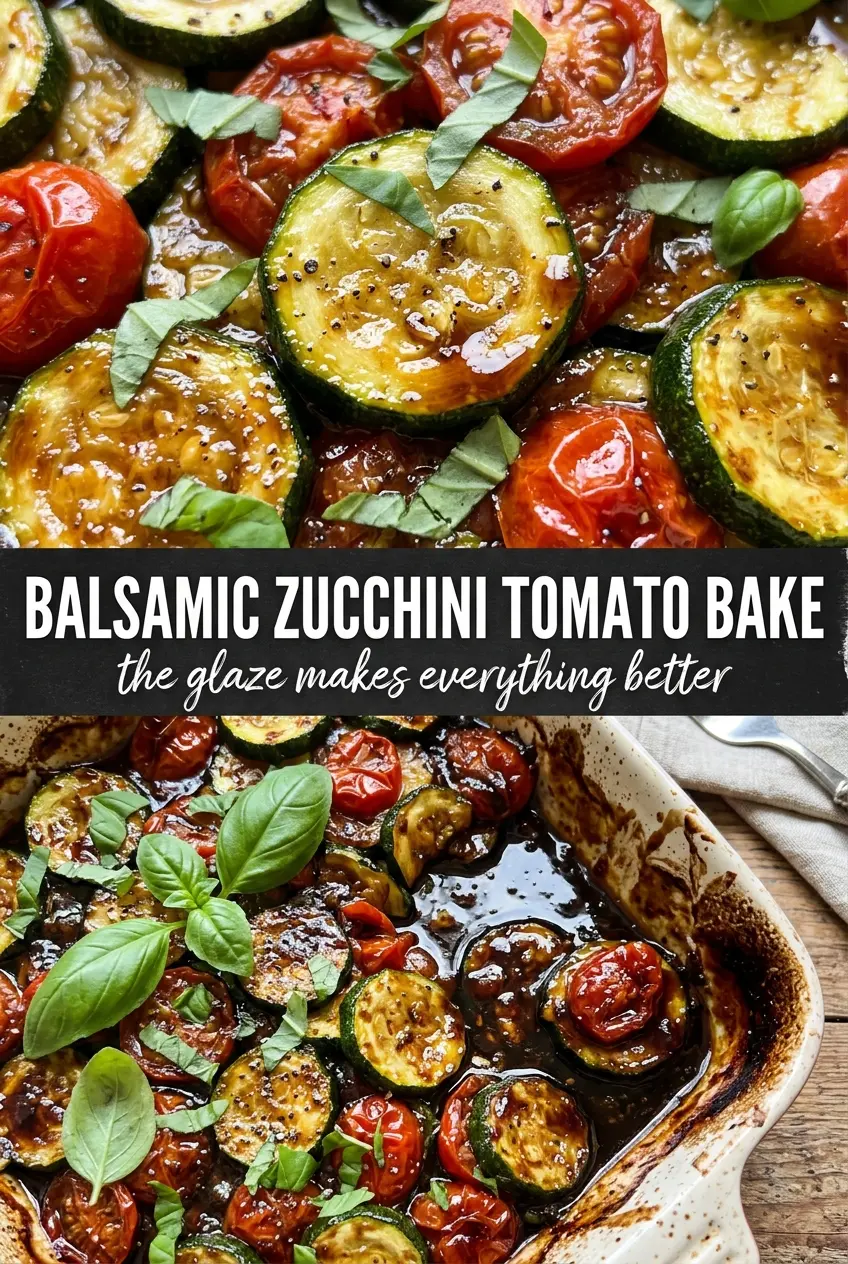
Balsamic Zucchini Tomato Bake
Ingredients
Equipment
Method
- Preheat the oven to 425°F and line a large baking sheet with parchment.
- Whisk olive oil, balsamic vinegar, garlic, Italian seasoning, honey, salt, and black pepper together until combined.
- Toss zucchini rounds and cherry tomatoes in the balsamic mixture until evenly coated.
- Spread the vegetables in a single layer on the baking sheet without crowding.
- Roast for 20–25 minutes at 425°F until zucchini is golden and tomatoes have burst and caramelized.
- Sprinkle parmesan over the hot vegetables and let it melt slightly.
- Garnish with fresh basil and serve warm or at room temperature.