Juicy chicken breasts, a glossy balsamic pan sauce, and melted mozzarella make this one of those dinners that looks like you spent far more effort than you did. The chicken stays tender because it gets a short marinade, a quick sear, and then finishes in the oven instead of drying out on the stove. The mozzarella softens into little creamy puddles over the top, and the cherry tomatoes bring just enough brightness to keep the whole dish from feeling heavy.
What makes this version work is the balance of acid, fat, and a little sweetness. The balsamic vinegar gives the glaze its backbone, but honey rounds out the sharp edges and helps the sauce cling to the chicken. A spoonful of Dijon doesn’t make it taste mustardy; it just sharpens the sauce and helps everything emulsify a little better while it bakes.
Below, I’m walking through the parts that matter most: how to keep the chicken juicy, why the sear comes before the bake, and what to do if your mozzarella or glaze starts to behave differently than expected. There’s also a storage note that’s worth reading before you cook, because this reheats better than most chicken bakes if you handle it the right way.
The chicken stayed juicy and the balsamic glaze thickened up beautifully in the oven. I was worried the mozzarella would slide right off, but it melted over the top and held everything together once I added the basil.
Love this balsamic baked chicken breast with mozzarella? Save it for the nights when you want a glossy caprese-style dinner with almost no cleanup.
The Trick to Keeping Balsamic Chicken Juicy Instead of Dry
The biggest mistake with baked chicken breast is pushing it through the oven until it turns stringy and chalky. This recipe avoids that by giving the chicken a short marinade, a fast sear, and then a controlled finish in the oven. That sequence matters because the sear builds flavor on the outside while the oven gently carries the center to temperature without overcooking the edges.
The other thing that saves this dish is the sauce timing. The balsamic mixture goes on before baking, which means the chicken bakes in its own seasoned glaze instead of under a separate sauce poured over at the end. That helps the flavor sink into the meat a little, and it keeps the final drizzle of balsamic glaze from having to do all the work.
What the Balsamic, Honey, and Mozzarella Are Each Doing Here
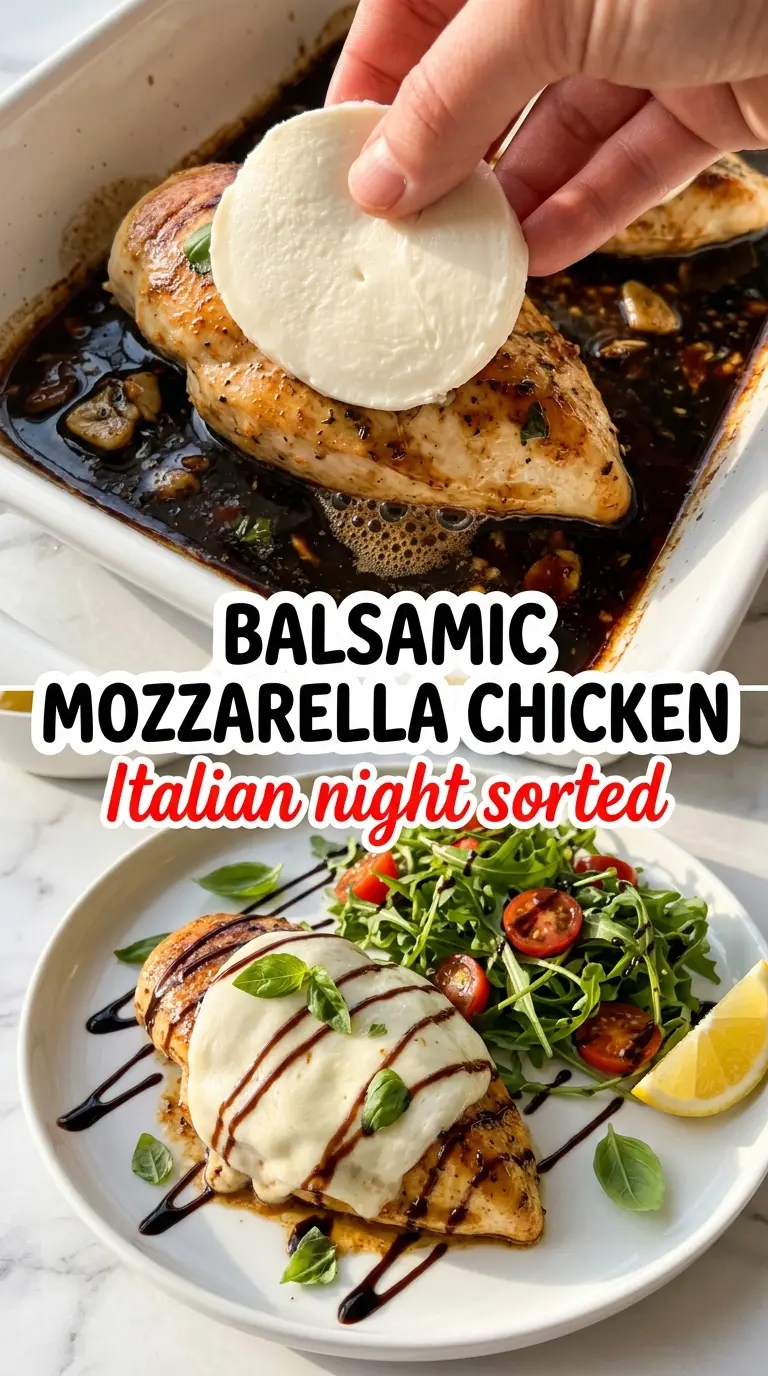
- Balsamic vinegar — This gives the dish its deep, tangy backbone and turns into a dark, glossy glaze as it bakes. Use a decent balsamic here; the cheaper, harsh stuff can taste flat once it reduces.
- Honey — The honey softens the sharpness of the vinegar and helps the marinade cling to the chicken. You can swap in maple syrup in a pinch, but the finish will be a little less rounded and more woodsy.
- Dijon mustard — Just a teaspoon helps the marinade emulsify so it coats the chicken instead of separating into oily patches. Don’t skip it if you want the sauce to bake up smoother.
- Fresh mozzarella — Fresh mozzarella melts into creamy, milky pools that suit the caprese-style finish. Shredded mozzarella works if that’s what you have, but it won’t give you the same soft, lush top.
- Cherry tomatoes and basil — These are not just garnish. The tomatoes burst a little in the oven and the basil lifts the whole dish at the end, which keeps the rich chicken and cheese from feeling heavy.
Building the Glaze, Sear, and Finish Without Losing the Chicken
Mixing the Marinade
Whisk the balsamic vinegar, olive oil, honey, garlic, and Dijon until the mixture looks glossy and unified, not separated. That’s the base that will coat the chicken and become part of the sauce in the pan. Season the chicken directly before it goes into the marinade so the seasoning actually sticks to the meat. Let it sit for 20 minutes; longer isn’t necessary here, and an overly long soak can make the surface a little mushy.
Getting a Real Sear
Use a hot oven-safe skillet and give the chicken three minutes per side until the surface turns golden and releases without fighting you. If it sticks, it’s not ready yet. The goal isn’t to cook it through on the stove; it’s to build color and flavor before the oven takes over. If the pan is overcrowded, the chicken will steam instead of sear, so work in batches if needed.
Finishing in the Oven
Pour in the remaining marinade and move the skillet into the oven right away. Bake until the thickest part of the chicken hits 165°F, but start checking a few minutes early because breast size varies a lot. Pulling it at the right moment matters more than the timer. If you wait until it looks dry on the outside, you’ve already gone too far.
Melting the Mozzarella and Adding the Tomatoes
Once the chicken comes out, top it with mozzarella slices and halved cherry tomatoes, then return it to the oven just long enough to melt the cheese. You want soft, glossy cheese with some shape left, not a fully collapsed puddle. Finish with balsamic glaze and basil after baking so the herbs stay fresh and the glaze keeps its punch instead of disappearing into the heat.
How to Adapt This Baked Chicken for Different Tables
Make It Dairy-Free
Skip the mozzarella and finish with extra tomatoes plus a handful of torn basil. You lose the creamy top layer, but the balsamic glaze and olive oil still carry the dish, so it stays bright and satisfying.
Use Chicken Thighs Instead
Boneless skinless thighs work well if you want a richer, more forgiving result. They usually need a little longer in the oven, but they stay juicy even if your timing runs a few minutes long.
Make It Gluten-Free Without Changing the Dish
This recipe is naturally gluten-free as written, as long as your Dijon and balsamic glaze are certified gluten-free. That means you can serve it the same way without changing the method or texture.
Storage and Reheating
- Refrigerator: Store leftovers in an airtight container for up to 3 days. The mozzarella will firm up a bit, but the flavor holds well.
- Freezer: Freeze only the chicken and sauce if you want the best texture; the fresh mozzarella and tomatoes don’t thaw well. Wrap tightly and freeze for up to 2 months.
- Reheating: Warm gently in a 325°F oven, covered loosely with foil, until hot through. The common mistake is blasting it in the microwave, which makes the chicken tough and the cheese rubbery.
Answers to the Questions Worth Asking
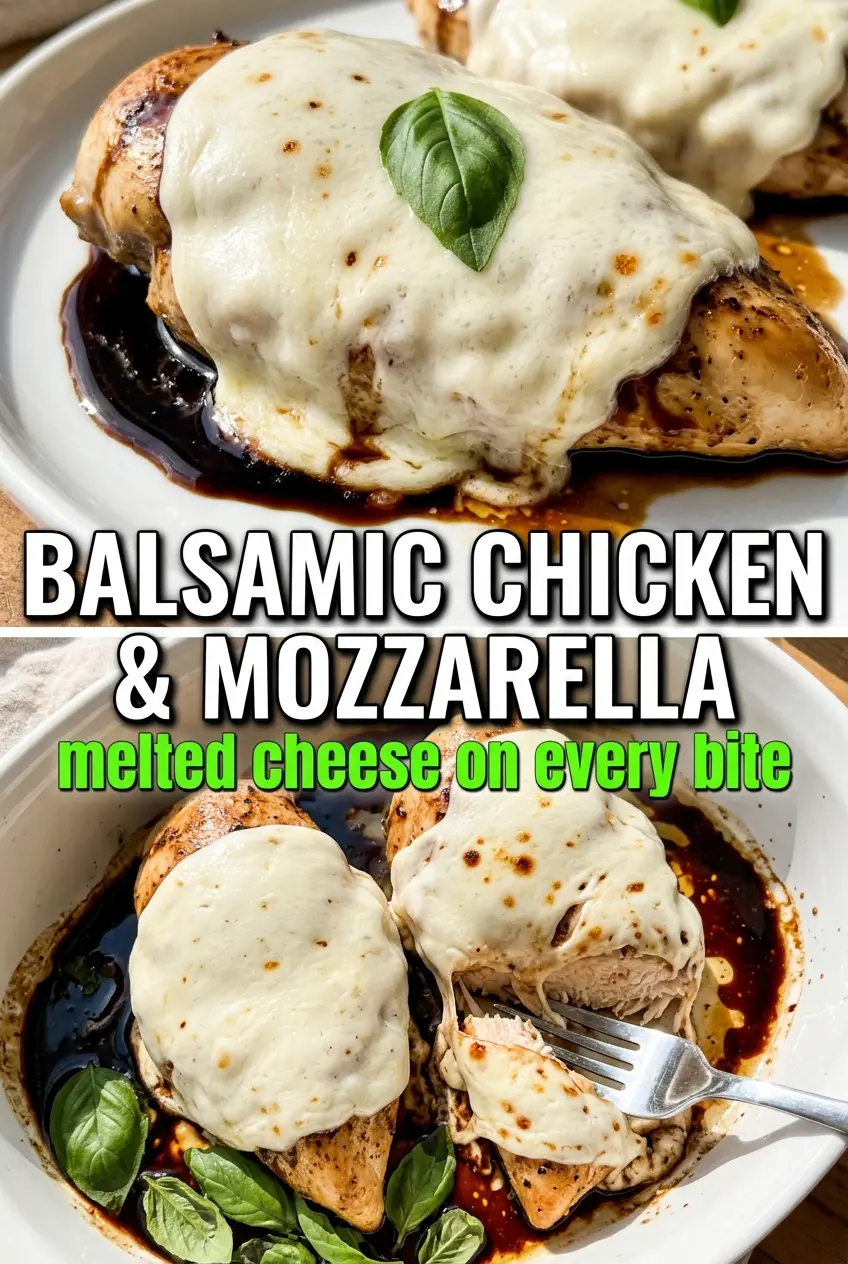
Balsamic Baked Chicken Breast with Mozzarella
Ingredients
Equipment
Method
- Whisk together balsamic vinegar, olive oil, honey, minced garlic, and Dijon mustard, then season with salt, pepper, garlic powder, and Italian seasoning. Marinate the chicken in the mixture for 20 minutes, reserving some marinade.
- Preheat the oven to 400°F, then sear the marinated chicken in an oven-safe skillet over medium-high heat for 3 minutes per side until golden.
- Transfer the skillet to the oven with the remaining marinade and bake for 18-20 minutes until the internal temperature reaches 165°F.
- Remove the skillet from the oven and top each chicken breast with mozzarella slices and halved cherry tomatoes, then return to the oven for 4-5 minutes until the cheese is melted.
- Drizzle with balsamic glaze and garnish with fresh basil leaves before serving.