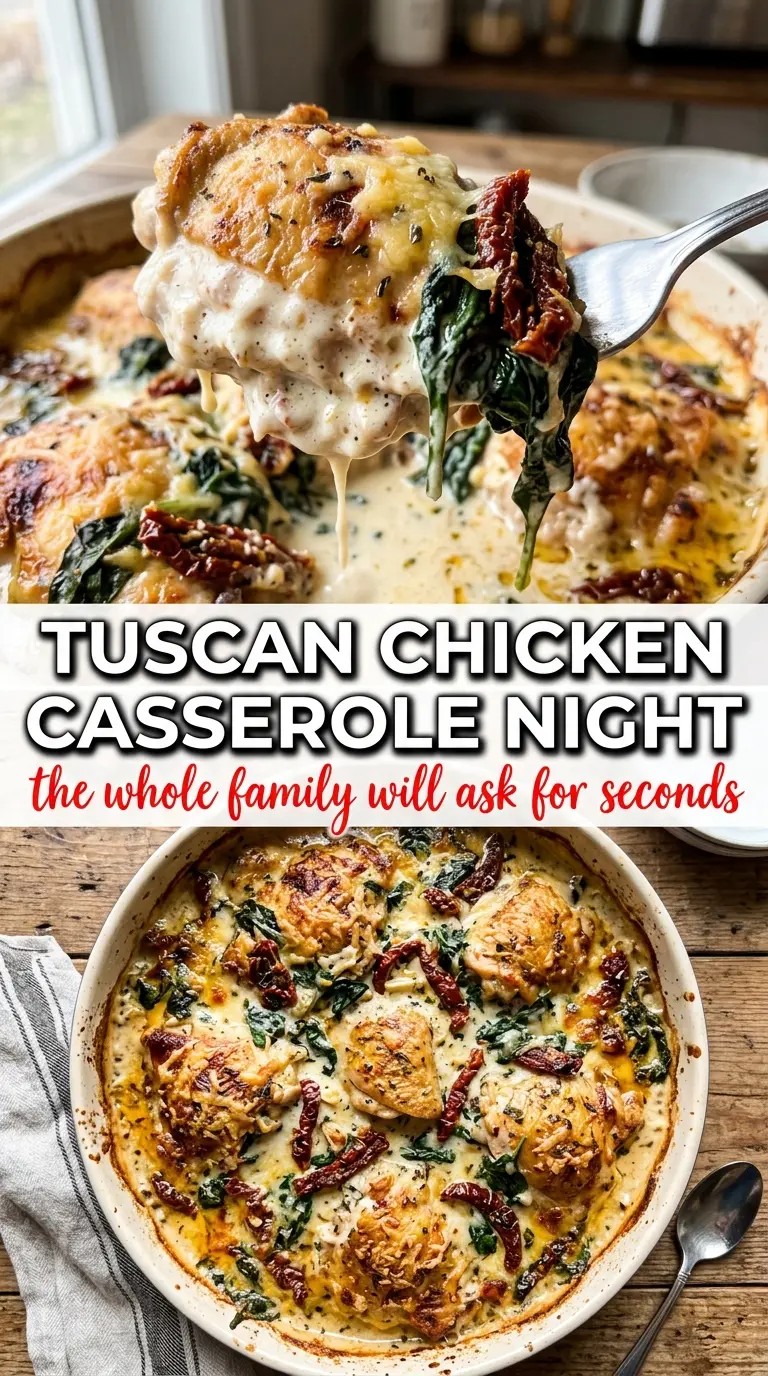
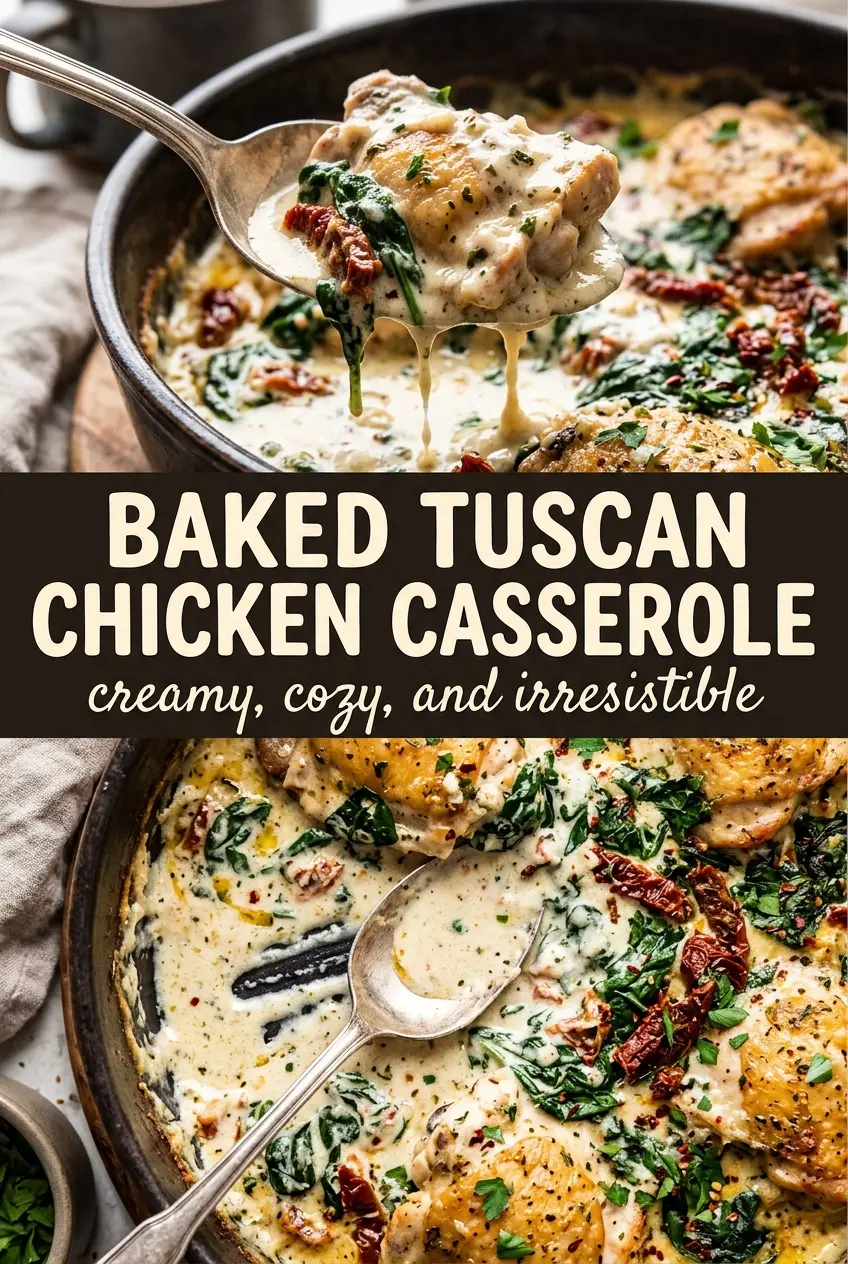
Golden chicken thighs tucked into a creamy sun-dried tomato sauce are the kind of dinner that disappears fast and still feels like something worth sitting down for. The skin stays crisp enough to stand up to the sauce, while the Parmesan cream underneath turns silky and rich with little pops of tomato and herb in every bite. It’s comforting without turning heavy in the pan.
What keeps this casserole from tasting flat is the order of operations. The chicken gets a hard sear first, which builds flavor and protects the skin from going rubbery in the oven. Then the garlic and sun-dried tomatoes go into the same pan, so the sauce picks up all those browned bits before the broth and cream go in. That’s where the depth comes from. The spinach goes in at the end so it stays bright instead of melting into nothing.
Below, I’ve included the small details that matter here: how to keep the cream sauce from turning grainy, which substitutions hold up, and what to watch for when the chicken finishes in the oven. If you’ve made creamy chicken bakes that came out dull or broken before, this version is built to avoid exactly that.
The chicken skin stayed crisp even under the sauce, and the Parmesan cream thickened up beautifully in the oven. I was worried the spinach would disappear, but it stayed fresh and gave the whole dish a nice balance.
Save this baked Tuscan chicken casserole for the nights when you want crisp chicken, silky Parmesan sauce, and one pan to do the work.
The Part Most Creamy Chicken Bakes Get Wrong
The sauce only stays smooth when the pan isn’t screaming hot by the time the dairy goes in. If you add cream directly onto high heat after searing, the fat can separate and the Parmesan can go grainy instead of melting into the broth. Pull the pan back to a steady medium-low before you stir in the cream, and the sauce will thicken as it bakes instead of breaking on the stove.
The other mistake is skipping the deglaze. Those browned bits from the chicken are not burnt scraps; they’re the backbone of the sauce. A quick splash of broth loosens them, and once they lift into the cream, the whole dish tastes fuller and more cooked-through.
- Chicken thighs — Bone-in, skin-on thighs stay juicy through the bake and give you the crisp top this casserole needs. Chicken breasts can work, but they dry out faster and don’t bring the same richness.
- Sun-dried tomatoes in oil — These bring concentrated tomato flavor and a little built-in fat that helps the sauce taste rounder. Drain them before slicing, but don’t rinse away all the oil unless the jar is especially greasy.
- Heavy cream — This is what gives the sauce body without curdling in the oven. Half-and-half is a weaker swap and can work in a pinch, but the sauce will be thinner and less stable.
- Parmesan cheese — Freshly grated Parmesan melts best and gives the sauce its salty, nutty edge. Pre-shredded cheese often has anti-caking starches that can leave the sauce slightly sandy.
- Baby spinach — It wilts fast and keeps some shape, which matters here because it lightens the casserole without turning it into a puree. Add it at the end so it stays green and doesn’t disappear into the sauce.
What Each Ingredient Is Actually Doing in This Chicken Dish
- Chicken (cut into uniform pieces or whole) — Pat dry so it browns. Even thickness ensures uniform cooking.
- Oil or butter (the browning medium) — High-heat oil essential for proper searing. Creates pan flavor.
- Seasonings (salt, pepper, spices) — Don’t hold back. Chicken carries the entire flavor profile.
- Aromatics (garlic, onion, herbs) — Cook with fat to bloom flavors. Become the foundation of the dish.
- Sauce or braising liquid (cream, broth, or tomato) — This keeps chicken moist. Balance richness with acid.
- Vegetables (if using) — Layer by cooking time so everything finishes together.
- Acid (lemon, vinegar, or wine) — This brightens and prevents one-dimensional flavor.
- Proper doneness (165°F internal temperature) — Use a thermometer for accuracy. Overcooked is dry.
Getting the Chicken Skin Crisp Before It Meets the Sauce
Season the chicken with enough confidence
Coat the thighs on both sides with salt, pepper, garlic powder, Italian seasoning, and smoked paprika. The seasoning needs to go on before the pan, not after, because the skin can only build flavor where the spice actually touches it. Let the chicken sit while the oven heats so the salt starts pulling moisture to the surface, which helps the skin brown more evenly.
Sear until the skin releases on its own
Place the thighs skin-side down in hot olive oil and leave them alone until the skin is deeply golden and no longer stuck to the pan. If you force the flip too early, the skin tears and stays pale. Six to seven minutes is the range here, but the real cue is color and release, not the clock.
Build the sauce in the same pan
After the chicken comes out, cook the garlic and sun-dried tomatoes for about a minute, just until fragrant. Then add the broth and scrape the bottom well. Once the heat comes down a little, stir in the cream, Parmesan, Italian seasoning, and red pepper flakes until the sauce looks smooth and lightly thickened. If the Parmesan clumps, the pan is too hot.
Bake until the sauce bubbles at the edges
Return the chicken skin-side up and bake uncovered. You want the sauce gently bubbling around the edges and the chicken reaching 165°F at the thickest part. The uncovered bake matters because it lets the top stay defined and the sauce reduce a little instead of turning soupy.
Finish with the spinach at the end
Stir in the spinach after the pan comes out of the oven. It only needs a minute or two to wilt from the residual heat, and that keeps the leaves tender instead of mushy. Add the basil right before serving so it stays fragrant and fresh against the rich sauce.
How to Adapt This Baked Tuscan Chicken When You Need a Different Finish
Make it dairy-free without losing the creamy texture
Use full-fat canned coconut milk instead of heavy cream and swap the Parmesan for a dairy-free Parmesan-style cheese that melts well. The sauce will taste a little different and carry a subtle coconut note, but the body stays close to the original if you keep the heat gentle.
Use chicken breasts for a leaner casserole
Boneless skinless breasts work, but they need less oven time and won’t give you the same crispy finish. Sear them briefly, then bake just until they hit 165°F so they don’t dry out in the cream sauce.
Make it gluten-free with no real changes
This recipe is naturally gluten-free as written, as long as your broth and Parmesan are labeled gluten-free. The sauce thickens from reduction and cheese, not flour, so you don’t need a separate starch to get it right.
Stretch it with vegetables for a bigger meal
Add sliced mushrooms or chopped zucchini when you cook the garlic and tomatoes. Mushrooms deepen the sauce; zucchini softens faster and adds volume without changing the flavor much. Just don’t crowd the pan so much that the vegetables steam instead of browning.
Storage and Reheating
- Refrigerator: Store leftovers in an airtight container for up to 3 days. The sauce will thicken as it chills.
- Freezer: It can be frozen, but the cream sauce may separate a little when thawed. For the best texture, freeze the chicken and sauce together only if you don’t mind a slightly less silky finish.
- Reheating: Rewarm gently on the stovetop or in a covered oven-safe dish at 325°F until hot. Add a splash of broth or cream if the sauce looks tight. High heat is the fastest way to break the sauce and dry out the chicken.
Answers to the Questions Worth Asking
Baked Tuscan Chicken Casserole
Ingredients
Equipment
Method
- Preheat the oven to 400°F and season the chicken thighs with salt, pepper, garlic powder, Italian seasoning, and smoked paprika.
- Heat olive oil in a large oven-safe skillet or braiser and sear the chicken skin-side down for 6-7 minutes until deeply golden.
- Flip the chicken and sear for 3 more minutes, then remove the chicken to a plate.
- Cook the minced garlic and sliced sun-dried tomatoes in the same pan for 1 minute.
- Pour in the chicken broth and deglaze, stirring to lift browned bits from the bottom.
- Stir in the heavy cream, Parmesan, Italian seasoning, and red pepper flakes until the sauce looks smooth and begins to thicken.
- Return the chicken skin-side up to the pan, setting it into the sauce.
- Bake uncovered for 20-22 minutes at 400°F until the chicken reaches 165°F and the sauce bubbles around the edges.
- Stir in the baby spinach into the hot sauce until wilted and bright green.
- Garnish with fresh basil and serve once the sauce is a silky pool beneath the chicken.