Baked ratatouille is the kind of vegetable dish that looks like it took all day, then earns its keep the second you cut into it. The vegetables turn tender at the center, a little caramelized at the edges, and the tomato sauce underneath pulls everything together without turning watery or muddy. It’s the sort of pan you set on the table and watch people go quiet for a minute before they reach for bread.
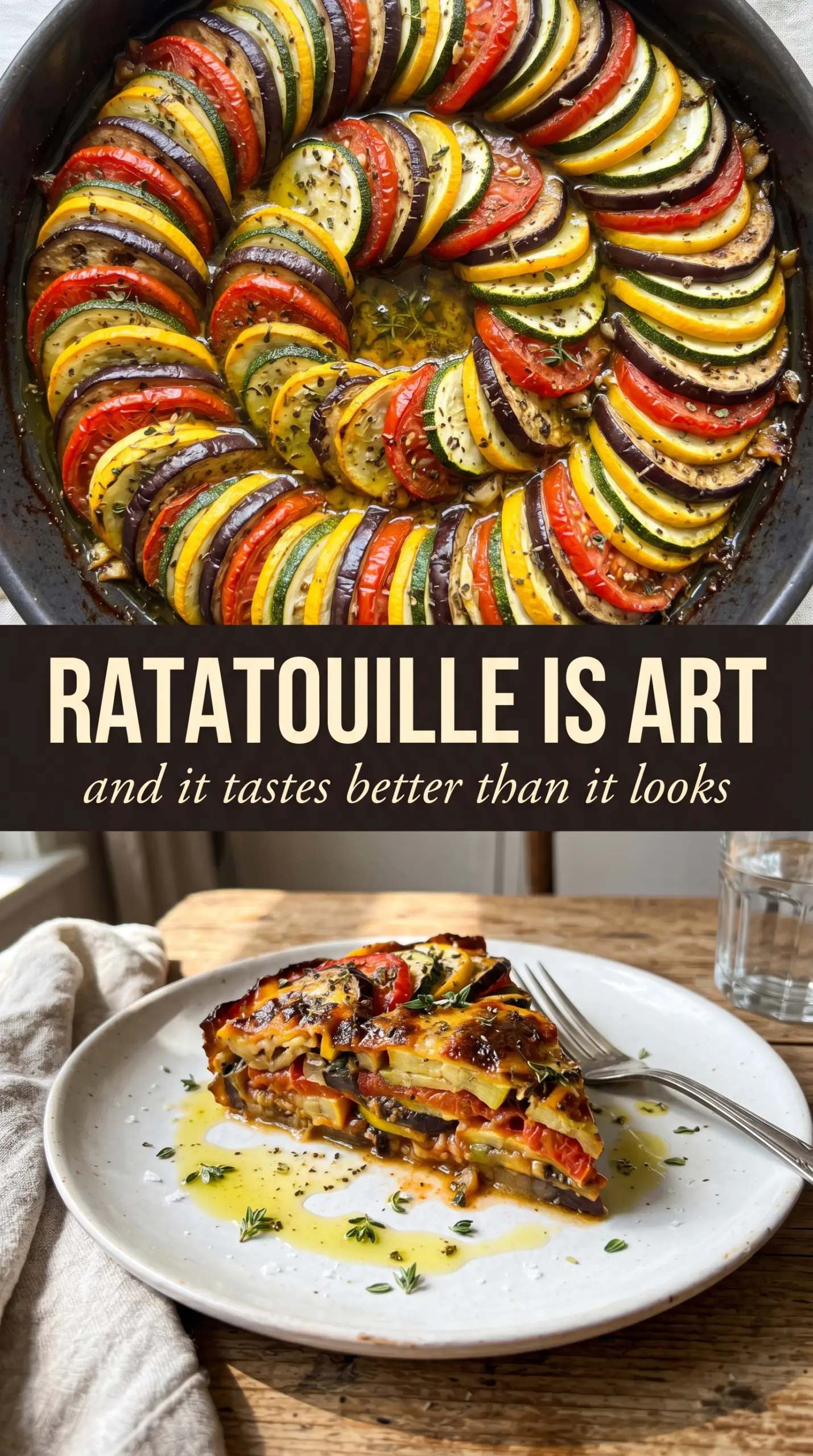
The trick is slicing the vegetables thin enough that they soften at the same pace, then tucking them into a tight pattern so they steam just enough under the parchment before they finish uncovered. The sauce matters too. It should be thick and seasoned on its own, because the vegetables will release moisture as they bake. If the base is thin, the whole dish turns soupy instead of glossy and layered.
Below you’ll find the way I keep the vegetables neat, the sauce balanced, and the top bronzed without drying out the middle. There’s also a smart way to adapt it if your zucchini are huge, your tomatoes are underwhelming, or you want to turn this into a proper make-ahead meal.
I’ve made ratatouille before, but this was the first time the vegetables stayed distinct and the sauce didn’t pool up under the center. Covering it with parchment kept everything tender, and the last 15 minutes uncovered gave me those caramelized edges I was hoping for.
Save this baked ratatouille for the night you want those neat vegetable spirals, a rich tomato base, and browned edges all in one pan.
The part that keeps baked ratatouille from turning soggy
The biggest mistake with ratatouille is treating the vegetables like they’ll all behave the same way in the oven. They won’t. Tomatoes shed moisture fast, eggplant drinks up oil, and zucchini can go from tender to limp if the slices are too thick. When the slices are cut evenly and arranged tightly, they soften together instead of collapsing into a puddle.
The sauce underneath has one job: anchor the vegetables and carry flavor. It should be thick enough to spread, not pour. If it’s loose, the vegetables float and steam in the wrong way. A short simmer after the tomatoes go in gives the sauce body and keeps the final dish looking defined instead of watery.
- Eggplant — Thin slices are important here because eggplant needs time to soften and mellow. If your eggplant is especially large, salt the slices lightly and let them sit for 10 minutes, then blot them dry; that pulls off some bitterness and helps them roast instead of tasting spongy.
- Zucchini and yellow squash — These bring the tender, silky texture that makes the dish feel lush. A mandoline gives the most even slices, and even thickness matters more than exact diameter.
- Roma tomatoes — Roma tomatoes hold their shape better than juicy slicing tomatoes, so the top stays neat. If your tomatoes are very wet, lay the slices on paper towels for a few minutes before assembling.
- Crushed tomatoes — This is the base that keeps the dish from tasting like plain roasted vegetables. Use a brand you like; this is one place where flavor matters more than price, because the sauce doesn’t have much else to hide behind.
- Herbes de Provence and thyme — These give the dish its Provençal backbone. Fresh thyme on top is worth it, but dried thyme in the sauce works fine if that’s what you have.
What Each Ingredient Is Actually Doing in This Recipe
- Primary ingredient (the star) — Quality matters most. Choose the best you can find.
- Cooking medium (oil, butter, or broth) — This carries flavors and prevents dryness.
- Seasonings (salt, pepper, spices, herbs) — Layer flavors so nothing overpowers. Build depth gradually.
- Aromatics (garlic, onion, herbs) — Cook with fat to bloom flavors. Become the foundation.
- Supporting ingredients — Complement the main ingredient without overpowering it.
- Sauce or liquid (if applicable) — Brings flavors together. Balance richness with acid.
- Acid (lemon, vinegar, wine, or other) — Brightens and prevents flat-tasting results.
- Final finish (garnish, glaze, or sauce) — Prevents one-dimensional taste and adds visual appeal.
How to layer the vegetables so they bake, not stew
Building the sauce first
Start by softening the shallot and garlic in olive oil until they smell sweet and lose their raw edge. Add the crushed tomatoes, thyme, and herbes de Provence, then let the sauce simmer until it looks thicker and a little glossy. You want it to hold a spoon in a soft mound. If it still looks thin and loose, keep cooking; a watery base is what turns the finished dish soupy.
Cutting the slices evenly
Slice the eggplant, zucchini, yellow squash, and tomatoes very thin, about 1/8 inch. A mandoline makes this much easier, but a sharp knife works if you keep your cuts steady. Uneven slices are the main reason one vegetable turns soft while another still tastes underdone, so keep the thickness as close as you can across all four vegetables.
Getting the pattern tight enough
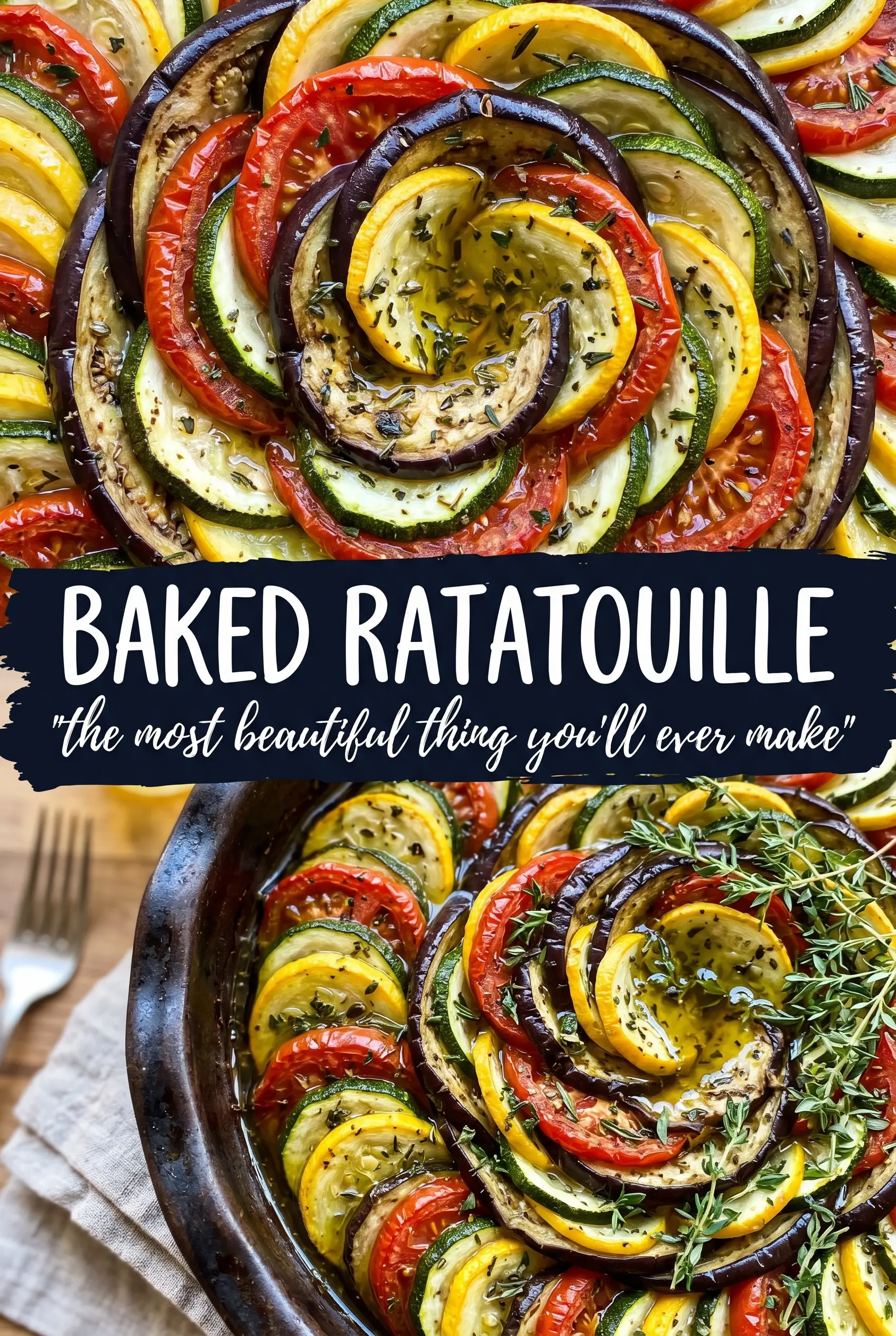
Spoon the sauce into a large oven-safe skillet or baking dish, then start arranging the slices in overlapping concentric circles. Alternate the colors as you go. The pattern is not just for looks; the tight arrangement helps the vegetables support each other while they cook, which keeps the center from collapsing. If you leave gaps, the slices dry out instead of settling into a neat tian.
Covering, then finishing uncovered
Cover the dish with parchment for the first part of the bake so the vegetables steam gently and turn tender without drying out. After 45 minutes, uncover it and let it finish for about 15 minutes until the edges brown and the top looks lightly caramelized. If you uncover it too early, the surface can dry before the center is soft.
Turn it into a more filling main
Serve the ratatouille over creamy polenta, buttered rice, or thick toasted bread if you want it to eat like dinner. The vegetables stay the star, but the extra starch catches the sauce and makes the whole pan feel more substantial.
Make it dairy-free without losing much
Skip the parmesan on top and finish with a little extra olive oil and fresh thyme instead. You’ll lose the salty, nutty finish, but the baked vegetables and tomato sauce already carry plenty of flavor on their own.
Use what your garden gave you
If your squash are huge or your tomatoes are uneven, keep the slices the same thickness and just work with what you have. Larger slices can still bake well, but they’ll need a little more time under the parchment before they soften all the way through.
Storage and Reheating
- Refrigerator: Store leftovers in a covered container for up to 4 days. The vegetables soften more as they sit, but the flavor deepens.
- Freezer: It freezes, but the texture gets softer after thawing, especially the zucchini. Freeze only if you don’t mind a more rustic result, and thaw overnight in the fridge before reheating.
- Reheating: Warm it in a 350°F oven, covered loosely with foil, until hot through. The oven keeps the top from turning soggy; the microwave tends to make the vegetables collapse and the sauce separate.
Questions I Get Asked About This Recipe
Baked Ratatouille
Ingredients
Equipment
Method
- Preheat oven to 375°F.
- Heat 3 tablespoons olive oil in an oven-safe skillet over medium heat and sauté diced shallot and minced garlic for 3 minutes.
- Add crushed tomatoes, fresh thyme, and herbes de Provence, then simmer for 10 minutes.
- Season with salt and pepper to taste and spread the sauce on the bottom of the large oven-safe skillet or baking dish.
- Slice all vegetables very thin (about 1/8 inch), using a mandoline if available.
- Arrange overlapping slices of eggplant, zucchini, yellow squash, and roma tomatoes in tight concentric circles over the sauce, alternating colors.
- Drizzle generously with extra olive oil, then season with salt, pepper, and fresh thyme leaves.
- Cover with parchment and bake for 45 minutes at 375°F.
- Uncover and bake for 15 more minutes at 375°F until vegetables are tender and edges are caramelized.
- Serve baked ratatouille with crusty bread or over polenta.