Apple Crisp Coffee Cake bakes up with a tender, sour cream-rich crumb, a layer of cinnamon-kissed apples, and a thick oat crumble that turns crisp and golden on top. It’s the kind of breakfast cake that slices cleanly, stays moist for days, and tastes like it was meant to sit next to a hot mug of coffee.
The sour cream keeps the cake soft without making it heavy, and the apple pieces bake right into the batter so every slice has pockets of fruit instead of a soggy middle. The topping matters just as much as the cake: cold butter cut into the oat mixture gives you those clumpy, craggy bits that brown instead of melting flat. That contrast is what makes this more than a plain apple cake.
Below, I’ve included the detail that keeps the crumble crisp, a few smart swaps, and the storage note that matters most if you want the topping to stay worth eating on day two.
The crumble stayed chunky and crisp, and the apples baked into the cake without turning mushy. I brought it to a brunch and there wasn’t a crumb left.
Save this Apple Crisp Coffee Cake for the mornings when you want a buttery coffee cake with a true oat crumble crown.
The Crumble Stays Crisp Because the Butter Stays Cold
Most coffee cakes with a streusel top lose their texture because the butter softens too much before baking. Once that happens, the topping melts into the batter and you get a sugary lid instead of a real crisp crumble. Cold butter, cut into the oat mixture until it forms uneven clumps, is what gives you those crunchy peaks and browned edges.
There’s another small detail that matters here: the topping gets refrigerated while you mix the cake. That extra chill keeps the butter from disappearing in the oven too soon, so the crumble has time to set before it starts to melt. If your topping looks dusty and sandy, it needs a few more cuts of butter; if it looks paste-like, it’s already too warm.
What the Sour Cream and Apples Are Doing Here
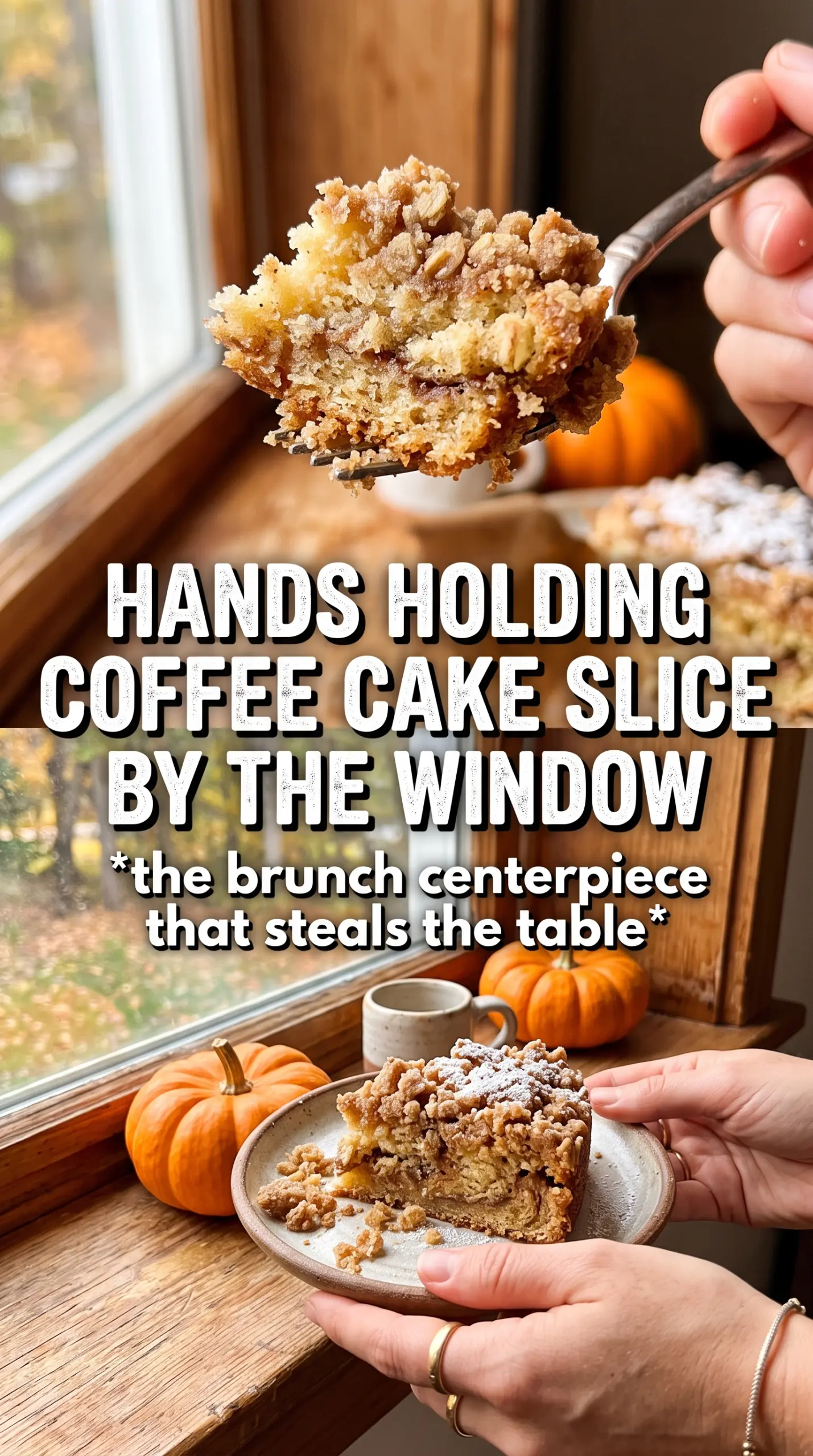
- Sour cream — This keeps the crumb plush and moist without thinning the batter. Full-fat sour cream gives the best texture, but plain Greek yogurt works if that’s what you have; use the thick kind, not a pourable one, or the cake can bake up tighter.
- Apples — Dice them small so they soften inside the cake instead of sinking or staying crunchy. A firm, tart apple like Granny Smith holds its shape best, but Honeycrisp or Braeburn work if you want a sweeter bite. Avoid very soft apples that turn to mush.
- Rolled oats — These bring the crisp, nubby texture that makes the topping taste like apple crisp instead of basic streusel. Quick oats can work in a pinch, but the topping will be less defined and a little denser.
- Brown sugar — This is what gives the crumble its caramel edge and keeps it from tasting flat. Packed light brown sugar is fine; dark brown sugar will push the topping deeper and molasses-heavy.
Building the Batter and Keeping the Topper Separate
Mix the crumble first
Start with the topping so it can chill while you make the batter. Combine the oats, flour, brown sugar, cinnamon, and salt, then cut in the cold butter until the mixture forms clumps the size of peas and small pebbles. If you overwork it into a paste, it will bake up dense instead of crisp.
Make the cake base without overbeating it
Cream the butter and sugar until it looks light and fluffy, then add the eggs and vanilla before the sour cream. Once the flour mixture goes in, stop mixing as soon as the dry streaks disappear. Overmixing develops the gluten in the flour and turns a soft breakfast cake into something tough and bready.
Fold in the apples and bake generously
Fold the diced apples in by hand so they stay evenly distributed. Spread the batter into a greased 9×13 baking dish, then scatter the crumble over the top in a thick layer. Bake until the top is deep golden and a toothpick comes out clean from the cake portion, not the apple pockets, which can stay a little moist.
How to Adapt the Cake Without Losing the Crumble
Dairy-Free Version
Use plant-based butter for both the cake and the topping, and swap the sour cream for a thick dairy-free yogurt. The texture will still be soft and moist, though the flavor will be a little less rich than the original.
Gluten-Free Swap
Use a 1:1 gluten-free baking flour in the cake and certified gluten-free oats in the topping. The crumb will be slightly more delicate, so let the cake cool fully before slicing.
Pear Instead of Apple
Firm pears work well if they’re the only fruit on hand, but use them before they get overly ripe. Pears bake down faster than apples, so the cake will taste softer and a little more delicate, with less sharp contrast against the crumble.
Storage and Reheating
- Refrigerator: Store covered for up to 4 days. The crumble softens a bit in the fridge, but the cake stays moist.
- Freezer: Freeze individual slices tightly wrapped for up to 2 months. Thaw in the fridge so the topping doesn’t turn soggy from sudden moisture.
- Reheating: Warm slices in a 300F oven for 8 to 10 minutes. The oven brings the topping back to life better than the microwave, which tends to soften the crumble and make the edges rubbery.
Answers to the Questions Worth Asking
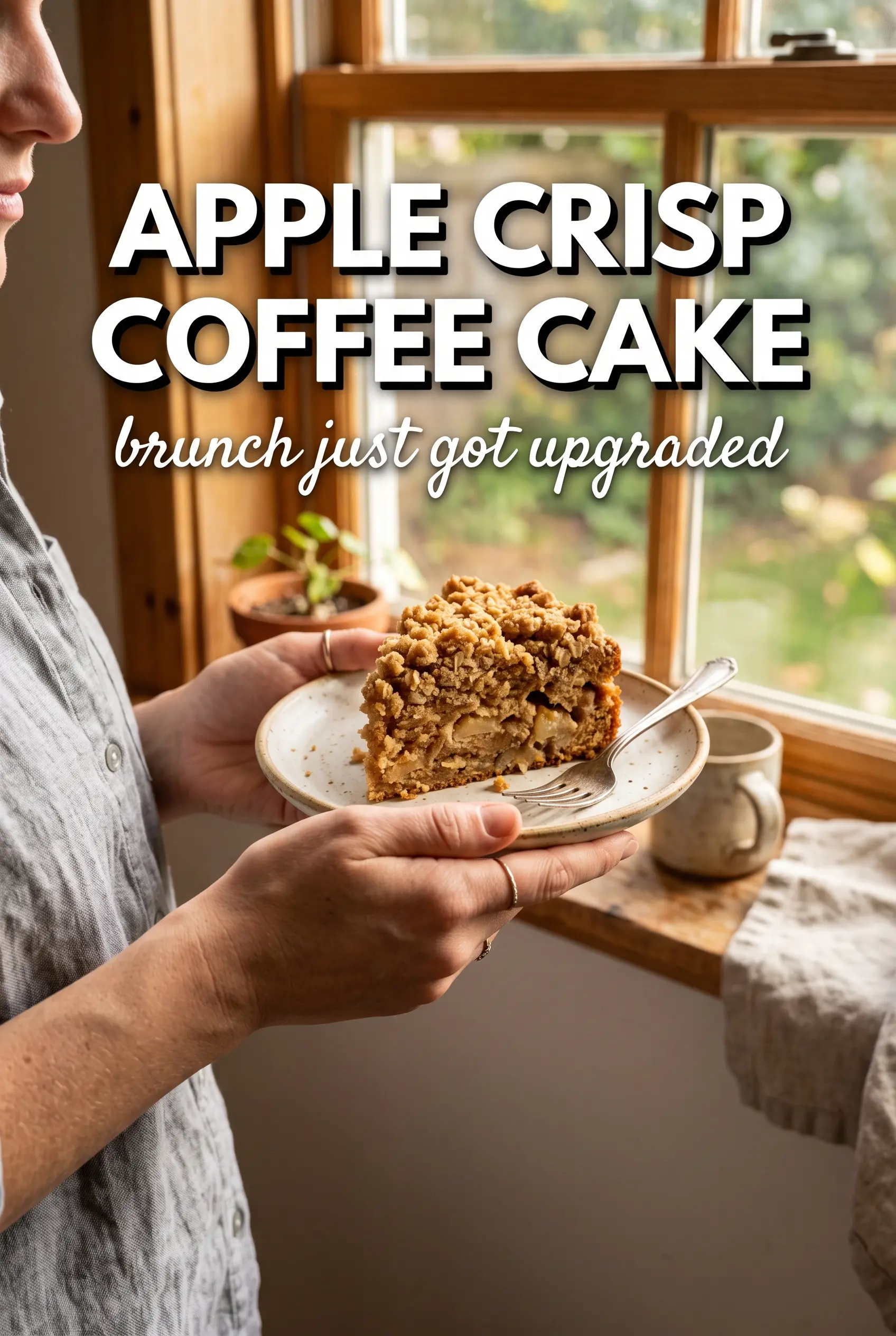
Apple Crisp Coffee Cake
Ingredients
Equipment
Method
- Preheat the oven to 350F and grease a 9x13 baking dish.
- Make apple crisp topping by combining rolled oats, all-purpose flour, brown sugar, cinnamon, and salt, then cut in cold cubed butter until clumpy.
- Refrigerate the topping while you prepare the cake.
- Whisk together all-purpose flour, baking powder, baking soda, cinnamon, and salt until evenly combined.
- Beat softened unsalted butter and granulated sugar until fluffy, then beat in eggs and vanilla.
- Beat in sour cream until the batter looks smooth.
- Fold the flour mixture into the wet ingredients, then fold in diced apples.
- Spread the batter into the prepared pan, then scatter the oat crumble generously over the top.
- Bake at 350F for 50-55 minutes until a toothpick comes out clean and the crumble is golden.
- Let the coffee cake cool briefly, then dust with powdered sugar if desired.