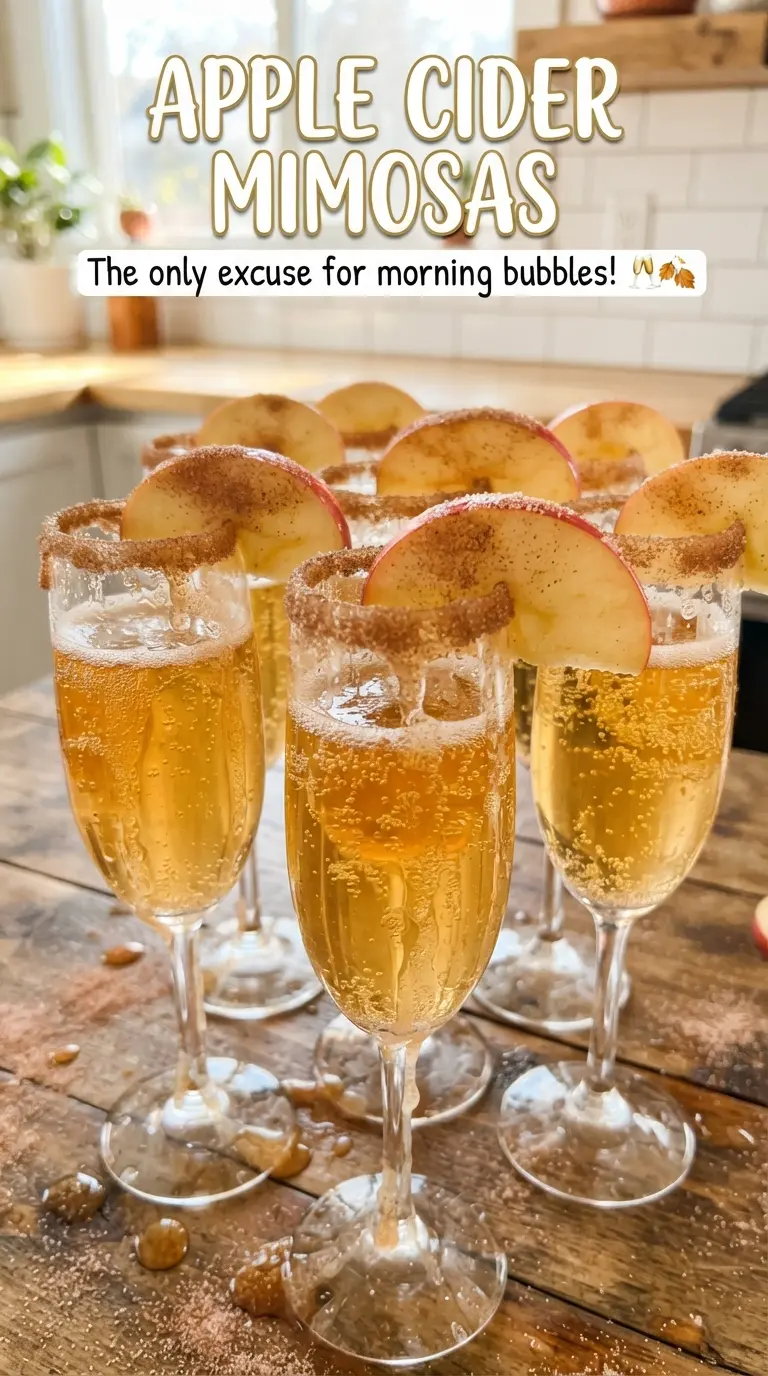
Apple cider mimosas land right in that sweet spot between festive and effortless. The cider gives each glass a crisp, autumn-leaning fruitiness, while the champagne keeps everything light and bright instead of turning it into a heavy punch. The cinnamon sugar rim is the part people notice first, but the real trick is how the bubbles lift the cider and make the whole drink taste cleaner and sharper.
This version works because the ingredients stay cold. Warm cider flattens the bubbles, and that’s the fastest way to end up with a drink that tastes dull before it reaches the table. I also like using a modest amount of sugar and cinnamon on the rim so it reads as aromatic, not gritty. Thin apple slices finish it off without weighing the glass down.
Below, I’ve included the small details that matter most: how to rim the glasses neatly, what happens if your cider is too sweet, and how to batch these for a group without losing the fizz.
The cinnamon sugar stuck to the rim perfectly, and the cider-to-champagne ratio kept the mimosas crisp instead of too sweet. I served them for brunch and everyone asked what I put in them.
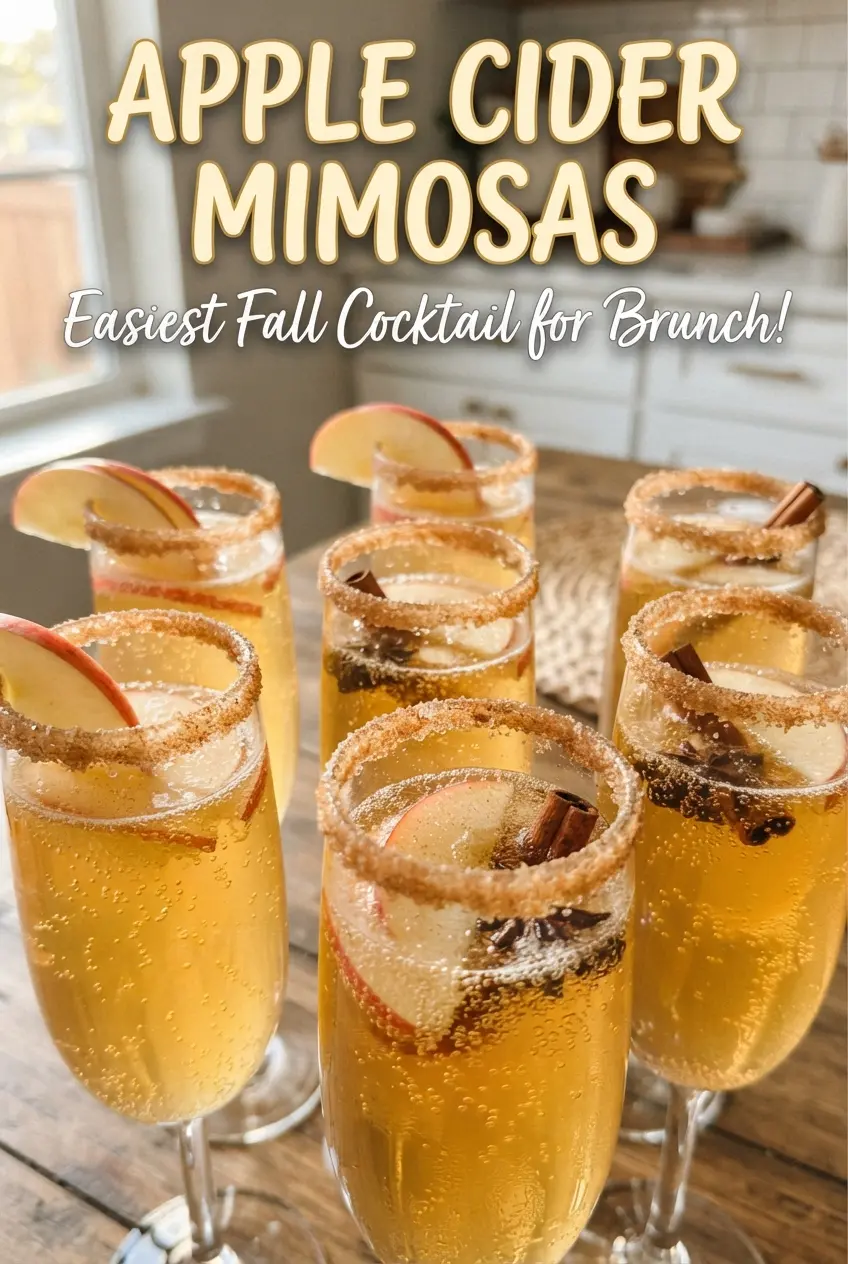
Cinnamon-sugar apple cider mimosas are the easiest way to turn a simple brunch into something that feels special.
The Part That Keeps the Bubbles Alive
The mistake people make with sparkling drinks is building them too early or stirring them after the champagne goes in. Both flatten the texture. This drink only needs gentle assembly, and the order matters: cider first, sparkling wine last, with no agitation once the flute is filled.
The other detail that changes everything is temperature. Chilled cider and chilled champagne stay bright longer, and the rim clings better when the glass is cold and slightly damp. If the cider tastes flat on its own, the finished drink will taste flat too, so start with a cider you’d happily sip straight.
- Apple cider — Use a crisp, unfiltered cider if you can find it. That gives the drink body and a deeper apple flavor than filtered juice. If your cider is very sweet, cut it with a splash of club soda in the glass or use a drier sparkling wine.
- Champagne or prosecco — Prosecco brings a softer, fruitier finish, while champagne tastes drier and a little sharper. Either works. What matters most is that it’s well chilled and freshly opened.
- Cinnamon sugar rim — This isn’t just garnish. It changes the first sip by adding warmth and aroma. If you want a cleaner rim, use a fine-grain sugar so it adheres evenly instead of falling off in clumps.
- Apple slices and cinnamon sticks — Slice the apple thin so it sits neatly on the rim and doesn’t sink. The cinnamon stick is mostly for aroma, but it also keeps the drink looking polished without extra effort.
What Each Ingredient Is Actually Doing in This Recipe
- Primary ingredient (the star) — Quality matters most. Choose the best you can find.
- Cooking medium (oil, butter, or broth) — This carries flavors and prevents dryness.
- Seasonings (salt, pepper, spices, herbs) — Layer flavors so nothing overpowers. Build depth gradually.
- Aromatics (garlic, onion, herbs) — Cook with fat to bloom flavors. Become the foundation.
- Supporting ingredients — Complement the main ingredient without overpowering it.
- Sauce or liquid (if applicable) — Brings flavors together. Balance richness with acid.
- Acid (lemon, vinegar, wine, or other) — Brightens and prevents flat-tasting results.
- Final finish (garnish, glaze, or sauce) — Prevents one-dimensional taste and adds visual appeal.
Building Each Glass Without Losing the Sparkle
Mix the Rim First
Stir the sugar and cinnamon on a small plate until the color looks even. Wet just the outer rim of each flute with a little cider, then dip it straight down into the sugar mixture. If the glass is dripping wet, the rim turns clumpy and heavy instead of lightly coated.
Pour the Cider Before the Wine
Fill each flute about one third full with apple cider. That leaves enough room for the bubbles and keeps the drink balanced. If you pour the sparkling wine first, the cider can knock the fizz down too fast and the layers won’t combine as cleanly.
Top Gently and Serve Right Away
Pour the champagne or prosecco slowly down the side of the flute so the foam stays controlled. Give it a second to settle, then add the apple slice and cinnamon stick. These are best served immediately while the bubbles are lively and the rim is still crisp.
Make It Less Sweet
Use a drier sparkling wine and skip part of the cinnamon sugar on the rim. You’ll still get the apple-and-spice character, but the drink finishes cleaner and feels more brunch-friendly instead of dessert-like.
Make It Non-Alcoholic
Swap the champagne for chilled sparkling apple cider or plain club soda for a lighter version. Sparkling apple cider gives the closest flavor match; club soda keeps the drink drier and lets the cinnamon rim stand out more.
Batch for a Crowd
Rim the glasses ahead of time and chill everything separately, but don’t combine the cider and sparkling wine until right before serving. If you need a pitcher setup, mix the cider and wine in short bursts and pour immediately so the first glasses don’t lose their fizz while you’re filling the last ones.
Storage and Serving Prep
- Refrigerator: You can chill the cider, wine, and garnishes up to 24 hours ahead, but assembled mimosas should be served immediately.
- Freezer: Don’t freeze the finished drink. It will damage the carbonation and dull the texture.
- Reheating: Not applicable. If the ingredients warm up, the only fix is to re-chill them before mixing.
Answers to the Questions Worth Asking
Apple Cider Mimosas
Ingredients
Method
- Mix sugar and ground cinnamon on a small plate until evenly combined, then set aside for dipping.
- Wet the rims of the champagne flutes with chilled apple cider, then dip them into the cinnamon sugar to coat.
- Fill each flute one third full with chilled apple cider.
- Top each flute with chilled champagne or prosecco.
- Garnish each with a thin apple slice and a cinnamon stick, then serve immediately.