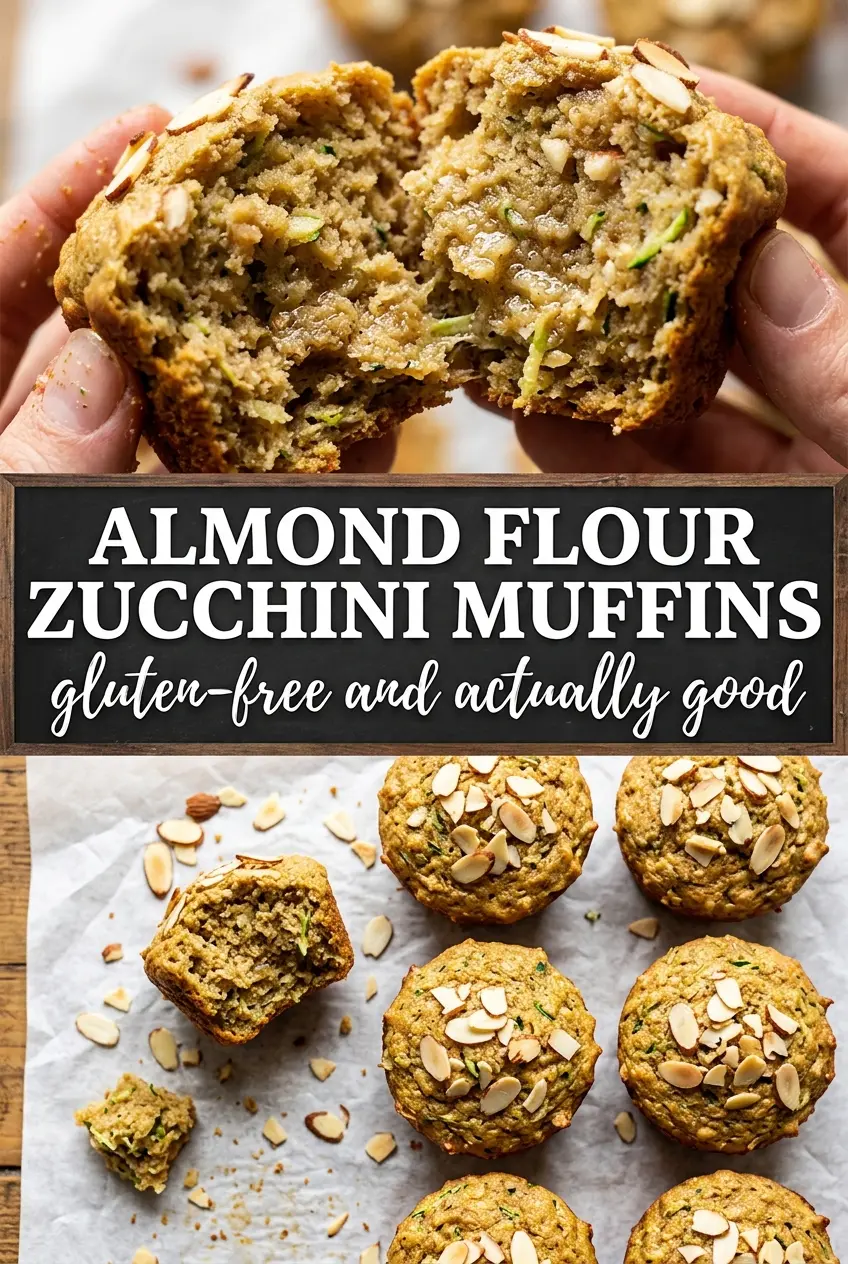
These almond flour zucchini muffins bake up tender, lightly sweet, and sturdy enough to pick up without crumbling in your hand. The zucchini keeps the crumb moist, while almond flour gives them a soft, nutty richness that feels more substantial than a standard muffin. They’re the kind of breakfast I reach for when I want something wholesome that still tastes like a treat.
The key is squeezing the zucchini dry before it goes into the bowl. Almond flour holds onto moisture differently than wheat flour, so if the zucchini is wet, the muffins can turn heavy or gummy in the center. A little cinnamon and nutmeg round out the flavor, and maple syrup or honey gives just enough sweetness without hiding the zucchini.
Below, I’ll show you the small details that matter most, including how to keep the crumb light, what happens if you swap the add-ins, and how to store these so they stay soft for days.
I squeezed the zucchini dry like you said, and the muffins came out fluffy instead of soggy. The almond flour crumb was soft but not heavy, and my kids ate two each before school.
Save these almond flour zucchini muffins for a soft, nutty breakfast that stays moist for days.
The Reason These Muffins Stay Tender Instead of Dense
Almond flour behaves differently from regular flour, and that’s where most muffin problems start. It doesn’t have gluten to build structure, so the batter needs eggs for lift and binding, and it needs the zucchini moisture under control so the crumb sets instead of steaming itself soft in the wrong way. If you’ve ever pulled out a muffin that looked done but sank as it cooled, too much liquid was usually the culprit.
The other thing that matters here is mixing. Once the wet and dry ingredients come together, stop as soon as the batter looks uniform. Overmixing almond flour batter can make the muffins feel heavier, especially once the zucchini goes in. You want a thick batter that mounds in the muffin cups, not a loose one that spreads and bakes flat.
What Each Ingredient Is Actually Doing In These Muffins

- Almond flour — This is the backbone of the recipe. Use blanched almond flour, not almond meal, if you want a finer crumb and a lighter muffin. Almond meal will work, but the texture will be more rustic and a little heavier.
- Zucchini — It keeps the muffins moist without making them taste like vegetables. Grate it on the fine side and squeeze it dry in a clean towel or paper towels. That step changes everything; wet zucchini is the fastest way to get gummy muffins.
- Eggs — Almond flour needs eggs for structure, lift, and a muffin that holds together after cooling. I wouldn’t swap these unless you’re using an egg substitute built for baking, and even then the texture will be softer and less stable.
- Maple syrup or honey — Either one works. Maple syrup gives a slightly warmer, deeper sweetness, while honey makes the muffins a touch more fragrant and a little more golden. Use whichever you already have; the difference is subtle.
- Coconut oil — It adds richness and keeps the crumb tender. Melt it first, then let it cool a minute so it doesn’t scramble the eggs when you whisk everything together. Butter can work in a pinch, but it changes the flavor and makes the muffins less naturally sweet.
- Walnuts or chocolate chips — Optional, but useful if you want more texture. Walnuts add crunch and fit the nutty base, while chocolate chips push these closer to a snack muffin. Both should be folded in at the end so they don’t sink to the bottom.
Mixing, Filling, and Baking Without Overdoing the Batter
Build the Dry Base First
Whisk the almond flour, baking soda, cinnamon, nutmeg, and salt until the spices are evenly distributed. Almond flour clumps more than wheat flour, so a thorough whisk here keeps you from getting pockets of spice or baking soda in the finished muffins. If the almond flour looks lumpy, break those clumps up with your fingers before mixing.
Bring the Wet Ingredients Together Smoothly
Beat the eggs, maple syrup or honey, melted coconut oil, and vanilla until the mixture looks glossy and fully combined. The coconut oil should be melted, not hot; if it’s too warm, it can make the eggs look streaky or partially cook them. Smooth wet ingredients help the batter come together evenly instead of looking oily in spots.
Fold in the Zucchini at the End
Stir the wet into the dry until you have a thick batter, then fold in the zucchini and any add-ins. The batter will look denser than a standard muffin batter, and that’s what you want. If it seems loose, the zucchini probably wasn’t squeezed dry enough, and the muffins may need a minute or two longer in the oven.
Bake Until Set, Then Let Them Finish Cooling
Divide the batter among the muffin cups and bake until the tops are golden and the center springs back lightly when touched. Almond flour muffins can look a little soft in the middle when they’re done; that’s normal. Let them cool in the pan for at least 15 minutes, because they firm up as they cool and come out cleaner once they’ve set.
How to Adapt These Muffins for Different Needs and Add-Ins
Dairy-Free and Naturally Gluten-Free as Written
These muffins are already dairy-free if you use coconut oil, and they’re gluten-free because almond flour replaces wheat flour entirely. That means there’s no one-to-one flour swap to worry about, but it also means the eggs and zucchini moisture balance matter more than they would in a standard muffin.
Chocolate Chip Version
Fold in chocolate chips instead of walnuts if you want a sweeter, more dessert-like muffin. The chips add pockets of melty richness, but they also make the muffins a touch more fragile when warm, so let them cool fully before removing them from the pan.
Lower-Sugar Option
You can reduce the maple syrup or honey slightly if you want a less sweet muffin, but don’t cut it too far. The sweetener does more than add flavor here; it also helps with browning and keeps the crumb soft. Pulling it back too much can leave the muffins drier and less tender.
Storage and Reheating
- Refrigerator: Store in an airtight container for up to 5 days. The muffins stay moist, but the crumb gets a little denser after chilling.
- Freezer: These freeze well. Wrap them individually and freeze for up to 3 months, then thaw at room temperature or overnight in the fridge.
- Reheating: Warm in the microwave for 15 to 20 seconds or in a 300°F oven for a few minutes. Don’t overheat them, or the almond flour can turn dry at the edges before the center is warm.
Answers to the Questions Worth Asking
Almond Flour Zucchini Muffins
Ingredients
Equipment
Method
- Preheat the oven to 350°F and line a 12-cup muffin tin with liners, so the batter can bake right away.
- Whisk almond flour, baking soda, cinnamon, nutmeg, and salt in a large bowl until the spices and leavening are evenly distributed.
- Beat eggs, maple syrup or honey, melted coconut oil, and vanilla extract in a separate bowl until smooth and glossy.
- Stir the wet mixture into the dry mixture until a thick, uniform batter forms with no dry pockets.
- Fold in the grated zucchini and chopped walnuts or chocolate chips (if using) until evenly speckled throughout.
- Divide the batter evenly among the muffin cups, filling each about ¾ full for domed tops.
- Bake for 20–22 minutes at 350°F until the tops are set and golden; the centers may feel slightly soft but firm up as they cool.
- Cool completely in the pan before removing—at least 15 minutes—so the almond flour crumb holds together.