Thinly sliced ribeye, deeply browned onions, and a pile of melty cheese tucked into a toasted hoagie roll is the kind of sandwich that disappears fast for a reason. The best Blackstone Philly cheesesteak has a proper sear on the meat, sweet onions that stay just soft enough to cling to every bite, and a roll that holds together without getting soggy halfway through lunch.
What makes this version work is timing. The onions and peppers go first so they can cook down and pick up a little color while the griddle is hot, then the steak hits the same surface and browns quickly instead of steaming. I also keep the steak moving with the spatulas as it cooks, which gives you small tender pieces instead of a clumpy pile of meat.
Below you’ll find the exact order that keeps the sandwich hot, juicy, and easy to assemble, plus a few smart swaps if you’re working with different cheese or don’t have ribeye on hand.
The steak picked up a perfect crust on the Blackstone, and the onions were sweet without turning mushy. I used provolone and the sandwiches were gone before I could even wrap the second batch.
Save this Blackstone Philly cheesesteak for the nights when you want hot, juicy steak, caramelized onions, and a toasted roll in under 30 minutes.
The Secret to a Cheesesteak That Sizzles Instead of Steams
The biggest mistake with a griddle cheesesteak is crowding the meat before the pan is hot enough. Ribeye needs immediate contact with heat so it browns on the edges before it loses juice, and that browning is what gives the sandwich its steakhouse flavor. If the meat sits around in a gray heap, you’ll still get a sandwich, but it won’t have that crisp, savory bite that makes a cheesesteak memorable.
The onions and peppers also need room to cook down. They should soften, take on some color, and move aside cleanly without flooding the griddle with liquid. That lets you keep the steak hot and finish the whole sandwich without waiting for the vegetables to catch up.
- Hot griddle — This is what gives you the quick sear. Medium-high is the right target; too low and the meat steams, too high and the onions scorch before they sweeten.
- Thin-sliced ribeye — Ribeye stays tender and has enough fat to taste rich without needing a sauce. Slice it as thin as you can while it’s partially frozen, and it cooks faster and more evenly.
- Cheese on top of the chopped steak — Letting the cheese melt directly over the hot meat keeps the filling cohesive. If you add it too early, it can seize on the griddle instead of melting into the steak.
What Each Ingredient Is Actually Doing in This Sandwich
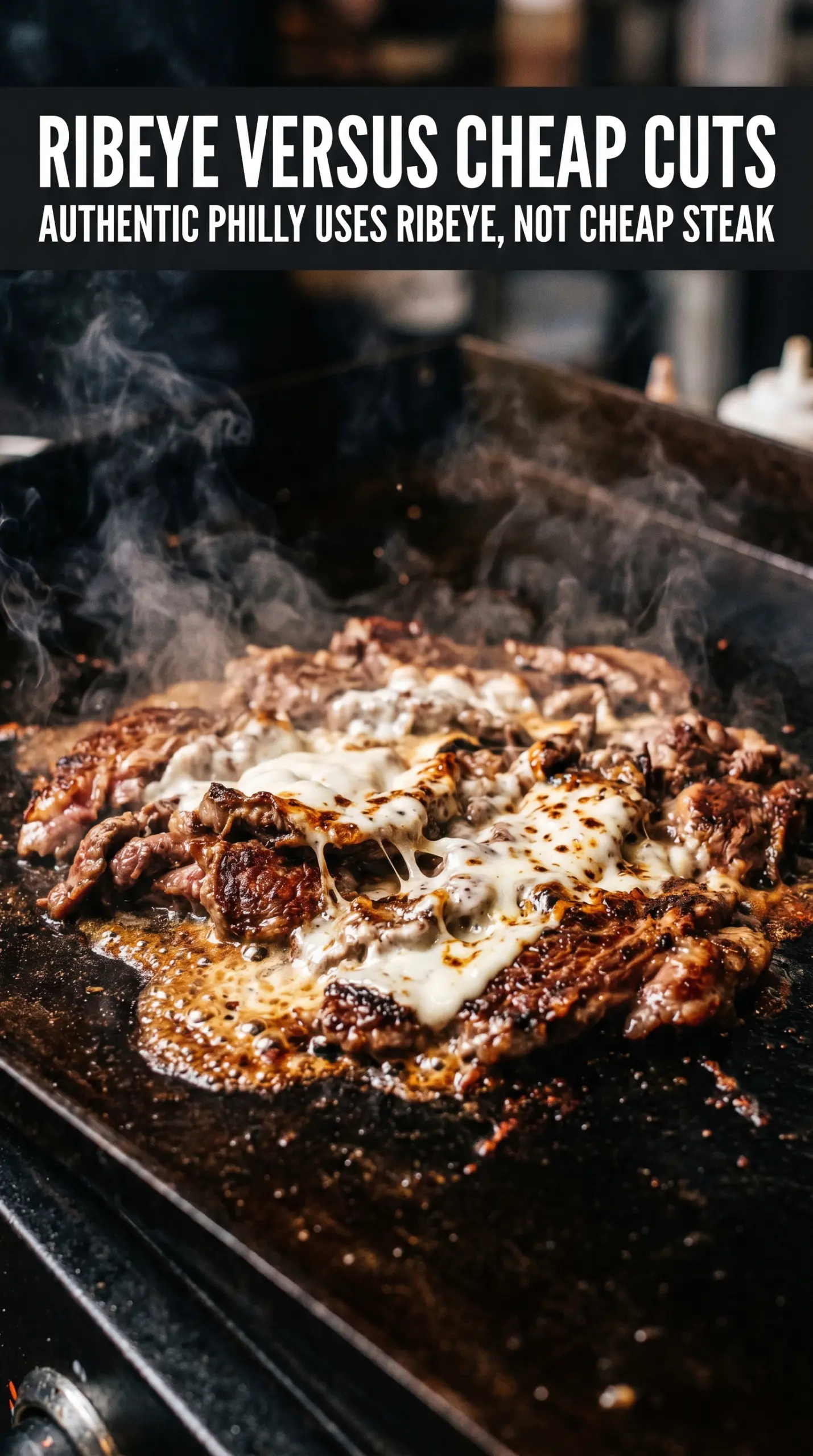
- Ribeye steak — This is the backbone of the sandwich. It has enough marbling to stay juicy on a hot griddle, and that fat carries the beef flavor better than a lean cut. Sirloin works in a pinch, but it won’t be as rich or tender.
- Onions and green bell peppers — The onions bring sweetness and the peppers add a little sharpness and color. If you want a more classic Philly feel, you can lean heavier on onions and use fewer peppers, but the peppers do help balance the richness of the ribeye.
- Provolone or Cheese Whiz — Provolone gives you a clean melt and a mild, salty finish. Cheese Whiz gives you the classic old-school diner texture and a stronger tang. Both work; the choice is about the style you want, not just what melts.
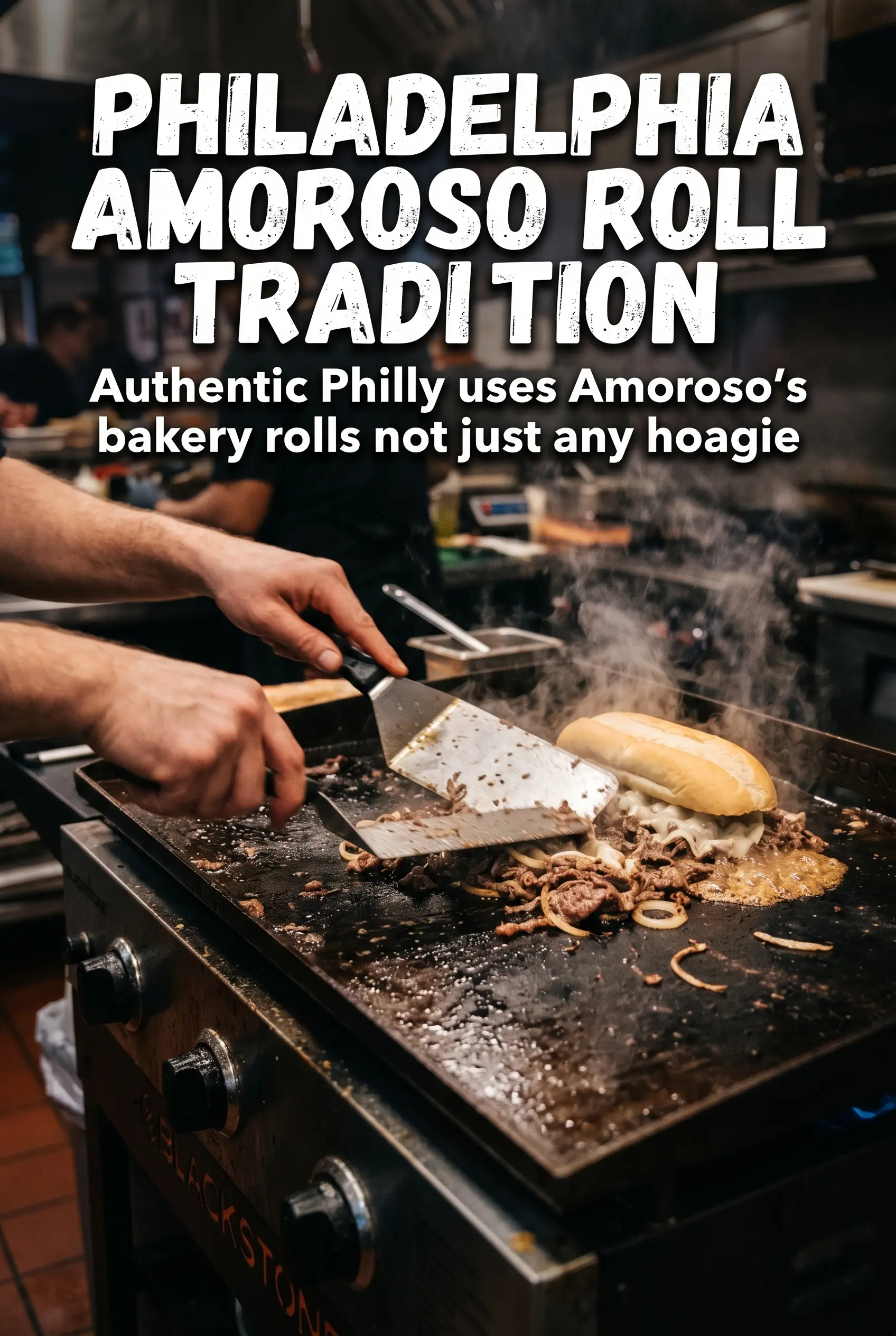
- Hoagie rolls — Use rolls with some structure so they don’t collapse under the filling. A soft roll tears, and a crusty one can fight the bite. Buttering and toasting them on the griddle gives you a little barrier against the juices.
- Oil and butter — Oil handles the high heat for cooking, while butter on the rolls adds flavor and helps them toast evenly. Don’t use butter for the whole cook; it burns before the steak finishes.
Build the Layers in the Right Order on the Griddle
Start With the Vegetables
Heat the Blackstone to medium-high and add the oil, then get the onions and peppers down first. You want them to soften and caramelize around the edges, not turn limp and pale, so give them enough time to move from crisp to sweet. If they start sticking, the griddle isn’t hot enough or you need a touch more oil. Once they’re done, slide them to the side so they stay warm without overcooking.
Chop the Steak as It Cooks
Season the ribeye with salt and pepper, lay it on the hottest part of the griddle, and start chopping with the spatulas almost immediately. That movement keeps the steak in small, tender pieces that are easy to pile into a roll. If you let it sit untouched, you’ll get larger chewy strips and less of that chopped cheesesteak texture. Pull it once the pieces are browned and no longer look raw in the center.
Melt, Toast, and Assemble Fast
Divide the steak into four portions and drape the cheese over each one while it’s still on the griddle so the heat melts it right in place. At the same time, butter the hoagie rolls and toast them cut-side down until they’re golden. Scoop the onions, peppers, and cheesy steak into the rolls immediately. Once everything is combined, the sandwich waits on no one.
How to Adapt This Cheesesteak for Different Cheese, Bread, or Diet Needs
Classic Provolone Version
Use all provolone if you want a mellow, savory melt that keeps the steak front and center. It gives the sandwich a cleaner finish than Cheese Whiz and makes the filling feel a little lighter without changing the method.
Cheese Whiz for the Classic Street-Style Texture
Swap in Cheese Whiz if you want that smooth, saucy finish that coats the steak instead of slicing through it. The flavor is bolder and a little saltier, and the sandwich feels richer and more nostalgic.
Low-Carb Cheesesteak Bowl
Skip the rolls and serve the steak, onions, peppers, and cheese over a bowl of shredded lettuce or cauliflower rice. You keep the same griddle flavor and melt, just without the bread. The meal ends up heavier on the savory beef and cheese, so a little extra pepper helps balance it.
Storage and Reheating
- Refrigerator: Store the steak and vegetables separately from the rolls for up to 3 days. The meat stays best when it isn’t packed into bread.
- Freezer: The cooked steak mixture freezes well for up to 2 months, though the peppers soften a bit more after thawing. Freeze it flat in a sealed bag for faster reheating.
- Reheating: Reheat the steak mixture in a skillet or on the griddle over medium heat until hot. Don’t microwave the filled sandwich if you can avoid it; the roll turns soggy and the cheese goes uneven.
Answers to the Questions Worth Asking
Authentic Blackstone Philly Cheesesteak
Ingredients
Equipment
Method
- Heat the Blackstone griddle to medium-high heat and add the oil.
- Cook the onions and peppers until caramelized, about 8-10 minutes, then move them to the side.
- Season the thinly sliced steak with salt and pepper and cook on the hot griddle for 3-4 minutes, chopping with spatulas.
- Divide the steak into 4 portions and top each portion with provolone cheese, allowing it to melt.
- Butter and toast the hoagie rolls on the griddle until golden.
- Scoop each steak portion with onions and peppers into the toasted rolls and serve immediately.