Red potato salad gets a lot better when the dressing stays light and tangy instead of heavy and gluey. The tender potatoes hold their shape, the dill and green onion keep it fresh, and the Greek yogurt gives you that creamy bite without drowning everything in mayonnaise. It’s the kind of side dish that still tastes like potato salad, just cleaner and brighter on the plate.
The key is cooling the potatoes enough that they don’t steam the dressing into a loose, greasy mess. I like to dress them once they’re warm, not piping hot, so they absorb flavor without falling apart. The Dijon and white wine vinegar do the work of cutting through the starch, and the celery gives the whole bowl a crisp finish that keeps each bite from feeling soft all the way through.
Below you’ll find the few details that matter most: how to keep the potatoes intact, which ingredient carries the tang, and the small chilling step that makes the salad taste like it came together on purpose instead of at the last minute.
The dressing stayed creamy after chilling and didn’t get watery like my usual potato salad. The dill and Dijon gave it a sharp, fresh flavor, and the potatoes held their shape beautifully.
Like this light red potato salad? Save it to Pinterest for the creamy dill dressing and chilled make-ahead side dish everyone actually finishes.
The Trick to Keeping This Potato Salad Light Instead of Watery
The most common mistake with lighter potato salad is treating the dressing like a regular mayo-heavy version. Once you cut the mayonnaise with Greek yogurt, the balance matters more. Too much vinegar and it turns sharp and thin. Too little and the salad tastes flat after the chill. The potatoes also need to be drained well and given a few minutes to cool so they don’t dump steam into the bowl and loosen everything.
Red potatoes are the right choice here because their waxy texture holds up after boiling. They stay in chunks instead of collapsing into mash, which is especially important when the dressing is lighter and can’t hide broken pieces. If you’ve ever had potato salad go soft overnight, it was probably overcooked potatoes or a dressing added while they were still too hot.
- Red potatoes — Their waxy flesh stays firm and creamy after cooking. Yukon Golds work in a pinch, but russets will fall apart and give you a softer, less distinct salad.
- Greek yogurt — This brings tang and body without the weight of all mayo. Use plain full-fat or low-fat yogurt; both work, but avoid anything too thin or flavored.
- Mayonnaise — A smaller amount still gives richness and keeps the yogurt from tasting sharp. Don’t skip it entirely unless you want a dressing that leans more like a tart herb sauce than classic potato salad.
- Dijon mustard and white wine vinegar — These give the salad its backbone. The mustard emulsifies the dressing a little, while the vinegar wakes up the potatoes after chilling.
What Each Ingredient Is Actually Doing in Light Potato Salad
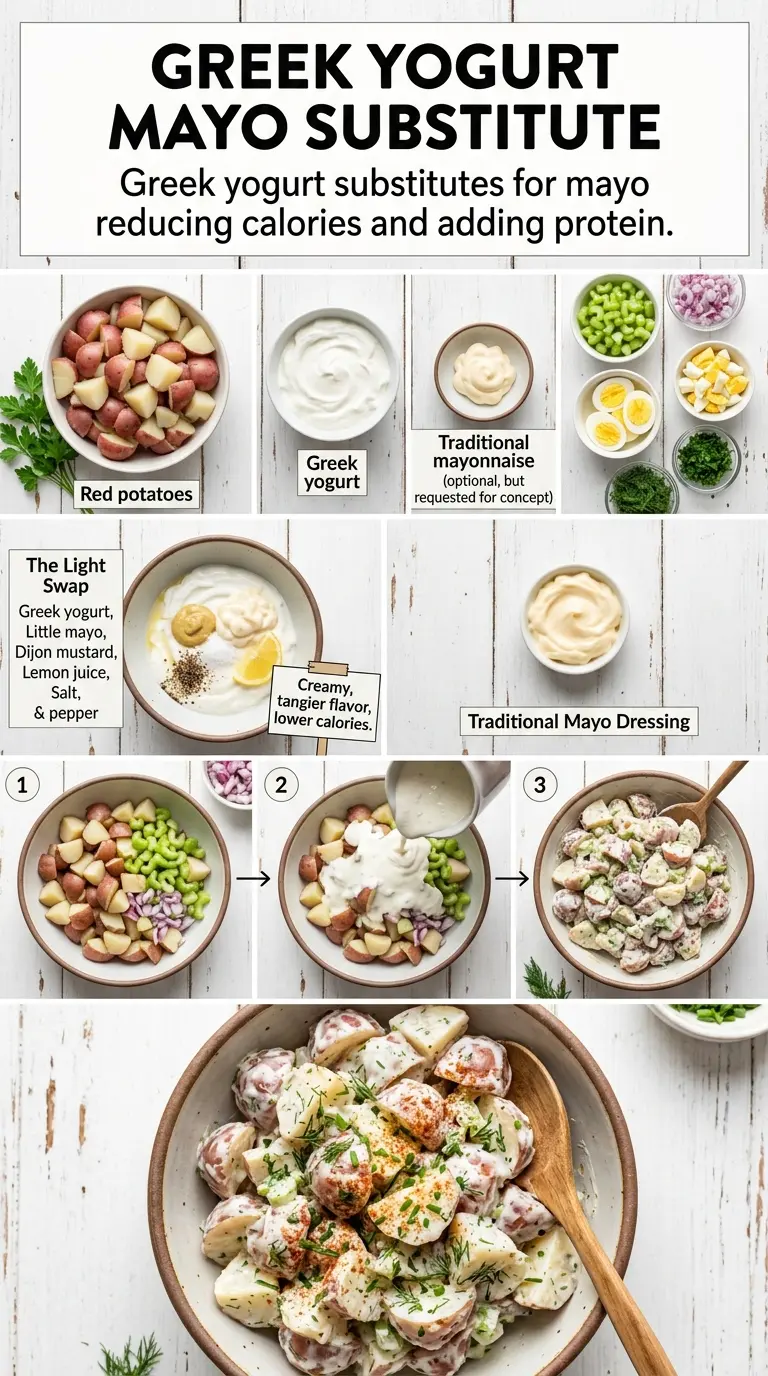
- Waxy potatoes (red or Yukon Gold) — These stay firm and creamy without becoming waterlogged. Russets are too starchy and break down easily.
- Oil-based dressing instead of heavy mayo — A lighter dressing with more vinegar and less mayo keeps the salad feeling fresh. It still coats everything without weighing it down.
- Fresh vegetables with light flavors — Cucumber, radish, and fresh herbs keep the salad tasting bright. Heavy vegetables like potatoes alone make it feel dense.
- Lemon juice or light vinegar — The acid brightens the salad and prevents it from tasting one-dimensional. It also preserves the fresh vegetables.
- Minimal protein or light protein choices — Skip heavy proteins like bacon or cheese. Choose fresh herbs, light fish, or skip protein entirely.
- No heavy binders (sour cream or mayo) — Keep the dressing thin so it feels light. Thick dressing makes the salad feel heavy even if it’s not.
- Chilled serving temperature — Cold food feels lighter than room temperature. Serve straight from the fridge.
- Final toss right before serving — Don’t let the salad sit with dressing. Toss at the last moment so everything stays crisp and light.
Building the Dressing Before the Potatoes Go In
Start by boiling the cubed potatoes until a knife slips in with almost no resistance, but stop before the edges start breaking down. If they’re overcooked, they’ll shatter when you toss them with the dressing. Drain them well, then let them sit just long enough to stop steaming. That short cooling window matters because hot potatoes absorb flavor, but boiling-hot potatoes turn the dressing loose.
Mix the Greek yogurt, mayonnaise, Dijon, vinegar, salt, and pepper first so the seasoning is even before the potatoes hit the bowl. Then fold in the dill, green onions, and celery with the potatoes. Toss gently with a spatula, not a heavy spoon, so the potatoes stay in chunks. After that, the two-hour chill is not optional — that’s when the salad tightens up and the flavors settle into each other.
Boiling the Potatoes Just to Tender
Cube the potatoes into even pieces so they finish cooking at the same time. Drop them into salted water and cook until they’re tender all the way through but still hold their edges when stirred. If a fork slides in with no resistance and the cube still looks intact, they’re ready. Drain them right away so they don’t keep cooking in the pot.
Whisking the Light Dressing
Stir the yogurt, mayonnaise, Dijon, vinegar, salt, and pepper together until the mixture looks smooth and glossy. The dressing should taste a little stronger than you want the finished salad to taste, because the potatoes will soften it. If it tastes bland at this stage, it will taste dull after chilling.
Combining Without Crushing
Add the potatoes, dill, green onions, and celery to the bowl, then pour the dressing over the top. Fold everything together carefully until every piece is coated. Stop as soon as the dressing is evenly distributed. Overmixing is how you end up with a bowl of mashed potato salad instead of one with clean, distinct chunks.
How to Adapt This for Different Tables and Different Diets
Dairy-Free Version
Swap the Greek yogurt for a thick, unsweetened dairy-free yogurt and keep the mayonnaise in place. The salad will still be creamy, but the tang may be a little softer, so taste the dressing before it goes on the potatoes and add a splash more vinegar if needed.
More Classic and Rich
Replace up to half of the Greek yogurt with mayonnaise if you want a fuller, more traditional potato salad texture. The dressing will cling a little more heavily and the tang will mellow, which works well if you’re serving it alongside smoky grilled meat.
No Dill, Different Herb
Use chopped parsley, chives, or a mix of both if dill isn’t your thing. Parsley keeps the flavor clean and grassy, while chives lean a little sweeter and more oniony. The salad will lose that signature dill note, but the fresh herb finish still keeps it bright.
Make-Ahead for a Crowd
This salad holds well for a day or two, and the flavor actually improves after a long chill. If you’re making it ahead, save a small spoonful of dressing to stir in right before serving in case the potatoes absorb more than expected. That refreshes the creamy texture without thinning the bowl.
Storage and Reheating
- Refrigerator: Store covered for up to 4 days. The potatoes may absorb some dressing, so the salad gets a little thicker on day two.
- Freezer: Don’t freeze this one. The yogurt and potatoes both change texture after thawing, and the dressing turns grainy.
- Reheating: Serve it cold or let it sit at room temperature for 15 to 20 minutes before serving. Don’t heat it, or the dressing will loosen and the potatoes will turn mealy.
Questions I Get Asked About This Recipe
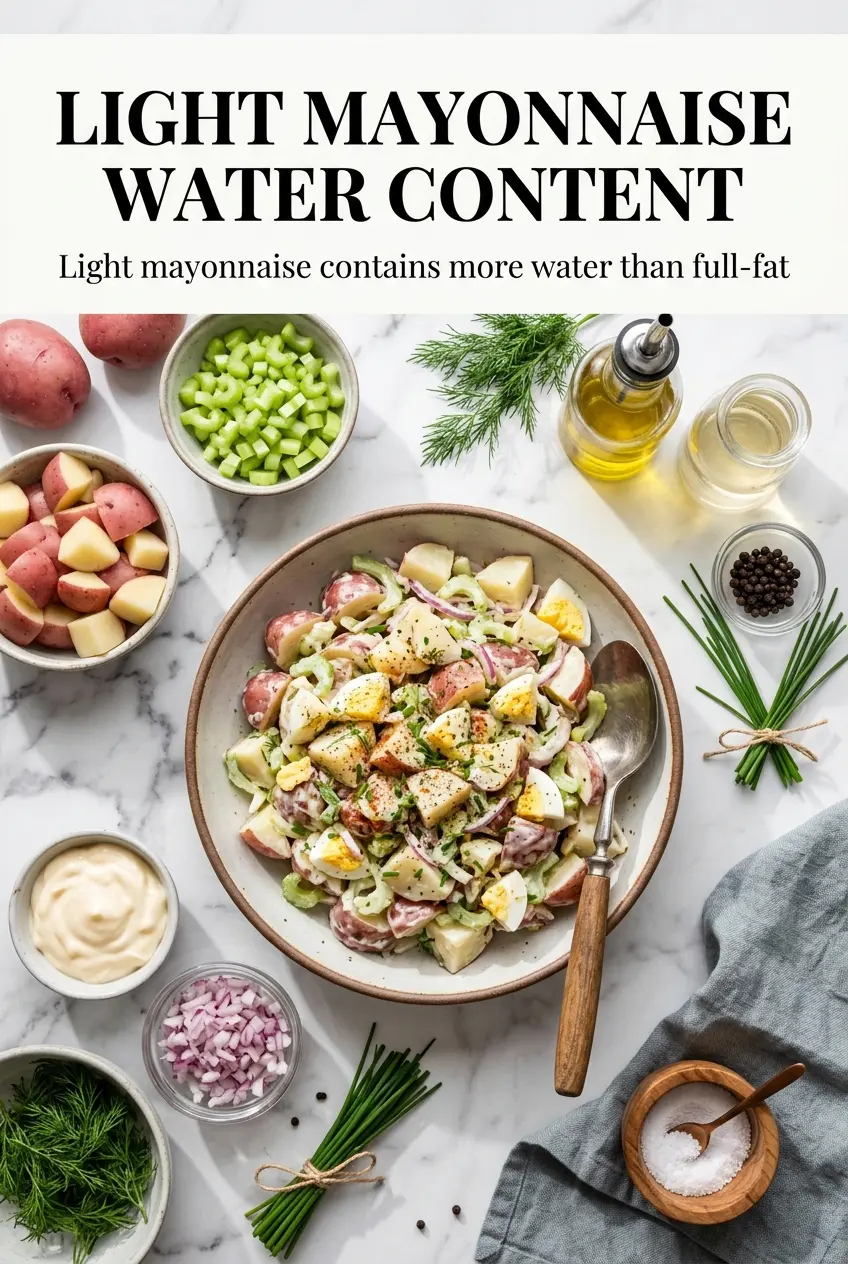
Red Potato Salad (Light on Mayo)
Ingredients
Equipment
Method
- Bring a large pot of water to a boil over high heat, then add cubed red potatoes and boil until tender, 10 to 15 minutes, until a knife slides in easily. Visual cue: the cubes should be fork-tender but not breaking apart.
- Drain the potatoes in a colander and let them cool until no longer steaming, about 10 minutes. Visual cue: they should look matte and hold their shape.
- In a bowl, mix plain Greek yogurt, mayonnaise, Dijon mustard, white wine vinegar, salt, and pepper until smooth and creamy, 1 to 2 minutes. Visual cue: the dressing should look evenly blended without streaks.
- Combine the cooled potatoes with fresh dill, green onions, and celery, and gently stir to distribute the add-ins evenly. Visual cue: herbs and vegetables should be visible throughout.
- Pour the dressing over the potato mixture and toss well until every piece is lightly coated. Visual cue: the salad should look glossy and evenly tinted from the dressing.
- Refrigerate the salad for 2 hours before serving, covered. Visual cue: chilled salad will look firmer and flavors will taste more blended.