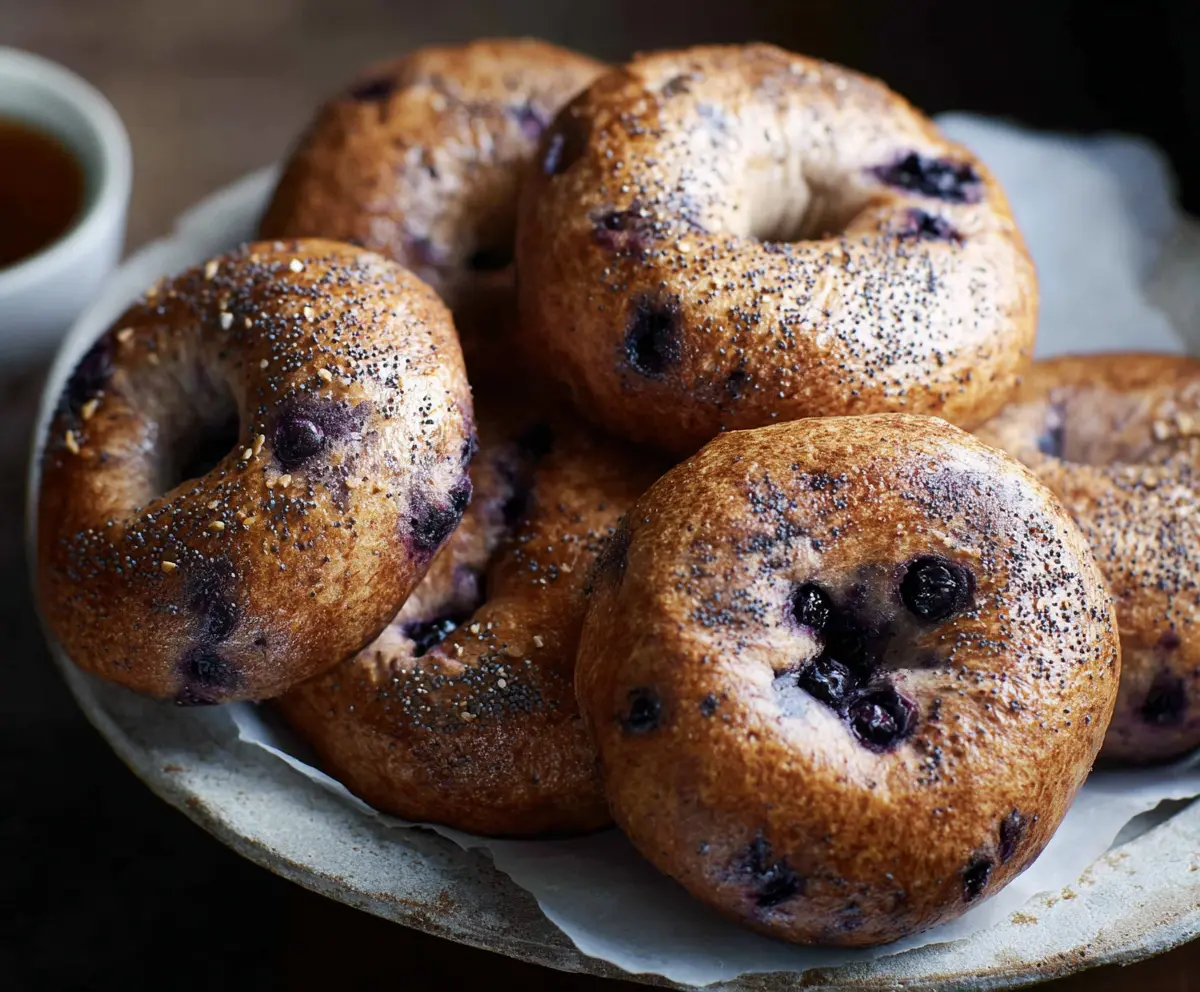
These Sourdough Blueberry Bagels are a delightful twist on a classic! They have a chewy texture from the sourdough and a sweet burst of blueberries in every bite.
Nothing beats a warm bagel fresh out of the oven. I love slathering mine with cream cheese and enjoying it with my morning coffee. Trust me, it’s a perfect start to the day!
Key Ingredients & Substitutions
Sourdough Starter: An active starter is crucial for flavor and rise. If you don’t have one, a store-bought sourdough mix can be a substitute, though the flavor won’t be quite the same. Always ensure your starter is bubbly before using!
Bread Flour: Bread flour gives the bagels their chewy texture. If you can’t find it, all-purpose flour works, but the bagels may not be as chewy. I prefer using high-protein flour for the best results.
Blueberries: Fresh blueberries are delightful, but frozen ones are just as good. They might burst a bit more in the dough, but that’s okay! For a twist, you could use other fruits like raspberries or chopped strawberries too.
Sugar: The sugar helps with browning and sweetness. For a healthier option, try using honey or maple syrup, but adjust the liquid in the recipe down slightly.
How Do You Knead the Dough Properly?
Kneading the dough helps develop gluten, giving bagels that classic chewy texture. Here’s how to do it without any stress:
- Turn the shaggy dough out onto a floured surface.
- Using your palms, push the dough away from you, fold it over, and give it a quarter turn. Repeat this for about 8-10 minutes.
- Keep your work surface floured lightly to prevent sticking, but avoid adding too much flour, which can make the bagels tough.
- The dough should become smooth and elastic — you can do the “windowpane test” by stretching a small piece; if it holds together without tearing, you’re done!
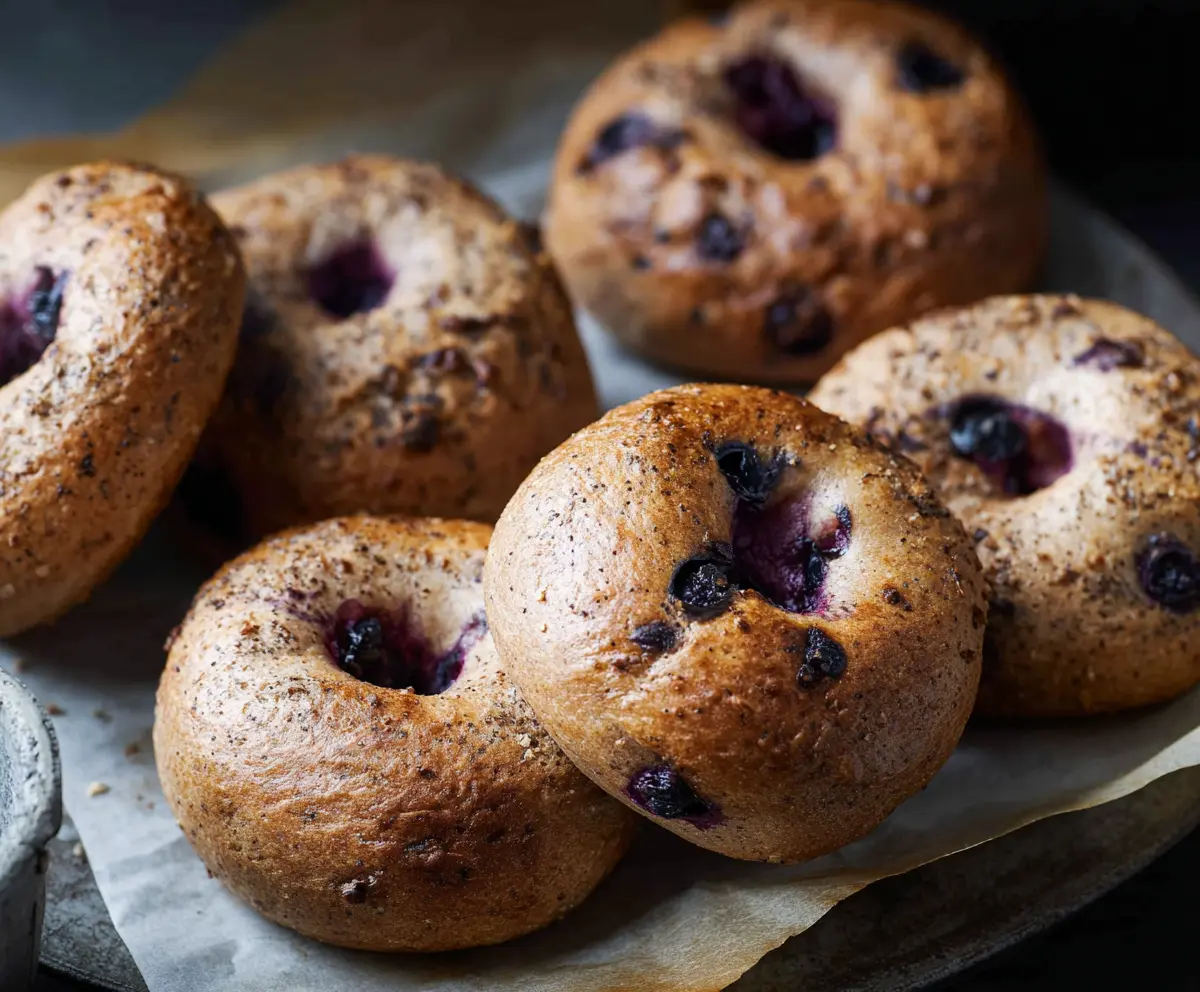
How to Make Sourdough Blueberry Bagels?
Ingredients You’ll Need:
For the Dough:
- 1 cup active sourdough starter (fed and bubbly)
- 3 1/2 cups bread flour (plus extra for kneading)
- 1/4 cup sugar
- 1 teaspoon salt
- 1 cup warm water (about 110°F / 43°C)
- 1 1/2 cups fresh or frozen blueberries
For Finishing:
- 1 tablespoon vegetable oil or melted butter (for brushing)
- Poppy seeds or coarse sugar, for topping (optional)
- 1 tablespoon baking soda (for boiling water)
How Much Time Will You Need?
This recipe requires about 20 minutes of active preparation, followed by a rising time of 4-6 hours. After the dough has risen, you’ll need about 30 minutes to shape and boil the bagels, and then an additional 20-25 minutes to bake them. So, set aside a total of about 5-7 hours for this delicious project!
Step-by-Step Instructions:
1. Prepare the Dough:
In a large mixing bowl, sift together the bread flour, sugar, and salt. In another bowl, mix the active sourdough starter with the warm water until it’s well combined and bubbly. Gradually add the liquid mixture into the flour mixture and stir with a wooden spoon until a shaggy dough starts to form.
2. Knead the Dough:
Turn the shaggy dough out onto a lightly floured surface. Knead the dough for about 8-10 minutes, incorporating the blueberries gently as you go. Aim to keep them whole while blending them into the dough, until the dough becomes smooth and elastic.
3. First Rise:
Once kneaded, shape the dough into a ball and place it back into the bowl. Cover it with a damp cloth or plastic wrap and let it rise in a warm spot for 4-6 hours until it has roughly doubled in size. This is when the magic happens!
4. Shape the Bagels:
After the dough has risen, turn it back onto a floured surface and divide it into 6 equal pieces. Roll each piece into a ball. To shape the bagels, poke your finger through the center of each dough ball and gently stretch it to form holes about 2 inches in diameter.
5. Second Rise:
Arrange the shaped bagels on a piece of parchment paper, cover them lightly, and let them rest for about 30-45 minutes to puff up slightly.
6. Prepare to Boil:
While the bagels are resting, preheat your oven to 425°F (220°C). Fill a large pot with water and bring it to a boil. Once boiling, stir in the baking soda — this helps the bagels get that nice, shiny crust.
7. Boil the Bagels:
Carefully boil the bagels in batches of 2-3 at a time for about 1 minute on each side. Use a slotted spoon to remove them and place them on a baking sheet lined with parchment paper.
8. Brush and Bake:
Brush the tops of the bagels with vegetable oil or melted butter. If you’d like, sprinkle some poppy seeds or coarse sugar on top for extra flavor. Bake the bagels in the preheated oven for about 20-25 minutes, or until they are golden brown and firm to the touch.
9. Cool and Serve:
Once baked, remove the bagels from the oven and let them cool on a wire rack for a few minutes before serving. Enjoy your chewy, tangy, and naturally leavened sourdough blueberry bagels!
Can I Use Active Dry Yeast Instead of Sourdough Starter?
While this recipe relies on sourdough starter for flavor and texture, you can use active dry yeast as a substitute. Use about 2 teaspoons of yeast, mixing it with the warm water before combining it with the dry ingredients. Keep in mind that the flavor will differ from sourdough.
What If I Don’t Have Bread Flour?
If you don’t have bread flour, all-purpose flour will work in a pinch! Note that your bagels might be a bit less chewy, but they’ll still be delicious. Just be cautious with the amount of extra flour you use when kneading, as all-purpose can absorb differently.
How Do I Store Leftover Bagels?
Leftover bagels can be stored in an airtight container at room temperature for up to 3 days. For longer storage, consider freezing them. Just slice them in half, wrap them tightly in plastic wrap, and place them in a freezer bag. They can be toasted directly from the freezer!
How Can I Adjust the Sweetness?
If you prefer your bagels less sweet, feel free to reduce the sugar to 2 tablespoons. You can also leave it out entirely, but keep in mind that it helps with browning and adds a bit of flavor.