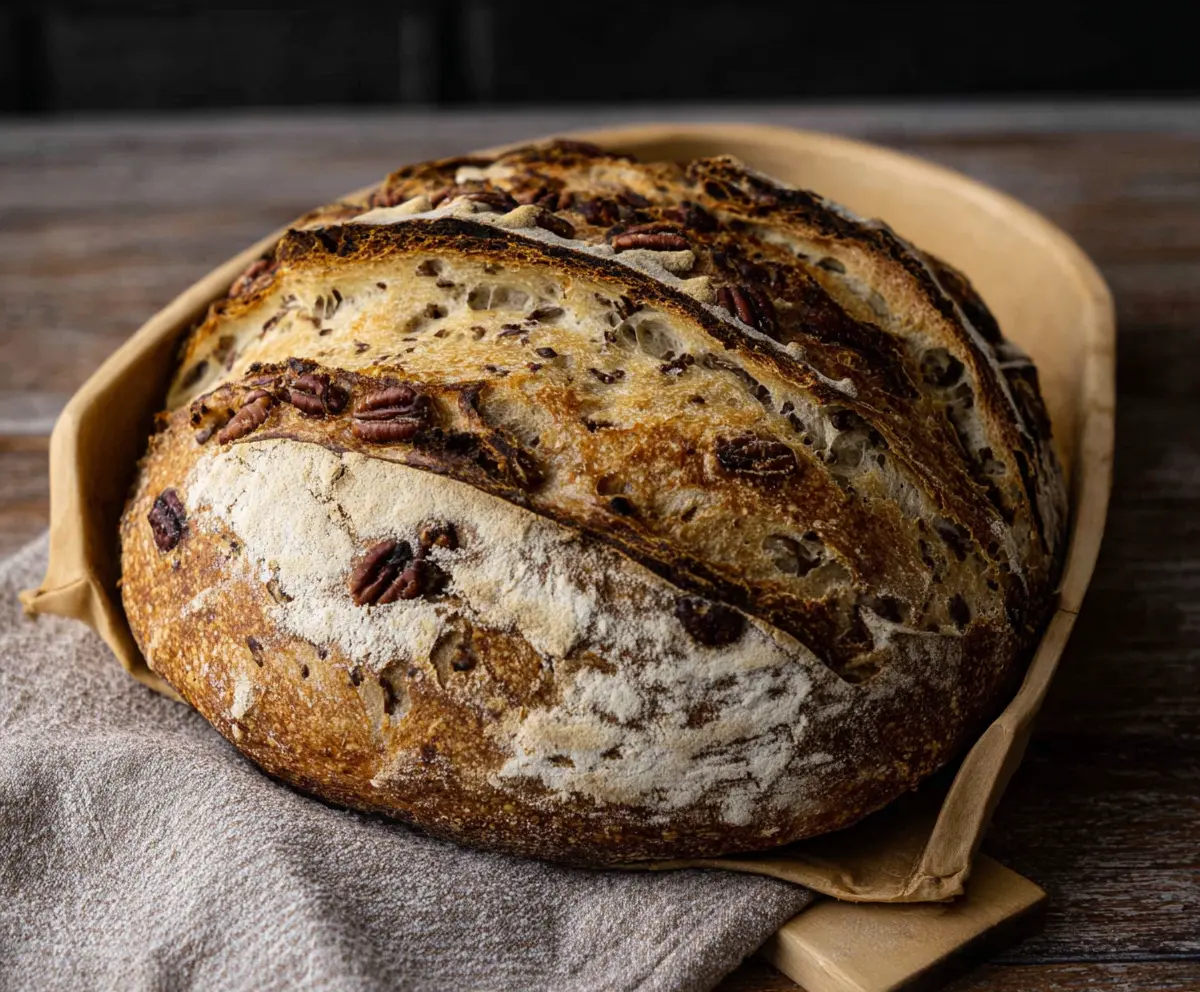
This Maple Pecan Sourdough Bread is a warm delight that’s perfect for any meal. Sweet maple syrup pairs with crunchy pecans, giving it a cozy and yummy flavor!
Every bite feels like a hug from the inside. I love to enjoy it toasted with a little butter on top—it makes my mornings feel extra special! 🌰🍞
Key Ingredients & Substitutions
Bread Flour: Bread flour has a higher protein content, giving structure to the bread. If you don’t have bread flour, all-purpose flour works, but the texture may be slightly softer.
Sourdough Starter: An active starter is crucial for a good rise. If you don’t have one, you can try a store-bought sourdough starter or use a quick yeast option, adding about 2g of instant yeast instead.
Maple Syrup: This adds sweetness and flavor depth. You can substitute it with honey or agave syrup if necessary, but adjust the amount slightly as they can differ in sweetness.
Pecans: These nuts add a nice crunch and flavor. Almonds or walnuts can be great substitutes. You can also use seeds like pumpkin or sunflower for a nut-free option.
How Do I Achieve the Perfect Dough Texture?
Getting the right dough texture is vital to great sourdough bread. Here’s how to do it:
- Autolyse Step: Don’t skip the 30-minute rest after mixing flour, water, and syrup. It helps with gluten development, making dough easier to handle.
- Stretch and Folds: This technique develops gluten structure without kneading. Every 30 minutes during the first two hours, lift one side of the dough and fold it over the next side. Repeat until you’ve folded all sides.
- Right Proofing Time: Pay attention to your dough during fermentation. It should nearly double in size but not over-ferment. Under-proofed dough won’t rise properly in the oven.
Being patient and attentive to these details will help you create a beautiful, airy loaf!
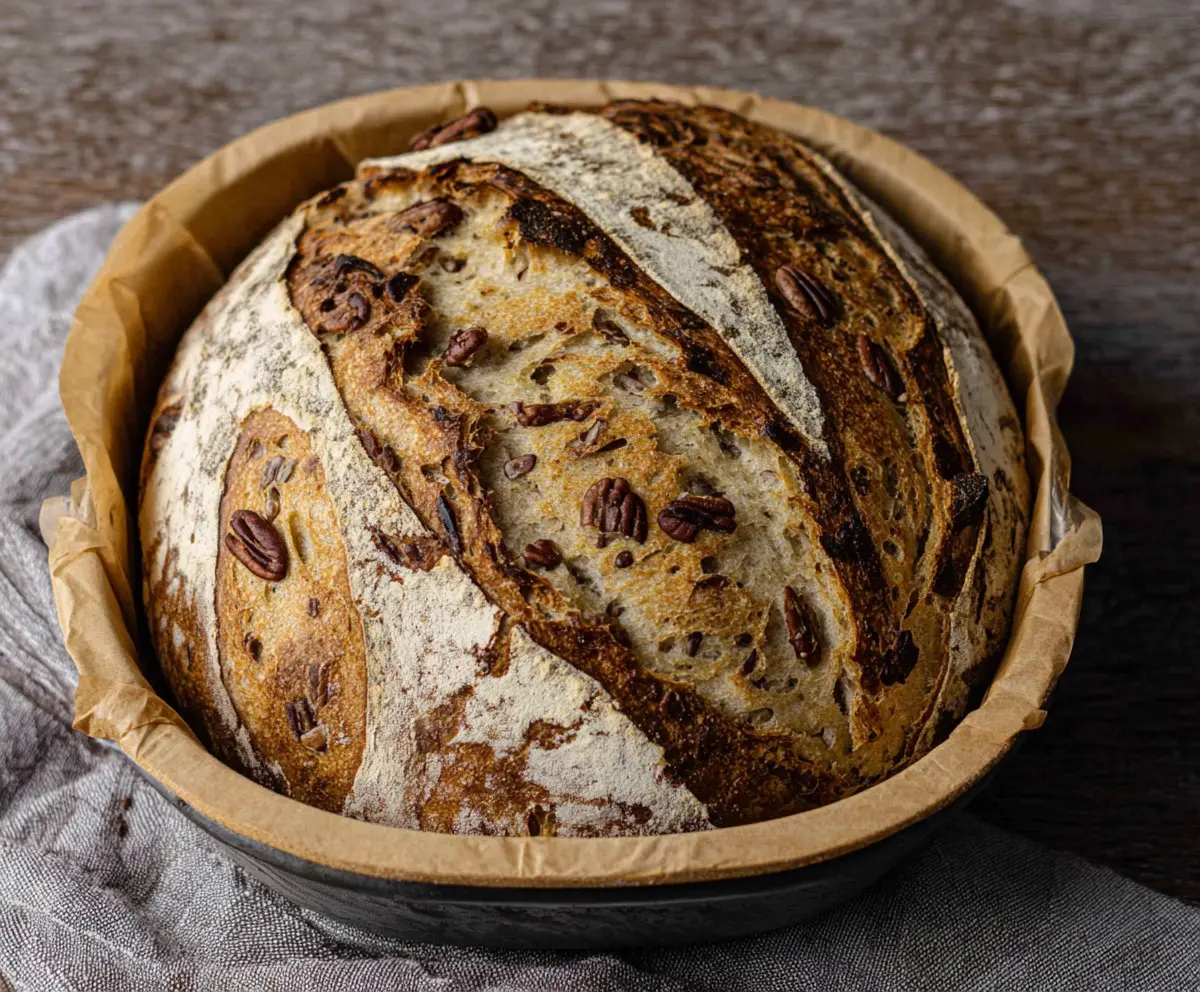
How to Make Maple Pecan Sourdough Bread
Ingredients You’ll Need:
For the Bread:
- 500g bread flour
- 350g water (room temperature)
- 150g active sourdough starter (100% hydration)
- 10g salt
- 60g pure maple syrup
- 100g pecans, roughly chopped
- Optional: a small handful of flaxseeds or other seeds for texture
How Much Time Will You Need?
This Maple Pecan Sourdough Bread takes about 30 minutes of active prep time, plus around 10-12 hours for the final proof (including an overnight chill), and 35 minutes for baking. So, plan for a cozy day of bread-making with delicious results!
Step-by-Step Instructions:
1. Prepare the Levain:
If your sourdough starter is in the fridge, make sure to feed it 4-6 hours before you plan to mix the dough. This will wake it up and make it bubbly and active!
2. Mix the Dough:
In a large mixing bowl, combine the bread flour, water, and maple syrup using a spatula or your hands. Keep mixing until no dry flour is visible. Cover the bowl with a clean towel or plastic wrap, and let it rest for 30 minutes. This is called the autolyse, and it helps with gluten development.
3. Add Starter and Salt:
After the autolyse, add the active sourdough starter and salt to the dough. Mix well until everything is thoroughly incorporated—don’t worry if it’s sticky!
4. Add the Pecans:
Gently fold in the chopped pecans (and any seeds if you’re adding them) until they are evenly distributed throughout the dough.
5. Bulk Fermentation with Stretch and Folds:
Cover the bowl and let the dough ferment at room temperature for about 4-5 hours. During the first 2 hours, perform a set of stretch and folds every 30 minutes. To stretch and fold, grab one side of the dough, stretch it up, and fold it over to the other side. Repeat this for each side of the dough.
6. Shape the Dough:
After the bulk fermentation, turn the dough out onto a lightly floured surface. With gentle hands, shape it into a round boule. Don’t worry if it feels sticky; just use a little flour to help you!
7. Final Proof:
Place the shaped dough seam-side up into a floured banneton or a bowl lined with a floured towel. Cover it and place it in the fridge overnight (8-12 hours) for the final proof. This will help develop flavor and texture.
8. Preheat Oven:
When you’re ready to bake, place a Dutch oven with its lid in your oven and preheat it to 230°C (450°F). Let it heat for at least 30 minutes—this helps create a crispy crust!
9. Score and Bake:
Carefully transfer the dough onto a piece of parchment paper. Using a sharp blade, score the top of the dough (make a shallow cut) to allow for expansion while baking. Place the dough with the parchment into the hot Dutch oven, cover it, and bake for 20 minutes.
10. Finish Baking:
After 20 minutes, remove the lid of the Dutch oven and continue baking for another 15-20 minutes, or until the crust is beautifully golden brown and crisp.
11. Cool:
Remove the bread from the Dutch oven and place it on a wire rack to cool completely before slicing. This cooling step is important for the best texture!
Enjoy every warm slice of your Maple Pecan Sourdough Bread! It’s perfect on its own, or toasted with a bit of butter. Happy baking!
Can I Use a Different Type of Flour?
Yes, you can substitute bread flour with all-purpose flour, but keep in mind that the texture may be slightly softer and the bread might not rise as much. For best results, stick with bread flour if possible!
What If My Dough Is Too Sticky?
If your dough feels overly sticky, it’s usually okay! Just sprinkle a bit of flour on your work surface and your hands while shaping. Avoid adding too much flour, as it can affect the final bread texture.
Can I Add Other Nuts or Ingredients?
Absolutely! Feel free to experiment by adding different nuts like walnuts or almonds, or even dried fruits like cranberries or raisins for a sweet twist. Just make sure not to overload the dough, as it can affect the structure.
How Do I Know When the Bread Is Done?
The bread is done when it’s a deep golden brown color and sounds hollow when tapped on the bottom. You can also use an instant-read thermometer; the internal temperature should be about 90°C (190°F) when fully baked.