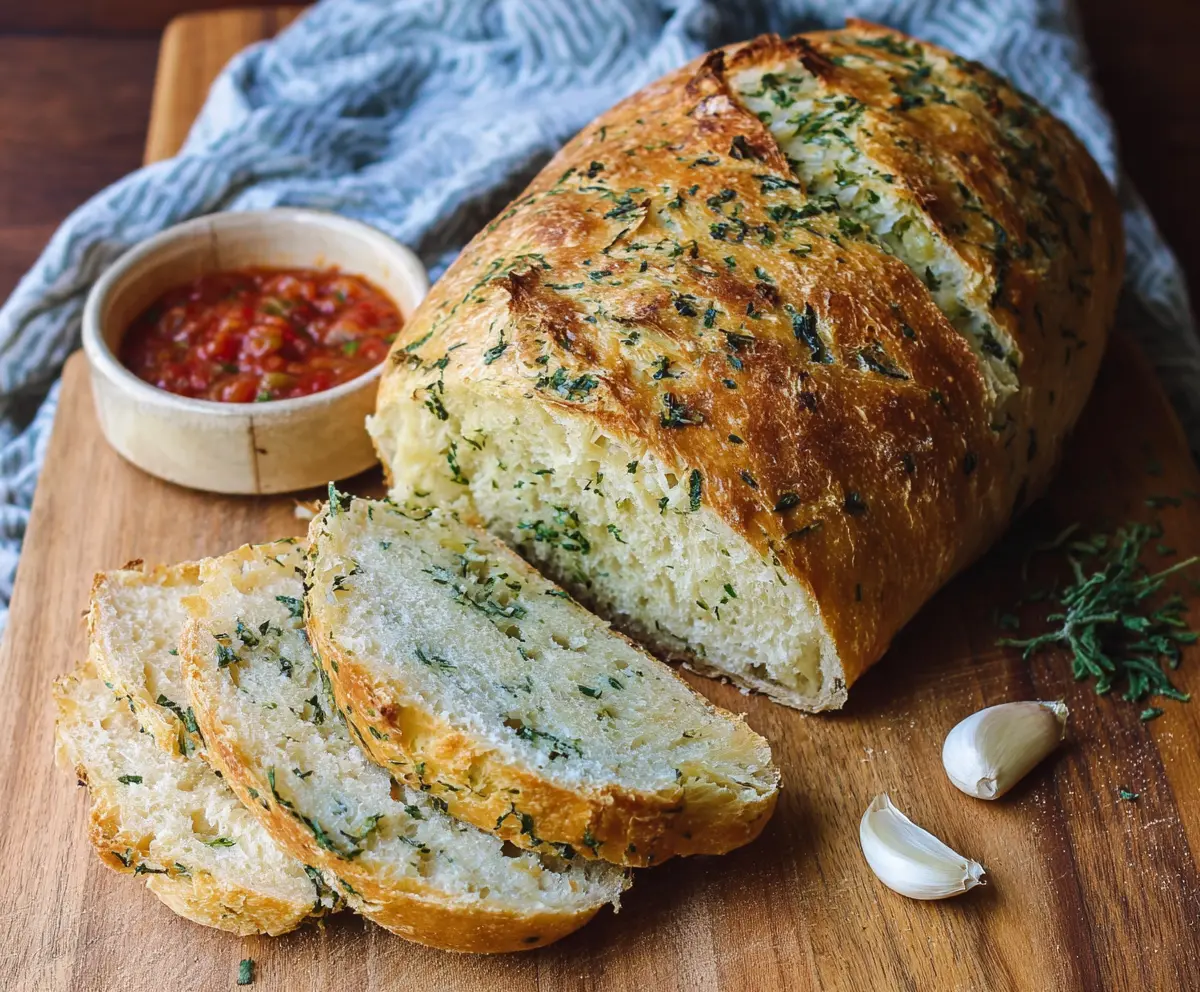
This garlic and herb sourdough bread is a warm, fluffy treat that fills your kitchen with a cozy smell. The crunchy crust and soft inside are just perfect for toasting!
Who can resist the combo of garlic and herbs? I love to slice it up and serve it with butter or as a side to soups. It’s like a hug in bread form! 🥖❤️
Key Ingredients & Substitutions
Sourdough starter: Make sure your starter is active and bubbly for the best rise. If you don’t have a starter, you can use a store-bought bread yeast, but it will change the flavor profile.
All-purpose flour: This is the main flour I use, but bread flour can give you a chewier texture if you prefer. Whole wheat flour is another option for a nuttier taste, but you might want to combine it with all-purpose flour for better structure.
Garlic: Fresh garlic adds a wonderful flavor. For a milder taste, you could use garlic powder instead; just use about 1 teaspoon. Roasted garlic is also a delicious alternative!
Fresh herbs: I love the fresh parsley and thyme combo. If you don’t have these on hand, try using dried herbs or swapping in some rosemary or oregano for a different twist!
Olive oil: Extra virgin olive oil is great for brushing, but melted butter can also add rich flavor. You could even use flavored oils, like garlic oil, for added taste.
How Do I Properly Knead Sourdough Dough?
Kneading your dough well is key to developing gluten, which helps the bread rise. If you’re unsure how to knead, here’s a straightforward way:
- Place your dough on a floured surface.
- Use the heel of your hand to push the dough away from you.
- Fold the dough back over itself, give it a quarter turn, and repeat.
- Keep kneading for about 8-10 minutes until the dough is smooth and elastic.
You can also use the stretch and fold method. Just pull one side of the dough, stretch it up, then fold it back into the center. Do this every 30 minutes during the bulk fermentation for great results!
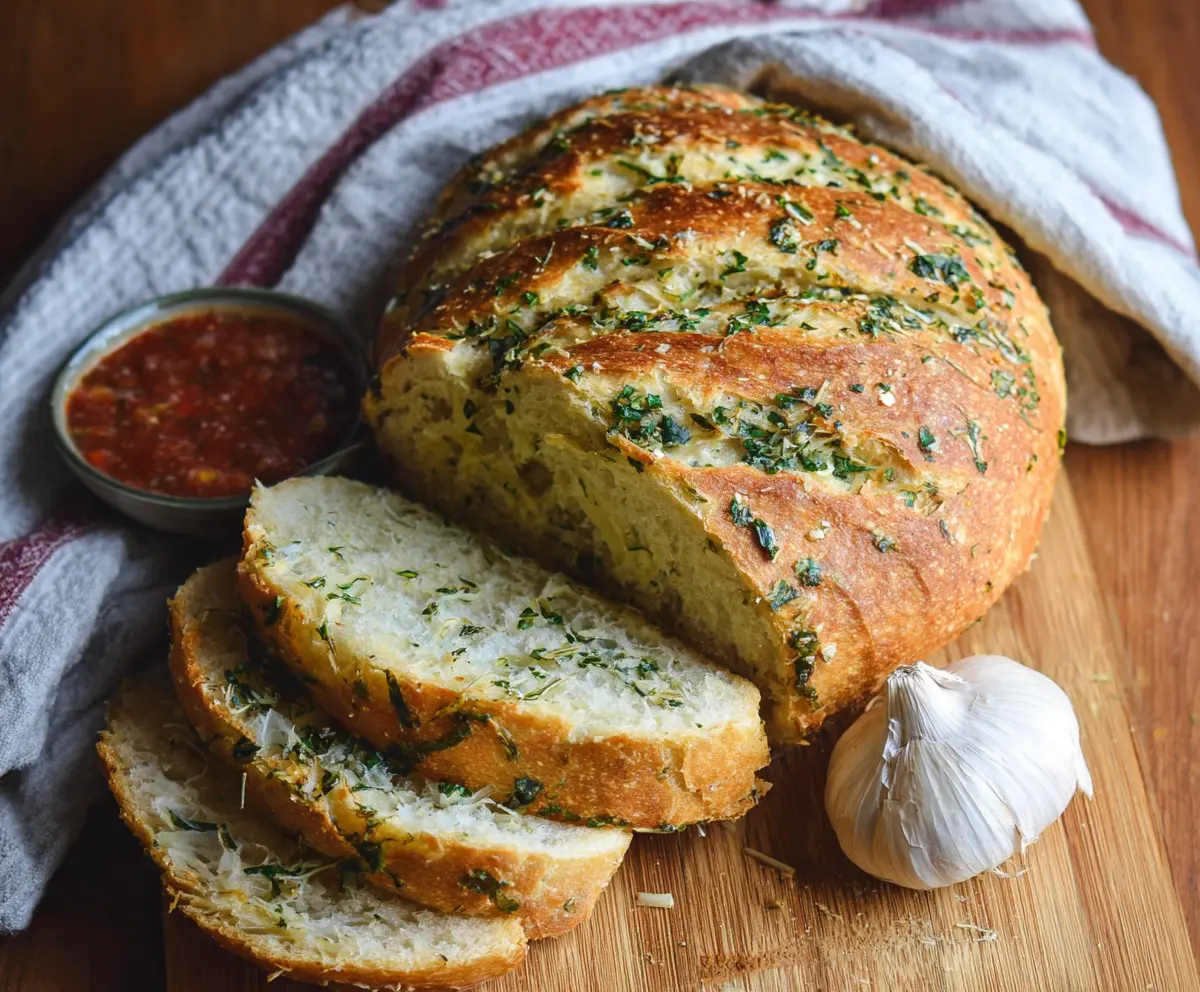
Garlic And Herb Sourdough Bread
Ingredients You’ll Need:
- 1 cup sourdough starter (active and bubbly)
- 3 1/2 cups all-purpose flour
- 1 1/4 cups warm water (around 75-80°F / 24-27°C)
- 2 tsp salt
- 4 cloves garlic, finely minced or grated
- 2 tbsp fresh parsley, finely chopped
- 1 tbsp fresh thyme leaves, chopped (optional)
- 2 tbsp olive oil (plus extra for brushing)
How Much Time Will You Need?
This garlic and herb sourdough bread takes about 15 minutes to prepare, plus 4-6 hours for rising, and another 35-40 minutes for baking. The longer rising time helps develop the flavor, so it’s worth the wait!
Step-by-Step Instructions:
1. Mix the Dough:
In a large bowl, combine your bubbly sourdough starter with the warm water. Stir until mixed well. Next, add the flour and salt. Mix everything until a shaggy dough forms. Now, fold in the minced garlic, chopped parsley, and thyme, making sure it’s evenly spread throughout the dough. Cover the bowl with a cloth and let it rest for 30 minutes. This resting time helps the flour absorb the water.
2. Knead and Bulk Ferment:
On a floured surface, gently knead the dough for about 8-10 minutes. If it’s too sticky, you can add a little more flour as you knead. Alternatively, you can use the stretch and fold method by gently stretching the dough and folding it every 30 minutes for 2 hours. You’ll notice it becoming more elastic and less sticky!
3. First Rise:
Once you’ve kneaded it, place the dough in a lightly oiled bowl. Cover it with a damp cloth or plastic wrap, and let it rise at room temperature for about 3-4 hours. You’ll want it to have noticeably expanded by this time, looking airy and puffy.
4. Shape the Loaf:
After the first rise is done, gently transfer the dough onto a floured surface. Shape it into an oval loaf by folding the edges into the center and tightening the surface to create a smooth top. Place it seam side down on a parchment-lined baking sheet.
5. Second Rise:
Cover your shaped loaf with a clean towel and let it rise for another 1.5 to 2 hours until it feels puffy. This second rise will help develop even more flavor and texture.
6. Prepare to Bake:
Preheat your oven to 450°F (230°C), placing a baking stone or a heavy baking tray inside to heat up. Just before the loaf goes in, brush the top with olive oil and sprinkle some extra chopped herbs for a lovely finish.
7. Score the Loaf:
Using a sharp knife or bread lame, make a few slashes on the top of your loaf. This helps the bread expand while baking and gives it a beautiful crust.
8. Bake:
Carefully transfer the loaf to your preheated baking stone or tray. Bake at 450°F for 20 minutes. Then, reduce the oven temperature to 400°F (200°C) and bake for another 15-20 minutes until the loaf is golden brown and crusty.
9. Cool:
Once baked, remove the bread from the oven. If you’d like, brush a little more olive oil on top for extra flavor. Let your beautiful bread cool completely on a wire rack before slicing.
Now, enjoy your delicious garlic and herb sourdough bread! It’s perfect for dipping in olive oil or serving alongside your favorite meal. Happy baking!
Can I Use Dried Herbs Instead of Fresh?
Yes, you can definitely use dried herbs! Use about one-third the amount since dried herbs are more concentrated in flavor. For example, if the recipe calls for 2 tablespoons of fresh herbs, use about 2 teaspoons of dried herbs instead.
Can I Make This Bread Without a Sourdough Starter?
If you don’t have a sourdough starter, you can substitute it with 1 packet (2 1/4 teaspoons) of active dry yeast. Mix it with the warm water and let it sit for about 5-10 minutes to activate before proceeding with the recipe. Just keep in mind that the flavor profile will differ from true sourdough!
How Do I Store Leftover Bread?
Store leftovers in an airtight container at room temperature for up to 3 days. If you want to keep it longer, slice it and freeze in a zip-top bag for up to 3 months. To enjoy, simply toast slices directly from the freezer or let them thaw at room temperature.
What Can I Serve with This Bread?
This garlic and herb sourdough bread pairs wonderfully with a wide range of dishes! It’s delicious on its own, but you can also serve it with olive oil and balsamic vinegar for dipping, soups, stews, or as a side to pasta dishes!