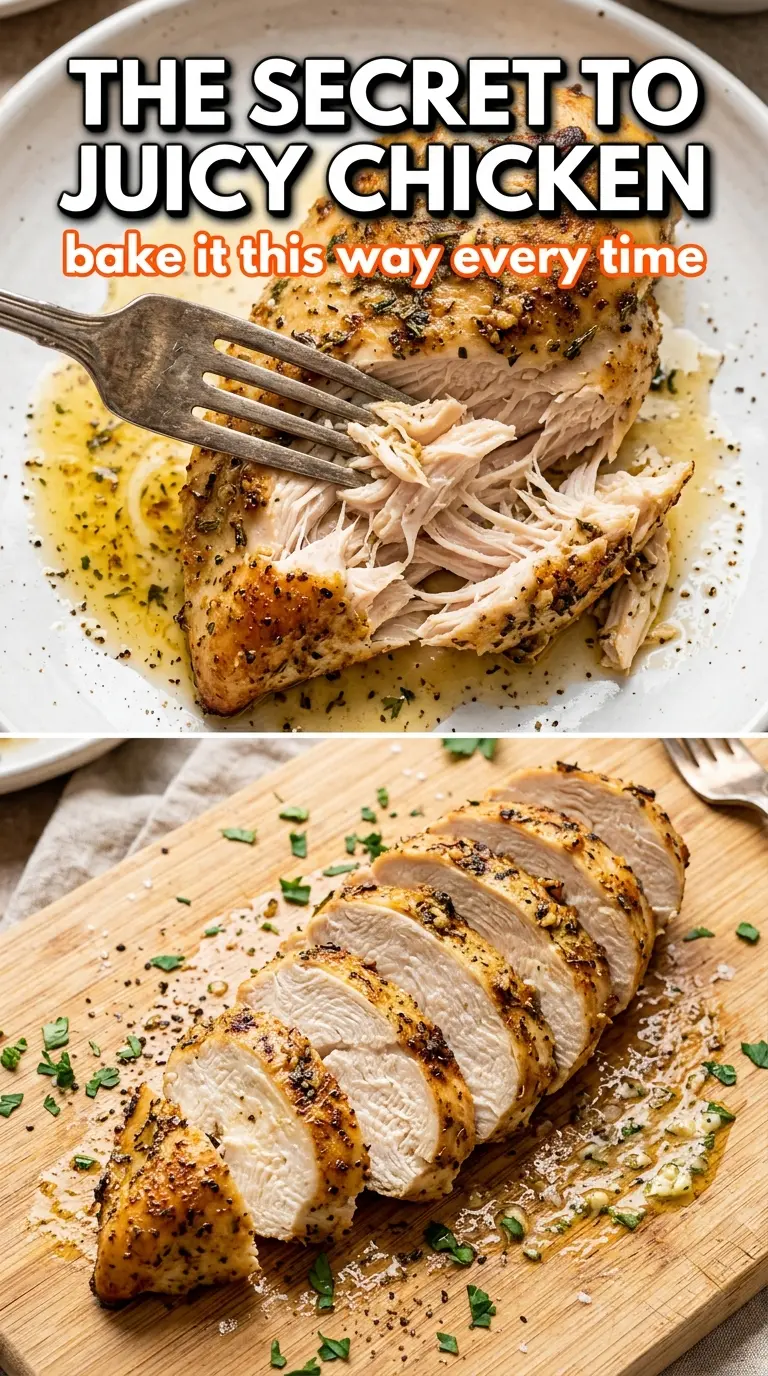
Golden baked chicken breasts stay on repeat because they solve the thing that goes wrong most often with boneless chicken: dry, bland meat with a seasoning crust that never quite tastes like anything. This version gives you a well-browned, fragrant exterior and a juicy center that slices cleanly, which is exactly what you want from a weeknight chicken you can serve with almost anything.
The difference is in two small moves that matter. Pounding the breasts to an even thickness keeps the thinner end from drying out before the thick part cooks through, and coating them with oil before the spice blend helps the seasonings bloom in the oven instead of baking on dusty and dull. A hot 425°F oven gives the top some color before the meat has time to overcook.
Below, you’ll find the timing that keeps the chicken moist, plus a few smart ways to change the seasoning without losing that same reliable texture.
The chicken came out juicy all the way through, and the spice crust actually stayed on the meat instead of sliding off when I sliced it. I pulled it at 165°F and let it rest, and that five-minute wait made a huge difference.
Save these juicy baked chicken breasts for a fast dinner when you want a golden herb crust without any fuss.
The Reason Baked Chicken Breasts Stay Juicy Instead of Dry
Chicken breasts dry out when the outside finishes long before the center has any chance to catch up. That usually happens because the pieces are uneven, the oven is too gentle, or the chicken stays in the heat after it has already reached temperature. This recipe avoids all three problems by flattening the thicker ends, using a hot oven, and pulling the chicken as soon as it hits 165°F in the thickest part.
The other thing that helps is the oil. It does more than prevent sticking; it carries the spice mixture across the surface and helps the top brown before the meat loses moisture. If you skip the oil or use too little, the seasonings can look patchy and the crust won’t taste as developed.
What Each Ingredient Is Actually Doing in This Chicken Dish
- Chicken (cut into uniform pieces or whole) — Pat dry so it browns. Even thickness ensures uniform cooking.
- Oil or butter (the browning medium) — High-heat oil essential for proper searing. Creates pan flavor.
- Seasonings (salt, pepper, spices) — Don’t hold back. Chicken carries the entire flavor profile.
- Aromatics (garlic, onion, herbs) — Cook with fat to bloom flavors. Become the foundation of the dish.
- Sauce or braising liquid (cream, broth, or tomato) — This keeps chicken moist. Balance richness with acid.
- Vegetables (if using) — Layer by cooking time so everything finishes together.
- Acid (lemon, vinegar, or wine) — This brightens and prevents one-dimensional flavor.
- Proper doneness (165°F internal temperature) — Use a thermometer for accuracy. Overcooked is dry.
What Each Seasoning Is Doing on the Chicken
- Olive oil — This is the glue for the spice blend and the reason the top turns fragrant instead of dusty. A neutral oil works too, but olive oil brings a little more flavor and browning.
- Garlic powder and onion powder — These build the savory base without burning the way fresh garlic can in a hot oven. Powder is the right choice here because it coats evenly and stays mellow.
- Smoked paprika — This adds color and a deeper roasted note that makes the chicken taste like more than just salt and pepper. Regular paprika works if that’s what you have, but the smoked version gives the best finish.
- Italian seasoning — This gives the chicken a little herbal lift without making the flavor busy. If your blend is salt-free, that’s ideal, since the salt is already measured separately.
- Chicken breasts — Try to choose pieces that are close in size so they finish together. If one breast is much larger, cut it in half horizontally after pounding so the batch cooks evenly.
How to Bake Chicken Breasts Without Overcooking Them
Even out the thickness first
Lay the chicken between sheets of parchment or plastic and pound the thicker ends until the whole piece is about 3/4-inch thick. You don’t need to flatten it thin; you just want the breast to cook at the same pace from end to end. If you skip this step, the tapered side turns dry while the center is still catching up.
Seasoning the surface the right way
Brush both sides with olive oil before adding the spice mix. That keeps the seasoning from falling off and helps the top form a light crust. Rub the spices in with your fingers so the surface looks evenly coated; if you see bare patches, you’ll taste them later.
Using oven heat to build color
Bake at 425°F in a lightly greased dish until the thickest part reaches 165°F and the tops are golden. The exact time depends on size, but 18 to 22 minutes is the range that usually lands well for medium chicken breasts. If the chicken is browning too fast before it cooks through, loosely lay a piece of foil over the top near the end rather than turning the oven down.
Letting the juices settle before slicing
Give the chicken five minutes to rest before you cut it. That pause lets the juices redistribute instead of running onto the plate the second the knife goes in. If you slice too soon, even perfectly cooked chicken can look dry.
How to Adapt These Baked Chicken Breasts for Different Dinners
Dairy-Free and Gluten-Free by Default
This recipe is already both dairy-free and gluten-free as written, which is part of why it’s such a dependable weeknight option. Just check that your Italian seasoning blend doesn’t contain added fillers or hidden salt if you’re watching sodium.
Swap the Herb Profile
Replace the Italian seasoning with a mix of dried thyme, rosemary, and oregano if you want a more classic roast chicken flavor. The result is a little woodier and less familiar in a good way, but keep the garlic and smoked paprika in place so the crust still has depth.
Turn It Into a Meal Prep Protein
Bake the chicken, let it cool, then slice it before storing so it reheats faster and more evenly. Sliced chicken keeps its moisture better than whole breasts in the fridge, especially if you’re using it for salads, grain bowls, or wraps later in the week.
Make It Spicier
Add 1/4 to 1/2 teaspoon cayenne or a pinch of red pepper flakes to the seasoning mix. That heat sits nicely under the smoky paprika, but don’t go too heavy or it will drown out the clean, savory flavor of the chicken itself.
Storage and Reheating
- Refrigerator: Store in an airtight container for up to 4 days. The crust softens a little, but the chicken stays tender if you don’t overcook it in the first place.
- Freezer: Freezes well for up to 2 months if wrapped tightly and stored with as little air as possible. Slice before freezing if you plan to use it in bowls or sandwiches.
- Reheating: Warm gently in a 300°F oven, covered, until just heated through, or reheat sliced pieces in a skillet with a splash of water. The biggest mistake is blasting it in the microwave until the juices seize up.
Questions I Get Asked About This Recipe

Baked Chicken Breasts
Ingredients
Equipment
Method
- Preheat the oven to 425°F and lightly grease a baking dish so the chicken browns without sticking.
- Pound the chicken breasts to an even 3/4-inch thickness if they vary in size, which helps them cook evenly.
- Brush both sides of each chicken breast with olive oil for a fragrant, golden crust.
- Mix together garlic powder, onion powder, smoked paprika, Italian seasoning, salt, and cracked black pepper, then rub evenly over both sides of the chicken.
- Bake for 18-22 minutes at 425°F until the internal temperature reaches 165°F and the tops are golden; do not overbake.
- Rest the baked chicken breasts for 5 minutes before slicing so juices settle and stay in the meat.
- Garnish with fresh parsley and lemon wedges for serving so the finished chicken is bright and fragrant at the cut.