Garlic Parmesan chicken pasta lands in that sweet spot where the sauce clings to every strand, the chicken stays juicy, and the whole skillet tastes like it took a lot more effort than it did. The cream sauce is rich without feeling heavy, thanks to a little chicken broth for balance and just enough pasta water to loosen everything into a silky coating instead of a clumpy blanket.
What makes this version work is the order. The chicken gets browned first, then the same pan builds the sauce, which means all those flavorful bits stay in play. Freshly grated Parmesan matters here because pre-shredded cheese often melts grainy, and that can turn a smooth sauce into something chalky and stubborn.
Below, I’ve included the small timing details that keep the sauce from tightening up too fast, plus a few easy swaps for when you need to work with what’s already in the kitchen.
The sauce came out silky and never separated, and the chicken stayed tender even after slicing it thin. I added a splash of pasta water at the end like you suggested and it coated the spaghetti perfectly.
Save this garlic Parmesan chicken pasta for the nights when you want a glossy cream sauce and golden sliced chicken without a long ingredient list.
The Part That Keeps the Sauce Smooth Instead of Grainy
The most common mistake in a dish like this is rushing the cheese. Parmesan wants gentle heat and steady stirring. If the pan is too hot when it goes in, the fat can separate and the sauce turns sandy instead of glossy. Pulling the skillet back to a low simmer before adding the cheese gives it a chance to melt into the cream instead of seizing up.
The pasta water matters for the same reason. It doesn’t just thin the sauce; it helps the sauce grip the pasta. Start with a small splash and add more only if the noodles still look tight or dry. You want the sauce to look like it’s hugging the spaghetti, not pooling underneath it.
- Freshly grated Parmesan — This is the ingredient that makes the sauce taste sharp, salty, and properly integrated. The pre-shredded kind often contains anti-caking agents that keep it from melting as smoothly, so use the real stuff if you want that silky finish.
- Heavy cream — Half-and-half will work in a pinch, but the sauce will be thinner and a little less stable. Heavy cream gives you enough fat to carry the cheese without curdling when the heat is reduced.
- Chicken broth — This keeps the sauce from tasting flat and cuts the richness just enough. If you don’t have broth, water will work, but the sauce will need a better pinch of salt to wake it up.
- Spaghetti or fettuccine — Long pasta gives the sauce more surface to cling to. Short shapes can work, but they won’t twirl through the sauce with the same satiny coating.
What Each Ingredient Is Actually Doing in This Chicken Pasta
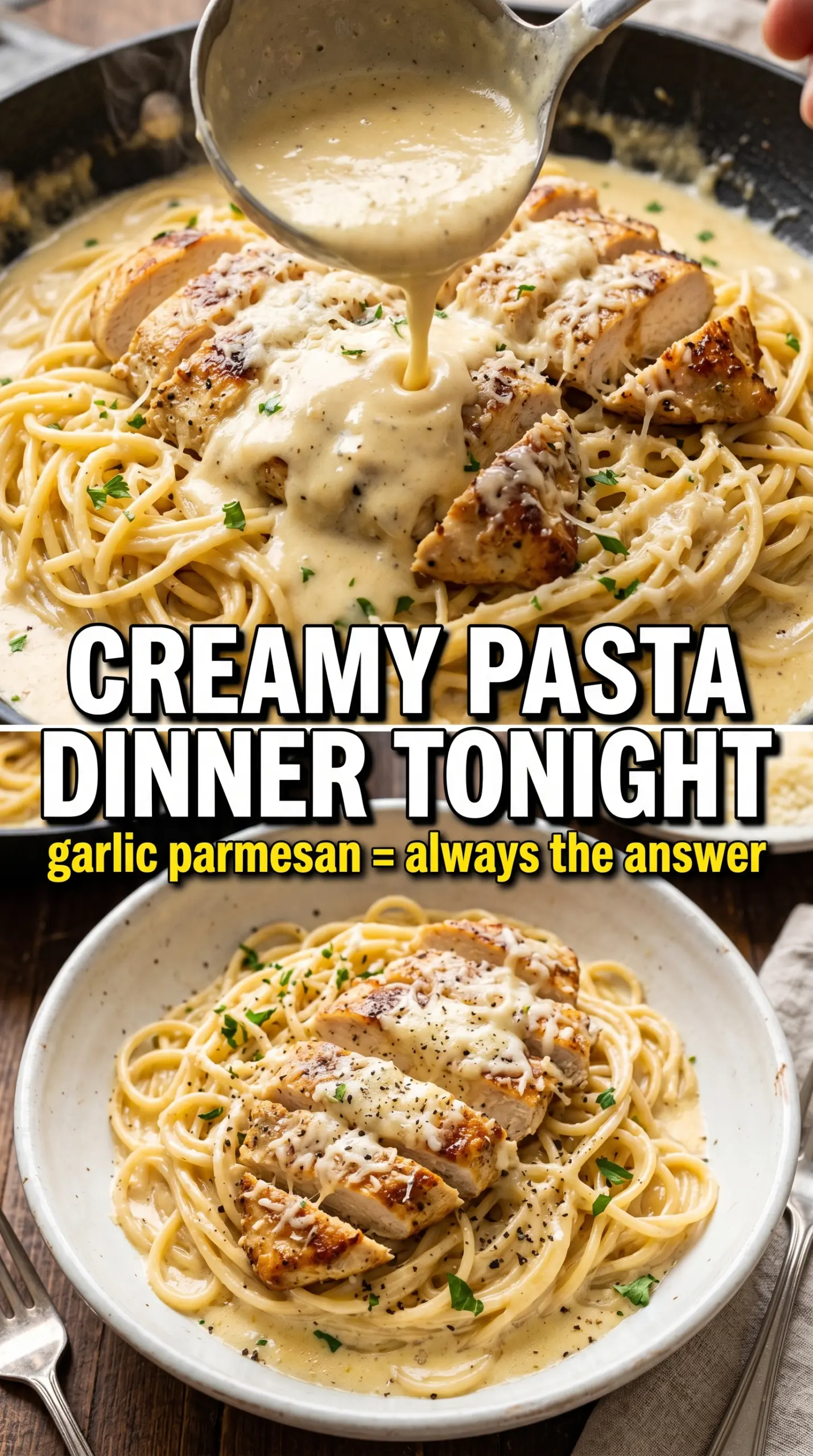
- Pasta (cooked to al dente) — Reserve cooking water for sauce. Starchy water is essential for silky sauce.
- Chicken (cut into uniform pieces) — Cook until just done. Overcooking makes it dry and stringy.
- Butter or oil (the cooking medium) — This browns the chicken and carries flavors. Don’t skip proper searing.
- Cream or sauce base (the richness) — This brings everything together and coats pasta. Balance with acid.
- Cheese (optional umami and binding) — This adds depth and helps sauce cling. Add off heat so it melts smoothly.
- Garlic and herbs (the flavor layers) — Cook with oil first to bloom. These define the dish’s personality.
- Acid (lemon, wine, or vinegar) — This prevents heavy sauces from tasting flat. Add at the end.
- Final toss (the emulsification) — Toss gently so pasta stays al dente and every piece gets coated.
How to Build the Skillet in the Right Order
Getting a Golden Sear on the Chicken
Season the chicken well before it hits the pan. You want a hot skillet and enough oil to coat the bottom, then leave the chicken alone long enough for a deep golden crust to form. If it sticks at first, it usually needs another minute; forcing it to move too early tears off the crust. Once it’s cooked through to 165°F, rest it before slicing so the juices stay in the meat instead of running onto the cutting board.
Cooking the Garlic Without Burning It
After the chicken comes out, the skillet should still have flavor in the bottom but not burned bits. Add the butter and garlic over medium heat and stir for about a minute, just until fragrant. Garlic goes bitter fast once it turns brown, and that bitterness shows up in the sauce, so keep it pale and soft. This is the point where the whole dish can tip from rich to harsh if you walk away.
Building the Cream Sauce Slowly
Pour in the cream and broth, then let the mixture simmer gently until it thickens enough to coat a spoon. Don’t crank the heat to hurry it along; high heat can make the dairy reduce unevenly or separate at the edges. When the Parmesan goes in, stir until it disappears into the sauce and then loosen it with a splash of pasta water if it starts to look too tight. The sauce should move in slow ribbons, not sit in a heavy mound.
Tossing the Pasta and Bringing It Together
Add the cooked pasta straight into the skillet and toss until every strand looks coated. If the noodles were drained too long and seem sticky, pasta water fixes that better than plain water because it adds starch back into the pan. Fold in the sliced chicken at the end or serve it over the top if you want the slices to stay neat and visible. Finish with basil and extra Parmesan while the sauce is still warm enough to melt the shavings slightly.
How to Adapt It When You Need a Different Version
Make It Gluten-Free
Use your favorite gluten-free spaghetti or fettuccine and cook it just to tender, not soft. GF pasta can go mushy if it sits in hot sauce too long, so toss and serve it right away. The sauce itself is naturally gluten-free as long as your broth is certified gluten-free.
Lighter Cream Sauce Version
Swap half the heavy cream for whole milk, but expect a looser sauce that needs a little more simmer time. It will still taste good, just less lush and less stable. Don’t push it to a hard boil or the dairy is more likely to split.
Add Vegetables Without Weighing It Down
Spinach, peas, or sautéed mushrooms fit in well here. Stir delicate greens in at the very end so they wilt without going dull, and cook mushrooms first so they lose their water before the cream goes in. Extra vegetables add body and make the dish feel a little more complete without changing the sauce structure.
Storage and Reheating
- Refrigerator: Store leftovers in an airtight container for up to 3 days. The sauce will thicken as it chills, which is normal.
- Freezer: I don’t recommend freezing this one. Cream sauces can separate after thawing, and the pasta turns soft in a way that’s hard to fix.
- Reheating: Warm it gently on the stove over low heat with a splash of milk, cream, or broth. Microwaving on high tends to dry out the chicken and make the sauce break, so go low and slow.
Questions I Get Asked About This Recipe
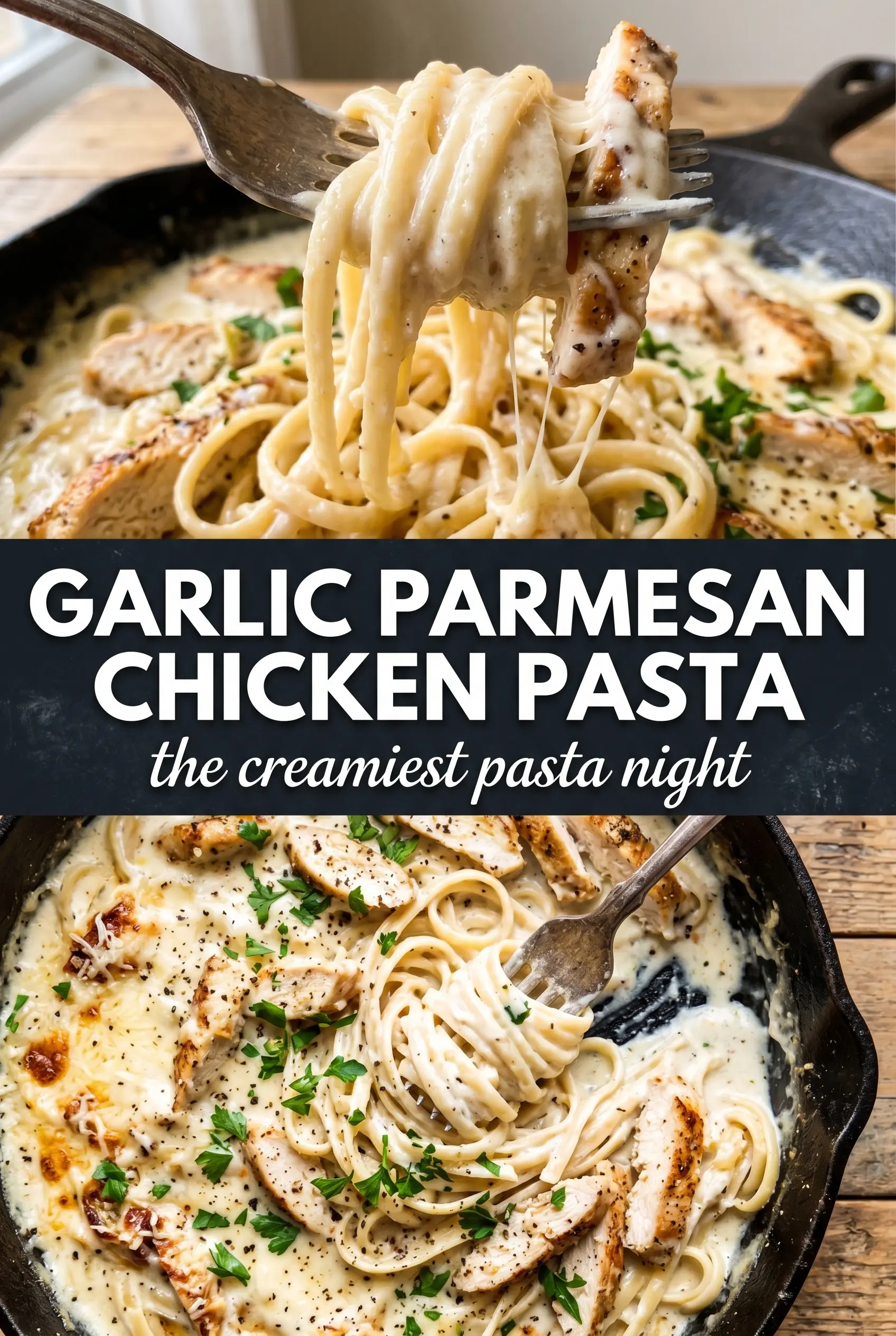
Garlic Parmesan Chicken Pasta
Ingredients
Equipment
Method
- Season boneless skinless chicken breasts with salt, pepper, garlic powder, and Italian seasoning to taste. Heat olive oil in a large skillet over medium-high heat, then cook the chicken 5-6 minutes per side until golden and cooked through to 165°F.
- Rest the chicken for a few minutes, then slice thin so it’s ready for topping the pasta.
- In the same skillet, cook minced garlic in butter over medium heat for 1 minute, just until fragrant. Avoid browning so the sauce stays smooth.
- Pour in heavy cream and chicken broth, then simmer for 4-5 minutes until slightly thickened and lightly glossy.
- Stir in Parmesan cheese, Italian seasoning, and red pepper flakes until smooth. Add reserved pasta water as needed to loosen the sauce to a silky coating consistency.
- Toss the cooked spaghetti or fettuccine in the garlic Parmesan sauce until every strand is coated. Add a splash more pasta water only if it looks dry.
- Divide the pasta among plates and top with the sliced chicken. Garnish with fresh basil and extra Parmesan for a finished look.