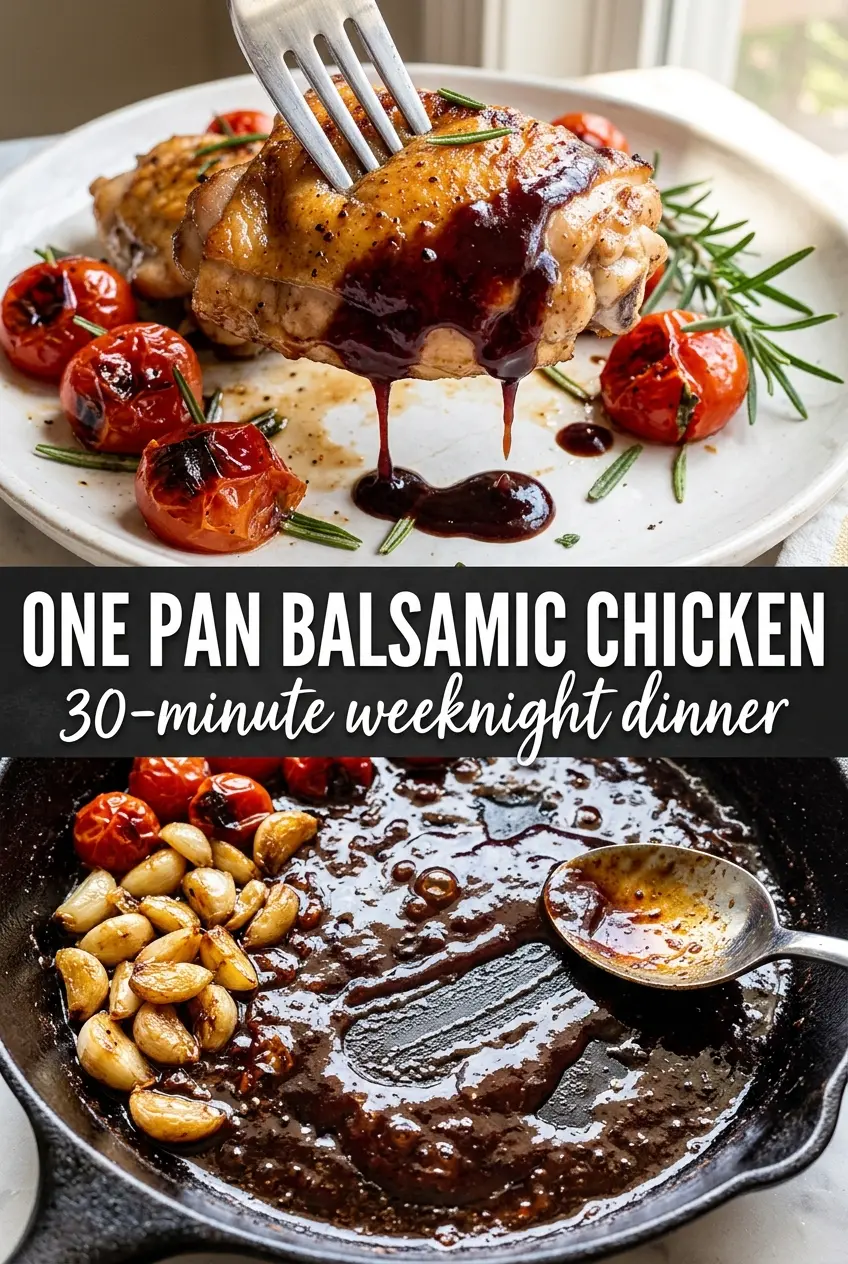
Golden chicken thighs with a glossy balsamic glaze have a way of making a weeknight dinner feel like it took more effort than it did. The skin turns deeply crisp in the skillet, the tomatoes collapse into sweet little bursts, and the sauce cooks down into something dark, sticky, and balanced enough to spoon over everything on the plate.
What makes this version work is the order. The chicken gets a hard sear first so the skin renders and browns before any liquid goes in, and the balsamic mixture reduces in the same pan so it picks up every bit of flavor from the bottom. Honey softens the vinegar’s sharp edges, butter gives the glaze a satin finish, and whole garlic cloves turn mellow instead of bitter.
Below, I’ll walk through the one part that matters most: getting the sauce to reduce without burning and keeping the chicken skin crisp instead of soggy. There’s also a short section on swaps, storage, and the questions that come up most often when people make this one-pan dinner at home.
The balsamic glaze thickened up beautifully and didn’t turn bitter. I was worried the chicken skin would go soft, but it stayed crisp even after the sauce reduced right in the pan.
Save this one-pan balsamic chicken for the nights when you want crisp skin, glossy glaze, and only one skillet to wash.
The Trick to Keeping the Skin Crisp While the Glaze Reduces
The main mistake with skillet chicken like this is rushing the liquid too early. If the balsamic mixture goes in before the skin has had time to render and brown, the chicken steams instead of sears, and you lose the crisp layer that gives the whole dish its contrast. The first sear needs to be aggressive enough to create a deep golden crust, because once the sauce goes in, that skin won’t get another chance to dry out.
The other detail that matters is reducing the sauce around the chicken instead of separately. That keeps the glaze tied to the pan drippings and prevents it from tasting flat. If the sauce seems thin at the end, let it bubble uncovered for another minute or two; if it looks syrupy before the chicken is done, lower the heat and keep it moving gently so the honey and balsamic don’t scorch.
What Each Ingredient Is Doing in the Skillet

- Bone-in, skin-on chicken thighs — These stay juicy through the full cook and give you the best chance at a crisp, browned skin. Boneless thighs will work in a pinch, but they cook faster and won’t give you the same depth of flavor from the skin and bones.
- Balsamic vinegar — This is the backbone of the glaze, so use one you’d actually taste on a salad. Cheap balsamic can be harsher and thinner; if that’s what you have, the honey and butter help smooth it out, but the reduction may need a minute longer to take on body.
- Honey — It rounds out the vinegar and helps the sauce turn glossy. Maple syrup can stand in, though it brings a deeper, warmer sweetness that tastes a little less classic.
- Chicken broth — This loosens the glaze just enough to let it reduce without turning sticky too fast. Water works in an emergency, but broth gives the sauce more savoriness and keeps it from tasting one-note.
- Whole garlic cloves — Leaving them whole keeps them from burning during the sear and lets them soften into sweet, spreadable little bites. If you slice them, they’ll brown faster and can turn bitter in the reduced sauce.
- Butter — Stirred in at the end, it smooths the glaze and gives the pan sauce a polished finish. Add it after the heat comes down so it melts in cleanly instead of separating.
- Fresh basil — It cuts through the richness and makes the skillet taste bright at the end. Dried basil won’t give the same finish here, so this is one place where fresh matters.
Getting the Sear Right Before the Sauce Goes In
Season the chicken with intention
Coat the thighs on both sides with salt, pepper, garlic powder, and Italian seasoning, then let them sit while the skillet heats. That little pause helps the seasoning cling and gives the skin time to dry slightly, which helps it crisp instead of sticking. If the chicken still feels damp when it hits the pan, it will seize and release late, so pat it dry first.
Render the skin, don’t rush it
Set the thighs skin-side down in hot olive oil and leave them alone for 7 to 8 minutes. You want a steady sizzle and a skin that turns deep golden, not pale tan. If the heat is too low, the fat won’t render; if it’s too high, the skin burns before the chicken cooks through.
Build the glaze in the same pan
Once the chicken is flipped and removed, add the garlic and tomatoes and let them cook just until the tomatoes start to blister. Pour in the balsamic, honey, and broth, then scrape the bottom well; those browned bits are what make the sauce taste layered instead of sweet and sharp. Bring it to a boil briefly, then lower the heat so it reduces without catching on the bottom.
Finish gently
Return the chicken skin-side up and let it finish cooking in the glaze until it reaches 165°F. The skin should stay above the liquid as much as possible so it stays crisp, and the sauce should look thick enough to coat a spoon. Stir in the butter off the hottest part of the burner, then finish with basil right before serving.
How to Adapt This Skillet Chicken Without Losing What Makes It Good
Use boneless thighs for a faster dinner
Boneless thighs shave a few minutes off the cook and still stay tender, but you’ll lose some of the rich flavor that comes from the bone and a little of the dramatic crisp skin. Reduce the finishing time and start checking early so they don’t overcook while the sauce reduces.
Make it dairy-free
Leave out the butter and finish with an extra spoonful of the reduced sauce from the pan. You’ll lose a little silkiness, but the glaze will still be glossy and flavorful, especially if you let it reduce until it lightly coats the back of a spoon.
Swap the tomatoes for what’s in your kitchen
Grape tomatoes work just as well, and halved cherry tomatoes break down a little faster if that’s what you have. The goal is the same: a juicy pop of acidity that keeps the glaze from feeling heavy.
Scale it for a bigger pan dinner
You can cook a couple more thighs if your skillet has room, but don’t crowd the pan or the chicken will steam instead of sear. If the pan looks crowded, sear in batches and build the sauce after all the chicken is browned.
Storage and Reheating
- Refrigerator: Store leftovers in an airtight container for up to 4 days. The skin softens in the fridge, but the flavor holds up well.
- Freezer: Freeze the chicken and sauce together for up to 2 months. The texture of the tomatoes will soften after thawing, but the dish still reheats well for a weeknight meal.
- Reheating: Rewarm gently in a covered skillet over low heat or in a 325°F oven until hot. High heat will tighten the chicken and can burn the glaze before the center warms through, so go slow and add a splash of broth if the sauce gets too thick.
Answers to the Questions Worth Asking
One Pan Balsamic Chicken
Ingredients
Equipment
Method
- Season chicken thighs generously on both sides with salt, pepper, garlic powder, and Italian seasoning.
- Heat olive oil in a large cast iron skillet over medium-high heat and sear chicken skin-side down for 7-8 minutes until skin is deeply golden and crispy; flip and sear 3 more minutes, then remove.
- Add whole garlic cloves and cherry tomatoes and cook 2 minutes until tomatoes begin to blister.
- Pour in balsamic vinegar, honey, and chicken broth, then stir and bring to a boil, scraping up any browned bits.
- Return chicken skin-side up and cook over medium heat for 12-15 minutes until chicken reaches 165°F and the balsamic sauce reduces to a thick glaze.
- Stir in butter until melted, scatter fresh basil over the top, and serve straight from the skillet.