Classic zucchini bread earns its place because it bakes up with a deep golden crust, a tender middle, and a crumb that stays moist for days without tasting heavy. The zucchini itself doesn’t turn the loaf green or make it taste like vegetables; it quietly melts into the batter and leaves behind a soft, plush texture that works just as well at breakfast as it does with coffee in the afternoon.
The trick here is restraint. Cinnamon and nutmeg bring warmth without overpowering the loaf, while oil keeps the crumb tender long after it cools. Grated zucchini goes straight into the batter without squeezing, which sounds counterintuitive until you taste the result: that extra moisture is exactly what keeps the slices from drying out. The batter also comes together with a light hand, because overmixing turns quick breads tight and tough instead of soft and sliceable.
Below, you’ll find the one cooling step that keeps the center from collapsing, plus a few smart ways to adapt the loaf if you want nuts, extra spice, or a gluten-free version that still bakes up with a good rise.
I loved that the loaf stayed moist for three days, and the top cracked just like the bakery version. The zucchini disappeared into the crumb, but the texture was perfect with my morning coffee.
Save this classic zucchini bread for the days you want a crackly top, a moist cinnamon crumb, and a loaf that slices cleanly after cooling.
The Reason Zucchini Bread Stays Dense When the Batter Gets Overworked
Quick bread batter should look a little rough when it goes into the pan. The moment you keep stirring after the flour disappears, the gluten starts tightening up and the loaf bakes with a heavier, more tunneled crumb. That’s the difference between a slice that feels soft and one that eats like a muffin brick.
The other common mistake is squeezing the zucchini dry. In this recipe, that moisture is part of the structure. It helps the loaf stay tender while the sugar and oil keep the crumb rich enough to hold together. Bake it until the top is deeply golden and the center springs back lightly; if the toothpick comes out with a few moist crumbs, you’re in the right range.
What the Zucchini, Oil, and Spices Are Each Doing Here
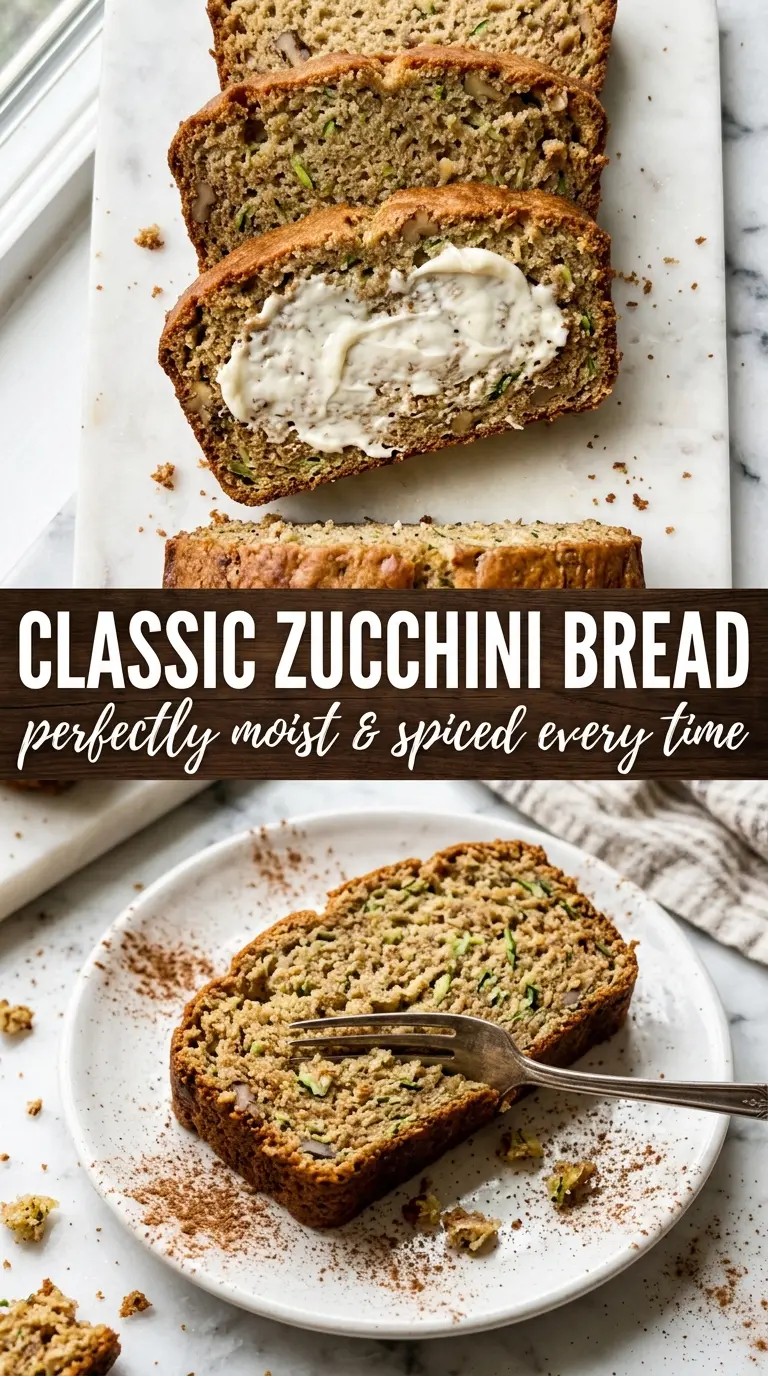
- Zucchini — Grated zucchini melts into the loaf and keeps it soft without making it taste vegetal. Don’t squeeze it dry; that liquid is part of what gives this bread its tender crumb.
- Vegetable oil — Oil gives a more reliable moist texture than butter in a quick bread like this. Melted butter can work, but the loaf will set up a little firmer once cool.
- Brown sugar isn’t needed here — Granulated sugar keeps the crumb lighter and lets the cinnamon come through cleanly. If you swap in some brown sugar, the loaf will taste deeper and a bit more molasses-like, but it won’t rise as cleanly.
- Cinnamon and nutmeg — These spices should support the zucchini, not bury it. Nutmeg is especially easy to overdo, so keep it measured; too much makes the loaf taste sharp instead of warm.
- Walnuts or pecans — Optional, but they add a good crunch against the soft crumb. Toast them first if you want more flavor, and fold them in at the very end so they stay evenly distributed.
Mixing the Batter So the Loaf Stays Tender and Tall
Build the dry base first
Whisk the flour, baking soda, baking powder, salt, cinnamon, and nutmeg in a large bowl until the spices disappear into the flour. That quick mix matters because it keeps the leavening evenly distributed, which helps the loaf rise without bitter pockets of soda. If you skip the whisking, you’ll sometimes get a patchy crumb or a pale streak through the middle.
Keep the wet mixture smooth, not whipped
Beat the sugar, oil, eggs, and vanilla until the mixture looks glossy and fully combined. You’re not trying to add air the way you would for cake; you’re just dissolving the sugar a bit and blending everything into a uniform base. Stir in the grated zucchini last so it stays evenly suspended instead of sinking to the bottom.
Fold until the flour just disappears
Add the wet ingredients to the dry and stir only until no dry streaks remain. A few lumps are fine. If you keep going, the loaf gets tougher and the center can bake into a strange, uneven tunnel instead of a soft slice. Fold in the nuts at the end if you’re using them, then divide the batter right away and bake before the baking soda loses its lift.
Make it nut-free
Skip the walnuts or pecans and the loaf bakes exactly the same. You lose the crunch, but you keep the soft, cinnamon-scented crumb and the slices hold together a little better for packed lunches or toast.
Gluten-free zucchini bread
A good 1:1 gluten-free flour blend can stand in for the all-purpose flour here. The loaf may need a few extra minutes in the oven, and it’s best cooled completely before slicing so the crumb can set without crumbling.
Add a richer spice note
For a warmer loaf, add a pinch of ginger or a little more cinnamon, but keep the total spice level restrained. This bread works because it tastes like zucchini bread, not spice cake.
Storage and Reheating
- Refrigerator: Store tightly wrapped for up to 5 days. The crumb stays moist, though the texture firms up a little once chilled.
- Freezer: Freeze slices or whole loaves wrapped well for up to 3 months. Thaw wrapped at room temperature so the surface doesn’t dry out.
- Reheating: Warm slices briefly in a toaster oven or skillet. The common mistake is microwaving too long, which turns the crumb rubbery instead of soft.
Answers to the Questions Worth Asking
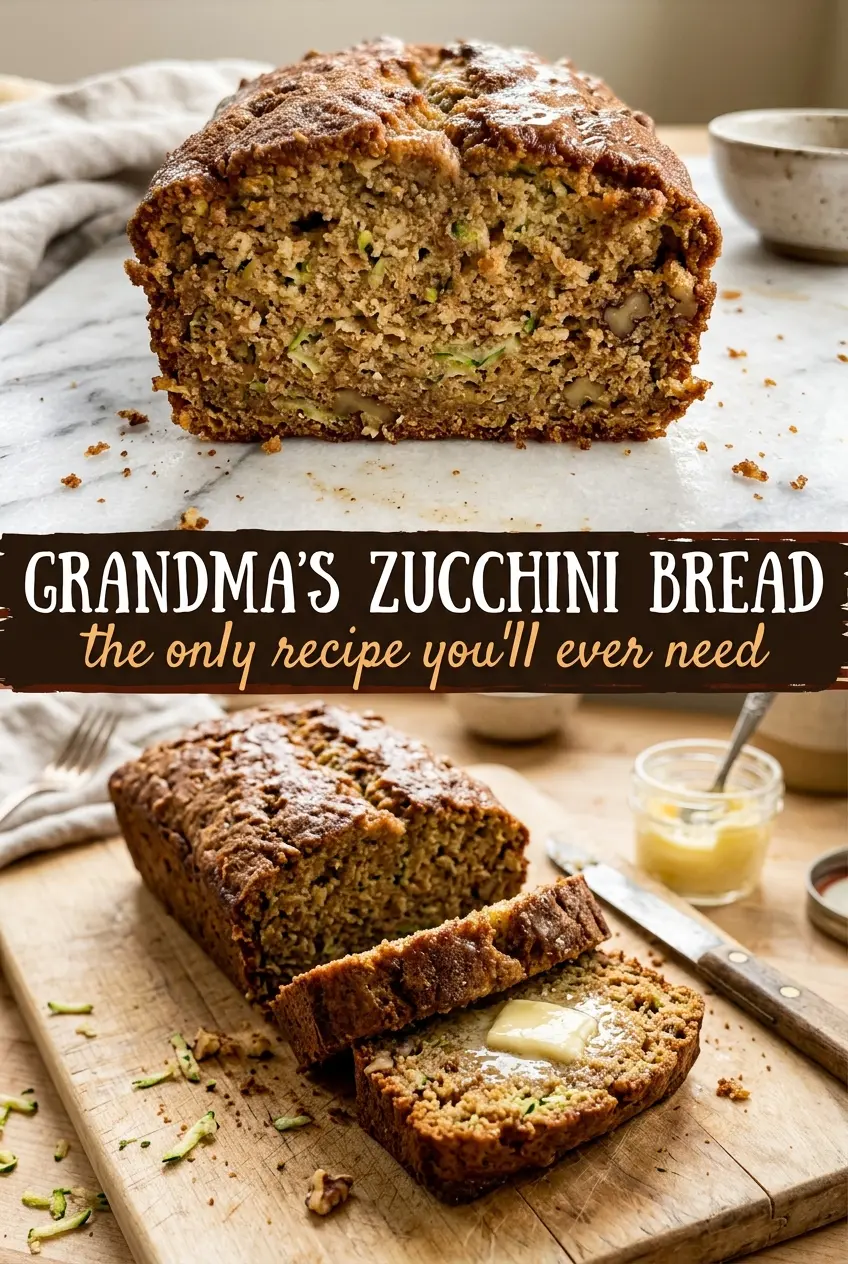
Classic Zucchini Bread
Ingredients
Equipment
Method
- Preheat the oven to 350°F and grease two 9x5 loaf pans (or one large loaf pan).
- Spread the greased pans on a sheet pan so they bake evenly.
- Whisk all-purpose flour, baking soda, baking powder, salt, cinnamon, and nutmeg in a large bowl until evenly combined.
- In a separate bowl, beat granulated sugar, vegetable oil, eggs, and vanilla extract until well combined.
- Stir in grated zucchini without squeezing it.
- Add wet ingredients to dry ingredients and fold until just combined, stopping as soon as no dry streaks remain.
- Fold in walnuts or pecans if using.
- Divide batter between the prepared loaf pans.
- Bake at 350°F for 55–65 minutes, until a toothpick comes out clean and the top is deeply golden.
- Cool in the pan for 20 minutes before transferring the loaves to a wire rack.