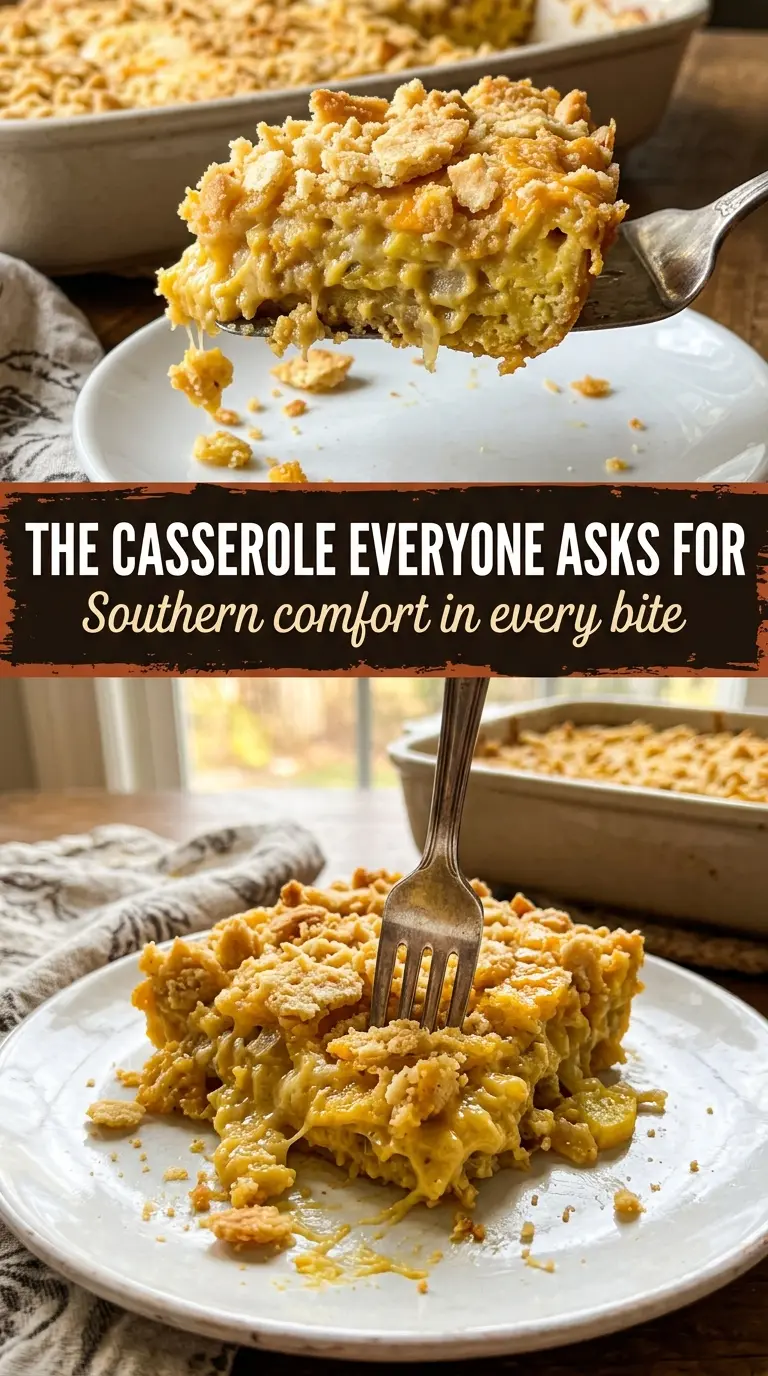
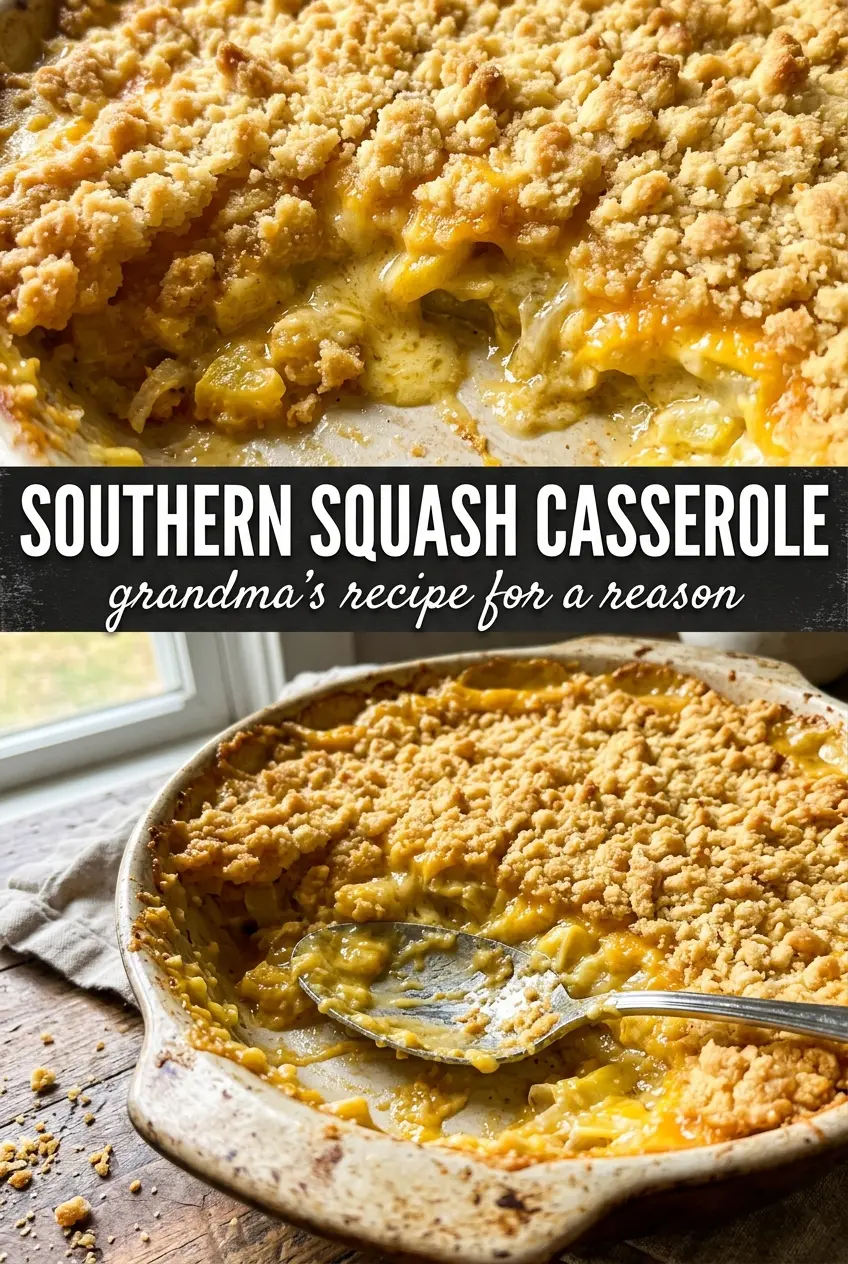
Southern squash casserole lands on the table creamy in the middle, bubbling at the edges, and capped with a buttery cracker crust that gives way with just enough crunch. The squash turns soft and savory, the cheddar melts into the custard, and the whole dish tastes like the kind of side people go back for before they’ve finished their first scoop.
What makes this version work is paying attention to moisture. Yellow squash holds a lot of water, and if you rush the draining step, the casserole turns loose instead of rich and sliceable. A quick boil until tender, a solid drain, and a light mash keep the texture soft without becoming watery. The onion gets cooked first so it blends into the filling instead of staying sharp, and the cracker topping goes on at the end so it stays crisp instead of sinking into the cheese.
Below you’ll find the little details that keep this casserole from sliding into mush, plus the best way to adapt it if you need a lighter swap or want to make it ahead.
The squash held its shape, the filling set up beautifully, and that Ritz topping stayed buttery and crisp all the way to the last bite. I’ve made a lot of squash casseroles, and this one had the best texture by far.
Love that buttery cracker crust on Southern squash casserole? Save this one for the next Sunday dinner or potluck.
The Squash Has to Lose Its Water Before the Casserole Can Set
Most squash casseroles fail for one reason: the squash goes into the dish carrying too much liquid. Yellow squash softens fast, but it also releases water fast, and if you don’t drain it well enough, the filling turns loose and the topping gets soggy before the center ever sets. Boiling the squash until just tender is fine, but the draining step matters more than the cooking step.
The goal is a mixture that looks thick and spoonable before it even hits the oven. You want the squash mashed lightly, not puréed, so the casserole keeps some texture. The eggs and cheese will bind what’s left, and that only happens cleanly when the base isn’t diluted with extra moisture.
- Drain the squash hard. Let it sit in a colander long enough to stop steaming. If you’ve got time, press it lightly with the back of a spoon or a clean towel.
- Cook the onion first. Raw onion can stay harsh in a short-baked casserole. Sautéing softens it and folds the flavor into the filling.
- Don’t overwork the squash. A light mash gives you a creamy casserole with bits of squash still visible. That texture is part of what makes it taste homemade.
What Each Ingredient Is Actually Doing in This Dish
- Yellow summer squash — This is the backbone of the casserole. Fresh squash with firm skin holds a better texture than oversized, seedy squash, which can turn watery and bland.
- Mayonnaise — It sounds old-school because it is, and it works. Mayo gives the filling body and richness without curdling the way some dairy-heavy mixtures can.
- Sharp cheddar — Sharp cheese keeps the casserole from tasting flat. Mild cheddar melts fine, but it won’t give you the same savory bite.
- Parmesan — This adds salt and depth. It helps the filling taste seasoned all the way through instead of just cheesy on top.
- Ritz crackers — They make the topping buttery and tender-crisp. If you swap them for plain breadcrumbs, you’ll lose that distinctive Southern-style richness.
- Butter — Tossing the cracker crumbs with melted butter before baking is what gives the top its golden, even crust instead of dry crumbs.
Building the Filling and Topping So They Bake Up Right
Softening the Squash Without Drowning It
Bring the squash just to the point where a fork slides in easily, then drain it until no more water is dripping off. If it goes into the bowl wet, the eggs have to fight that extra liquid and the casserole bakes up looser than it should. A light mash after draining helps the squash absorb the cheese and mayo instead of separating from them.
Mixing the Custard Base
Stir the squash with the eggs, mayo, cheeses, onion, sugar, garlic powder, salt, and pepper until everything is evenly distributed. The mixture should look thick and coated, not soupy. If it looks runny in the bowl, it will bake up loose in the dish, so don’t be tempted to add extra mayonnaise or cheese to fix a watery base.
Finishing With the Cracker Crust
Spread the filling into the baking dish, then scatter the remaining cheddar over the top before adding the buttery cracker crumbs. That middle layer of cheese melts into the casserole and helps the crust sit on top instead of sliding around. Bake until the edges are bubbling and the top is deeply golden; if the topping browns too fast, lay a loose piece of foil over it for the last few minutes.
How to Adapt This for a Lighter Table or a Bigger Crowd
Gluten-Free Version
Swap the Ritz crackers for your favorite gluten-free buttery cracker. Crush them the same way and toss with the melted butter as written. The topping will still brown and crisp, though it may be a little more delicate when you serve it.
Dairy-Free Version
Use a good dairy-free shredded cheddar-style cheese and swap the butter for a plant-based alternative. The filling still needs the mayo and eggs for structure, but the flavor will be a little less sharp and the top won’t brown quite as deeply.
Make It Ahead
You can mix the filling a few hours ahead and keep it covered in the refrigerator. Hold the cracker topping until right before baking so it stays crisp. If the mixture is cold from the fridge, add a few extra minutes in the oven so the center heats through.
Turn It Into a Fuller Side Dish
Add a handful of cooked, crumbled bacon or a little extra onion if you want a more savory casserole. That gives you a heavier, more meal-like side, but it can easily overshadow the squash, so keep the add-ins modest.
Storage and Reheating
- Refrigerator: Store covered for up to 4 days. The topping softens a bit, but the flavor stays good.
- Freezer: It freezes, but the texture of the squash softens after thawing. Freeze in portions for best results, tightly wrapped and sealed.
- Reheating: Reheat in a 325°F oven, covered loosely with foil at first, until warmed through. The common mistake is blasting it in the microwave, which makes the eggs rubbery and the topping limp.
Questions I Get Asked About This Recipe
Southern Squash Casserole
Ingredients
Equipment
Method
- Preheat the oven to 350°F and grease a 9x13 baking dish.
- Cook the sliced yellow summer squash in salted boiling water for 5–8 minutes until very tender, then drain well.
- Mash the drained squash lightly while warm.
- Sauté the diced onion until tender, then mix it into the mashed squash.
- Stir in the beaten eggs and mayonnaise until smooth and evenly combined.
- Add 3/4 cup cheddar, the parmesan, sugar, garlic powder, salt, and black pepper, then mix until fully incorporated.
- Spread the filling evenly into the greased baking dish.
- Top the casserole with the remaining cheddar.
- Toss the crushed Ritz crackers with the melted butter, then spread evenly over the top.
- Bake for 35–40 minutes at 350°F until the cracker topping is golden and the casserole is set and bubbling at the edges.