Pizza on a Blackstone griddle gives you that crisp-edged, bubbling-cheese result without firing up an indoor oven or waiting on a pizza stone. The crust gets a fast, even sear on the flat top, then the toppings finish under a dome so the cheese melts before the bottom overcooks. What you get is a pizza with a charred underside, stretchy mozzarella, and the kind of smoky edge that makes people hover around the griddle waiting for the next slice.
The trick is to treat the dough like flatbread for the first minute or two, then build the pizza after the first side is set. That first sear gives the dough enough structure to flip cleanly, and it keeps the toppings from sinking into raw dough. Medium heat matters here. Too hot, and the crust scorches before the cheese melts; too cool, and the dough dries out instead of blistering.
Below, I’ll walk through the one part that trips most people up on a griddle pizza, plus the ingredient swaps that still give you a crisp crust and a good melt. A few small moves make all the difference on a Blackstone.
The crust browned up underneath so nicely on the griddle, and flipping it before adding the sauce kept the center from getting soggy. My kids asked for these again the next night.
Griddle pizza with a crisp base, bubbly cheese, and charred edges is worth saving for your next outdoor cookout.
The Flip Is What Keeps the Crust from Going Soft
Most griddle pizzas fail because the toppings go onto raw dough and the bottom never gets the chance to set. By cooking the first side plain, you create a sturdy base that can handle sauce and cheese without collapsing. That flip is not a gimmick; it’s the whole reason this method works on a flat-top.
The other mistake is chasing a dark crust before the cheese has any chance to melt. A Blackstone holds heat well, so the pizza keeps cooking even after you add toppings. That’s why the dome matters. It traps heat above the pizza, which melts the cheese fast while the crust stays crisp instead of burning.
- Medium heat gives you time to build the pizza after the flip. High heat scorches the bottom before the toppings are done.
- Flour on the dough helps it stretch and release cleanly. Use just enough to keep it from sticking, not enough to dry it out.
- Olive oil on the griddle helps the crust brown evenly and gives you that crackly edge.
- A dome or large pan is the difference between melted cheese and a half-finished pizza with a raw top.
What the Dough, Sauce, and Cheese Are Each Doing Here
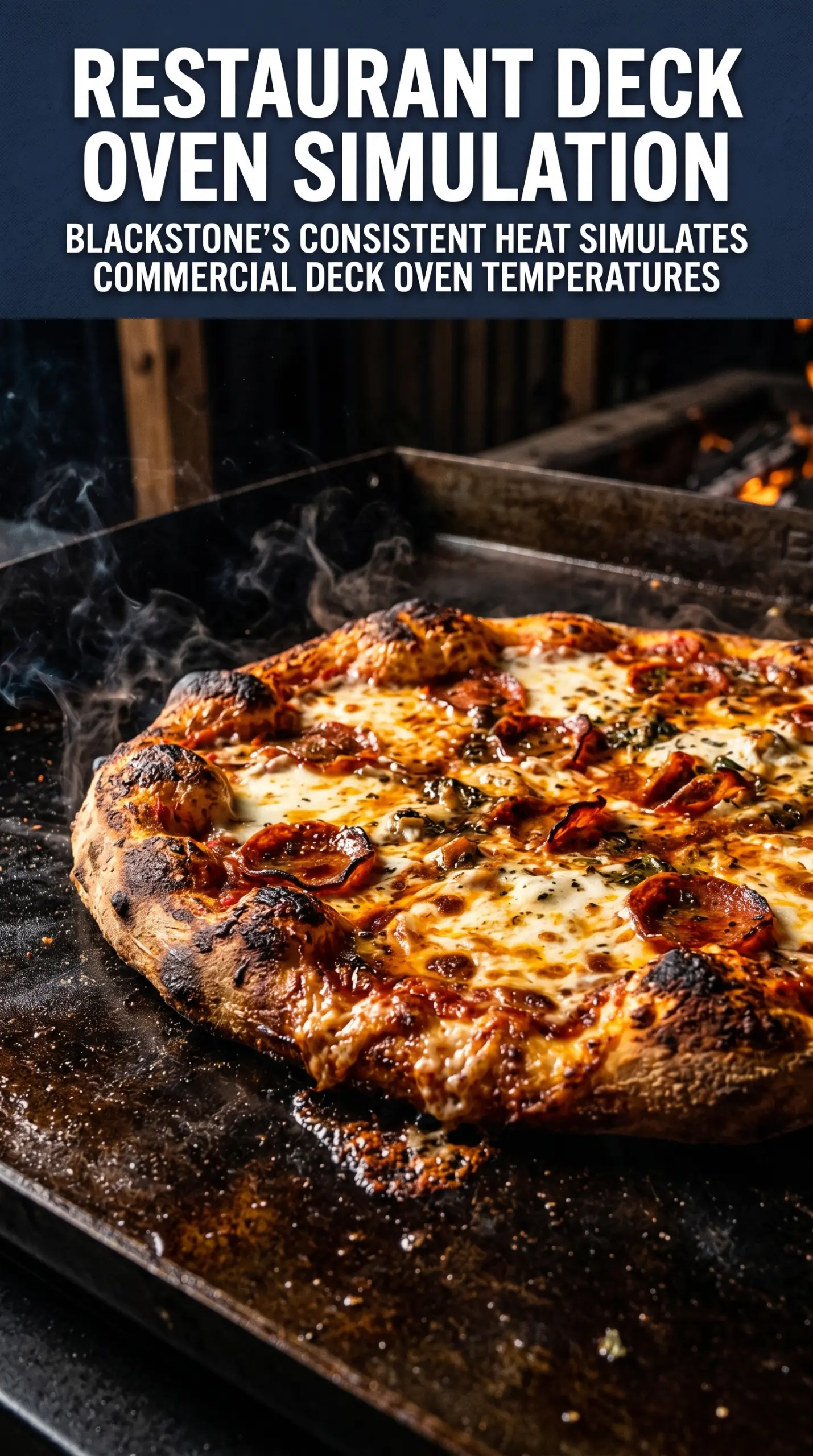
- Pizza dough needs enough gluten strength to stretch thin without tearing. Store-bought dough works fine if it’s relaxed at room temperature first; cold dough snaps back and fights you.
- Pizza sauce should be thick, not watery. Thin sauce runs to the edge and steams the crust instead of letting it stay crisp.
- Mozzarella is the melt you want here. Low-moisture shredded mozzarella gives the cleanest result; fresh mozzarella can work, but it brings extra moisture that softens the top unless you drain it well.
- Toppings should be cooked or thin enough to finish quickly. Heavy, wet toppings need to go on lightly or they’ll drag the center down before the cheese melts.
- Fresh basil and Parmesan go on after cooking so they stay bright. Basil blackens fast on the griddle, and Parmesan tastes sharper when it isn’t buried under heat.
Building the Pizza on the Griddle, One Side at a Time
Heating the Surface
Heat the Blackstone to medium and oil the surface lightly and evenly. You want the griddle hot enough that a flick of flour sizzles, but not so hot that the dough blackens in seconds. If the surface is smoking hard, it’s too hot for this style of pizza and the bottom will outrun the rest of the pie.
Stretching and Setting the Dough
Divide the dough into four portions and stretch each one into a thin round. Dust with flour as needed, but keep the layer light so the pizza doesn’t taste dusty. Lay the dough on the griddle and leave it alone for 2 to 3 minutes until the bottom is golden and the top has gone from raw and glossy to matte with a few bubbles.
The Flip and Fast Build
Flip the crust and work quickly on the cooked side. Spread on the sauce, add the cheese, then finish with toppings in a thin, even layer. If you pile everything on thick, the center stays heavy and the crust loses its crisp edge before the cheese has time to melt.
Melting Under the Dome
Cover the pizza with a dome or a large overturned pan and cook for 3 to 5 minutes. The cheese should be fully melted and starting to bubble, and the underside should stay golden rather than turning dark brown. Remove the pizza as soon as the cheese looks done; the griddle keeps carrying heat, and an extra minute can turn a crisp crust leathery.
How to Adapt This for Different Doughs and Toppings
Gluten-Free Dough on the Blackstone
Use a gluten-free pizza dough that’s meant to be stretched, not a batter-style crust. It usually needs a gentler flip and a little more oil on the griddle so it releases cleanly. The result is less chewy than standard dough, but you still get that crisp, browned base if you keep the toppings light.
Dairy-Free Pizza
Use a good melting dairy-free mozzarella-style cheese and go lighter on the sauce so the top doesn’t get greasy. Dairy-free shreds vary a lot, so choose one that actually softens under heat instead of staying rubbery. You’ll lose a little of the stretch, but the griddle crust still carries the pizza.
Pepperoni or Veggie Pizzas
Pepperoni works best when it goes on in a single layer so the fat doesn’t pool and slide around. For vegetables, pre-cook anything watery like mushrooms, peppers, or onions, or they’ll dump moisture onto the crust and soften it. Thinly sliced toppings finish better than chunky ones on a fast griddle pizza.
Make-Ahead Dough for a Crowd
Portion the dough earlier in the day and let it come to room temperature before cooking. Cold dough fights the stretch and shrinks back on the griddle, which makes the cook feel rushed for no reason. Once it’s relaxed, the pizzas move fast and you can turn out one after another.
Storage and Reheating
- Refrigerator: Store leftovers in an airtight container for up to 3 days. The crust softens a bit, but it still reheats well.
- Freezer: Freeze slices wrapped tightly for up to 1 month. The texture changes more than the flavor, so it’s best for quick lunches rather than a perfect second-round pizza.
- Reheating: Reheat in a skillet or back on the griddle over medium-low heat until the crust crisps and the cheese loosens again. The biggest mistake is microwaving it, which makes the crust soggy and the cheese rubbery.
Answers to the Questions Worth Asking
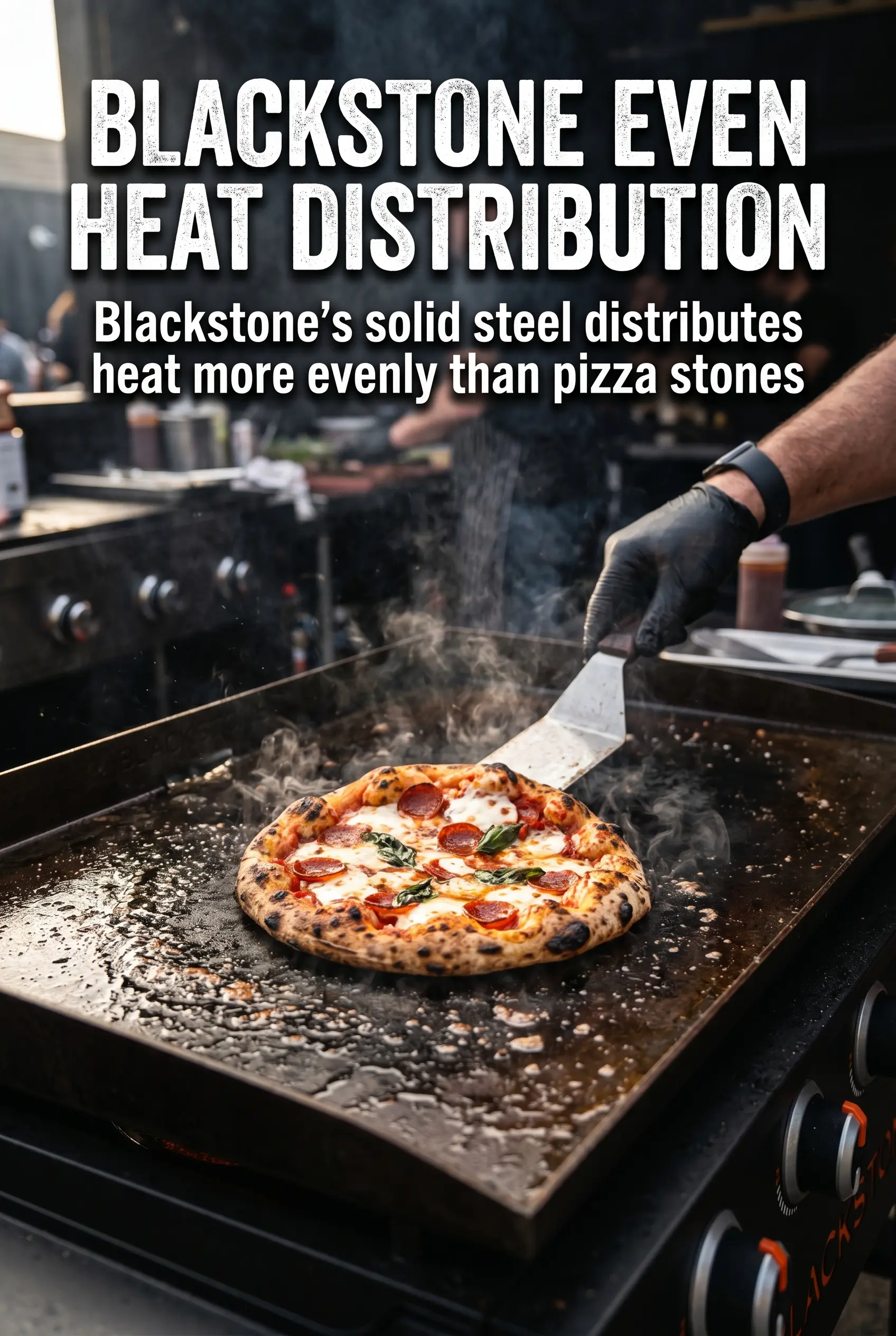
Pizza on a Blackstone Griddle
Ingredients
Equipment
Method
- Heat the Blackstone griddle to medium heat and oil the surface. Keep the heat steady so the dough starts browning immediately.
- Divide the pizza dough into 4 portions and stretch each into a thin round, dusting with flour as needed. Stretch evenly so the crust cooks at the same rate.
- Place the dough directly on the griddle and cook for 2-3 minutes until the bottom is golden. You should see set dough and light browning.
- Flip the crust and quickly add pizza sauce, shredded mozzarella cheese, and your choice of toppings to the cooked side. Work fast so the cheese starts melting right away.
- Cover with a dome or large pan and cook for 3-5 minutes until the cheese melts. Look for bubbling cheese and a fully heated center.
- Remove the pizza from the griddle, top with fresh basil leaves and grated Parmesan cheese, then slice and serve. Finish while hot so the basil stays fragrant.