Crispy potatoes carry this salad. The edges go deeply golden in the oven, then get tossed in a spicy-sweet gochujang dressing that clings instead of pooling at the bottom of the bowl. What you end up with is part potato salad, part roasted potato side, and every bite has a little crunch, a little heat, and a creamy finish.
The trick is giving the potatoes time to cool before they meet the dressing. Hot potatoes drink in the sauce and turn soft; cooled potatoes keep their edges intact and hold onto that roasted texture. A small amount of mayonnaise smooths out the gochujang without muting it, while rice vinegar and honey keep the dressing sharp and balanced instead of heavy.
Below, I’ll walk through the one step that keeps the potatoes crispy, plus a few swaps that make this work for different diets and different dinners.
The potatoes stayed crisp even after tossing, and the gochujang dressing had just enough heat with that creamy, tangy finish. I served it at room temperature and it disappeared fast.
Save these crispy gochujang potatoes for the nights when you want a bold side with crunchy edges and a creamy spicy glaze.
The Part That Keeps Crispy Potatoes from Going Soggy
Roasting the potatoes until the cut sides are deeply browned matters more here than in a standard potato salad, because the dressing is meant to coat and contrast, not soften everything into one texture. If the potatoes are pale when they come out of the oven, the salad will taste flat and the dressing will slide right off. The rough, blistered edges are what catch the gochujang mayo and make every bite worth a second forkful.
The cooling step is not optional. Hot potatoes release steam, and steam is what turns a crisp roast into a soft one. Let them sit until they’re warm, not steaming, then toss. That’s the difference between a salad with texture and a bowl of dressed potatoes that lean mushy within minutes.
What the Dressing Ingredients Are Doing Here
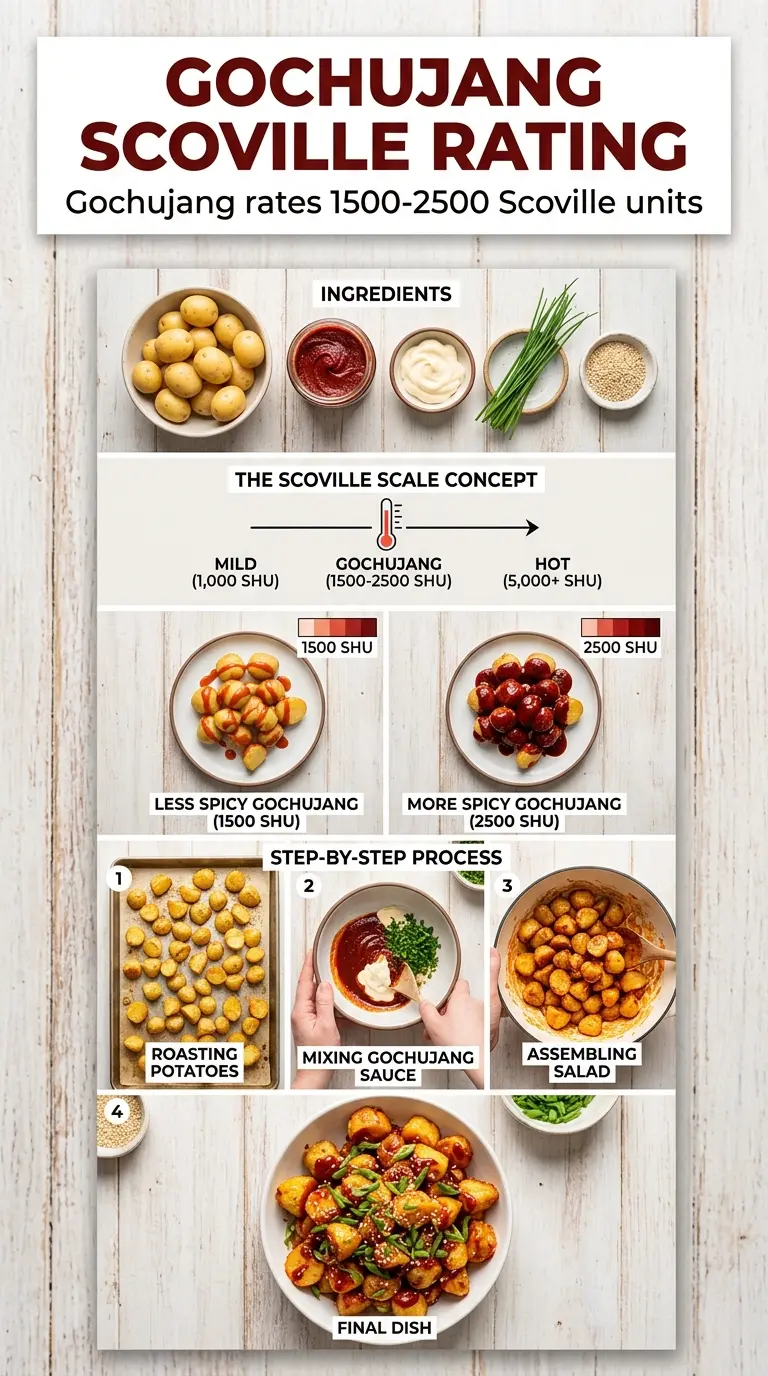
- Gochujang — This is the backbone of the dish. It brings heat, sweetness, and fermented depth in one spoonful, which is why a plain hot sauce swap won’t give you the same rounded result. If your gochujang is thick and stiff, stir it with the mayo and vinegar first so it loosens evenly.
- Mayonnaise — Mayo softens the spice and helps the dressing cling to the potatoes. It also gives the salad that creamy potato-salad feel without needing a lot of it. Greek yogurt can work in a pinch, but it will taste tangier and a little less lush.
- Rice vinegar and honey — These two keep the dressing bright and balanced. The vinegar sharpens the gochujang, and the honey rounds off the heat so the salad tastes balanced instead of bluntly spicy. If you swap the honey for sugar, dissolve it fully so the dressing doesn’t end up gritty.
- Sesame oil and sesame seeds — Sesame oil adds the nutty finish that makes the dressing taste intentional, while the seeds bring a little crunch on top. Don’t replace sesame oil with neutral oil; you’d lose the final savory note that pulls the whole bowl together.
- Green onions — They give freshness and a clean bite at the end. Slice them right before serving so they stay crisp and vivid instead of wilting into the salad.
Roasting, Cooling, and Tossing Without Losing the Crunch
Getting the Potatoes Browned in the Oven
Heat the oven to 425°F and spread the halved potatoes cut-side down on the pan after tossing them with oil, salt, and pepper. The cut surfaces should make direct contact with the hot sheet pan, because that’s where the browning starts. If the potatoes are crowded, they’ll steam and stay soft, so give them enough space to roast instead of sweating together. Pull them when the bottoms are deep gold and the edges look crisp enough to catch with a spatula.
Letting the Steam Escape
Once the potatoes come out, leave them alone for the full cooling time. You want them warm enough to absorb flavor but not hot enough to melt the dressing or collapse their texture. If you rush this step, the mayo loosens too much and the potatoes lose their roasted snap. A shallow bowl helps them cool faster because the steam can move away instead of trapping underneath.
Mixing the Dressing Until It Smooths Out
Stir the gochujang, mayonnaise, rice vinegar, honey, and sesame oil together until the mixture turns glossy and even. If the gochujang looks streaky at first, keep stirring; it takes a minute to fully dissolve into the mayo. Taste it before it hits the potatoes. If it feels too sharp, add a touch more honey. If it feels too heavy, a small splash of vinegar wakes it back up.
Bringing Everything Together
Toss the cooled potatoes with the dressing gently, just until coated. You’re not trying to mash them or work the sauce into every crevice. Add the sesame seeds and green onions at the end so they stay visible and textured. Serve the salad at room temperature for the best balance of crisp edges and creamy dressing.
Three Ways to Make This Gochujang Potato Salad Fit the Table
Make It Dairy-Free and Egg-Free
This recipe is already naturally dairy-free, and the mayo does the heavy lifting without any eggs in the rest of the dish. If you want to avoid traditional mayonnaise, use a vegan mayo with the same measurements. The texture stays creamy, but the flavor will be a little lighter and less rich.
Turn Up the Heat Without Ruining the Balance
For a sharper, spicier bowl, add a little extra gochujang or a pinch of gochugaru to the dressing. Don’t just dump in chili flakes and call it the same thing; gochujang brings body and sweetness that plain heat can’t replace. If you push the spice higher, keep the honey in the mix so the salad still tastes rounded.
Make It Ahead for a Picnic or Potluck
Roast the potatoes and mix the dressing up to a day ahead, but keep them separate until the potatoes have cooled completely. Tossing too early takes away the crisp finish that makes this salad special. Assemble shortly before serving and let it sit at room temperature for 10 to 15 minutes so the flavors settle without the potatoes turning soft.
Swap in a Different Potato Shape
Baby potatoes give you the best ratio of creamy center to crisp edge, but Yukon golds cut into 1-inch chunks also work. Avoid waxy potatoes that stay too dense or giant pieces that need more time than the dressing can wait for. The key is exposing enough cut surface to brown well.
Storage and Reheating
- Refrigerator: Store leftovers in an airtight container for up to 3 days. The potatoes will soften a bit as they sit, but the flavor stays good.
- Freezer: I don’t recommend freezing this salad. The dressing can separate and the potatoes turn grainy after thawing.
- Reheating: This is best served at room temperature, not reheated. If it has been chilled, let it sit out for 20 to 30 minutes before serving. Microwaving it will erase the crispy edges and make the dressing greasy.
Answers to the Questions Worth Asking
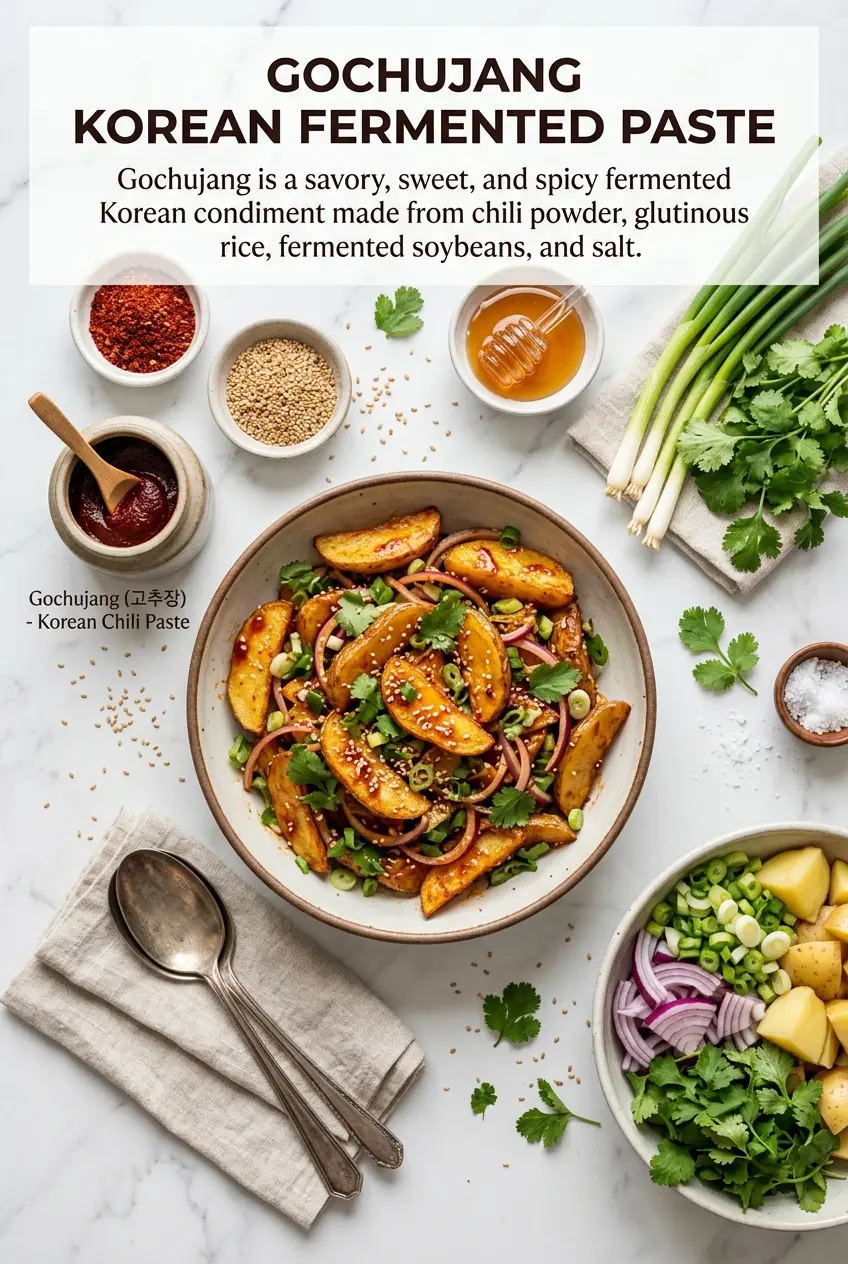
Crispy Gochujang Potato Salad
Ingredients
Equipment
Method
- Preheat the oven to 425°F. Set a sheet pan inside the oven to heat up while you prep.
- Halve the baby potatoes, then toss them with olive oil, salt, and pepper. Spread them cut-side down on the hot sheet pan in a single layer.
- Roast for 30-35 minutes, until the potatoes are golden and crispy. Flip or stir once halfway through for even browning.
- Let the potatoes cool for 30 minutes. Keep them at room temperature so the dressing doesn’t steam the crisp edges.
- Mix gochujang, mayonnaise, rice vinegar, honey, and sesame oil until smooth. Taste and adjust seasoning if needed.
- Toss the cooled potatoes with the gochujang dressing until evenly coated. Fold gently so the potatoes stay crisp.
- Top with sesame seeds and green onions. Serve at room temperature.