Creamy horseradish potato salad has the kind of sharp, cool bite that keeps people going back for another spoonful. The red potatoes stay tender without turning mushy, and the dressing lands in that sweet spot between rich and tangy, with enough horseradish to wake up the whole bowl without overpowering it. It’s the side dish that cuts through grilled meat, roast beef, or anything smoky and heavy on the plate.
What makes this version work is the balance. Sour cream gives the salad body, mayonnaise rounds it out, Dijon adds depth, and white wine vinegar keeps the whole thing from tasting flat. The potatoes are cooled before the dressing goes on, so they hold their shape instead of absorbing everything at once and breaking down. That chilling time matters too; the flavor settles in, and the horseradish mellows just enough to taste bright instead of harsh.
Below, I’ve laid out the small choices that make the biggest difference, plus the swaps I’d use if you want a little less heat or need to adjust the recipe for what’s in your fridge.
The dressing had just the right tang and the potatoes held up beautifully after chilling. I served it with roast beef and even the people who usually skip potato salad went back for seconds.
Creamy horseradish potato salad brings the tang and heat that make a beef dinner stand out.
The Reason Most Creamy Potato Salads Turn Bland
Potato salad usually goes flat for one of two reasons: the potatoes are still warm when the dressing goes in, or the dressing doesn’t have enough acid to keep the richness in check. Warm potatoes drink in the dressing unevenly and can turn pasty on the outside while staying dry in the center. Too little vinegar or mustard, and the whole bowl tastes heavy instead of balanced.
This version avoids both problems by cooling the potatoes first and building the dressing with sour cream, mayonnaise, Dijon, and white wine vinegar. That combination gives you body, tang, and a little backbone. The horseradish doesn’t just add heat; it sharpens the entire salad so it tastes alive even after it chills.
What Each Ingredient Is Actually Doing In This Bowl
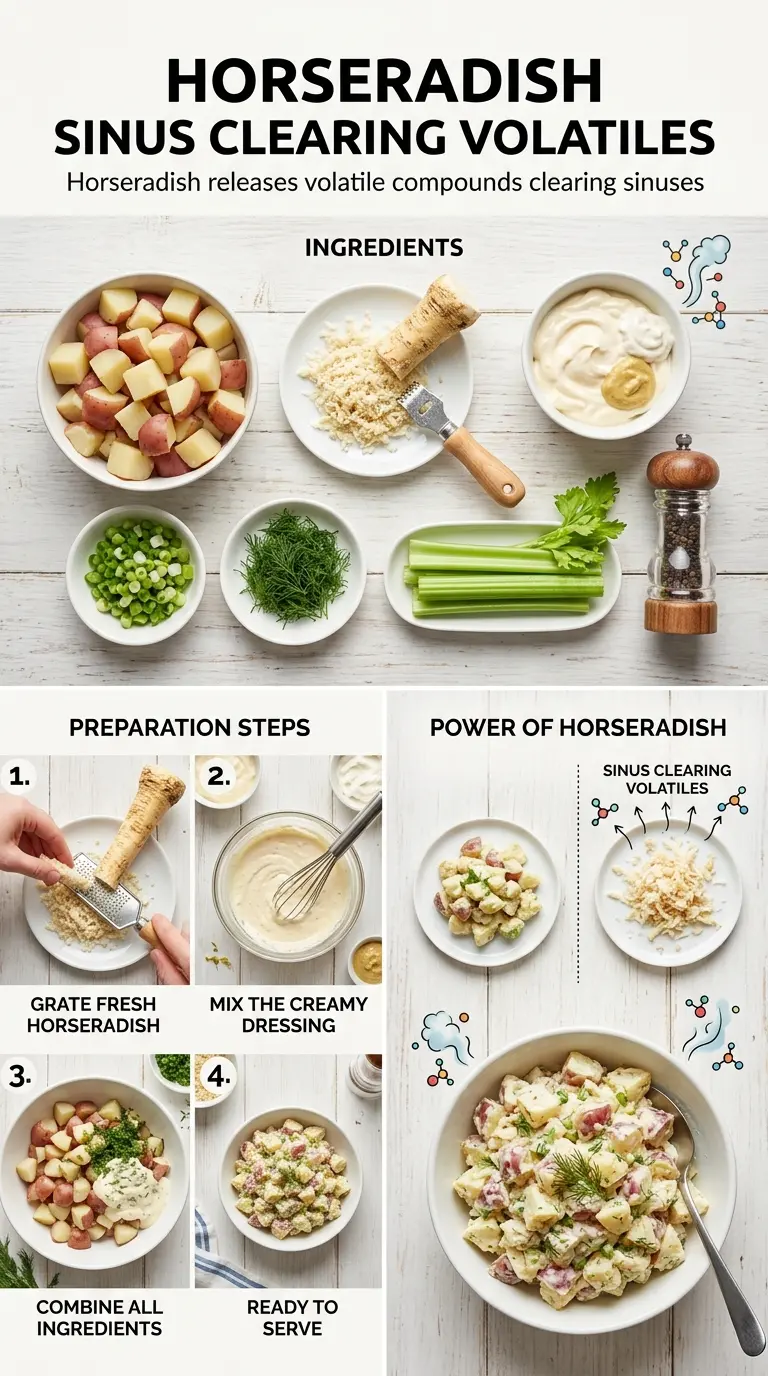
- Red potatoes — Their waxy texture holds together after boiling and chilling, which is exactly what you want here. Russets break down too much and turn the salad fluffy in a way that fights the creamy dressing.
- Sour cream — This is what gives the salad its cool, tangy base. Full-fat sour cream gives the best texture, but light sour cream works if you want a little less richness.
- Mayonnaise — Mayo smooths out the dressing and keeps it from tasting thin. If you swap in all sour cream, the salad will taste sharper and less silky.
- Prepared horseradish — This is the ingredient that gives the salad its signature kick. Use the prepared kind, not creamy horseradish sauce, so you control the heat and don’t add extra sweetness.
- Dijon mustard — Dijon adds depth and helps the dressing taste more complete. Yellow mustard can work in a pinch, but it will taste brighter and less rounded.
- White wine vinegar — A small amount keeps the dressing from feeling heavy. If you skip it, the mayo and sour cream can flatten out after chilling.
- Chives and parsley — The herbs lift the salad and keep the flavor from feeling all cream and root vegetables. Fresh is worth using here because dried herbs disappear into the dressing.
Getting The Potatoes, Dressing, and Chill Time To Work Together
Boiling The Potatoes Without Breaking Them Down
Start the potatoes in cold water and bring them up to a boil so the centers cook evenly. Once they’re tender when pierced with a fork, drain them right away and let them cool until they’re no longer steaming. If you dress hot potatoes, the outside can go soft and the salad will taste heavy instead of clean and creamy.
Mixing The Dressing While The Potatoes Cool
Whisk the sour cream, mayonnaise, horseradish, Dijon, vinegar, salt, and pepper until the mixture looks smooth and glossy. Taste it at this stage; it should seem a little bolder than you want in the final salad because the potatoes will soften the flavor. If it tastes flat now, it’ll taste dull later.
Combining Everything Without Mashing It
Add the chopped chives and parsley to the cooled potatoes, then pour the dressing over the top. Toss gently with a spatula or large spoon so the potatoes stay in cubes instead of smearing into the dressing. If you stir hard, the edges of the potatoes break down and the salad turns dense.
Letting The Chill Time Do The Real Work
Cover the bowl and refrigerate for at least 2 hours before serving. That rest gives the horseradish time to mellow and lets the potatoes absorb the dressing without getting soggy. Serve it cold, not icy, so the flavors come through clearly.
How To Adjust The Heat, Richness, Or Make-Ahead Timing
Milder horseradish salad
Cut the horseradish back to 1 to 2 tablespoons if you want the salad to stay creamy with just a little bite. You’ll still get the sharp finish, but it won’t dominate the potatoes or crowd out the herbs.
Dairy-free version
Use a good dairy-free sour cream and mayonnaise with a neutral flavor. The texture stays close to the original, though the tang may be a little different, so add the vinegar gradually and taste as you go.
Extra-herby potato salad
Double the parsley or add a little dill if you want a fresher, greener salad. Dill pushes it closer to a deli-style potato salad, while parsley keeps the flavor cleaner and lets the horseradish stay front and center.
Storage and Reheating
- Refrigerator: Store covered for up to 4 days. The dressing may thicken slightly as it chills, and the horseradish will taste a little sharper on day one than on day two.
- Freezer: Don’t freeze this salad. The dairy dressing separates and the potatoes turn grainy after thawing.
- Reheating: This salad is meant to be served cold or cool, not reheated. If it’s been in the fridge for a while, let it sit out for 15 to 20 minutes before serving so the dressing loosens and the flavors open up.
Answers to the Questions Worth Asking
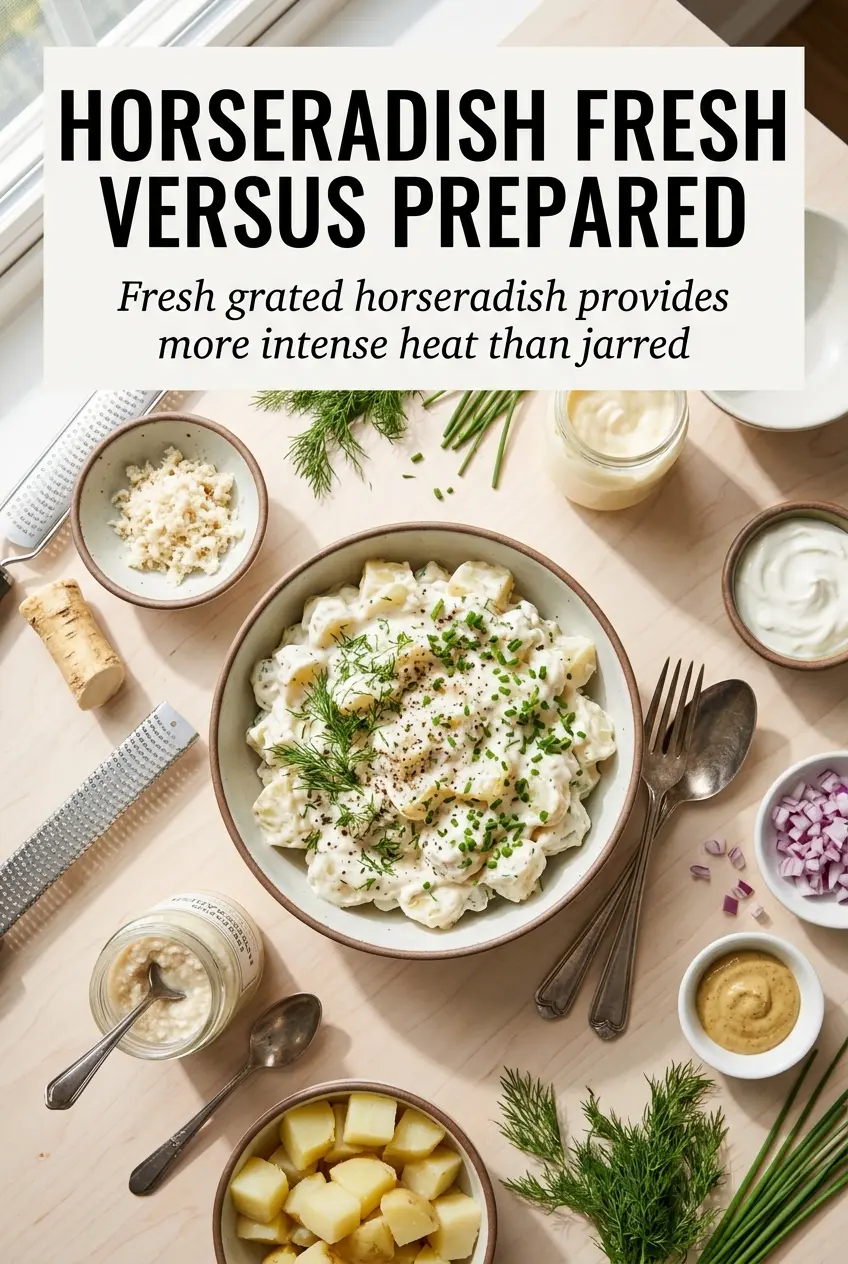
Creamy Horseradish Potato Salad
Ingredients
Equipment
Method
- Boil the red potatoes in a large pot of water until tender, about 15–20 minutes, until a knife slides in easily (visual cue: cubes break slightly at the edges).
- Drain the potatoes and cool them on a sheet pan until they’re room temperature, about 10–15 minutes (visual cue: surface looks dry, not steamy).
- In a bowl, mix sour cream, mayonnaise, prepared horseradish, Dijon mustard, and white wine vinegar until smooth (visual cue: dressing turns creamy and evenly flecked with horseradish).
- Season the dressing with salt and pepper to taste (visual cue: mixture looks glossy and fully seasoned).
- Combine the cooled potatoes with fresh chives and fresh parsley in a large bowl (visual cue: herbs are evenly distributed).
- Pour the dressing over the potato mixture and toss well until every cube is coated (visual cue: salad looks creamy with no dry patches).
- Refrigerate for 2 hours before serving (visual cue: salad thickens slightly and tastes more cohesive).