Warm German potato salad hits the table with glossy potatoes, crisp bacon, and a tangy dressing that soaks into every slice instead of sitting on top. That balance is what makes it worth making again and again: the potatoes stay tender, the dressing stays bright, and the bacon gives each bite a salty crunch that keeps the whole dish from tasting flat.
The trick is using Yukon gold potatoes and slicing them before boiling so they cook evenly and hold their shape when tossed with the hot dressing. The vinegar needs enough sugar to round it out, and the broth helps the dressing cling without turning heavy. If you’ve had German potato salad that tasted sharp, oily, or bland, it usually came down to the dressing being out of balance or poured on at the wrong time.
Below you’ll find the exact moments that matter most: how to keep the potatoes from breaking apart, how to build a dressing that tastes bold without biting back, and a few easy ways to adapt it for different diets and make-ahead needs.
The dressing soaked into the potatoes instead of pooling at the bottom, and the bacon stayed crisp enough to add a little crunch every time I spooned it up.
Save this warm German potato salad for the nights when you want bacon dressing and tender Yukon gold potatoes in one bowl.
The Dressing Has to Hit the Potatoes While It's Still Hot
This is the part that separates a good German potato salad from a bowl of dressed potatoes that never quite comes together. The potatoes need to be warm when the vinegar mixture goes in, and the dressing itself needs to be hot enough to soak in a little as you toss. That's how the flavor moves past the surface and into the slices instead of sliding off.
If the salad tastes flat, it's usually because the potatoes cooled too much before the dressing was added or the seasoning wasn't balanced with enough salt and sugar. The bacon drippings do a lot of the heavy lifting here, but they still need the broth and vinegar to keep the dressing from tasting greasy.
- Yukon gold potatoes — These stay creamy without collapsing into mash. Russets get too fluffy for this style, and red potatoes can work, but they won't give you quite the same soft, buttery bite.
- Bacon drippings — This is where the depth comes from. Use enough of the rendered fat to sauté the onion and build the dressing, but don't let the salad turn slick; the broth and vinegar keep it balanced.
- White vinegar — It gives the salad its clean, sharp edge. Apple cider vinegar can work in a pinch, but it brings a softer, fruitier note and slightly changes the classic profile.
- Dijon mustard — This helps the dressing emulsify just enough to cling to the potatoes. Yellow mustard will taste harsher and less rounded.
What Each Ingredient Is Actually Doing When Hot Dressing Hits Potatoes
- Potatoes still warm (not hot, not cold) — Warm potatoes have open pores that absorb dressing readily. Cold potatoes are harder to penetrate; hot potatoes become mushy.
- Dressing at medium-warm temperature — The dressing should be warm enough to flow but not so hot it turns the potatoes to mush. Test the temperature first.
- Oil-based dressing (not thick mayo) — Hot thin dressing penetrates better than thick mayo. Oil flows into the warm potato and flavors it from inside.
- Acid (vinegar or lemon) to help penetration — The acid helps the warm potato absorb the dressing more efficiently. It also seasons the potato from inside.
- Salt in the dressing (generous amount) — Warm potatoes absorb salt readily. Season boldly so the flavor is distributed throughout.
- Quick tossing while everything is warm — Don’t let the potatoes cool while the dressing is still hot. Toss immediately so the warm potato absorbs optimally.
- Time for absorption (10-15 minutes before other ingredients) — The warm potato needs a few minutes to drink in the warm dressing before you add cold ingredients.
- Cool ingredients added after dressing is absorbed — Once the potatoes have absorbed the warm dressing, you can add cooler ingredients without the temperature shock breaking down the potatoes.
What Each Stage Is Doing to the Final Bowl
Boiling the Potatoes to Tender, Not Fragile
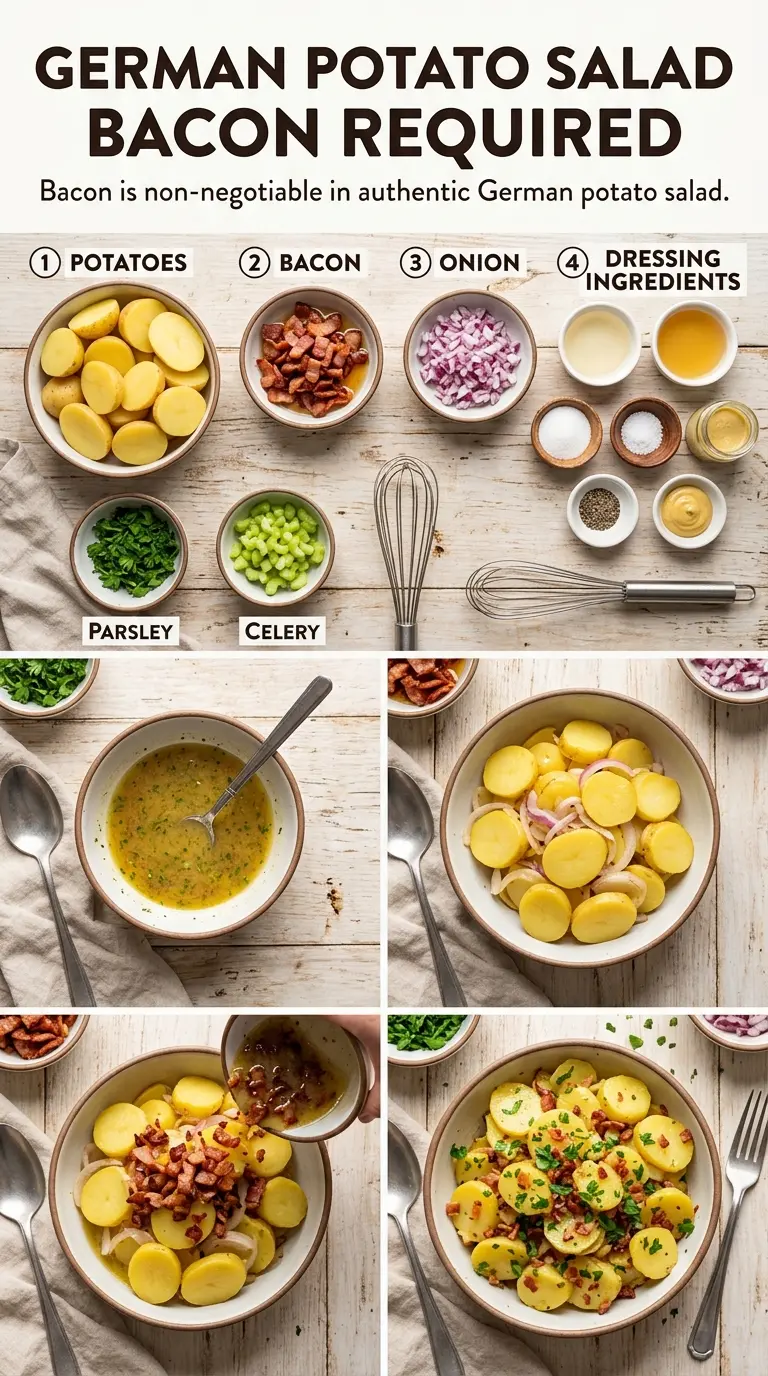
Cook the sliced potatoes until they're tender when pierced but still hold their shape at the edges. If they're overcooked, they'll break apart the second you toss in the dressing. Drain them well so they don't water down the bacon drippings later.
Building the Bacon Dressing
Cook the bacon until crisp, then use the drippings to soften the onion before adding broth, vinegar, sugar, mustard, salt, and pepper. Let that mixture simmer just long enough for the sugar to dissolve and the onions to turn silky. If the dressing tastes aggressively sharp, give it another minute on the heat; vinegar mellows a little once it's heated through with the broth and fat.
Tossing While Everything Is Warm
Crumbled bacon goes into the potatoes before the hot dressing so it can distribute through the bowl. Pour the dressing over gently and toss with a light hand, just until the slices are coated. Stirring too hard will smash the potatoes and turn the salad muddy instead of glossy.
Finishing With Parsley
Add the parsley at the end so it stays fresh and green against the warm potatoes. It's not just garnish here; it lifts the bacon and vinegar so the salad tastes bright instead of heavy. Serve it warm, because that's when the texture and seasoning land at their best.
How to Adapt This for Different Tables and Schedules
Make It Dairy-Free Without Losing the Classic Feel
This recipe is naturally dairy-free as written, which is part of why the bacon drippings matter so much. If you're serving someone who avoids dairy, you don't need to change a thing; just keep the broth and mustard balanced so the dressing still tastes full and not thin.
Use Red Potatoes for a Firmer Texture
Red potatoes hold their shape well and give you a salad with a little more bite. The tradeoff is a less buttery texture, so the dressing has to work harder to carry the flavor. If you want neat slices that stay distinct on a buffet, red potatoes are a solid swap.
Swap in Vegetable Broth for a Pork-Free Version
Vegetable broth can replace the chicken broth if you need a pork-free shortcut, but the flavor will be a little lighter. In that case, lean on the mustard and parsley for brightness and don't skimp on the bacon drippings if bacon is still on the table.
Storage and Reheating
- Refrigerator: Store leftovers in an airtight container for up to 3 days. The potatoes will absorb more dressing as they sit, so the salad gets a little more seasoned by day two.
- Freezer: I don't recommend freezing this salad. Potatoes change texture after thawing and the dressing loses its fresh, bright finish.
- Reheating: Warm it gently in a skillet over low heat or in the microwave at half power until just heated through. Don't blast it on high heat or the potatoes will turn mealy and the bacon will lose what little texture it has left.
Answers to the Questions Worth Asking
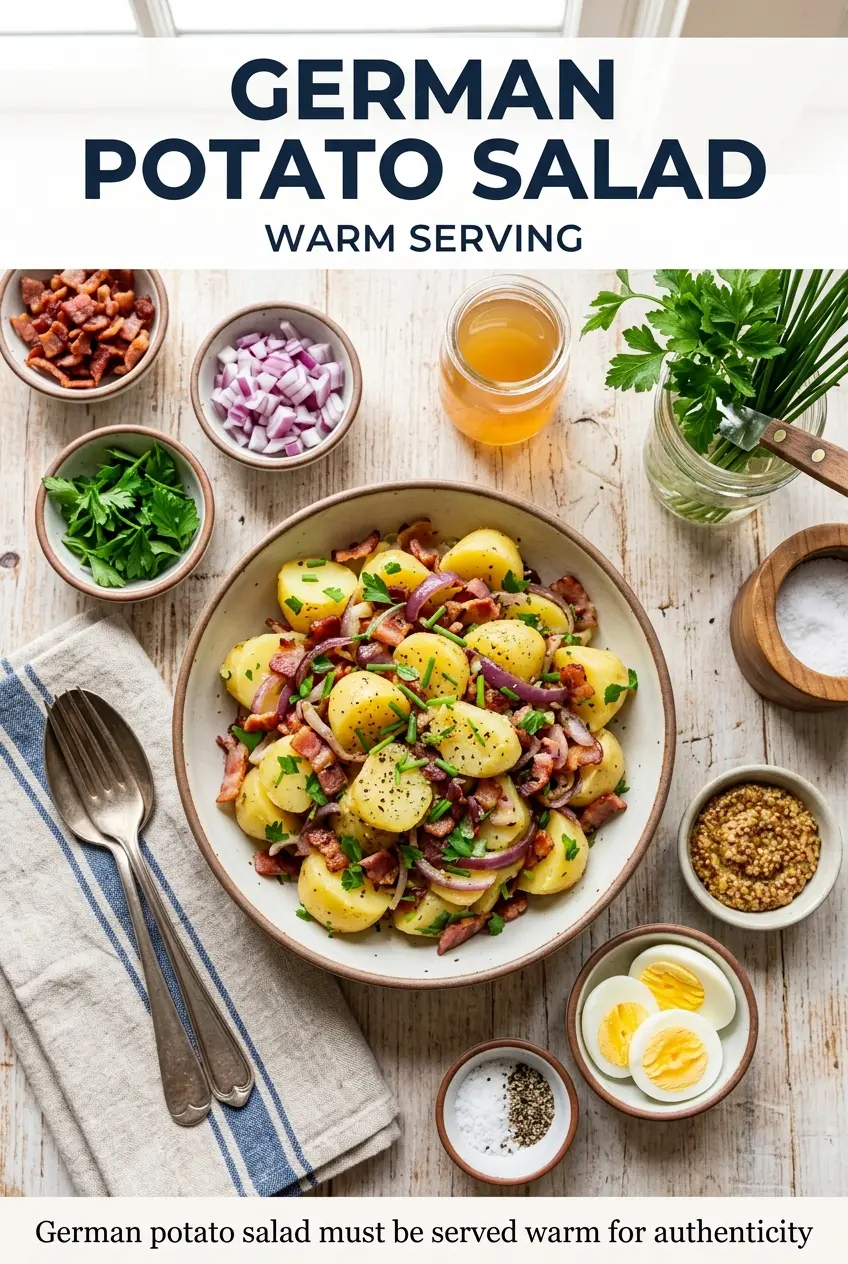
German Potato Salad
Ingredients
Equipment
Method
- Bring a large pot of water to a boil and add the sliced Yukon gold potatoes. Boil for 15 minutes, until tender when pierced, then drain well.
- Heat a cast iron skillet over medium heat and cook the bacon until crisp, about 8 minutes. Reserve the drippings in the pan and remove the bacon to a paper towel to cool.
- In the same skillet with bacon drippings, add the diced onion. Sauté for 5 minutes at medium heat, until soft and translucent.
- Pour in the chicken broth and stir to loosen browned bits from the skillet. Add white vinegar, sugar, Dijon mustard, salt, and black pepper, then simmer for 5 minutes to meld flavors.
- Crumble the cooked bacon and add it to the drained potatoes. Toss to distribute the bacon evenly.
- Pour the hot dressing over the potatoes and bacon, then toss gently to coat without breaking the slices. Taste and adjust seasoning if needed.
- Sprinkle the chopped fresh parsley over the warm salad and toss once more. Serve immediately while glossy and hot.