Creamy Japanese potato salad lands somewhere between a picnic staple and a proper comfort-food side. The potatoes stay soft and a little chunky, the cucumbers keep a fresh crunch, and the dressing coats everything without turning heavy or gluey. That contrast is what makes it worth making at home instead of treating it like just another deli salad.
The trick is in the texture. The potatoes are mashed while still warm, but not turned into a paste, so they hold enough shape to catch the mayo dressing. Salting the cucumber and squeezing out the water keeps the salad from getting watery after it chills, and a short rest in the fridge gives the flavors time to settle into the potatoes instead of sitting on top of them.
Below, I’ve included the little details that matter most: how soft the potatoes should be, why the vegetables are treated differently, and the few swaps that still keep the salad tasting like itself.
The potatoes held their shape but still got creamy, and squeezing the cucumber first kept the salad from turning watery after chilling. My husband went back for seconds before dinner was even on the table.
Creamy Japanese potato salad with crisp cucumber and fluffy mashed potatoes deserves a spot in your rotation.
The Chill Time Is What Gives the Potatoes Their Signature Texture
Japanese potato salad tastes best after it has had time to rest in the fridge. That chill period does more than cool the bowl down. It lets the dressing soak into the warm potatoes and helps the cucumber, carrot, and egg settle into the mix without tasting separate.
If you serve it right after mixing, it can taste loose and a little flat. After two hours, the potatoes firm up just enough to hold the creamy dressing, and the flavors come together in a way that feels smoother and more balanced. That rest is part of the recipe, not an extra step.
What Each Ingredient Is Doing in the Bowl
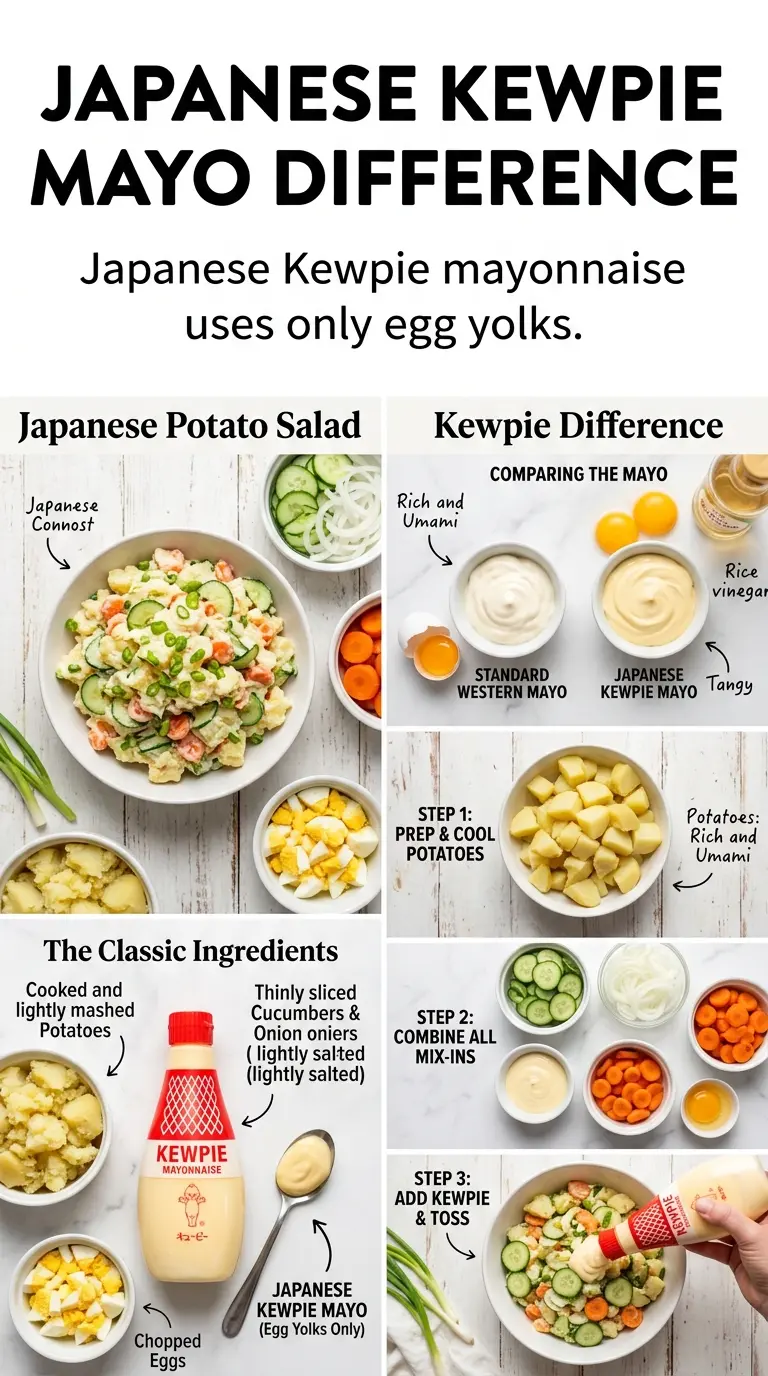
- Russet potatoes — These break down into a soft, fluffy base that absorbs the dressing well. Waxy potatoes stay too firm for this style of salad, so russets are the right choice here.
- Japanese mayonnaise — This gives the salad its rich, slightly tangy backbone. Regular mayo works if that’s what you have, but Japanese mayo brings a deeper savoriness and a silkier texture.
- Rice vinegar and sugar — Together, they brighten the potatoes and keep the dressing from tasting heavy. The sugar doesn’t make the salad sweet; it rounds out the vinegar and mayo.
- Cucumber — Salting and draining it first is the difference between a creamy salad and a watery one. Don’t skip that step, especially if the cucumber looks very juicy.
- Carrots and corn — They add color and a little sweetness, but they also help the salad feel layered instead of one-note. Blanching the carrots briefly keeps them tender without going mushy.
- Hard-boiled eggs — They add softness and a little richness without making the salad dense. Chop them fairly small so they blend into the potatoes instead of scattering in dry pieces.
Getting the Potatoes Creamy Without Turning Them Gluey
Cooking the Potatoes Until They Collapse Easily
Boil the cubed potatoes until a fork slides through with almost no resistance. If they’re undercooked, they’ll stay chalky in the center and won’t blend into the salad well. Drain them thoroughly, then let the steam escape for a minute so the bowl doesn’t trap extra water.
Mashing While They’re Still Warm
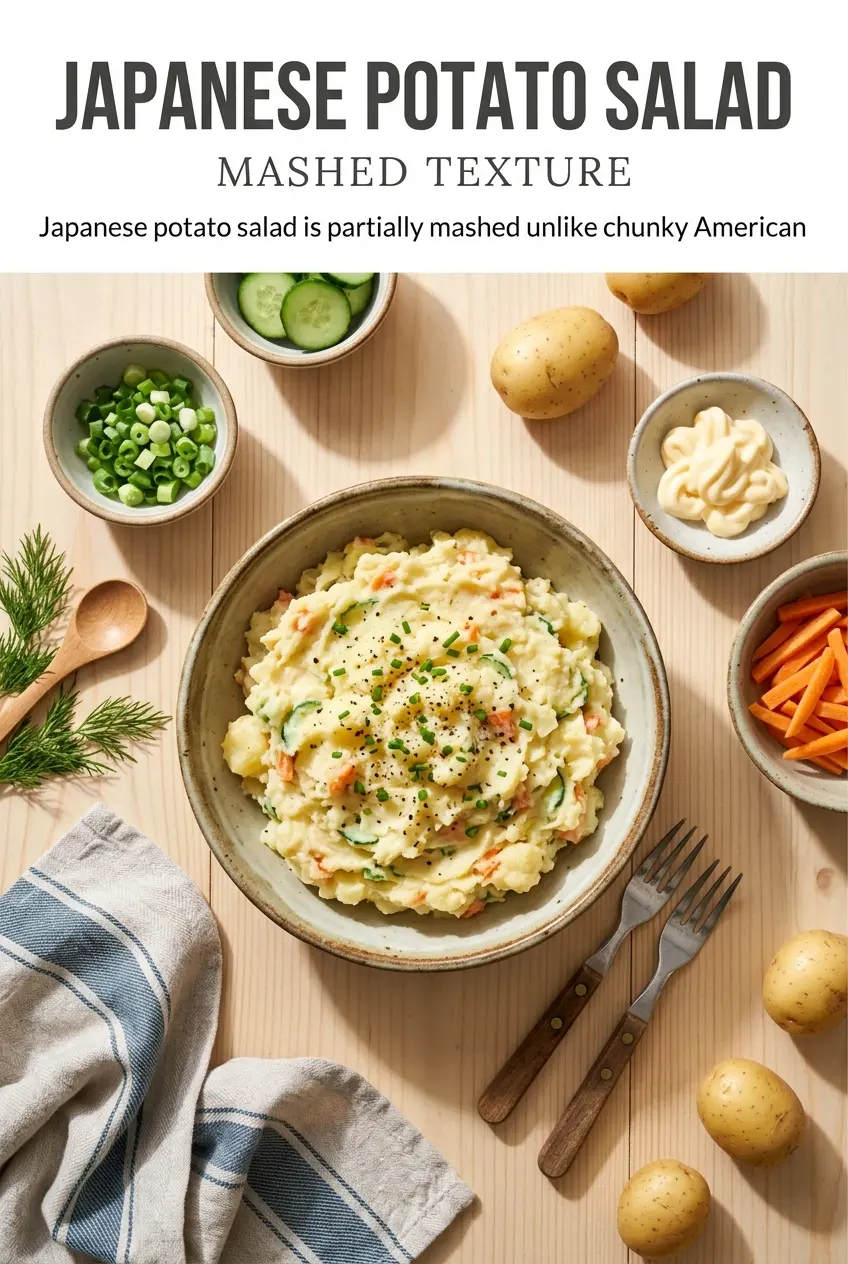
Mash the potatoes while they’re still hot enough to be tender, but stop when you still see some small pieces. That slightly uneven texture is what makes Japanese potato salad feel creamy without becoming mashed-potato mush. If you overwork them, they turn sticky and pasty, and the salad loses its light, fluffy character.
Mixing the Dressing at the End
Stir the mayonnaise, vinegar, sugar, salt, and pepper together first, then fold that into the potato mixture. That helps the seasoning distribute evenly instead of ending up in pockets. Fold gently so the eggs and vegetables stay intact and the potatoes keep their soft texture.
Make It Richer with Extra Egg
Add one more hard-boiled egg if you want a fuller, more lunch-like salad. The extra egg makes the texture a little softer and more substantial, which works well if you’re serving this with grilled meat or packing leftovers for lunch.
Dairy-Free by Nature
This recipe already fits a dairy-free table as written, as long as your mayonnaise is dairy-free. Just check the label on the mayo you buy, since some creamy-style spreads include milk ingredients.
Gluten-Free Without Any Special Adjustments
The salad is naturally gluten-free if your mayonnaise and vinegar are certified gluten-free. It’s an easy side for mixed crowds because the texture and flavor stay the same without needing any special swaps.
Storage and Reheating
- Refrigerator: Store covered for up to 3 days. The cucumbers soften a bit, but the salad stays creamy and good.
- Freezer: Don’t freeze it. The potatoes and mayo separate after thawing, and the cucumber turns unpleasantly watery.
- Reheating: Serve it cold straight from the fridge or let it sit at room temperature for 15 to 20 minutes. Heating this salad breaks the mayo and ruins the texture.
Answers to the Questions Worth Asking
Japanese Potato Salad
Ingredients
Equipment
Method
- Boil the russet potatoes in a pot of water until very tender, 15-20 minutes. Drain well in a colander so steam can escape.
- Mash the russet potatoes while still warm, leaving some chunks for a slightly mashed texture. Spread on a sheet pan in a thin layer to cool slightly.
- Blanch the carrots in boiling water for 2 minutes, then drain thoroughly. Let them cool to avoid watering down the salad.
- Salt the cucumber slices and let sit for 10 minutes to draw out moisture. Squeeze out the liquid well before adding to the salad.
- Combine the mashed russet potatoes, carrots, cucumber, corn kernels, and chopped hard-boiled eggs in a large bowl. Toss gently so the eggs and vegetables are evenly distributed.
- Mix the Japanese mayonnaise, rice vinegar, sugar, salt, and pepper until smooth. Taste and adjust seasoning if needed.
- Fold the dressing into the potato mixture until creamy and evenly coated. Keep some potato chunks so the salad stays textured.
- Refrigerate the Japanese potato salad for at least 2 hours before serving. Chill until cold and scoopable, with the flavors blended.