Grilled salmon earns its place in the weeknight rotation when the skin turns crisp, the flesh stays tender, and the fish lifts from the grates in one clean piece. The best part is that it doesn’t need much to taste finished: a little olive oil, lemon, garlic, salt, and pepper are enough when the grill is hot and the timing is right.
The trick is to start with dry salmon and a well-oiled grate. Moisture is what keeps the skin from crisping and what makes fish stick when you try to turn it too soon. A short rest with the seasoning gives the surface just enough time to absorb flavor without starting to cure or break down the texture.
Below you’ll find the small details that matter most here — how to keep the fillets from tearing, when to flip them, and what to do if your grill runs hotter than you expected.
The salmon released from the grill cleanly and the skin got crisp without sticking. I used the lemon and dill at the end and the fillets were perfectly moist after just 10 minutes.
Crisp-skinned grilled salmon with lemon and dill is worth keeping handy for fast dinners that still feel special.
The Trick to Grilled Salmon That Doesn’t Stick
Most grilled salmon problems start before the fish ever hits the grate. If the salmon is damp, the surface steams instead of searing, and if the grates aren’t hot and oiled, the skin grabs before it has a chance to crisp. This recipe works because it handles both of those issues up front: dry the fish well, oil the fillets lightly, and oil the grates generously.
Letting the salmon sit for 15 minutes with the oil, lemon, and garlic does two things. It seasons the surface and gives the fish a little time to come off the chill, which helps it cook more evenly. Don’t leave it much longer than that, though, or the acid in the lemon starts working on the texture and the salmon can turn soft on the outside.
- Dry salmon — Patting the fillets dry is what gives you a better crust and less sticking.
- Skin-on fillets — The skin protects the flesh and gives you the best chance at clean grill marks and a crisp finish.
- Lemon juice — It brightens the fish, but it’s not a marinade you want to leave on too long.
- Garlic — Minced garlic adds flavor fast; just keep the pieces small so they don’t burn on the grill.
What Each Ingredient Is Doing on the Grill
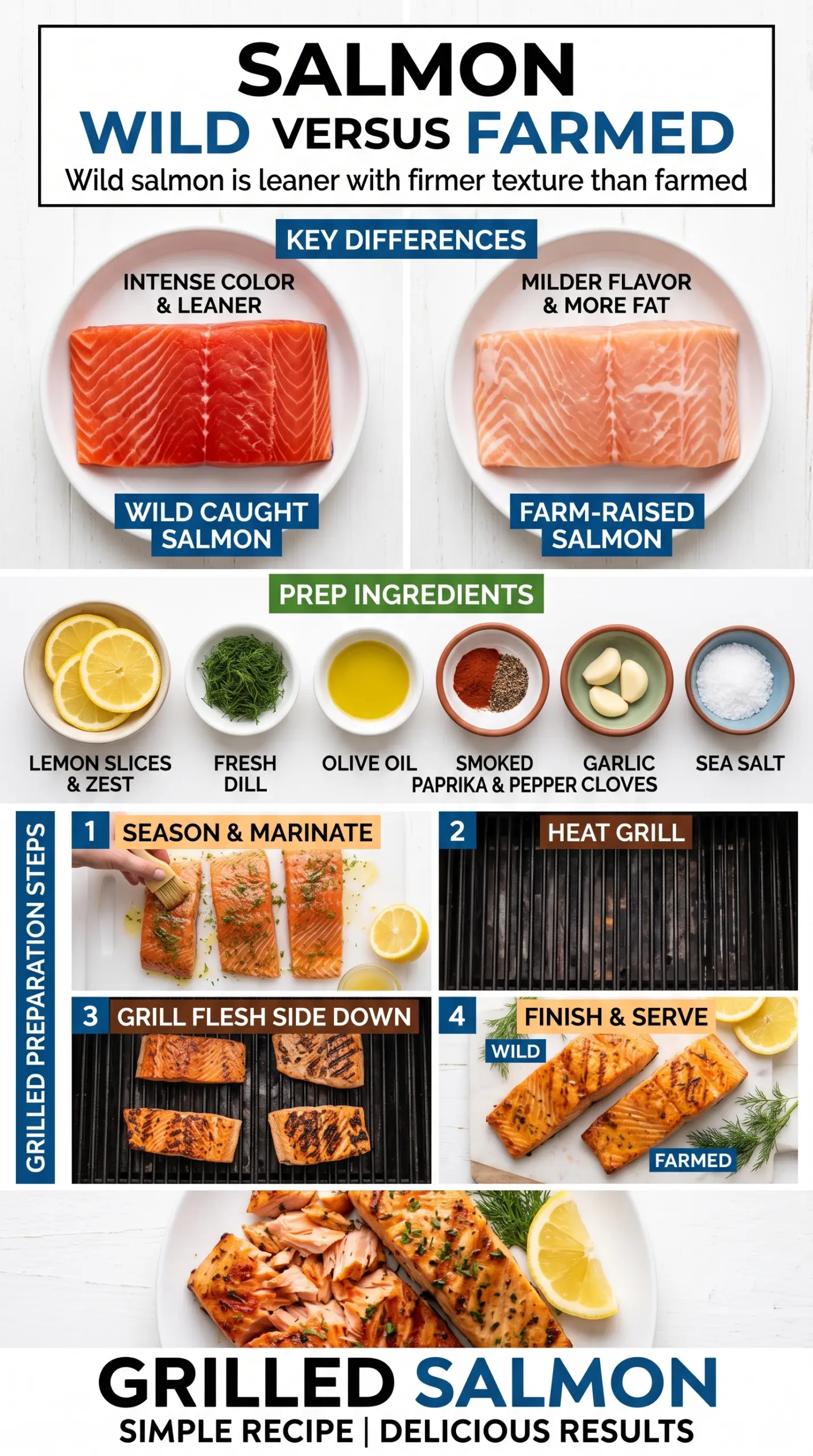
- Salmon fillets — Skin-on fillets are the safest choice here because the skin shields the flesh and helps the fish hold together while it cooks.
- Olive oil — This keeps the surface from drying out and helps the seasoning cling. A basic olive oil is fine.
- Lemon juice — Fresh lemon gives a cleaner, brighter finish than bottled juice. It’s one of the places where freshness matters.
- Garlic — Minced garlic perfumes the fish without overpowering it. If your grill runs hot, keep the pieces very fine so they don’t scorch.
- Dill and lemon wedges — Add them at the end. Dill brings freshness, and the lemon wedge lets each person control the final hit of acid.
How to Get Salmon Off the Grill in One Piece
Prepping the Fish
Pat the salmon dry with paper towels until the surface feels tacky instead of wet. Brush on the olive oil, lemon juice, and garlic, then season generously with salt and pepper. Let the fillets sit for 15 minutes while the grill heats; that short rest is enough to season the surface without changing the texture too much.
Heating and Oiling the Grates
Preheat the grill to medium-high and let it get properly hot before the salmon goes on. Brush the grates with oil using tongs and a folded paper towel, or use a grill-safe oil spray if that’s what you trust most. If the grates aren’t hot enough, the skin will cling and tear when you try to lift the fish.
Cooking Skin-Side Down First
Set the salmon skin-side down and leave it alone for 6 to 8 minutes. You want to hear a steady sizzle, not a violent pop or flare-up. If you move it too early, the skin will stick and shred; wait until the flesh turns opaque about halfway up the side of each fillet before you even think about turning it.
The Quick Flip and Final Finish
Turn the salmon carefully and grill for 2 to 3 minutes more, just until the thickest part reaches 145°F for medium. The center should still look moist and barely translucent before it comes off the heat, because it keeps cooking after it leaves the grill. Rest it a minute, then serve with dill and lemon wedges.
How to Adapt This Salmon for Different Grills and Diets
Cedar Plank Version
If you want a softer, smokier finish, cook the salmon on a soaked cedar plank. You’ll lose the direct contact crispness on the skin, but you gain a gentle wood aroma and a little insurance against sticking.
Gluten-Free and Dairy-Free as Written
This recipe is naturally gluten-free and dairy-free, so there’s nothing to replace. That’s part of why it’s such a strong grilling recipe — the flavor comes from the fish, the heat, and the aromatics instead of any heavy sauce.
No Fresh Dill on Hand
Use chopped parsley, chives, or a small pinch of dried dill in place of fresh dill. Parsley keeps the finish bright, while dried dill is stronger and should be used sparingly so it doesn’t dominate the salmon.
Storage and Reheating
- Refrigerator: Store leftovers in an airtight container for up to 3 days. The skin softens, but the fish stays useful for salads, rice bowls, or flakes.
- Freezer: Cooked salmon can be frozen, but the texture gets a little drier after thawing. Wrap tightly and freeze for up to 2 months.
- Reheating: Warm it gently in a low oven, covered, until just heated through. High heat is the mistake that dries salmon out fast and makes it taste old.
Answers to the Questions Worth Asking
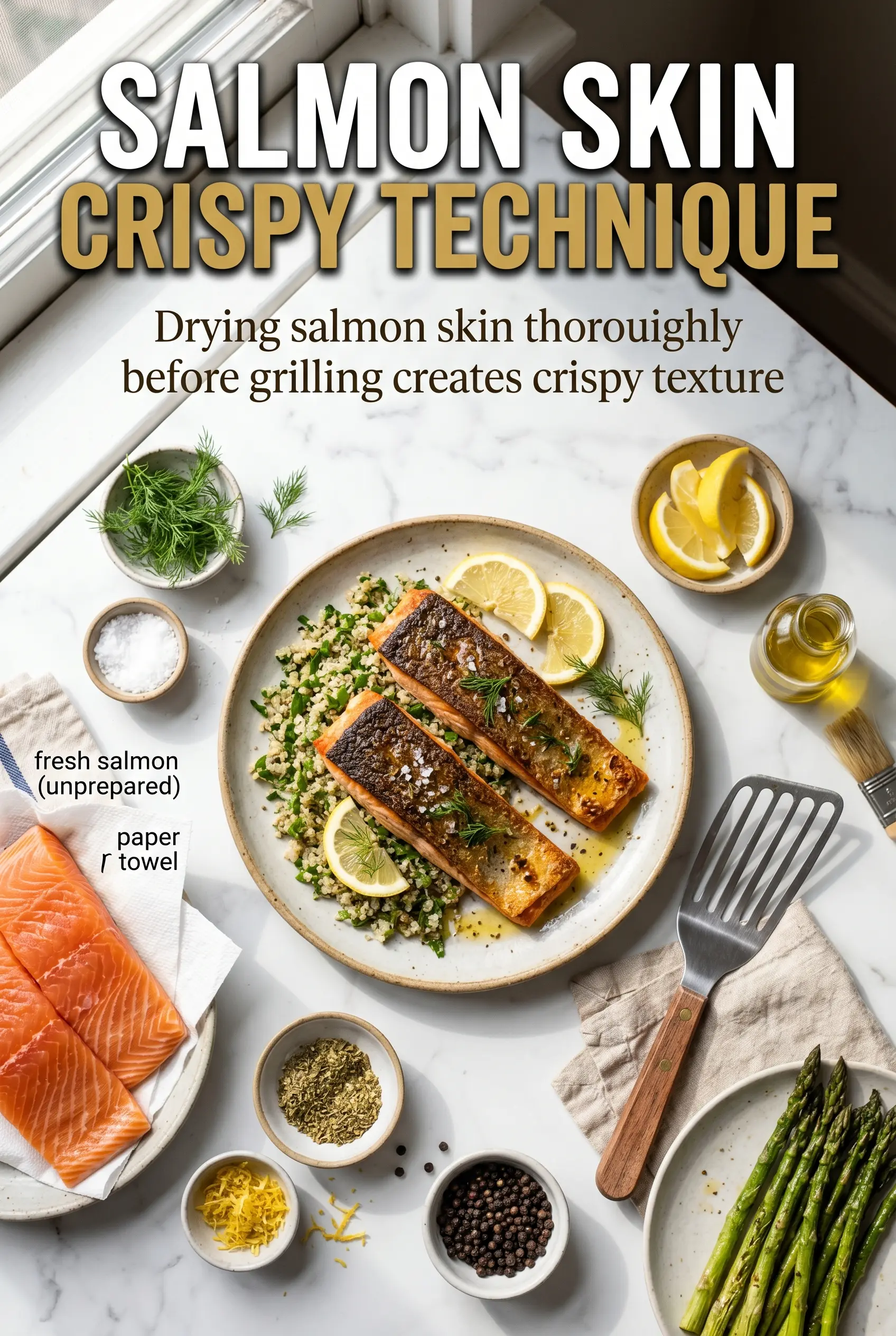
How To Make The Best Grilled Salmon
Ingredients
Equipment
Method
- Pat the salmon dry, then brush it with the olive oil, lemon juice, and minced garlic until evenly coated.
- Season the salmon generously with salt and pepper, then let it sit for 15 minutes to marinate.
- Preheat the grill to medium-high and oil the grates well so the skin doesn’t stick.
- Place the salmon skin-side down and grill for 6-8 minutes without moving, until the skin is visibly browned.
- Carefully flip the salmon and grill for 2-3 minutes more, until it reaches 145°F for medium doneness.
- Serve the grilled salmon right away with fresh dill and lemon wedges.