Cranberry maple roast chicken comes out with crackling bronzed skin, juicy meat, and a pan sauce that lands somewhere between tart, sweet, and deeply savory. The cranberries burst in the heat and mingle with the onion, garlic, and chicken drippings, so every slice gets spooned over with something glossy and bright instead of just plain roasting juices.
The trick is starting the bird hot enough to set the skin, then adding the maple-Dijon glaze later so it caramelizes without scorching. Butter under and over the skin helps the rosemary perfume the meat and keeps the breast from drying out, while the orange and garlic inside the cavity steam gently and round out the sharper edges of the glaze.
Below, you’ll find the timing that keeps the chicken juicy, the detail that keeps the glaze from burning, and a few smart ways to adapt the pan sauce if you need to work with what you have.
The skin turned deep golden and the cranberries burst right on schedule, which made the pan sauce taste like it had been simmered for hours. I served it with potatoes and everyone kept going back for more of the glaze.
Save this cranberry maple roast chicken for a roast dinner with glossy skin and a cranberry-Dijon pan sauce that practically serves itself.
The Reason the Glaze Goes on Late
Maple syrup is the ingredient most likely to betray you here. Add it too early and the sugars darken before the chicken finishes, leaving you with a bitter, sticky skin instead of a lacquered one. Waiting until the bird has already had time to roast on its own lets the skin dry and color first, so the glaze clings in a thin shiny layer instead of turning into burnt varnish.
Dijon matters because it keeps the glaze from tasting flat. It brings sharpness and a little emulsifying power, which helps the maple and pan juices stay blended long enough to coat the chicken evenly. The cranberries do a second job: they soften into the pan sauce and give you tart pops that cut through the richness of the butter and skin.
What Each Ingredient Is Actually Doing in This Roast Chicken
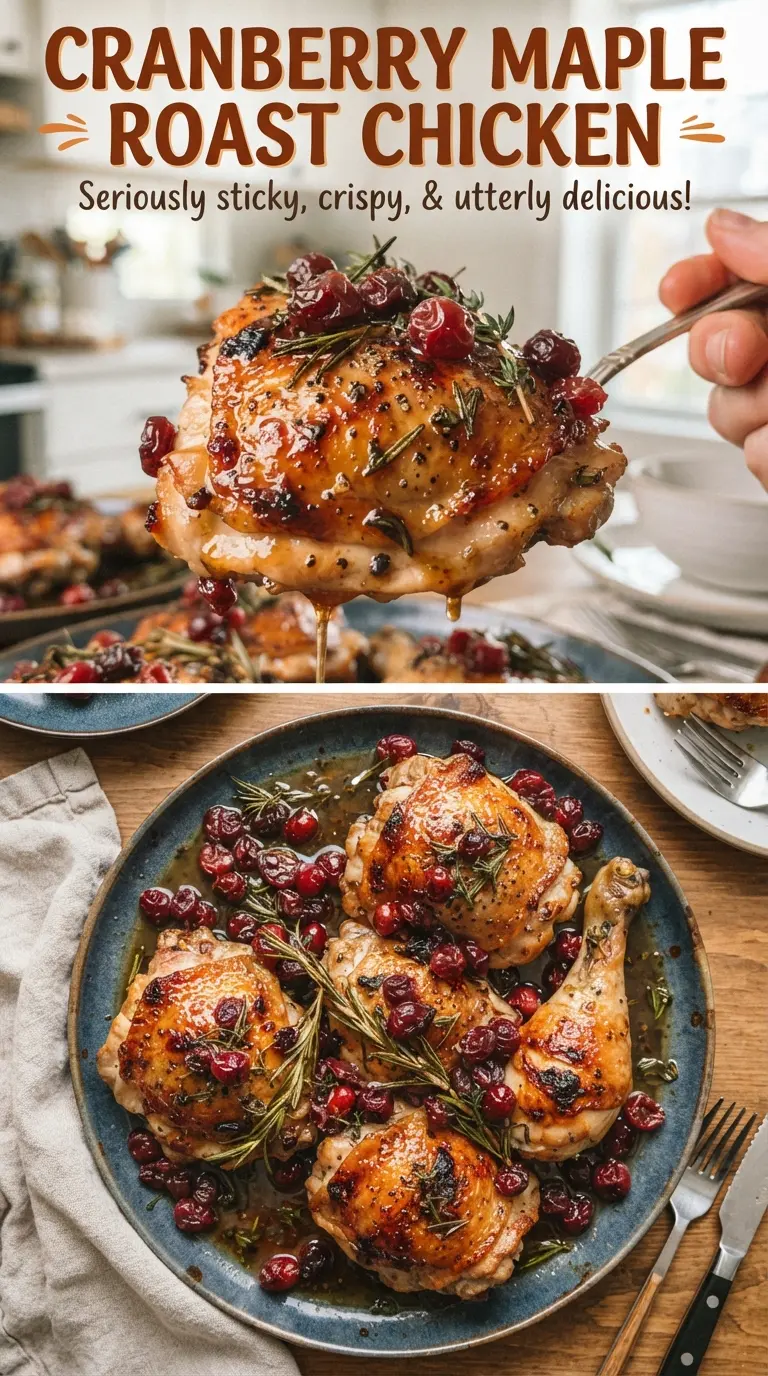
- Whole chicken — A 5-pound bird gives you enough meat for six and enough drippings for a proper pan sauce. Pat it dry before seasoning; wet skin steams, and steamed skin never gets crisp.
- Butter and rosemary — Butter carries the rosemary flavor under the skin and helps the surface brown evenly. Softened butter spreads without tearing the skin, which matters more than most people think.
- Orange and garlic — The orange brightens the glaze and perfumes the meat from the inside, while the garlic turns mellow and sweet as it roasts. Halve both so the flavor releases without turning harsh.
- Cranberries, maple syrup, and Dijon — This is the sweet-tart glaze that turns the pan juices into something worth spooning over everything. If you swap the maple for honey, the sauce will taste softer and less woodsy; it still works, but the finish changes.
- Chicken broth — Broth keeps the cranberries from scorching once they go into the hot pan. Use low-sodium if that’s what you have, since the chicken itself is already seasoned.
The Two Roasts That Matter Most
Season and Butter the Bird Well
Rub the chicken inside and out with salt and pepper, then work the rosemary butter under the skin and over the top. The under-skin butter is what protects the breast meat while the oven does its work, and it also gives the skin a richer, tighter finish. If the butter is too cold, it tears the skin; if it’s melted, it slides off instead of staying put.
Roast Hard First, Then Glaze
Set the chicken in a hot 425°F oven with the onion around it and roast for the first 50 minutes without the glaze. That first stretch builds color and renders some of the fat, which is what gives you crackly skin later. Don’t crowd the pan so much that the chicken sits in liquid; the onions should roast in the drippings, not steam in them.
Brush, Add Cranberries, and Finish to Temperature
Whisk the maple syrup and Dijon, brush on half, then scatter in the cranberries and pour in the broth. The bird goes back in for 25 to 30 minutes, with one more glaze brush near the end, until the thigh reaches 165°F. If the skin is getting dark before the center is done, tent the top loosely with foil for the last stretch.
Rest Before You Carve
Let the chicken sit for 15 minutes before carving. That pause keeps the juices from running out the second the knife hits the meat, and it gives the cranberry pan sauce time to settle into something spoonable. Carve, then spoon the onions, cranberries, and glossy juices over the top so every plate gets the full pan treatment.
How to Adapt the Cranberry Maple Roast Chicken for Different Tables
Make it dairy-free
Swap the butter for olive oil or a plant-based butter that browns well. You’ll lose a little of the round, creamy richness, but the rosemary and glaze still carry the dish, and the skin will roast up nicely as long as the chicken is patted dry.
Use honey instead of maple syrup
Honey gives you a brighter sweetness and a slightly stickier glaze. It works well here, but it browns a touch faster than maple, so keep an eye on the skin during the final roast and brush on the second layer toward the end.
Make it gluten-free
This recipe is naturally gluten-free as written if your Dijon and broth are certified gluten-free. That’s one of the nice things about a roast chicken dinner like this: the flavor comes from the pan, not from flour or thickeners.
Storage and Reheating
- Refrigerator: Store leftovers in an airtight container for up to 4 days. The skin softens, but the meat stays juicy if you keep some of the pan juices with it.
- Freezer: The carved chicken freezes well for up to 2 months, especially if you pack it with a little sauce. The cranberries soften after thawing, but the flavor holds up.
- Reheating: Reheat covered in a 325°F oven with a spoonful of broth or pan juices until warmed through. High heat dries out the breast fast, so go slow and skip the microwave if you want the texture to stay close to freshly roasted.
Answers to the Questions Worth Asking
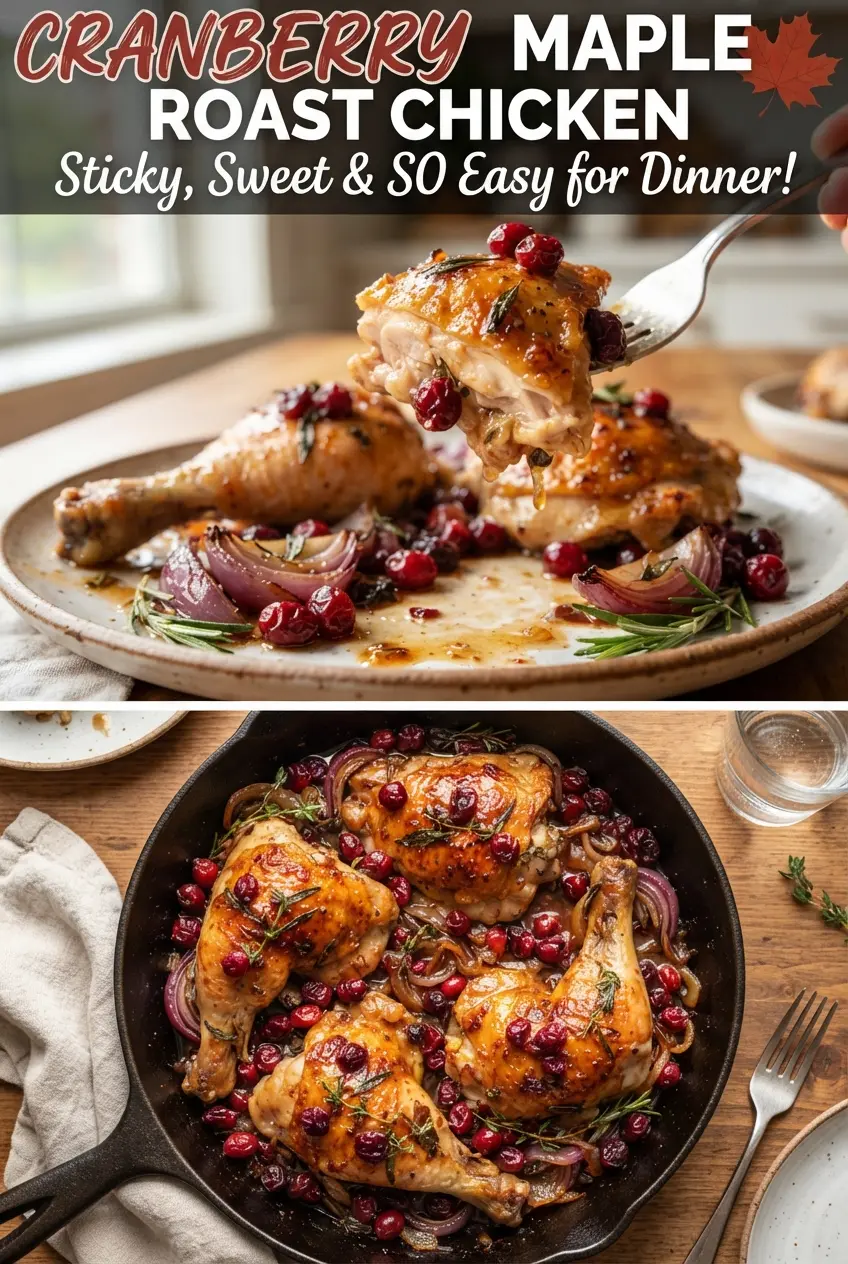
Cranberry Maple Roast Chicken
Ingredients
Equipment
Method
- Preheat the oven to 425F so it’s fully hot before the chicken goes in.
- Pat the chicken dry, then season inside and out with salt and black pepper.
- Mix softened butter with chopped rosemary, then rub it under and over the skin for even coverage.
- Stuff the cavity with orange halves and halved garlic.
- Place the chicken in a roasting pan, then tuck the red onion wedges around it.
- Roast for 50 minutes at 425F to build a deep golden surface.
- Whisk maple syrup with Dijon mustard, then brush half of the glaze over the chicken.
- Add fresh cranberries and chicken broth to the pan around the chicken.
- Roast 25-30 minutes more at 425F, brushing with the remaining glaze until the thigh reaches 165F.
- Rest the chicken for 15 minutes before carving so the juices settle.
- Carve and spoon the cranberry pan sauce over the top for serving.