Bright, chunky cranberry relish brings the kind of sharp-sweet contrast that cuts through rich holiday food and wakes up everything on the plate. The raw cranberries stay lively instead of turning jammy, the orange adds perfume and juice, and the apple softens the tart edges without making the relish muddy. It’s the sort of side dish that disappears fast because it tastes fresh, not heavy.
This version works because the fruit is chopped in stages instead of all at once. The cranberries get a coarse pulse so they still have texture, while the orange and apple are processed finer so they release enough juice to help dissolve the sugar. After a few hours in the fridge, the mixture turns glossy and cohesive, with the flavors folding into each other without losing that crisp bite.
Below, I’ll show you how to keep the relish from turning watery, when to add the pecans, and what to change if you want a softer or sweeter finish.
The sugar melted into the fruit overnight and the relish turned glossy and bright instead of watery. I served it with roast turkey and everyone kept going back for the tart little cranberry bites.
Save this cranberry relish for roast dinners, holiday plates, and any meal that needs a bright sweet-tart side with fresh texture.
The Trick to Keeping Cranberry Relish Chunky, Not Mushy
The biggest mistake with cranberry relish is overprocessing the fruit until it turns into paste. Cranberries need only a few pulses; they should look chopped, not pureed. If you keep going after that point, the mixture gets wet and the final relish loses the clean pop that makes it worth serving.
Splitting the fruit into two textures fixes the problem. The cranberries bring tartness and structure, while the orange and apple act like a fragrant, juicy binder. That balance gives you a relish that holds together on the spoon without turning into a sauce.
- Cranberries — Use fresh cranberries for the best texture. Frozen berries can work if you thaw and drain them first, but they release more liquid and the relish can loosen while it chills.
- Orange — Keep the peel on, but remove the seeds. The peel brings the bright aromatic edge that bottled juice can’t replace, and the pith softens as the sugar dissolves.
- Apple — A crisp, tart-sweet apple gives body and a little mellow sweetness. Soft apples break down too fast and make the relish look slack.
- Sugar — This does more than sweeten. It pulls moisture from the fruit and helps the chopped pieces turn glossy and spoonable after chilling.
- Pecans — Add these at the end so they stay crisp. If they go in too early, they lose their snap and pick up moisture from the fruit.
What Each Fruit Is Doing in the Bowl
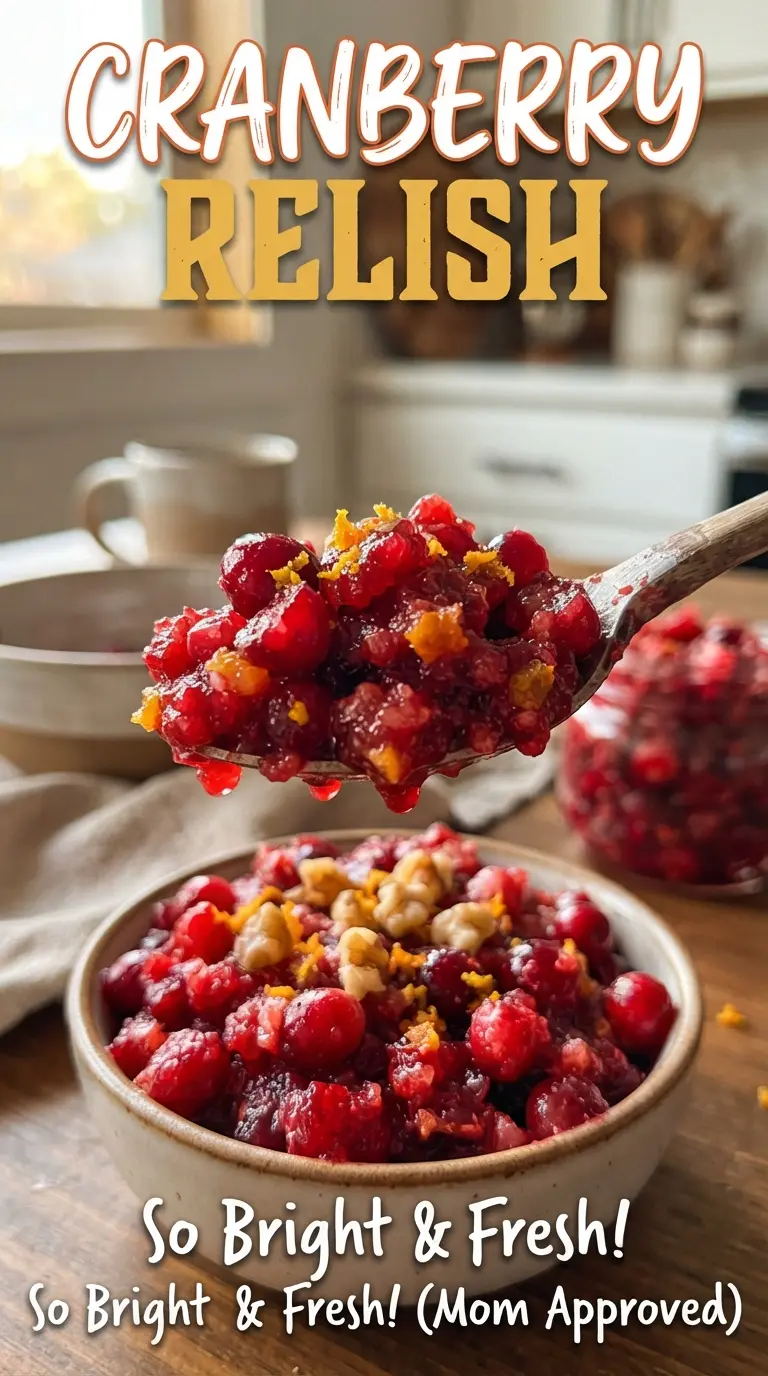
The cranberries are the backbone here. They bring the tart bite and the signature ruby color, and they need only enough processing to break down into small pieces. The orange provides both juice and oils from the peel, which is why it tastes fuller than a relish made with juice alone. The apple adds moisture and a softer sweetness that rounds out the sharpness without flattening it.
Sugar matters more than it looks like it should. It isn’t just there to make the relish sweet; it draws the fruit juices out and helps the mixture settle into a glossy spoonable consistency. If you want to cut the sweetness, reduce it a little, but don’t remove it entirely or the relish will taste thin and overly sharp.
Pecans are optional, but they bring a good contrast if you like a little crunch. Stir them in right before serving so they stay crisp. If you prefer a cleaner, smoother relish for spreading on leftovers, skip them altogether.
How the Fruit Comes Together Without Turning Watery
Chopping the Cranberries First
Pulse the cranberries in a food processor until they’re coarsely chopped and stop before they start to clump or smear against the bowl. You want uneven little pieces, not a wet paste. If the processor runs too long, the natural juices flood out and the relish starts looking saucy instead of chunky.
Breaking Down the Orange and Apple
Process the orange chunks and apple until they’re finely chopped. They should look smaller and wetter than the cranberries, because that finer texture helps dissolve the sugar during the chill time. Don’t chase a smooth puree here either; some visible fruit gives the finished relish a fresher bite.
Letting the Sugar Work
Stir everything together and chill it at least 4 hours, though overnight is even better. The sugar needs time to pull out the fruit juices and soften the sharp edges. If you serve it too soon, the sugar can feel gritty and the flavors stay separate instead of mingling.
Finishing With Crunch
Stir in the pecans right before serving. That last-minute addition keeps them crisp and gives the relish a better contrast against roasted meats, stuffing, or mashed potatoes. If you’re serving it the next day, give it a stir before spooning it into a bowl, since a little liquid can settle at the bottom.
Three Useful Ways to Adjust This Relish
No-Nut Version
Leave out the pecans and nothing else has to change. The relish will be a little softer and cleaner in texture, which is nice if you want it to spoon easily over turkey or ham. Add the nuts only if you want that extra crunch at the table.
Lower-Sugar Relish
You can reduce the sugar a bit if you like a sharper relish, but don’t cut it too far. Less sugar means less juice gets drawn out, so the texture stays looser and the fruit tastes more aggressive. Start with a small reduction and taste after chilling rather than stripping it out completely.
Apple-Free Version
If you don’t have an apple, use more orange instead. The relish will be a touch looser and a little brighter, with less mellow sweetness and less body. A firm pear can work in the apple’s place too, though it softens faster and reads a little more floral.
Storage and Reheating
- Refrigerator: Store in a covered container for up to 5 days. The flavor deepens as it sits, and the texture stays best in the first few days.
- Freezer: It freezes, but the texture softens after thawing, so I don’t recommend freezing if you want that crisp raw-fruit bite.
- Reheating: No reheating needed. Serve it cold or cool from the fridge, and stir before serving if any juice has settled.
Questions I Get Asked About This Recipe
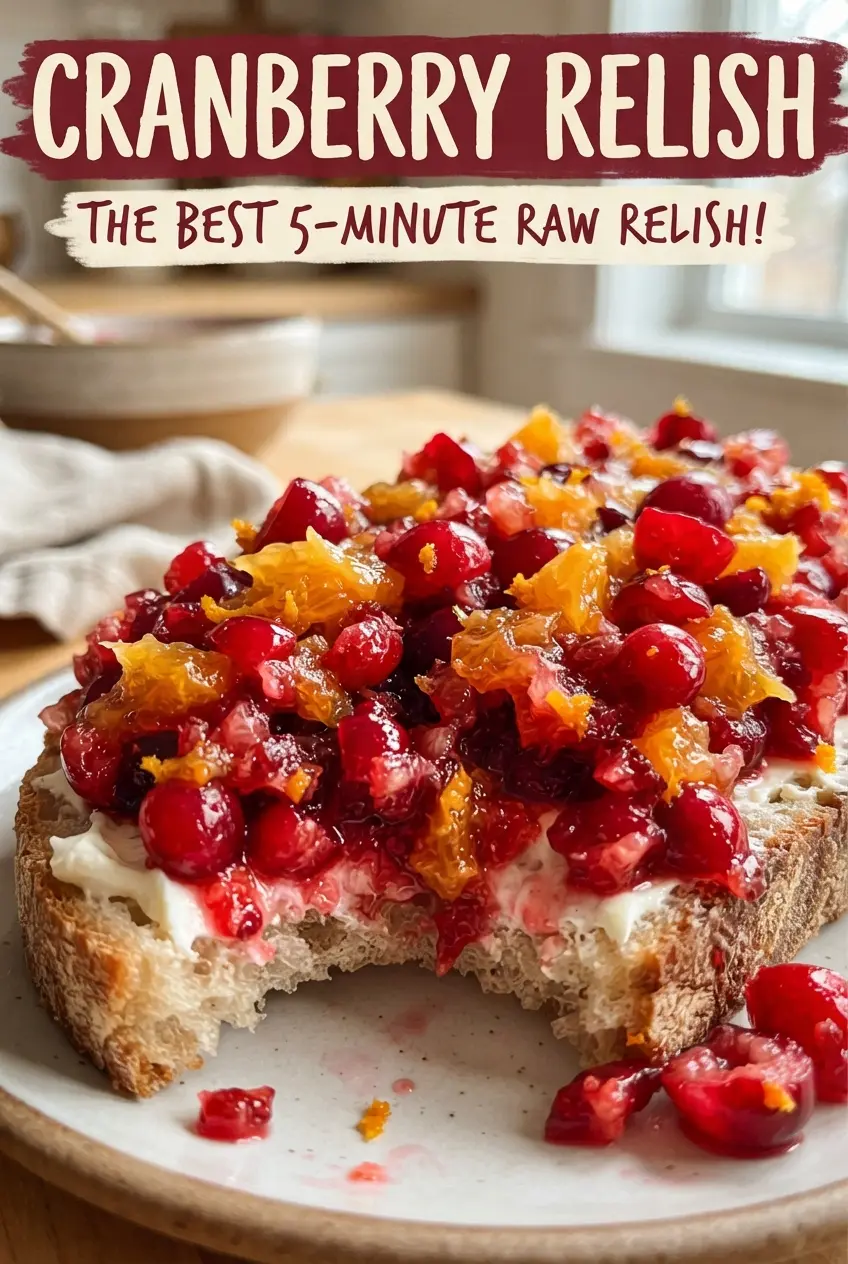
Cranberry Relish
Ingredients
Equipment
Method
- Pulse the cranberries in a food processor until coarsely chopped, then transfer to a bowl. Stop as soon as they look chunky, not fully smooth.
- Pulse the orange and apple in the food processor until finely chopped. Scrape down the processor bowl if needed so the pieces chop evenly.
- Stir the orange, apple, and sugar into the cranberries until evenly combined. The mixture should look bright and chunky with visible fruit pieces.
- Cover and chill at 4°C (40°F) for at least 4 hours or overnight so the sugar dissolves and the flavors meld. The relish should thicken slightly as it chills.
- Stir in the pecans just before serving. Taste and adjust consistency if needed, then serve chilled or at cool room temperature.