Cabbage turns silky, a little sweet, and edged with just enough caramelization to make you keep going back for another forkful. When it’s cooked with bacon, onion, and a splash of vinegar at the end, the whole pan tastes deeper and cleaner at the same time. This is the kind of side dish that quietly takes over the plate.
What makes this version work is the order. Bacon goes in first so the drippings can carry the onion and cabbage, and the cabbage gets enough time in the pan to lose its raw crunch without turning mushy. A small pinch of sugar helps the edges brown, and the vinegar at the end keeps the dish from tasting heavy. That last step matters more than most people think.
Below, you’ll find the exact timing that gives you tender cabbage with a little bite left in the center, plus a few smart swaps if you need to work with what’s in the fridge.
The cabbage got those sweet browned edges I never managed before, and the vinegar at the end kept it from tasting greasy. My husband went back for thirds.
Save this Southern Fried Cabbage for a skillet side with crisp bacon, tender cabbage, and those caramelized edges that make it stand out.
The Trick to Keeping Fried Cabbage Tender, Not Watery
Cabbage gives off a lot of moisture as it cooks, and that’s where most pans go wrong. If the heat is too low, it steams in its own liquid and turns soft before it ever gets a chance to brown. If the heat is too high from the start, the onions burn before the cabbage has time to collapse and take on the bacon drippings.
The sweet spot is a medium heat and a wide skillet. Give the cabbage room to spread out so the steam can escape. Stir it occasionally, not constantly. You want some pieces to sit against the hot pan long enough to pick up those golden edges, because that’s where the best flavor comes from.
What Each Ingredient Is Actually Doing in the Skillet
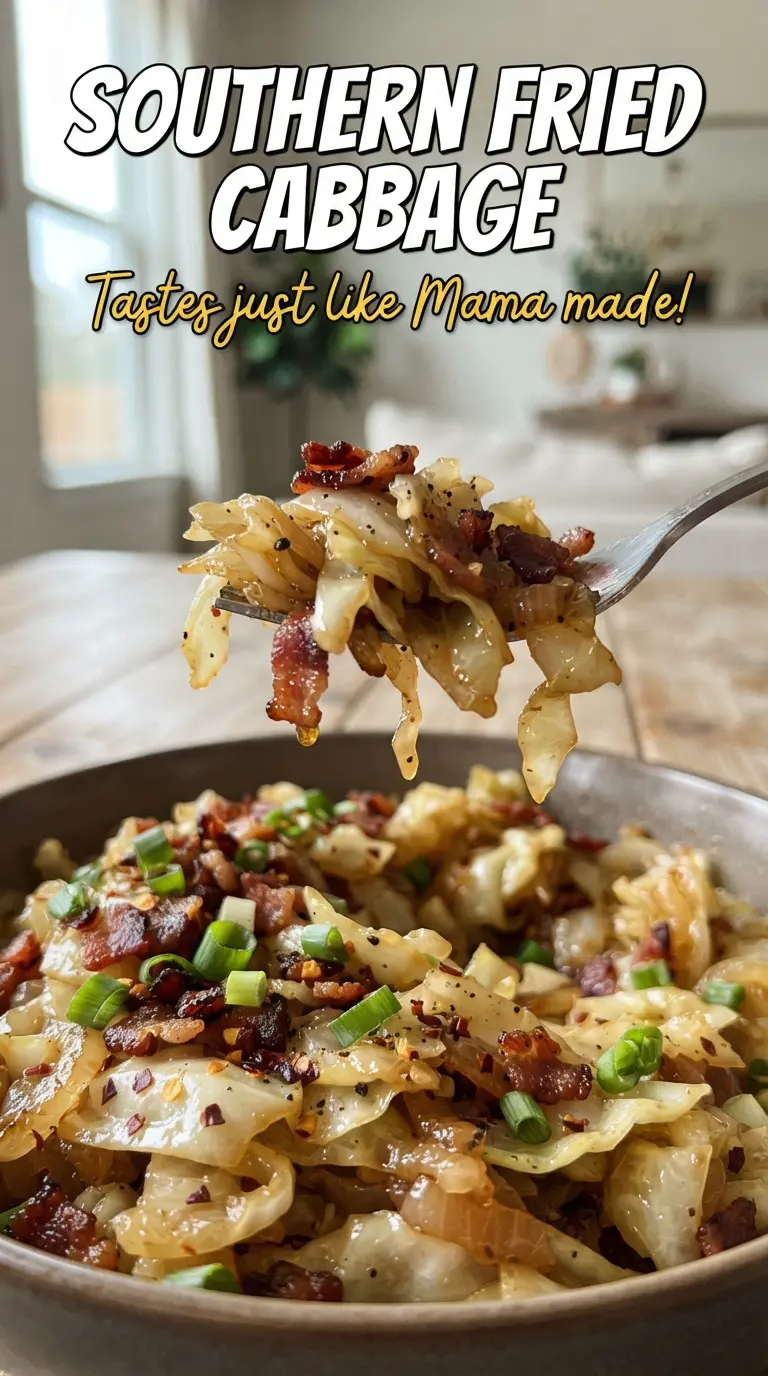
- Bacon — This is the backbone of the dish. It seasons the pan, adds fat for the cabbage to cook in, and gives you those crisp bits to fold back in at the end. Thick-cut bacon works too, but it takes a little longer to render. Don’t drain away all the drippings unless there’s an unusually large amount in the pan.
- Yellow onion — Onion softens into the cabbage and sweetens the whole skillet. Yellow onion is the best choice here because it turns mellow and slightly sweet without disappearing completely. Slice it thin enough that it softens in the same time the cabbage starts to wilt.
- Green cabbage — Use a firm head with tight leaves. It should hold up to a longer cook without falling apart. Chop it into bite-size pieces so it softens evenly; huge chunks stay tough while tiny shreds can go mushy.
- Apple cider vinegar — This is the finish that keeps the dish from feeling heavy. A tablespoon is enough to brighten the bacon and cabbage without making it taste sour. Add it at the end so the flavor stays sharp and fresh.
Building the Flavor Before the Cabbage Lets Go of Its Moisture
Rendering the Bacon
Start the bacon in a cold skillet and bring it up over medium heat so the fat has time to render before the pieces overbrown. You want crisp edges and a good amount of drippings left in the pan. If the bacon cooks too fast, the fat stays trapped and the cabbage won’t have much to work with. Lift the bacon out once it’s crisp, but keep the drippings in the skillet.
Softening the Onion and Garlic
Add the onion to the hot drippings and cook until it turns translucent and starts to pick up a little color at the edges. That step builds sweetness and keeps the finished dish from tasting flat. Garlic only needs about 30 seconds; any longer and it can turn bitter once the cabbage goes in. If the pan looks dry, the butter steps in and keeps the onions from scorching.
Cooking the Cabbage Until It Browns at the Edges
Once the cabbage is in, it should look piled high at first, then slowly shrink as it softens. Stir occasionally so the bottom layer doesn’t burn, but leave it alone long enough for some pieces to sit against the pan and caramelize. The cabbage is ready when it’s tender but still has a little structure, and you can see golden edges throughout. The sugar helps with browning; the black pepper and red pepper flakes give the dish a little lift without turning it spicy.
Finishing with Vinegar and Bacon
Pull the pan off the heat for the vinegar, then stir it in with the reserved bacon. Off heat is the safest way to keep the vinegar bright and keep the cabbage from overcooking in the last minute. Taste it before serving; bacon saltiness varies, and sometimes the skillet needs only the acid at the end. Serve it warm while the edges are still glossy.
Three Ways to Work This Recipe Around What’s in Your Kitchen
Make It Without Bacon
Use 2 to 3 tablespoons of butter or bacon drippings from another recipe, plus a pinch of smoked paprika for depth. You’ll lose the crisp bacon bits, but the cabbage will still caramelize nicely and the smoked seasoning brings back some of that savory backbone. Add a little extra salt at the end because bacon usually does more seasoning than people realize.
Keep It Lower Carb
This recipe already fits a low-carb style as written, but you can skip the teaspoon of sugar if you want to keep it even tighter. The cabbage will still brown, just a little less deeply, and the vinegar becomes more important for balance. Don’t skip the fat in the pan or the vegetables can taste flat instead of rich.
Use Red Cabbage for a Different Look
Red cabbage works, but it cooks a touch faster and the color will deepen into purple-brown as it softens. The flavor is a little earthier and the finished dish looks less classic Southern, more rustic and bold. Keep the vinegar in; red cabbage benefits even more from that bright finish.
Storage and Reheating
- Refrigerator: Store in an airtight container for up to 4 days. The cabbage softens a bit more as it sits, but the flavor stays strong.
- Freezer: It freezes okay, though the texture turns softer after thawing. Freeze in portions for up to 2 months if you don’t mind a more tender result.
- Reheating: Reheat in a skillet over medium-low heat with a small splash of water or a dab of butter. Microwaving works in a pinch, but it can make the cabbage watery and dull the bacon.
Answers to the Questions Worth Asking
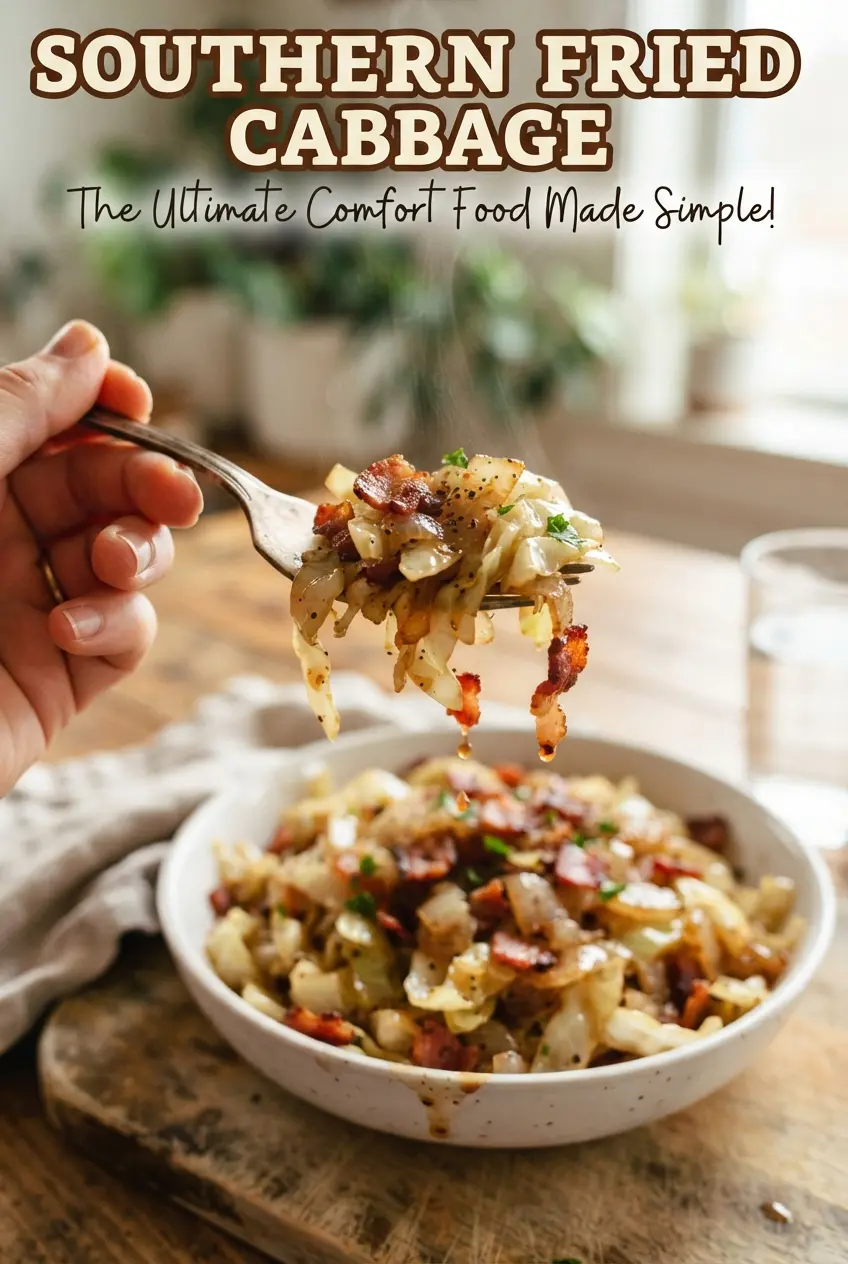
Southern Fried Cabbage
Ingredients
Equipment
Method
- Cook the chopped bacon in a large skillet over medium heat for 8 minutes until crisp, then remove it and leave the drippings in the pan.
- Add the sliced onion to the drippings and cook for 5 minutes, stirring until softened; stir in the minced garlic and cook for 30 seconds.
- Add the chopped cabbage, butter, salt, black pepper, red pepper flakes, and sugar to the skillet, stirring to coat the cabbage.
- Cook for 12–15 minutes, stirring occasionally, until the cabbage is tender and caramelized at the edges (watch for golden-brown spots).
- Stir in the apple cider vinegar and the crispy bacon, then serve warm.