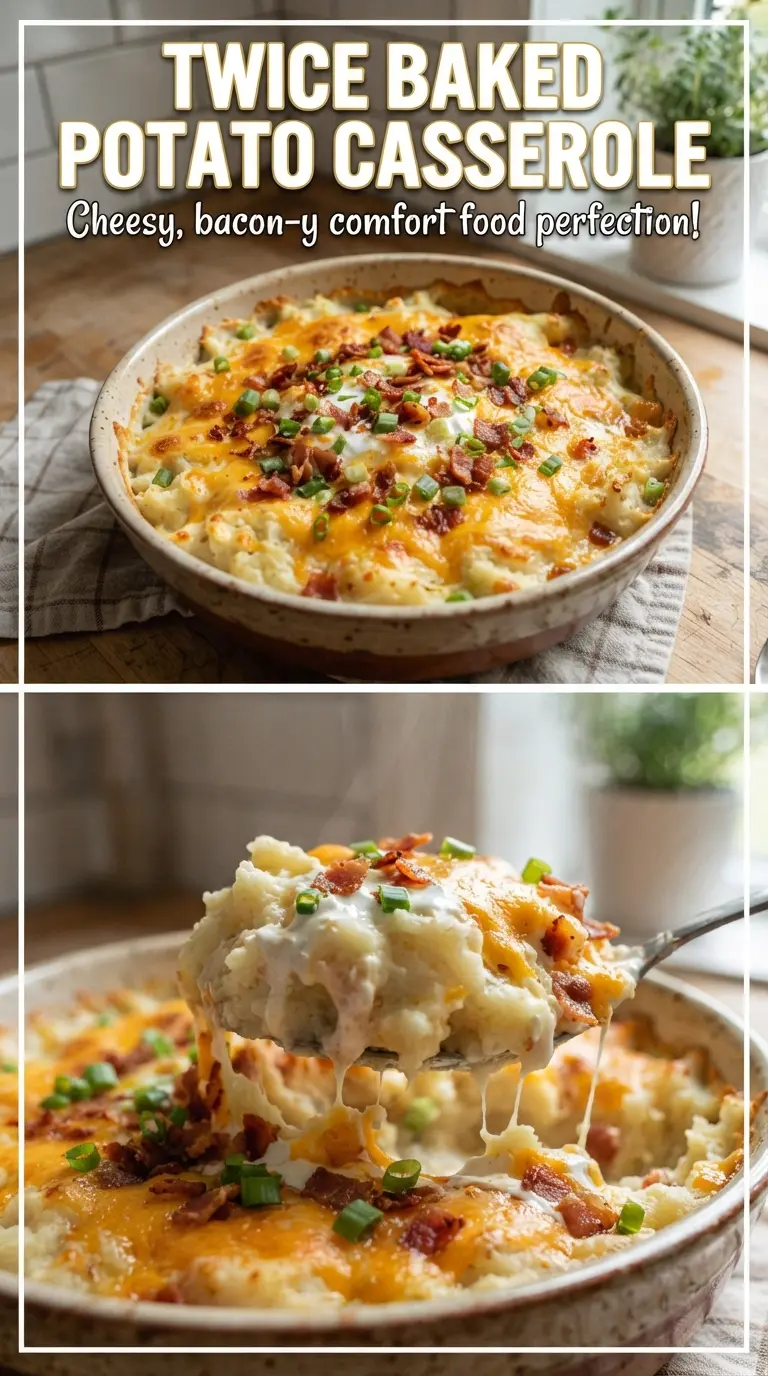
Twice baked potato casserole lands on the table creamy in the middle, bronzed and bubbling on top, and somehow feels a little more special than a standard mashed potato side without asking for extra work at serving time. You get the same comfort as a loaded baked potato, but in a spoonable casserole that holds its shape and scoops cleanly. The cheddar melts into the potatoes, the bacon gives each bite a salty crunch, and the green onions keep it from tasting heavy.
The trick is starting with russet potatoes, not waxy ones. Russets bake up fluffy and dry enough to mash into a casserole that stays light instead of dense. I also like to mash them while they’re still warm, because butter and sour cream melt in smoothly and the texture turns creamy without overworking the potatoes. Bake them once until tender, then finish the casserole long enough to melt the cheese and warm everything through.
Below, I’ll walk you through the little details that keep the filling fluffy, the topping browned, and the bacon from going soft. There’s also a few smart swaps if you want to lighten it up or make it ahead.
The potatoes came out fluffy instead of gluey, and the top got that perfect bubbly cheddar layer. I made it ahead and baked it just before dinner, and everyone went back for seconds.
Save this twice baked potato casserole for the nights when you want a creamy, cheesy side with a crisp bacon finish.
The Reason Russets Stay Fluffy Instead of Turning Gluey
Twice baked potato casserole can go heavy fast if you overwork the potatoes or start with the wrong variety. Russets are the right choice because their high starch content breaks down into a fluffy mash instead of a waxy paste. That matters here more than in plain mashed potatoes, because the casserole gets baked a second time and needs enough structure to stay creamy without turning dense.
The other thing that keeps this dish on track is how you handle the potatoes after baking. Scoop them while they’re still warm, then mash only until the butter and dairy disappear. If you keep stirring after that, the starches tighten up and the casserole turns gummy. A fork or potato masher gives you the best control; a food processor is the fastest way to ruin the texture.
- Russet potatoes — These bake up light and dry, which is exactly what you want for a casserole that needs to scoop well. Red potatoes or Yukon Golds will taste good, but they hold more moisture and make a softer, heavier filling.
- Sour cream — This brings tang and body at the same time. Full-fat gives the best texture, but plain Greek yogurt works in a pinch if you want a little more bite and don’t mind a sharper finish.
- Sharp cheddar — Sharp cheddar gives the casserole its backbone. Mild cheddar melts fine, but the flavor fades under the potatoes and bacon, so the whole dish tastes flatter.
- Bacon and green onions — Add most of both inside the casserole, then save some for the top so every bite gets a little crunch and fresh onion flavor. If the bacon goes in too early and sits under the cheese the whole time, it softens instead of staying crisp.
What Each Ingredient Is Actually Doing in This Recipe
- Primary ingredient (the star) — Quality matters most. Choose the best you can find.
- Cooking medium (oil, butter, or broth) — This carries flavors and prevents dryness.
- Seasonings (salt, pepper, spices, herbs) — Layer flavors so nothing overpowers. Build depth gradually.
- Aromatics (garlic, onion, herbs) — Cook with fat to bloom flavors. Become the foundation.
- Supporting ingredients — Complement the main ingredient without overpowering it.
- Sauce or liquid (if applicable) — Brings flavors together. Balance richness with acid.
- Acid (lemon, vinegar, wine, or other) — Brightens and prevents flat-tasting results.
- Final finish (garnish, glaze, or sauce) — Prevents one-dimensional taste and adds visual appeal.
Building the Filling So It Stays Creamy in the Oven
BakIng the Potatoes All the Way Through
Prick the potatoes, set them directly on the oven rack or on a lined sheet, and bake until a knife slides in with no resistance. If they still feel firm in the center, the final casserole will have little hard bits that never mash out. Let them cool just enough to handle, but don’t let them go cold; warm potatoes absorb butter and dairy much better.
Mixing the Base Without Beating It to Death
Scoop the flesh into a bowl and mash with the butter, sour cream, and milk until the mixture is smooth but still a little rustic. The potatoes should look fluffy and hold soft ridges, not turn elastic. Stir in the cheese, bacon, green onions, salt, and pepper just until combined. Overmixing after the cheese goes in can make the filling dense and pasty.
Baking Until the Top Bubbles
Spread the mixture in a buttered 9×13-inch dish and scatter the remaining cheese and bacon over the surface. Bake at the lower temperature until the edges are hot and the top is fully melted and bubbling. If you want deeper browning, give it an extra minute or two under the broiler, but watch it closely because cheddar can go from golden to scorched fast.
How to Adapt the Casserole for Different Tables
Make it ahead for a holiday meal
Assemble the casserole up to a day in advance, cover it tightly, and refrigerate it before the final bake. Let it sit on the counter while the oven heats so it doesn’t go in stone cold, or the center will need much longer than the top and edges. Add a few extra minutes to the bake time if it’s coming straight from the fridge.
Dairy-free version
Use plant-based butter, unsweetened dairy-free milk, and a melting-style vegan cheddar. The texture stays close, but the flavor will be a little less rich and tangy, so add a splash of lemon juice or a bit more salt to keep it from tasting flat.
Skip the bacon
Leave out the bacon and add a handful of extra cheddar plus a pinch of smoked paprika for depth. You lose the salty crunch, so top the casserole with sliced green onions right after baking and serve it while the cheese is still hot and stretchy.
Storage and Reheating
- Refrigerator: Store covered for up to 4 days. The potatoes will tighten a bit when chilled, but the texture stays creamy once reheated.
- Freezer: It freezes well if you cool it completely first, then wrap it tightly and freeze for up to 2 months. The bacon softens slightly after thawing, but the casserole still reheats nicely.
- Reheating: Reheat covered in a 350F oven until hot through, then uncover for the last few minutes so the top can crisp back up. The common mistake is blasting it uncovered the whole time, which dries out the edges before the center is warmed through.
Questions I Get Asked About This Casserole

Twice Baked Potato Casserole
Ingredients
Equipment
Method
- Preheat oven to 400F. Bake russet potatoes for 50-60 minutes until fork-tender, with a crisped exterior and a soft center.
- Cool slightly, then scoop out the potato flesh. Mash the flesh until smooth and creamy, with no large lumps visible.
- Stir butter, sour cream, and whole milk into the mashed potatoes until fully incorporated. The mixture should look glossy and spreadable.
- Add 1 cup cheddar, half the bacon, half the green onions, salt, and black pepper. Mix until evenly speckled throughout.
- Spread the potato mixture into a buttered 9x13-inch baking dish. Smooth the top so it bakes evenly.
- Top with the remaining cheddar and bacon. Cover the surface for an even golden layer.
- Reduce oven to 350F and bake 20-25 minutes until hot and the cheese is bubbly. Look for active bubbling at the edges and a lightly browned top.
- Sprinkle with the remaining green onions and serve. The onions should look bright and fresh against the melted cheese.