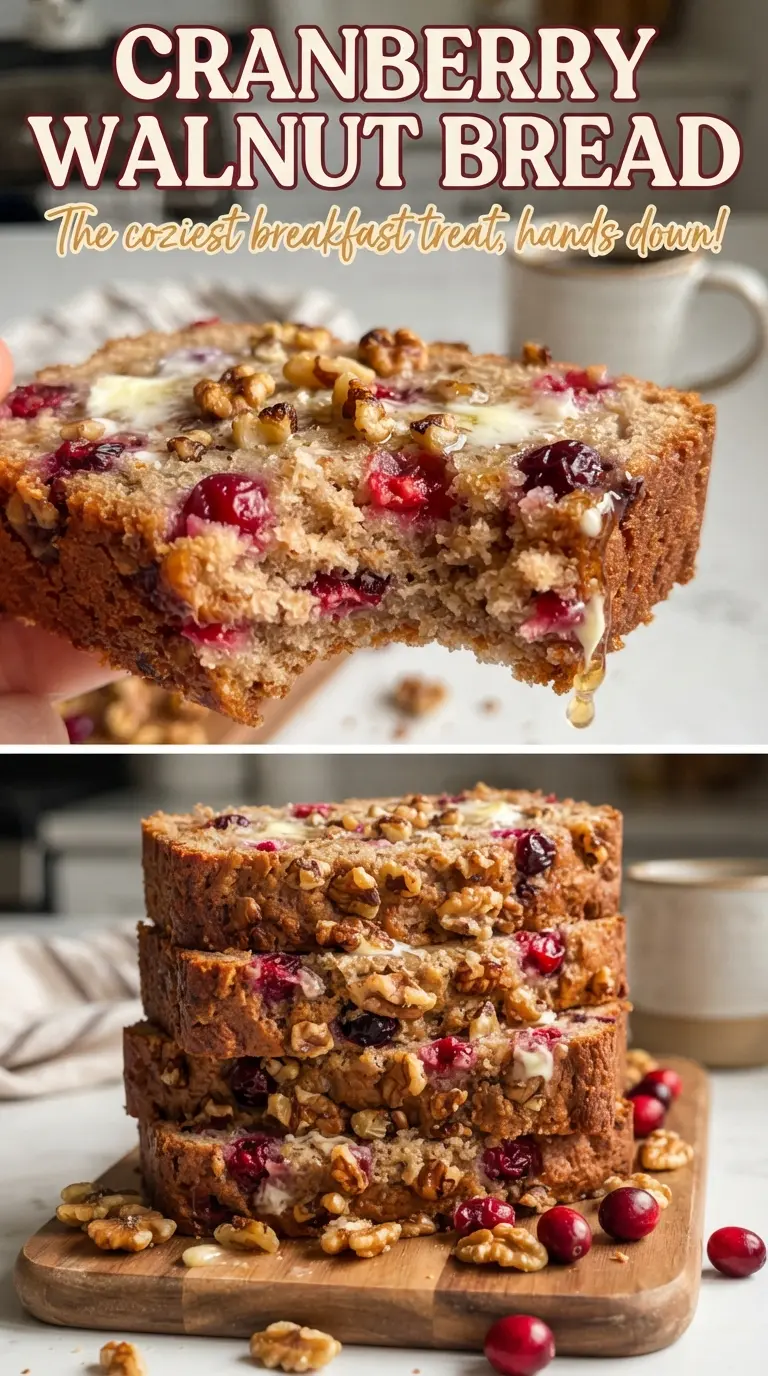
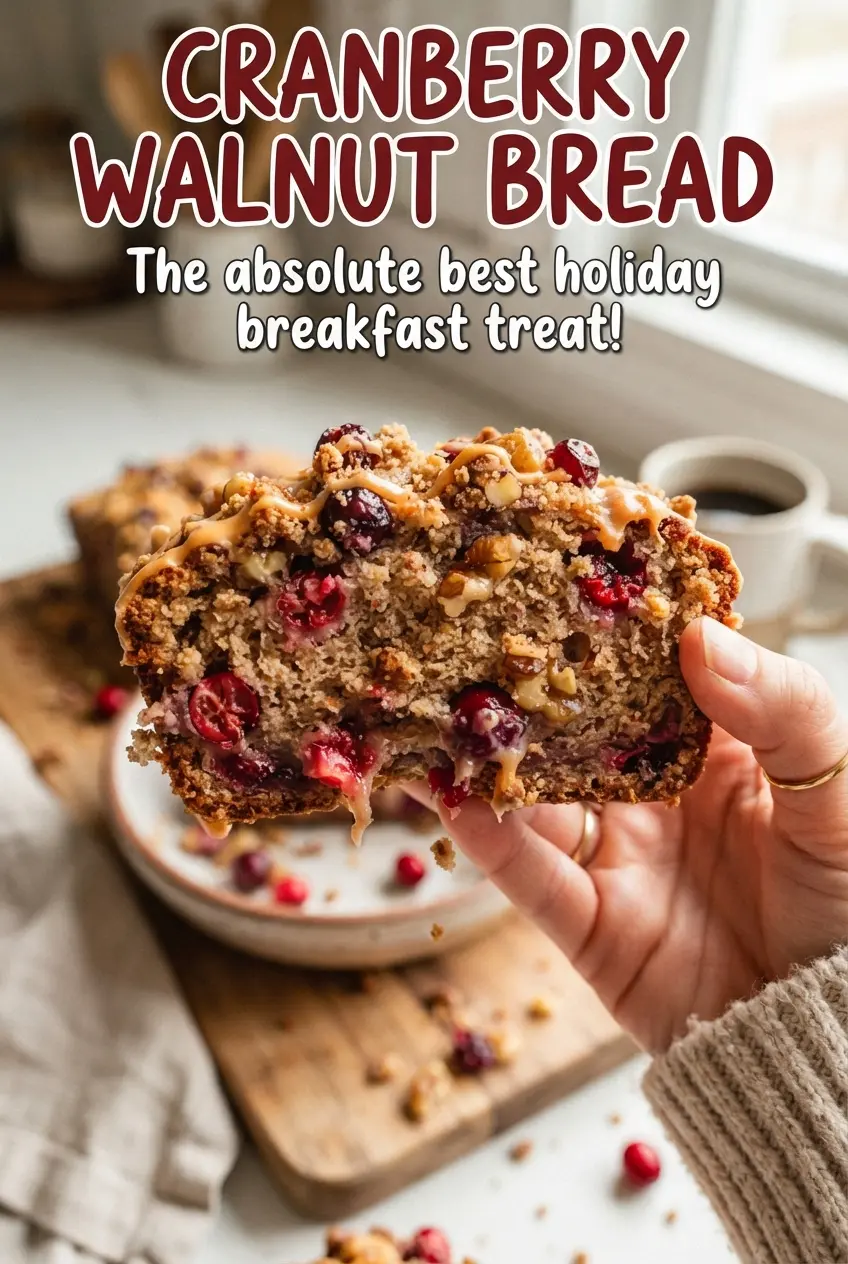
Cranberry walnut bread lands right in that sweet spot between bright and tender, with a crackly top, a soft crumb, and pockets of tart fruit that wake up every slice. The orange zest gives it lift without pushing it into cake territory, and the toasted walnuts bring a deep, nutty bite that keeps each piece from feeling one-note.
What makes this version work is the balance in the batter. Orange juice adds moisture and acidity, which helps the baking soda do its job, while the melted butter keeps the loaf rich without making it heavy. The key is stopping as soon as the flour disappears; if you keep stirring, the crumb tightens up and the bread loses that delicate, sliceable texture.
Below, you’ll find the little details that matter most, including how to keep the cranberries from sinking and how to tell when the loaf is baked through without drying it out. It’s the kind of quick bread that looks simple on paper but bakes into something people remember.
The loaf came out tender and the cranberries stayed evenly spread instead of sinking to the bottom. I also loved the orange zest with the toasted walnuts — it tasted brighter the next day, which surprised me.
Save this cranberry walnut bread for when you want a bright, bakery-style loaf with tart fruit, toasted nuts, and orange in every slice.
The Part That Keeps Cranberries From Turning the Loaf Heavy
The biggest mistake with quick breads like this is overmixing after the flour goes in. As soon as the batter is stirred too long, the gluten tightens and the loaf bakes up dense instead of tender. You want the wet and dry ingredients just combined, with a few streaks of flour still visible before the fruit goes in.
The other thing that matters here is the cranberries. Fresh or frozen both work, but chopping them roughly keeps the bursts of tartness distributed through the loaf instead of leaving you with huge wet pockets. If you use frozen cranberries, add them straight from the freezer so they hold their shape better in the batter.
- Orange zest — This is where the loaf gets its strongest citrus aroma. Zest the orange before juicing it, and keep the zest fine so it disperses through the dry ingredients instead of clumping.
- Orange juice — The juice adds moisture and a little tang. Bottled juice works in a pinch, but fresh juice gives the cleanest flavor and plays better with the cranberries.
- Walnuts — Toasting them first is worth the extra few minutes because it deepens the flavor and keeps the nuts from tasting flat inside the loaf. Chop them after toasting so the pieces stay crisp at the edges.
- Butter — Melted butter gives the bread a softer, richer crumb than oil without making it greasy. Let it cool slightly before whisking it in so it doesn’t scramble the egg.
What Each Ingredient Is Actually Doing in This Recipe
- Primary ingredient (the star) — Quality matters most. Choose the best you can find.
- Cooking medium (oil, butter, or broth) — This carries flavors and prevents dryness.
- Seasonings (salt, pepper, spices, herbs) — Layer flavors so nothing overpowers. Build depth gradually.
- Aromatics (garlic, onion, herbs) — Cook with fat to bloom flavors. Become the foundation.
- Supporting ingredients — Complement the main ingredient without overpowering it.
- Sauce or liquid (if applicable) — Brings flavors together. Balance richness with acid.
- Acid (lemon, vinegar, wine, or other) — Brightens and prevents flat-tasting results.
- Final finish (garnish, glaze, or sauce) — Prevents one-dimensional taste and adds visual appeal.
Building the Batter So the Loaf Bakes Up Light, Not Gumgy
Whisking the Dry Ingredients
Start with the flour, sugar, baking powder, baking soda, salt, and orange zest in one bowl. Whisking them together evenly spreads the leavening so the loaf rises with a consistent crumb instead of forming random tunnels. The zest belongs here because rubbing it into the dry mixture helps release its oils.
Mixing the Wet Base
Whisk the orange juice, egg, melted butter, and vanilla until the mixture looks smooth and unified. If the butter is too hot, it can turn the egg lumpy, so let it cool just enough that the bowl feels warm, not hot. The mixture doesn’t need to look fluffy; it just needs to be fully blended.
Bringing the Batter Together
Pour the wet ingredients into the dry and stir only until the flour disappears. The batter will look thick, and that’s exactly what you want. If it becomes glossy and stretchy, you’ve gone too far and the loaf will bake up tougher than it should.
Folding in the Fruit and Nuts
Fold in the cranberries and walnuts at the very end, using a few slow turns of the spoon or spatula. This keeps the fruit from breaking apart and helps the nuts stay evenly distributed. Scrape the batter into the loaf pan and smooth the top lightly; don’t press it down, or you’ll lose some of the rise.
Baking and Cooling Cleanly
Bake until the top is deeply golden and a toothpick comes out clean or with just a few moist crumbs. If the top browns before the center is done, tent it loosely with foil for the last part of baking. Let the loaf sit in the pan for 10 minutes, then move it to a rack so steam doesn’t collect underneath and soften the crust.
Three Ways to Work With What You’ve Got
Gluten-Free Version
Use a 1:1 gluten-free baking blend that includes xanthan gum. The loaf will still be tender, but it may brown a little faster and need a few extra minutes in the oven because gluten-free batters hold moisture differently.
Pecan Swap for the Walnuts
Pecans bring a sweeter, softer crunch and fit this loaf beautifully if walnuts taste too bitter to you. Toast them the same way, then chop them a little finer so they weave into the crumb instead of sitting in large pieces.
Using Frozen Cranberries
Frozen cranberries work well and don’t need to be thawed. Stir them in straight from the freezer, and expect the batter to bake a touch longer because the cold fruit lowers the temperature of the loaf as it goes into the oven.
Storage and Reheating
- Refrigerator: Keep the cooled loaf wrapped well for up to 4 days. The crumb stays moist, but the crust softens a little after day one.
- Freezer: This bread freezes well. Wrap the whole loaf or individual slices tightly, then freeze for up to 3 months.
- Reheating: Warm slices in a toaster oven or 300F oven for a few minutes until just heated through. Skip the microwave if you want to keep the crumb from turning damp and rubbery.
Questions I Get Asked About This Recipe
Cranberry Walnut Bread
Ingredients
Equipment
Method
- Preheat oven to 350°F, then grease and line a 9x5-inch loaf pan with parchment or paper lining. Use a sheet pan under the loaf pan for easier handling while baking if needed.
- Whisk all-purpose flour, sugar, baking powder, baking soda, salt, and orange zest in a large mixing bowl until evenly combined. Stop once the orange zest is evenly distributed.
- Whisk orange juice, large egg, melted butter, and vanilla extract in a separate bowl until smooth and glossy. Ensure there are no visible egg streaks.
- Stir wet ingredients into dry just until moistened, taking care not to overmix. The batter should look lumpy rather than fully smooth.
- Fold in roughly chopped cranberries and toasted chopped walnuts, then scrape batter into the prepared loaf pan and spread evenly. Distribute cranberries so they’re not all clustered in one area.
- Bake at 350°F for 55-60 minutes, until the top is golden and a toothpick inserted in the center comes out clean. If the top browns too fast, tent loosely with foil during the last 10 minutes.
- Cool the loaf in the pan for 10 minutes before removing it. This helps the crumb set so slices stay intact.
- Transfer to a rack and cool fully before slicing. Wait until the loaf is no longer warm for the cleanest slices.