Thanksgiving deviled eggs disappear fast because they hit that sweet spot between familiar and a little bit festive. The filling stays creamy and tangy, but the cranberry sauce, candied pecans, bacon, and fried sage turn each bite into something that tastes intentional instead of ordinary. They look special on the platter, and they hold up well enough to make ahead without turning watery or dull.
The trick is keeping the yolk filling smooth and balanced before the toppings go on. Dijon and apple cider vinegar sharpen the richness from the mayonnaise, while a little poultry seasoning gives the filling a quiet holiday note that ties everything together. The toppings matter too: cranberry sauce adds brightness, the pecans bring crunch, and the sage needs to be fried until crisp so it doesn’t go limp on the eggs.
Below you’ll find the timing that keeps the eggs easy to peel, plus a few practical ways to swap the toppings if you’re working with what you’ve got. The result is still classic deviled eggs, just dressed for the holiday table.
The filling was silky and the cranberry topping kept each bite from tasting heavy. I fried the sage ahead of time and it stayed crisp after chilling, which made these look like they came from a caterer.
These Thanksgiving deviled eggs get their holiday twist from cranberry, crispy sage, and candied pecans, so every bite has creaminess, crunch, and a little tang.
Why These Deviled Eggs Stay Creamy Instead of Overworked
Deviled eggs go wrong when the yolk filling gets rushed. If the yolks are still warm when you mash them, the mayonnaise loosens too much and the mixture can turn greasy instead of creamy. Letting the eggs cool in an ice bath for a full 10 minutes gives you yolks that break down cleanly and hold a fluffier texture once the mayo goes in.
The other place people run into trouble is seasoning. The filling needs enough acid to taste bright after the toppings go on, but not so much that it tastes sharp before serving. Dijon and apple cider vinegar handle that balance here, while poultry seasoning keeps the flavor tied to the rest of the Thanksgiving spread instead of tasting like plain lunch eggs.
What Each Topping Is Doing in This Thanksgiving Version

- Eggs — Older eggs actually peel a little easier than farm-fresh ones, so if you have a choice, don’t use the brand-new carton. The boil-and-steam method matters more than the age, though, because the brief covered rest helps the whites set without getting rubbery.
- Mayonnaise — This carries the filling and gives it the classic deviled egg texture. Use a good one here, because it’s the main flavor behind the yolks. If you need a lighter option, you can replace up to half with plain Greek yogurt, but the filling will be tangier and less plush.
- Dijon mustard and apple cider vinegar — These are what keep the filling from tasting flat. Dijon brings depth, not just heat, and cider vinegar gives a softer acidity than straight white vinegar. Swap in lemon juice only if that’s what you have, and use a touch less because it reads sharper.
- Poultry seasoning — This is the ingredient that makes the eggs taste holiday-ready. It gives a little herb-and-sage note without making the filling muddy. If you don’t have it, a small pinch of sage and thyme together gets close.
- Cranberry sauce, candied pecans, bacon, and sage — These toppings give the eggs their whole personality. The cranberry adds moisture and tartness, the pecans bring sweetness and crunch, the bacon gives salt and smoke, and the sage needs to be crisp so it stays delicate on top instead of chewy.
Building the Filling and Toppings Without Losing the Texture
Cooking the Eggs Evenly
Start the eggs in cold water, bring the pot to a boil, then cover it and pull it off the heat for 12 minutes. That covered rest cooks the yolks through without blasting the whites, which is how you avoid dry centers and that gray ring around the yolk. Move them straight into an ice bath for 10 minutes so they stop cooking and peel cleanly.
Mashing the Yolks Until Smooth
Once the eggs are peeled and halved, pop the yolks into a bowl and mash them with mayonnaise, Dijon, vinegar, poultry seasoning, salt, and pepper. Keep working the mixture until it looks creamy and no dry crumbs remain. If the filling feels stiff, add a teaspoon more mayonnaise, not more vinegar, or it can turn loose and hard to pipe.
Frying the Sage and Chopping the Crunch
Cook the sage leaves in a little butter until they darken slightly and turn crisp at the edges, then move them to paper towels right away. If they sit in the pan too long, they’ll burn fast and taste bitter. Chop the candied pecans finely so they cling to the eggs instead of tumbling off the top.
Filling and Decorating the Eggs
Pipe or spoon the yolk mixture into the egg whites, making sure each cavity is filled all the way to the rim. A smooth, rounded top gives you a better base for the toppings. Add a small dot of cranberry sauce first, then pecans and bacon, and finish with the sage leaf so it stays visible and crisp.
How to Adapt These for Different Tables and Diets
Make Them Dairy-Free
This version is naturally dairy-free if you use mayonnaise made without dairy. The fried sage is cooked in butter in the original recipe, so use olive oil or a neutral oil instead. You’ll lose a little of that buttery aroma, but the cranberry, bacon, and pecans still carry the flavor.
Skip the Bacon and Keep the Crunch
If you want a vegetarian version, leave out the bacon and add a few extra chopped candied pecans or even toasted pumpkin seeds. You’ll lose the smoky note, so a tiny pinch of smoked paprika in the filling helps replace that depth without changing the look of the eggs.
Make the Filling Ahead
The yolk filling can be made a day ahead and kept covered in the refrigerator. Pipe it into the whites closer to serving so the eggs stay neat and don’t absorb moisture from the filling. Hold the cranberry, pecans, bacon, and sage until the last minute for the best texture.
Storage and Reheating
- Refrigerator: Store covered for up to 2 days. The sage softens a little, but the eggs still taste great.
- Freezer: Don’t freeze deviled eggs. The whites turn spongy and the filling can separate after thawing.
- Reheating: These are served cold, so don’t reheat them. If they’ve been chilled a long time, let them sit out for 10 to 15 minutes before serving so the filling tastes creamy instead of firm.
Answers to the Questions Worth Asking
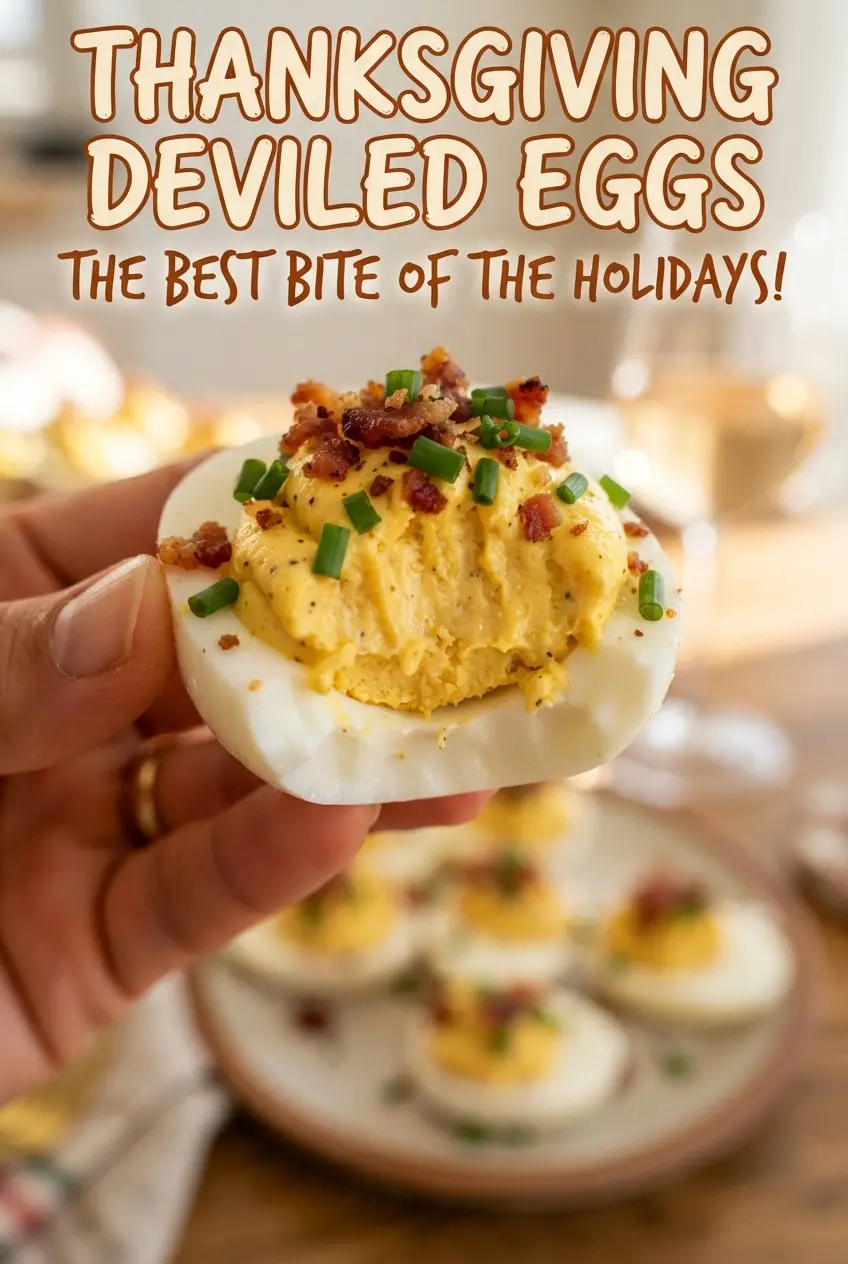
Thanksgiving Deviled Eggs
Ingredients
Method
- Place large eggs in a pot and cover with cold water, then bring to a boil. Cover the pot, remove from heat, and let the eggs stand 12 minutes.
- Chill the eggs in an ice bath for 10 minutes, then peel and halve lengthwise. Keep the yolks and egg whites separated for filling.
- Mash the yolks with mayonnaise, Dijon mustard, apple cider vinegar, poultry seasoning, salt, and black pepper until smooth. Mix thoroughly so the filling is creamy with no lumps.
- Pipe the filling into the egg whites. Fill each half completely so the topping holds its shape.
- Top each egg with a small dot of whole berry cranberry sauce, then add candied pecans and bacon. Distribute toppings evenly so every bite has all components.
- Add a crispy sage leaf to each deviled egg, then chill until serving. Keep them cold to maintain the crisp sage texture.