Caramelized butternut squash and crisp-edged Brussels sprouts make this sheet pan side dish the kind of thing people keep sneaking bites of before it even hits the table. The squash turns soft and sweet in the center, the sprouts pick up those browned, nutty edges, and the cranberries and pecans bring the last-minute pop that makes the whole pan taste finished.
The trick is giving the vegetables enough space and enough heat. A crowded pan steams the sprouts before they can brown, which is why this version works best on a large sheet pan at 425F. The maple-balsamic glaze goes in after roasting, so it clings to the vegetables without burning or turning sticky in the oven.
Below, I’ve included the details that matter most: how to get real caramelization instead of soft roasted vegetables, why the pecans should be toasted, and a few easy ways to change this up for different meals.
The squash got browned and tender without turning mushy, and the maple balsamic tied everything together without making the sprouts soggy. I served it warm and the pecans stayed crisp all the way through dinner.
Save this roasted butternut squash and Brussels sprouts with pecans and cranberries for a caramelized side that brings crunch, sweetness, and tang to any dinner table.
The Reason These Vegetables Brown Instead of Steam
Roasted vegetables only get deeply caramelized when the pan stays hot and the vegetables have room to breathe. Butternut squash and Brussels sprouts both carry a fair bit of moisture, so if they’re piled up, the steam has nowhere to go and you end up with soft edges instead of color. A large sheet pan and a hot oven fix that problem fast.
The other thing that matters is cutting the squash into even cubes and halving the sprouts through the stem. That gives you pieces that cook at roughly the same pace, which keeps the smaller bits from burning before the larger ones are tender. Tossing halfway through exposes new surfaces to the pan, and that’s where the best browning happens.
- 425F heat — Hot enough to brown the outside before the centers collapse. Lower heat gives you tender vegetables, but not much color.
- Single layer on the pan — This is what keeps the vegetables roasting instead of steaming. Use two pans if yours looks crowded.
- Tossing halfway — It prevents one side from overbrowning and helps both squash and sprouts pick up new caramelized edges.
What Each Ingredient Is Doing in the Pan
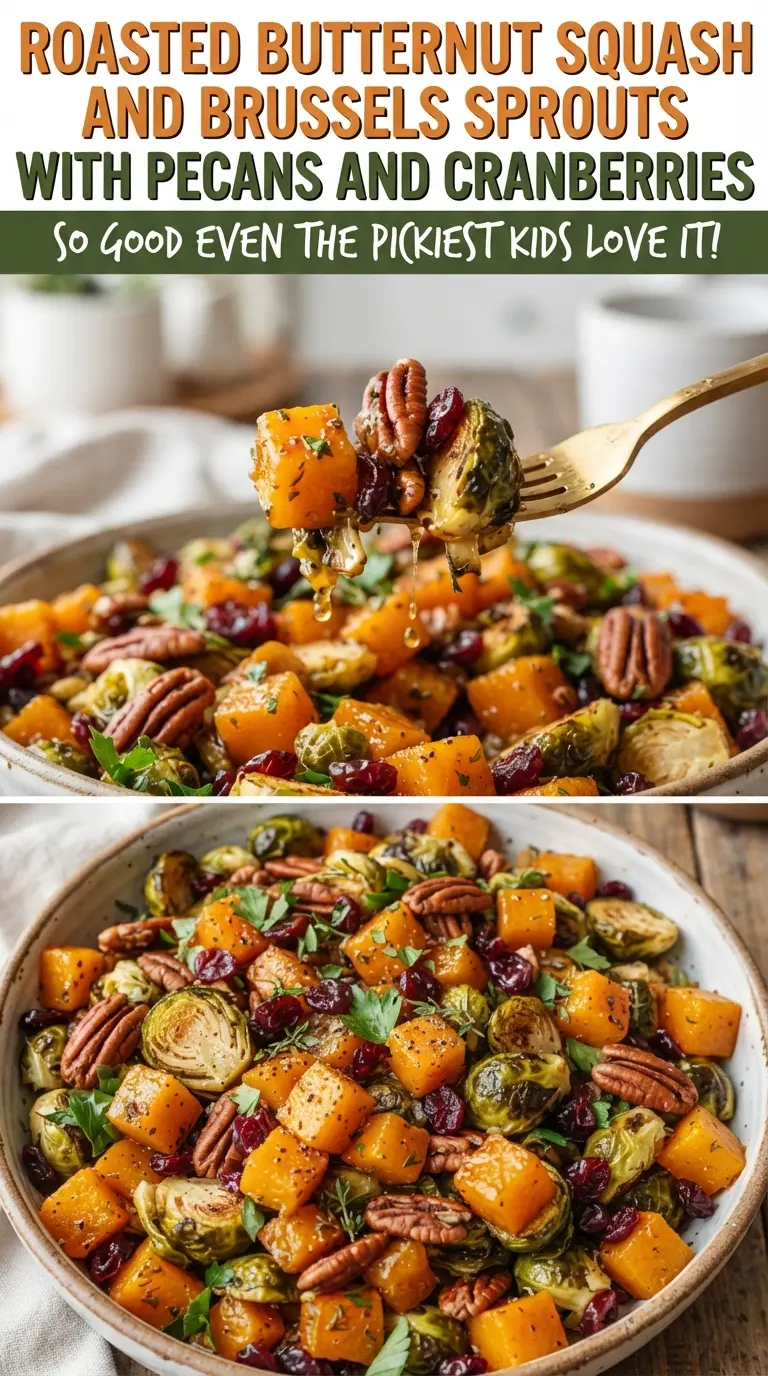
- Butternut squash — Brings sweetness and a soft, creamy center after roasting. Fresh squash matters here; frozen tends to release too much water and won’t caramelize the same way.
- Brussels sprouts — Give the dish its savory edge and those browned crispy leaves around the cut sides. Trim them well and halve them through the stem so they stay together in the oven.
- Olive oil — Helps the vegetables brown and carry the salt evenly. You don’t need an expensive bottle for roasting, but you do need enough oil to coat every piece lightly.
- Maple syrup and balsamic vinegar — These make the quick glaze that finishes the dish. Stir them together after roasting; if they go in early, the sugar can scorch before the vegetables are done.
- Dried cranberries — Add tart-sweet bursts that wake up the roasted vegetables. Add them at the end so they stay chewy instead of hardening in the oven.
- Toasted pecans — Bring crunch and a deeper nutty flavor than raw pecans. Toasting matters because it keeps the nuts from tasting flat once they’re mixed into the warm vegetables.
Roasting the Vegetables Without Losing the Crunch
Coating Every Surface
Start by tossing the squash and Brussels sprouts with olive oil, salt, and pepper until every cut side looks lightly glossy. Dry patches won’t brown evenly, and clumps of oil can pool on the pan and create soggy spots. Spread everything out right after mixing so the oil stays where it should.
Letting the Oven Do the Browning
Roast at 425F for 25 to 30 minutes, and don’t rush the color. The vegetables should look deeply browned at the edges, with the squash tender enough to pierce easily and the sprouts crisped on the cut sides. If they’re pale, they need more time; if the smallest pieces are dark before the rest are tender, the pan was too crowded or the pieces weren’t cut evenly.
Finishing After the Heat
Whisk the maple syrup and balsamic vinegar together, then toss them with the hot vegetables, cranberries, and pecans once the pan comes out of the oven. The residual heat helps the glaze coat everything without reducing into a sticky mess. Add the nuts at the end so they keep their crunch, and serve it warm while the contrast between sweet squash, tangy cranberries, and toasted pecans is at its best.
How to Change This Dish for Different Tables
Make it dairy-free and vegetarian as written
This recipe already fits both needs without any changes. The texture and balance come from the vegetables, glaze, and nuts, so there’s no dairy to replace and no meat needed to make it feel complete.
Use walnuts or almonds instead of pecans
Walnuts bring a softer, slightly more bitter bite, while sliced almonds stay a little lighter and crunchier. Pecans are the sweetest and most buttery option, so the swap changes the finish more than the structure of the dish.
Swap in maple for a more pronounced glaze
If you like a sweeter finish, add an extra drizzle of maple syrup after the vegetables come out of the oven. The dish will read more like a holiday-style side, with a softer balsamic edge and a little more shine.
Make it ahead for a crowd
Roast the vegetables a few hours ahead, then rewarm them on a sheet pan in a hot oven and toss with the maple-balsamic, cranberries, and pecans right before serving. Adding the finishing ingredients at the end keeps the nuts crisp and the glaze bright.
Storage and Reheating
- Refrigerator: Store leftovers in an airtight container for up to 4 days. The Brussels sprouts soften a bit, but the flavor stays good.
- Freezer: The roasted vegetables can be frozen, but the texture gets softer after thawing. Freeze in a flat layer and keep the pecans out until serving if possible.
- Reheating: Warm on a sheet pan in a 400F oven until hot. The biggest mistake is microwaving the whole batch, which makes the sprouts limp and the pecans lose their crunch.
Answers to the Questions Worth Asking
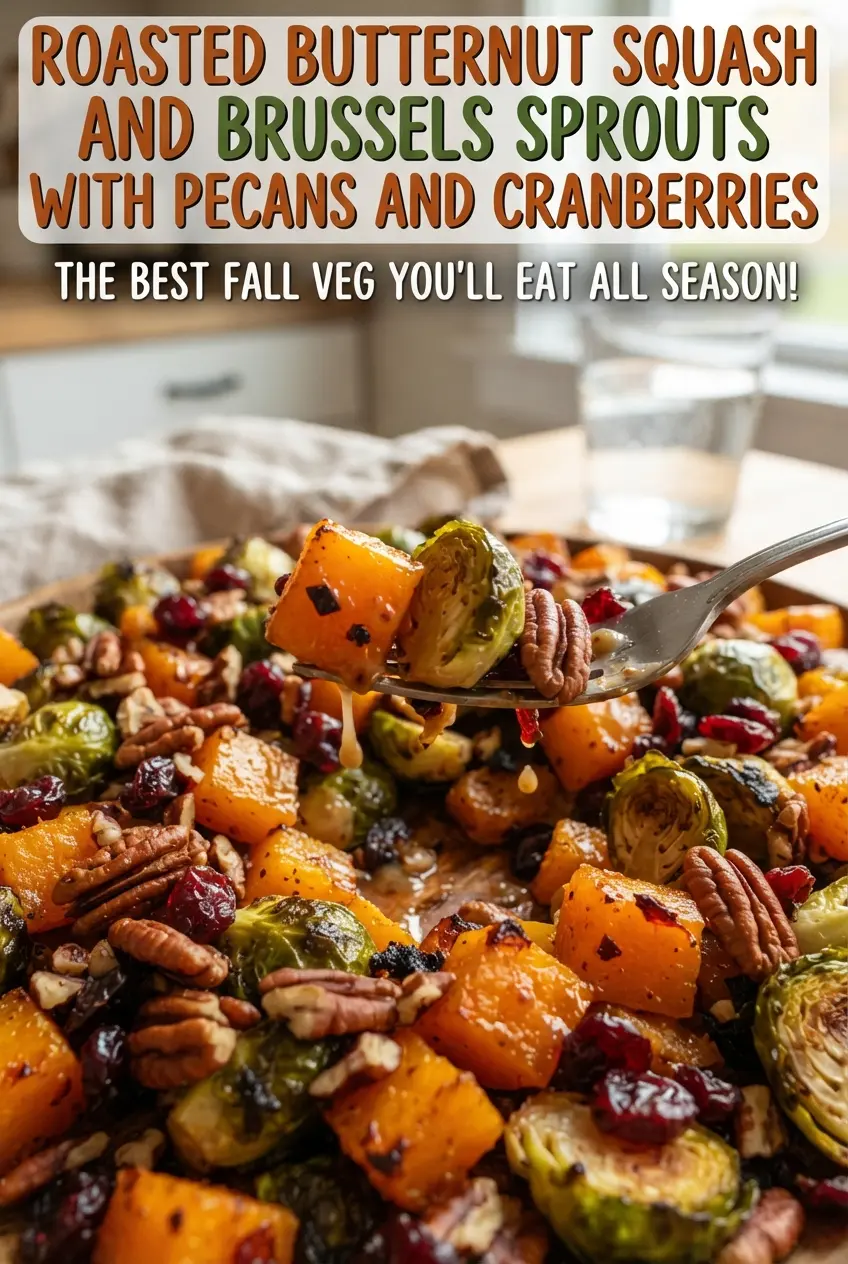
Roasted Butternut Squash and Brussels Sprouts with Pecans and Cranberries
Ingredients
Equipment
Method
- Preheat oven to 425F. Let the oven fully heat so the squash caramelizes as it roasts.
- Toss butternut squash and Brussels sprouts with olive oil, salt, and black pepper on a large sheet pan. Spread into a single layer for browning.
- Roast for 25-30 minutes, tossing halfway, until tender and caramelized. Look for deep golden edges on the squash and crisped Brussels sprouts surfaces.
- Whisk maple syrup and balsamic vinegar until smooth. Keep stirring until the mixture looks glossy and evenly combined.
- Toss the roasted vegetables with the maple balsamic, dried cranberries, and pecans, then serve warm. The glaze should coat everything, with cranberries and pecans evenly distributed.