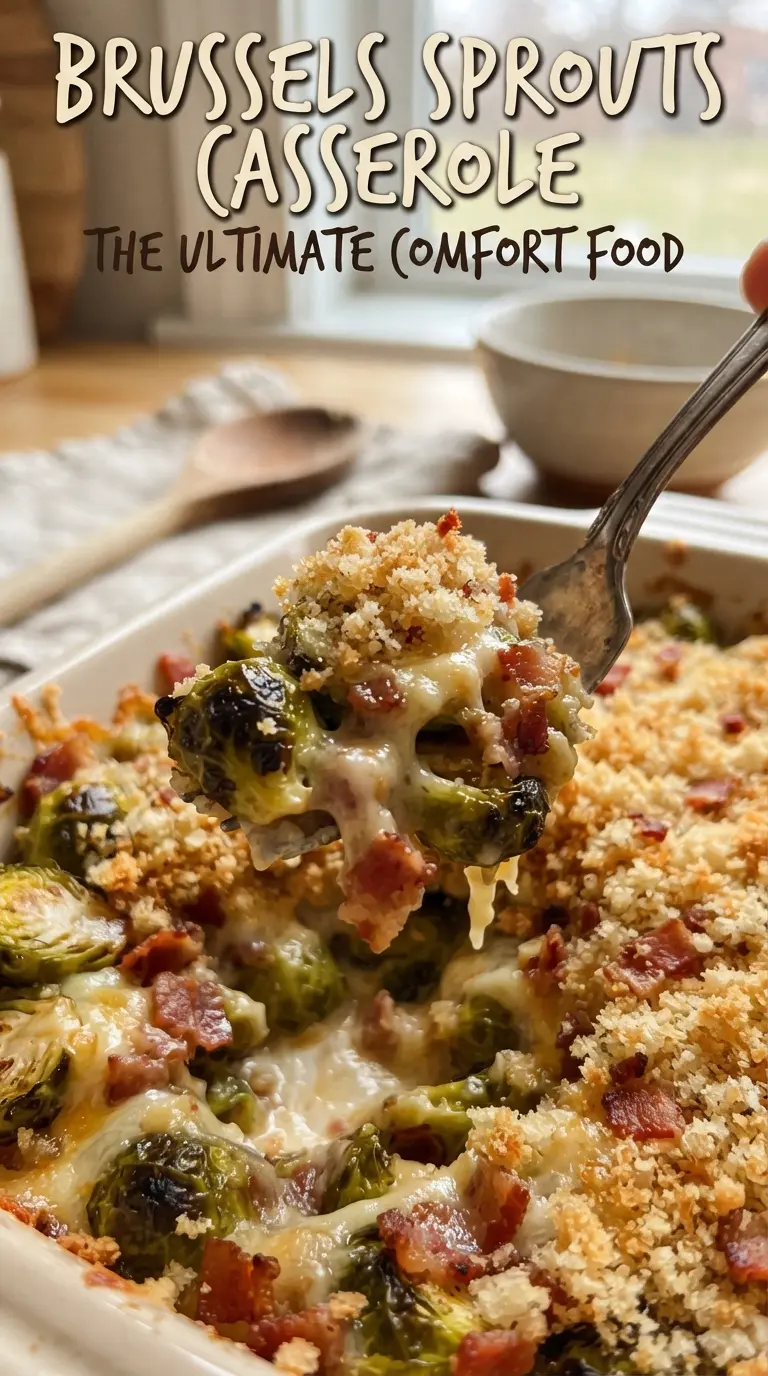
Bubbling Brussels sprouts casserole lands on the table with the kind of pull-apart, spoonable comfort that makes people go back for a second scoop before they’ve finished the first. The Brussels stay tender but still hold their shape, the sauce coats every cut edge, and the bacon and panko on top give you that crisp, salty finish that keeps the dish from feeling heavy.
What makes this version work is the quick blanch before baking. Brussels sprouts can stay firm in the middle long after the top looks done, so that four-minute boil takes the raw edge off and gives them a head start without turning them mushy. The sauce builds in the same pan as the bacon and gets thickened before the cheese goes in, which keeps it smooth instead of grainy. Gruyere brings the nutty melt, Parmesan sharpens it, and the bacon drippings give the whole dish a deeper backbone than butter alone.
Below, I’ll walk through the part that matters most — keeping the sauce creamy and the topping crisp — plus a few smart swaps if you want to adjust the richness, skip the bacon, or prep this ahead for a bigger meal.
The Brussels stayed tender without falling apart, and the sauce thickened up perfectly in the baking dish. My husband kept sneaking bites off the edge because the bacon and panko topping was that good.
Pin this Brussels sprouts casserole for the nights when you want a bubbling, cheesy side with a crisp bacon-panko top.
The Part That Keeps Brussels Sprouts Tender Instead of Watery
The biggest mistake with Brussels sprouts casserole is skipping the pre-cook and hoping the oven will handle everything evenly. It won’t. The tops brown before the centers soften, and by the time the sprouts are tender, the sauce has tightened too much or the topping has burned.
Blanching the halved sprouts for four minutes gives them a head start and locks in that bright, clean vegetable flavor. Drain them well after the bath. If they go into the casserole dripping wet, the sauce loosens and the whole dish turns thin at the bottom instead of creamy through the middle.
- Brussels sprouts — Fresh, firm sprouts hold up best here. Trim the stem ends and cut them in half so they cook at the same rate and catch more sauce in their layers.
- Bacon — This does more than add salt. The rendered drippings help start the sauce and give the dish a smoky base you won’t get from butter alone. Thick-cut bacon works, but regular bacon crisps a little faster.
- Gruyere — This is the cheese that gives the casserole its smooth melt and nutty depth. Swiss cheese can step in if needed, but the flavor will be milder.
- Panko — Panko stays light and crisp on top instead of sinking into the sauce. Regular breadcrumbs work in a pinch, but they bake up denser and less crunchy.
What Each Ingredient Is Actually Doing in the Dish
Butter and bacon drippings build the sauce base. Use both if you have them, because the drippings carry flavor that butter can’t fake. If you’re short on drippings, add a little extra butter rather than skipping the fat entirely.
Flour, milk, and cream create the bechamel-style sauce that holds everything together. Whisk the milk and cream in gradually and let the mixture simmer until it coats the back of a spoon. If you rush this part, the sauce tastes thin even after baking.
Parmesan and Gruyere give you two different kinds of richness. Parmesan adds salt and sharpness, while Gruyere melts into that stretchy, velvety texture people expect from a casserole. Stir the cheese in off direct heat so it melts smoothly instead of turning grainy.
Panko and reserved bacon finish the dish with contrast. The casserole underneath should be creamy and soft; the top needs to break with a little crunch. That texture shift is what keeps each bite interesting.
Building the Casserole So the Sauce Stays Smooth
Cooking the Bacon and Starting the Base
Cook the bacon until crisp, then pull it out and leave just one tablespoon of the drippings in the pan. Too much fat makes the sauce greasy, but a little gives it depth. When you add the garlic and flour, cook them for about a minute until the raw flour smell fades and the mixture looks paste-like. If the flour stays pale and uncooked, the sauce can taste chalky after baking.
Thickening the Cream Sauce
Whisk in the milk and cream slowly and keep the heat at a gentle simmer. The sauce should go from loose to glossy and thick enough to coat a spoon. If it starts looking lumpy, keep whisking off the heat for a few seconds before returning it to low heat. High heat is the fastest way to scorch the dairy or make the sauce break.
Bringing the Casserole Together
Stir in the cheese until the sauce is smooth, then fold in the Brussels sprouts and half the bacon. The mixture should look generously coated, not soupy. Transfer it to the baking dish and spread it into an even layer so the top browns at the same pace. If the sauce seems a little loose before baking, don’t chase it with more flour; it will tighten in the oven.
Getting the Top Golden
Finish with the remaining Gruyere, bacon, and panko, then bake until the edges bubble and the top turns deeply golden. That bubbling at the sides is the sign the casserole is heated through, not just browned on top. If the topping darkens too fast, lay a piece of foil loosely over the dish for the last few minutes. You want a crisp crust, not a burnt one.
How to Adapt This for a Bigger Crowd or a Lighter Table
Make it gluten-free
Swap the all-purpose flour for a gluten-free 1:1 flour blend and use gluten-free breadcrumbs or crushed gluten-free crackers on top. The sauce will still thicken, but let it simmer an extra minute or two so the starch fully activates before the cheese goes in.
Skip the bacon without losing flavor
Use all butter in the sauce and add a pinch of smoked paprika if you want a little of that savory depth back. The casserole will be a touch cleaner tasting and less smoky, but the cheese still carries the dish.
Make it ahead for a holiday table
Assemble the casserole without the panko topping, cover, and refrigerate up to a day ahead. Add the crumbs right before baking so they stay crisp instead of absorbing moisture from the sauce. If it goes into the oven cold from the fridge, add a few extra minutes to the bake time.
Storage and Reheating
- Refrigerator: Store leftovers in an airtight container for up to 4 days. The topping softens, but the flavor stays great.
- Freezer: Freeze for up to 2 months in a tightly wrapped baking dish or freezer-safe container. The sauce may separate a little after thawing, but it comes back together well once reheated.
- Reheating: Warm covered in a 350F oven until hot in the center, then uncover for the last few minutes to crisp the top again. Microwaving works in a pinch, but it softens the panko completely and can make the sprouts watery.
Answers to the Questions Worth Asking

Brussels Sprouts Casserole
Ingredients
Equipment
Method
- Preheat the oven to 400F.
- Bring a pot of boiling salted water to a boil, then blanch the halved Brussels sprouts for 4 minutes and drain well.
- Cook the chopped bacon until crisp, then remove it and reserve 1 tablespoon of the drippings.
- Melt the butter with the drippings in a Dutch oven, add the minced garlic and flour, and cook for 1 minute while whisking.
- Whisk in the whole milk and heavy cream, then simmer until the sauce thickens.
- Stir in 1 cup of the shredded Gruyere, the grated Parmesan, salt, and black pepper until smooth.
- Fold the drained Brussels sprouts and half the bacon into the sauce, then pour into a baking dish.
- Top with the remaining Gruyere, the remaining bacon, and the panko breadcrumbs.
- Bake for 20-25 minutes until bubbly and golden.