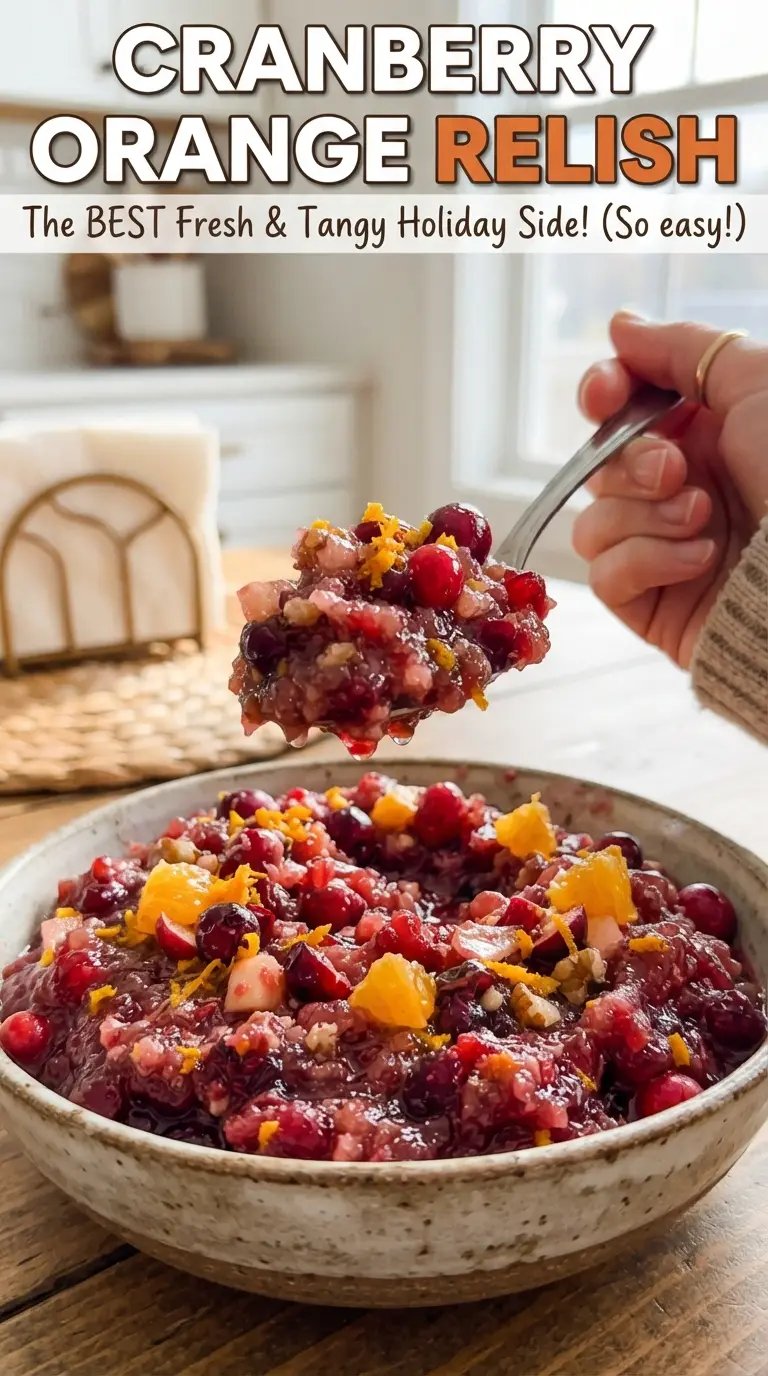
Bright, sharp, and just sweet enough, cranberry orange relish brings the kind of freshness that cuts straight through a heavy meal. It’s not cooked down into a sauce, so the cranberries keep their vivid bite and the orange brings both juice and zest into every spoonful. The texture stays lively instead of jammy, which is exactly why it earns a spot next to roast turkey, glazed ham, or a simple cheese board.
The trick is in the chop. Pulse the cranberries and orange just until they’re finely broken down, not puréed, so the relish holds some structure after it chills. Leaving the orange unpeeled adds depth, but it has to be seeded and trimmed well or the pith and seeds will turn the whole bowl bitter. A little sugar pulls everything together, and the rest of the work happens in the fridge.
Below, I’ve included the one texture cue that matters most, plus a few easy swaps if you want to adjust the sweetness or make it without liqueur. Once you’ve made it this way, it’s hard to go back to the canned version.
The orange really came through after it sat overnight, and the relish stayed bright and chunky instead of turning watery. I served it with turkey sandwiches the next day and it held up perfectly.
Love the bright crunch of cranberry orange relish? Save this version for a fresh no-cook side dish that cuts through rich holiday meals.
The Trick to Keeping Cranberry Relish Bright Instead of Watery
The biggest mistake with cranberry orange relish is overprocessing it. Once the cranberries are reduced to paste, they bleed too much liquid and the relish loses that lively, spoonable texture. You want distinct little bits of cranberry and orange, with enough surface area for the sugar to dissolve and season everything evenly.
Chilling matters more than people think. The sugar draws out juice at first, which can look loose and a little noisy in the bowl, but after a few hours the fruit settles into a thicker, glossy mix. Stir it once or twice if you remember, and always taste it after chilling — cold mutes sweetness, so the balance can shift.
- Cranberries — Fresh berries give the relish its clean, tart snap. Frozen berries work in a pinch if you thaw and drain them first, but expect a softer finished texture.
- Navel orange — The peel and pith add aromatic bitterness that keeps the relish from tasting flat. Seed it well and trim away any very thick white pith if your orange has a tough rind.
- Sugar — This doesn’t just sweeten; it softens the sharp edges of the cranberry and helps the juices turn syrupy as the relish rests. If you cut the sugar, the relish will taste brighter and more tart, but it won’t mellow as much.
- Orange liqueur or orange juice — The liqueur adds a deeper citrus note and a little roundness. Orange juice works well if you want it alcohol-free, though the flavor will be lighter and less layered.
- Pinch of salt — It’s small, but it wakes up the citrus and keeps the relish from tasting one-note.
What Each Ingredient Is Actually Doing in This Recipe
- Primary ingredient (the star) — Quality matters most. Choose the best you can find.
- Cooking medium (oil, butter, or broth) — This carries flavors and prevents dryness.
- Seasonings (salt, pepper, spices, herbs) — Layer flavors so nothing overpowers. Build depth gradually.
- Aromatics (garlic, onion, herbs) — Cook with fat to bloom flavors. Become the foundation.
- Supporting ingredients — Complement the main ingredient without overpowering it.
- Sauce or liquid (if applicable) — Brings flavors together. Balance richness with acid.
- Acid (lemon, vinegar, wine, or other) — Brightens and prevents flat-tasting results.
- Final finish (garnish, glaze, or sauce) — Prevents one-dimensional taste and adds visual appeal.
How to Pulse, Chill, and Serve It So the Texture Stays Right
Breaking Down the Fruit
Pulse the cranberries and orange chunks in short bursts. Stop as soon as the mixture looks finely chopped and evenly mottled with orange zest flecks. If you run the processor too long, the cranberries turn mushy and the orange breaks down into juice, which gives you a loose relish instead of a crisp one.
Seasoning the Bowl
Stir in the sugar, orange liqueur or juice, and salt right away. The sugar should coat the fruit and start dissolving as soon as it hits the bowl. If it still looks grainy after stirring, that’s normal; the fridge finishes the job.
Letting the Flavors Settle
Cover and chill for at least 4 hours, or overnight if you can. The relish thickens as it rests, and the orange flavor gets more integrated instead of tasting sharp and separate. If it seems a little loose when you first mix it, don’t panic — it tightens as the sugar pulls juice from the fruit.
Finishing for the Table
Stir well before serving so the juices get redistributed through the bowl. A few leaves of fresh mint on top give it a clean finish and make the color pop. Serve it cold or just slightly chilled; warm relish loses the snap that makes it worth making.
How to Adapt This for a Sweeter, Brighter, or Alcohol-Free Relish
Alcohol-Free Orange Relish
Use orange juice instead of orange liqueur. You’ll keep the citrus flavor, but the relish will taste a little lighter and less rounded, so let it chill fully before judging the sweetness.
Lower-Sugar Version
Cut the sugar to 1/2 cup for a sharper, more tart relish. The texture will still hold, but the juices won’t thicken quite as much, so serve it with rich foods where the extra bite is welcome.
Lime or Lemon Accent
Add a little finely grated lime or lemon zest if you want a sharper citrus edge. Keep it light — too much turns the relish bitter and competes with the orange instead of supporting it.
Make-Ahead for a Crowd
This is an ideal make-ahead side because it tastes better after it rests. Stir it the day before, keep it covered in the fridge, and garnish with mint just before serving so the herbs stay fresh and bright.
Storage and Reheating
- Refrigerator: Keeps well for 5 to 7 days in a covered container. The flavor deepens as it sits, and the texture stays pleasantly chunky.
- Freezer: It freezes well for up to 2 months, though the texture softens a bit after thawing. Freeze in a small airtight container and thaw in the fridge overnight.
- Reheating: No reheating needed. Serve it cold or at cool room temperature; warming it dulls the cranberry and orange and makes it taste flatter.
Answers to the Questions Worth Asking

Cranberry Orange Relish
Ingredients
Equipment
Method
- Pulse cranberries and orange chunks in a food processor until finely chopped but not pureed.
- Transfer the finely chopped mixture to a bowl.
- Stir in sugar, orange liqueur or orange juice, and salt until evenly combined.
- Cover and chill in the refrigerator for at least 4 hours or overnight (no heat, room-cold texture).
- Stir well before serving to redistribute any liquid.
- Garnish with fresh mint right before serving for a bright, fresh finish.