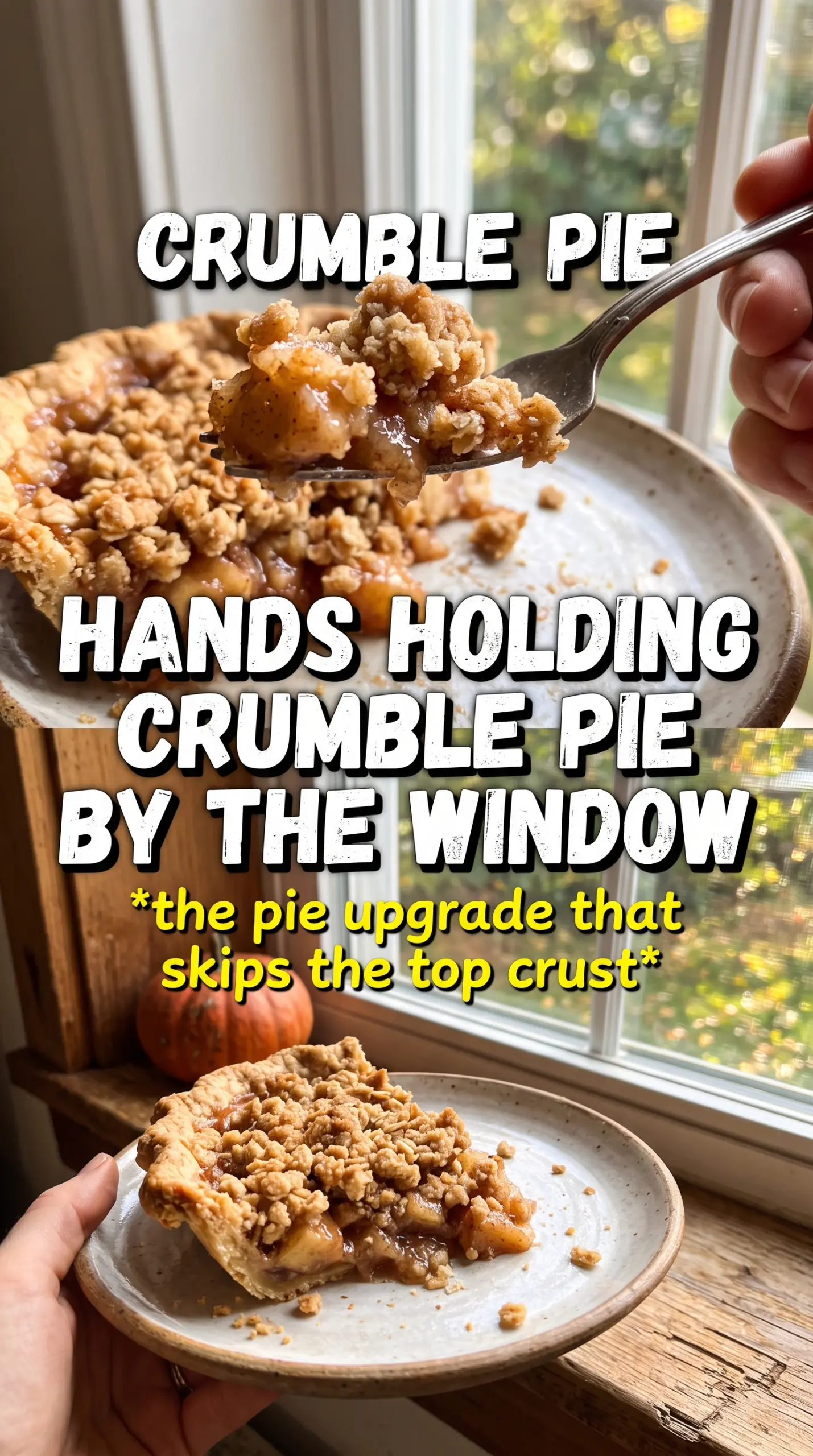
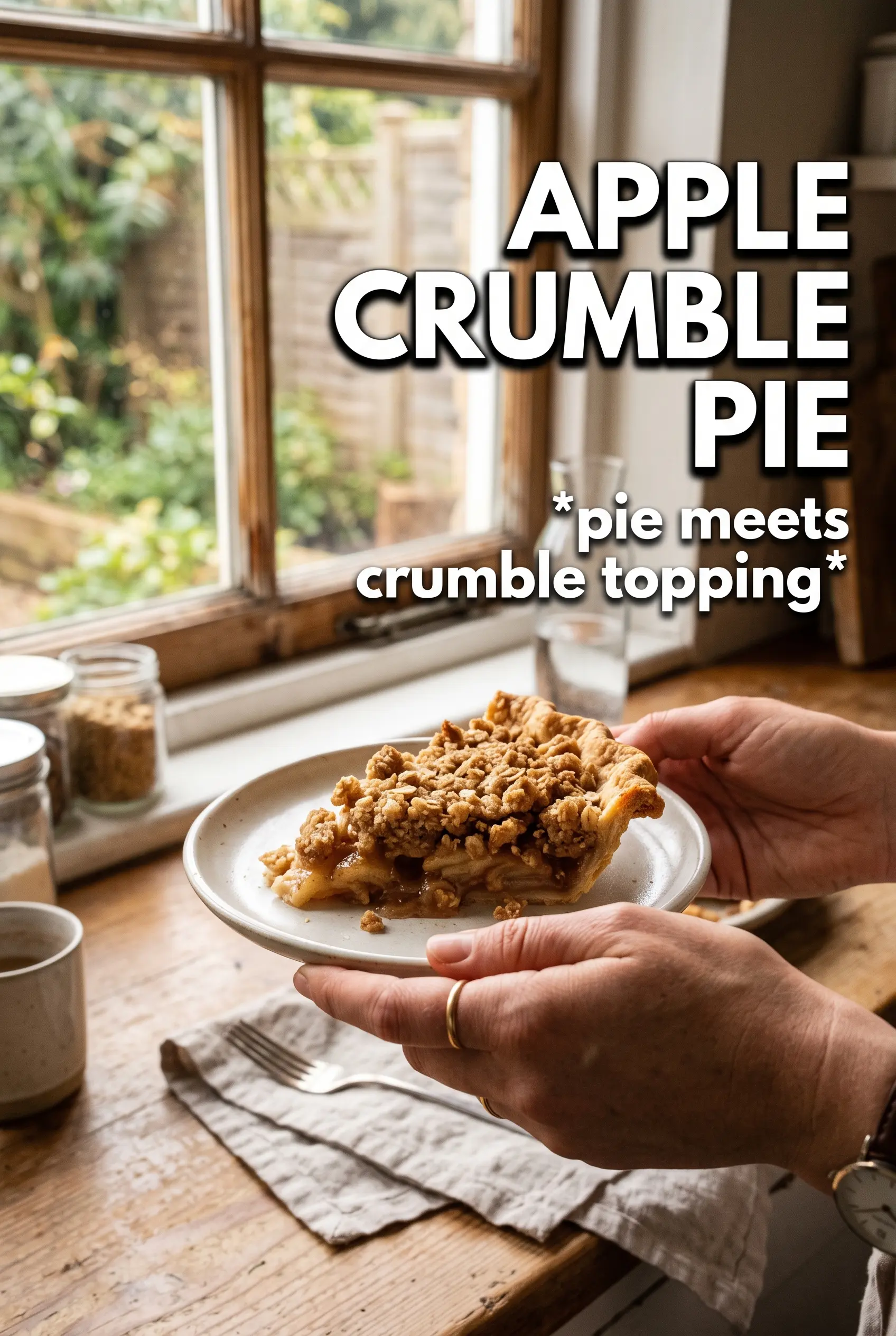
Apple crumble pie lands in that sweet spot between classic and a little more interesting than the usual double-crust version. The filling bakes up soft and spiced, the juices thicken into a glossy layer around the apples, and the oat crumble on top turns deeply golden with those big buttery clusters everyone reaches for first. You get a crisp-edged shell, tender fruit, and enough texture on top to keep every slice from feeling heavy.
What makes this version work is the contrast. Cornstarch keeps the apple juices from running all over the plate, and the lemon juice keeps the filling from tasting flat once the sugar and cinnamon go in. The crumble topping is built with cold butter, not softened, so it bakes into nubby, sandy clumps instead of melting into a paste. That’s what gives the top its crunch.
Below, I’ve included the timing trick that keeps the topping from overbrowning before the apples are done, plus a few swaps that help if you need to work with what’s already in the pantry.
The crumble stayed crisp even after sitting, and the filling thickened up instead of spilling out when I sliced it. I tented it with foil at 35 minutes like you said, and the top came out golden instead of burned.
Love the thick apple filling and buttery oat crumble on this pie? Save it to Pinterest for the next time you want a classic dessert with a crisp topping.
The Crumble Topping Won’t Sink if the Apples Are Packed Right
The biggest mistake with apple crumble pie is treating it like a loose apple skillet dessert. The filling needs to be mounded slightly so the fruit settles as it bakes, and the crumble needs to sit on top in generous clumps, not a thin dusting. If the topping is too fine, it melts into the fruit and you lose the whole point of the pie.
Another thing that matters is how the apples are cut. Keep the slices fairly even so they soften at the same rate. If you’ve got a mix of soft and firm pieces, the pie ends up with apples that collapse before the cornstarch has had time to thicken the juices. That’s when the bottom crust turns soggy and the slice won’t hold.
What the Apples, Cornstarch, and Cold Butter Are Each Doing Here
- Apples — Use a mix that holds its shape and softens well, such as Granny Smith, Honeycrisp, or a blend of tart and sweet apples. Very soft apples break down too quickly and leave you with apple sauce under the crumble. Peel them for the cleanest texture.
- Cornstarch — This is what turns loose fruit juices into a sliceable filling. Flour can work in a pinch, but it needs more time to cook and won’t give the same clear, glossy finish. If your apples are especially juicy, the cornstarch is what keeps the filling from running.
- Cold butter — The butter has to stay cold until it hits the oven. That’s how the crumble forms into crumbs instead of a greasy layer. If the butter starts softening while you mix, pop the bowl in the fridge for 10 minutes before topping the pie.
- Rolled oats — These bring the craggy, toasty texture that makes this pie different from a standard streusel pie. Quick oats can work, but the topping will be denser and less defined. Old-fashioned oats give you the best crunch.
Building the Filling and Baking Until the Juice Bubbles Through
Coating the Apples Evenly
Toss the sliced apples with the sugar, cinnamon, nutmeg, cornstarch, and lemon juice until every piece looks lightly coated. You want the cornstarch spread through the fruit, not sitting in pockets at the bottom of the bowl. If you see dry clumps, keep tossing; those spots can turn chalky in the finished pie.
Making the Crumble Without Melting the Butter
Combine the oats, flour, brown sugar, cinnamon, and salt, then cut in the cold butter until you have uneven, chunky clumps. Some pieces should look sandy and some should be the size of small peas. That mix is what gives the topping both crunch and those bigger bakery-style clusters. If it starts looking like a paste, the butter got too warm.
Watching for the Right Bake
Bake the pie until the crumble is deeply golden and the filling is actively bubbling at the edges. Those bubbles matter more than the timer because they tell you the cornstarch has thickened the fruit juices. If the top is browning too quickly, tent it with foil after about 35 minutes. Pulling it early leaves the filling loose, and the pie will run when sliced.
Letting the Pie Set Before You Cut It
Let the pie cool for at least an hour before slicing. The filling thickens as it cools, and that’s when the slices hold together cleanly. If you cut it too soon, the juices will spill out and the bottom crust won’t have time to firm up. A warm pie is good, but a set pie is what gives you a proper wedge.
How to Adapt This Pie When You Need a Different Crust, Topping, or Pan Size
Make It Gluten-Free
Swap the all-purpose flour in the crumble for a good 1:1 gluten-free baking blend. The topping will still brown and crisp, though it may be a little more delicate when you slice. Keep the oat texture the same, and check that your oats are certified gluten-free if that matters for your kitchen.
Use a Different Apple Blend
All tart apples make the pie brighter, while all sweet apples make it softer and more dessert-like. The best pie usually comes from mixing both, because the tart fruit keeps the flavor from turning flat. If your apples are very sweet, don’t skip the lemon juice; it wakes up the filling.
Turn It Into a Dairy-Free Pie
Use a plant-based butter that bakes well in place of the unsalted butter. You’ll still get a crumbly topping, though the flavor will be a little less rich and the clusters may brown a bit faster. Watch the top closely in the last 15 minutes and tent with foil if needed.
Storage and Reheating
- Refrigerator: Store covered for up to 4 days. The crumble softens a little in the fridge, but the filling stays nicely set.
- Freezer: This pie freezes well after baking and cooling completely. Wrap tightly in plastic and foil, then freeze for up to 2 months.
- Reheating: Warm slices in a 325F oven until the filling loosens slightly and the topping crisps back up. The mistake is microwaving it too long, which makes the crust soggy and the crumble chewy.
Answers to the Questions Worth Asking
Apple Crumble Pie
Ingredients
Equipment
Method
- Preheat oven to 375°F, then fit the unbaked 9-inch pie shell into a 9-inch pie dish and crimp the edges, leaving a sealed rim. Visual cue: crimped edges hold their shape around the perimeter.
- Toss peeled and sliced large apples with granulated sugar, cinnamon, nutmeg, cornstarch, and lemon juice until evenly coated. Visual cue: the apples look glossy and thickened.
- Pile the apple mixture into the unbaked shell, mounding slightly to keep the filling from sinking. Visual cue: the center rises above the crust.
- Combine rolled oats, all-purpose flour, brown sugar (packed), cinnamon, and salt until evenly mixed. Visual cue: the mixture appears dry and evenly speckled.
- Cut cold unsalted butter (cubed) into the oat mixture until chunky clumps form. Visual cue: you see varied oat clusters rather than a uniform sand.
- Scatter the oat crumble topping over the apple filling, covering generously so most apples are hidden. Visual cue: a thick, even layer sits across the surface.
- Bake for 55-65 minutes at 375°F until the crumble is deeply golden and the filling bubbles through at the edges. Visual cue: active bubbling is visible around the perimeter.
- Tent with foil after 35 minutes if the topping browns too quickly. Visual cue: the foil prevents further darkening while the pie continues baking.
- Cool for at least 1 hour before slicing so the filling sets. Visual cue: the pie slices cleanly without running juices.