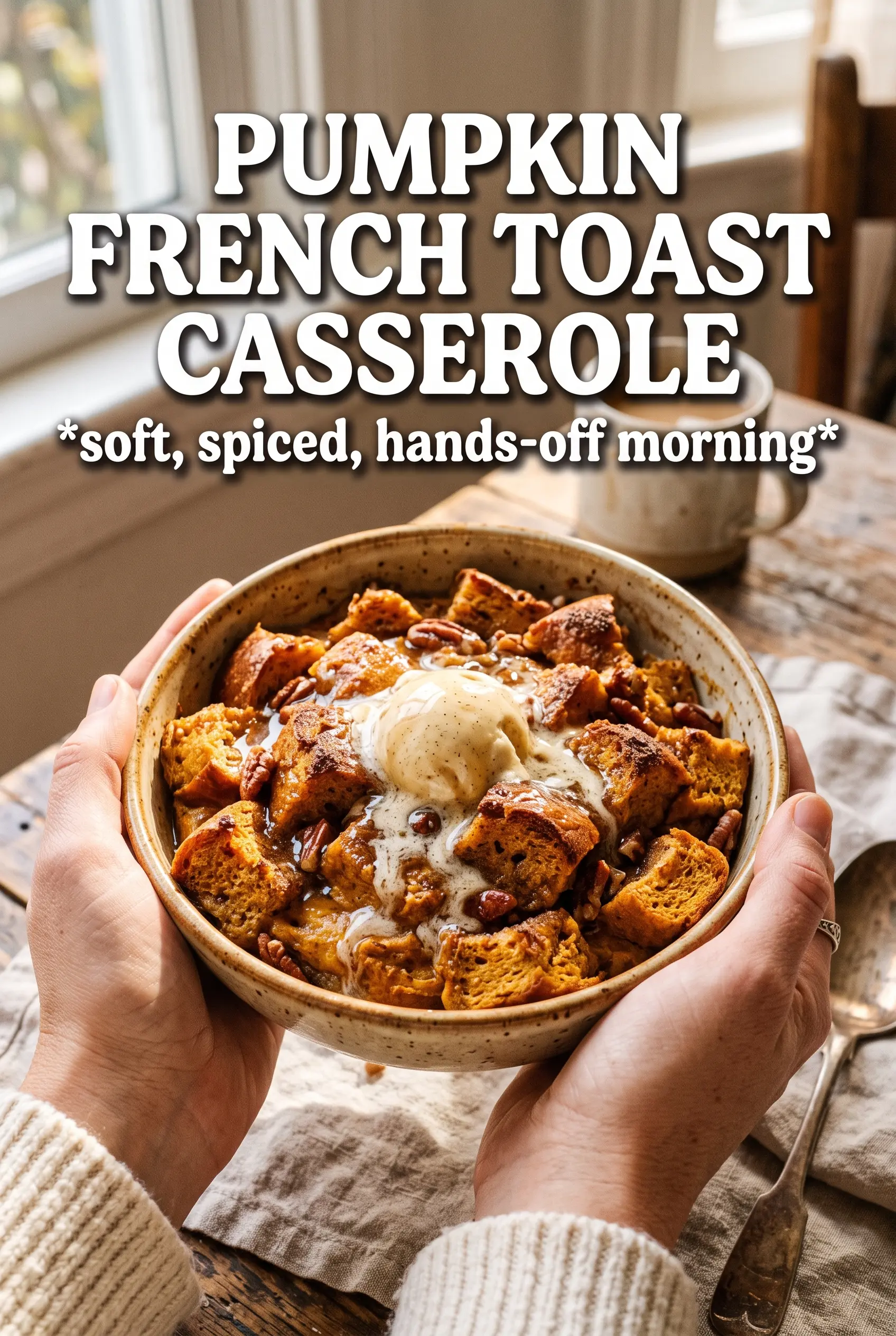
Pumpkin French toast casserole comes out with the best parts of a holiday breakfast without the stovetop shuffle. The bread bakes up custardy in the middle, puffed at the edges, and topped with a buttery cinnamon streusel that turns crisp in the oven. Every spoonful gets you that mix of soft pumpkin-spiced custard and crackly topping, which is exactly why this dish disappears fast at the table.
The trick is using sturdy bread that can sit in the custard overnight without collapsing. Brioche or challah gives you rich flavor and a soft crumb, but it still holds its shape after soaking. The pumpkin puree adds body, not just flavor, so the filling sets into a sliceable casserole instead of a loose bread pudding. That overnight rest matters more than it looks on paper — it gives the custard time to move all the way through the bread cubes.
Below, I’ll show you how to keep the center from turning soggy, how to get the streusel crisp instead of sandy, and what to do if you want to make it ahead for guests without losing that fresh-from-the-oven texture.
The custard soaked in overnight and baked up perfectly set, and the streusel stayed crisp even after we added maple syrup. My kids kept going back for the puffed edges.
Save this pumpkin French toast casserole for a make-ahead breakfast with crisp streusel and a custardy center.
The Overnight Soak That Keeps the Middle Custardy, Not Soggy
The biggest mistake with French toast casserole is rushing it into the oven before the bread has time to absorb the custard evenly. When that happens, the top bakes before the center catches up, and you end up with dry corners and a wet middle. Overnight chilling fixes that by giving the egg mixture time to move through every cube of bread, especially the ones tucked into the center of the dish.
Pressing the bread down after pouring the custard matters too. You want the cubes submerged or at least thoroughly coated, because any dry bread left on top will bake up bready and disconnected from the rest of the casserole. Brioche and challah both work because they soak without breaking apart, which is what keeps the finished texture tender instead of mushy.
What the Bread, Pumpkin, and Streusel Are Each Doing Here

- Brioche or challah — This is the structure. You need a bread with enough body to hold the custard after an overnight soak. Sandwich bread turns too soft and can collapse into paste.
- Pumpkin puree — Pumpkin adds body and a gentle earthy sweetness that makes the custard feel thicker and more substantial. Use plain pumpkin puree, not pumpkin pie filling, or the casserole will turn overly sweet and spiced in the wrong way.
- Heavy cream and whole milk — The milk keeps the custard pourable, while the cream gives the finished casserole a richer, silkier bite. You can swap the heavy cream for half-and-half in a pinch, but the center will be a little lighter and less plush.
- Maple syrup — There’s maple in the custard and more on the table for serving. That layered sweetness keeps the pumpkin from tasting flat, and real maple syrup gives a warmer finish than pancake syrup ever will.
- Brown sugar streusel — The cold butter and brown sugar bake into crisp, sandy crumbs that contrast with the soft custard below. If the butter is too soft, the topping melts instead of crumbling, so keep it cold and work quickly.
Building the Custard and Streusel So They Bake Into One Clean Slice
Whisk the custard until the pumpkin disappears
Start by whisking the eggs first, then add the milk, cream, pumpkin puree, maple syrup, brown sugar, spices, vanilla, and salt. Keep whisking until the mixture looks smooth and evenly orange with no streaks of pumpkin hiding at the bottom. If the pumpkin isn’t fully incorporated, those thicker pockets can bake up dense and slightly under-set. Pour it over the bread slowly so the cubes have time to catch the liquid instead of letting it pool on top.
Let the bread drink before the oven ever turns on
Once the custard is in the dish, press the bread down gently with the back of a spoon or clean hands. Cover the dish and refrigerate it overnight, or at least for several hours if you’re short on time. The bread should feel heavy and saturated in the morning, not just damp on the surface. If you skip this rest, the casserole bakes unevenly and the middle often ends up with dry bread hidden under a soft top.
Make the streusel cold and crumbly
Cut the butter into the flour, brown sugar, and cinnamon until you get uneven clumps, not a smooth dough. Those rough crumbs are what turn crisp in the oven. If the butter softens too much, the topping melts into a paste and loses the texture that makes each bite interesting. Scatter it over the soaked bread right before baking so it stays distinct.
Bake until the center sets with a little give
Bake at 350°F until the top is deeply golden and puffed, and the center no longer sloshes when you nudge the pan. A knife inserted near the center should come out mostly clean, with just a little moist custard clinging to it. If the top browns too fast before the center is done, lay a loose sheet of foil over the dish for the last stretch of baking. Let it rest a few minutes before serving so the custard settles and slices cleaner.
Three Ways to Change the Pan Without Losing the Good Texture
Dairy-Free Version
Use full-fat coconut milk in place of the cream and whole milk. The casserole will still set, but the flavor shifts slightly richer and a little coconut-forward, which works well with pumpkin and maple. Keep the rest of the method the same.
Gluten-Free Bread Swap
Use a sturdy gluten-free brioche-style loaf if you can find one. Softer gluten-free sandwich breads tend to break down too fast, so pick a loaf with some structure and cube it a day ahead so it dries slightly before soaking. The casserole will be a little more delicate when sliced, but the flavor still lands beautifully.
Make It Less Sweet
Reduce the brown sugar in the custard to 1 tablespoon and keep the maple syrup for serving. That keeps the pumpkin and spice more front-and-center and makes the casserole taste more like breakfast than dessert. The streusel still gives you plenty of sweetness and crunch on top.
Storage and Reheating
- Refrigerator: Store leftovers covered for up to 4 days. The topping softens a bit, but the custard stays pleasant and the flavor deepens.
- Freezer: Freeze baked slices tightly wrapped for up to 2 months. The texture changes slightly after thawing, but it still reheats well if you want individual portions.
- Reheating: Warm in a 325°F oven, covered loosely with foil, until heated through. The microwave works for a single slice, but it softens the streusel more than the oven does, so use short bursts if that’s your only option.