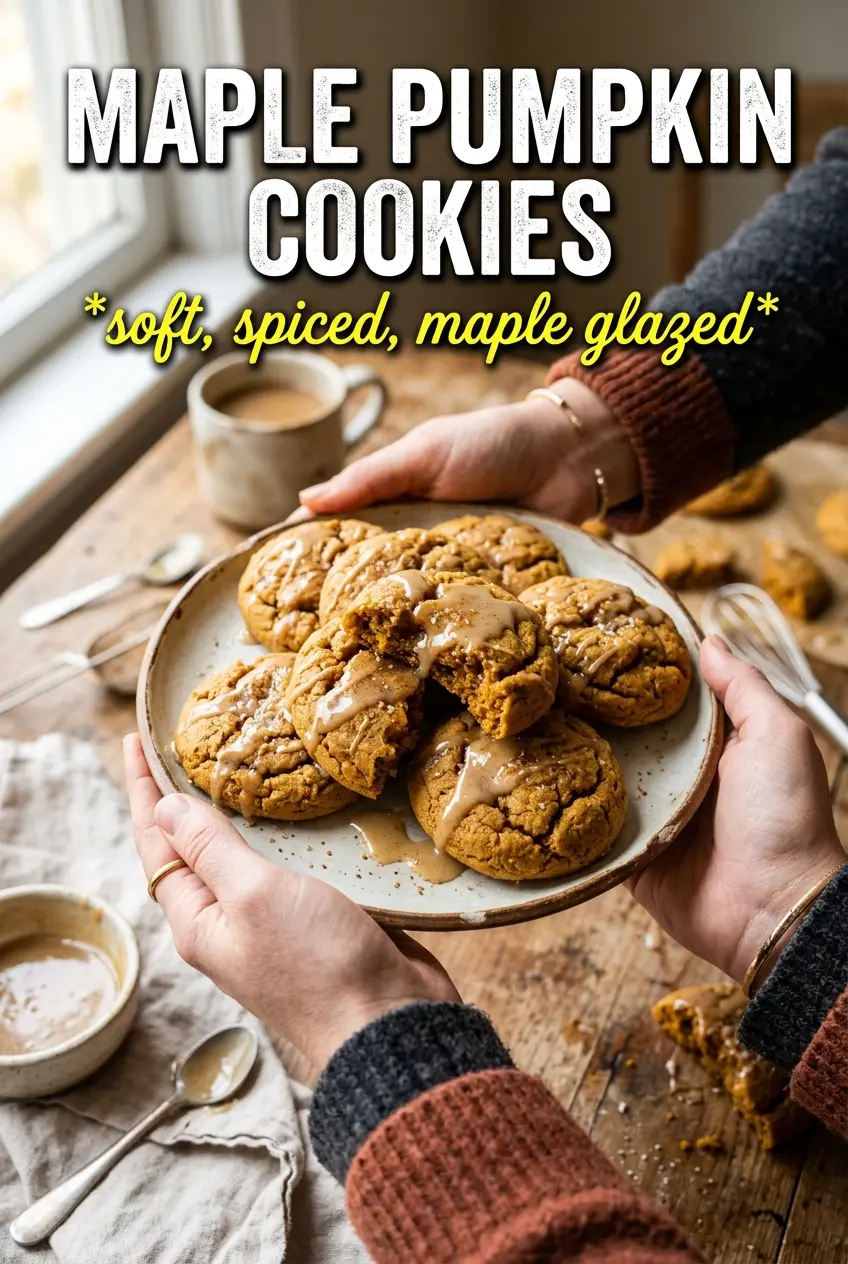
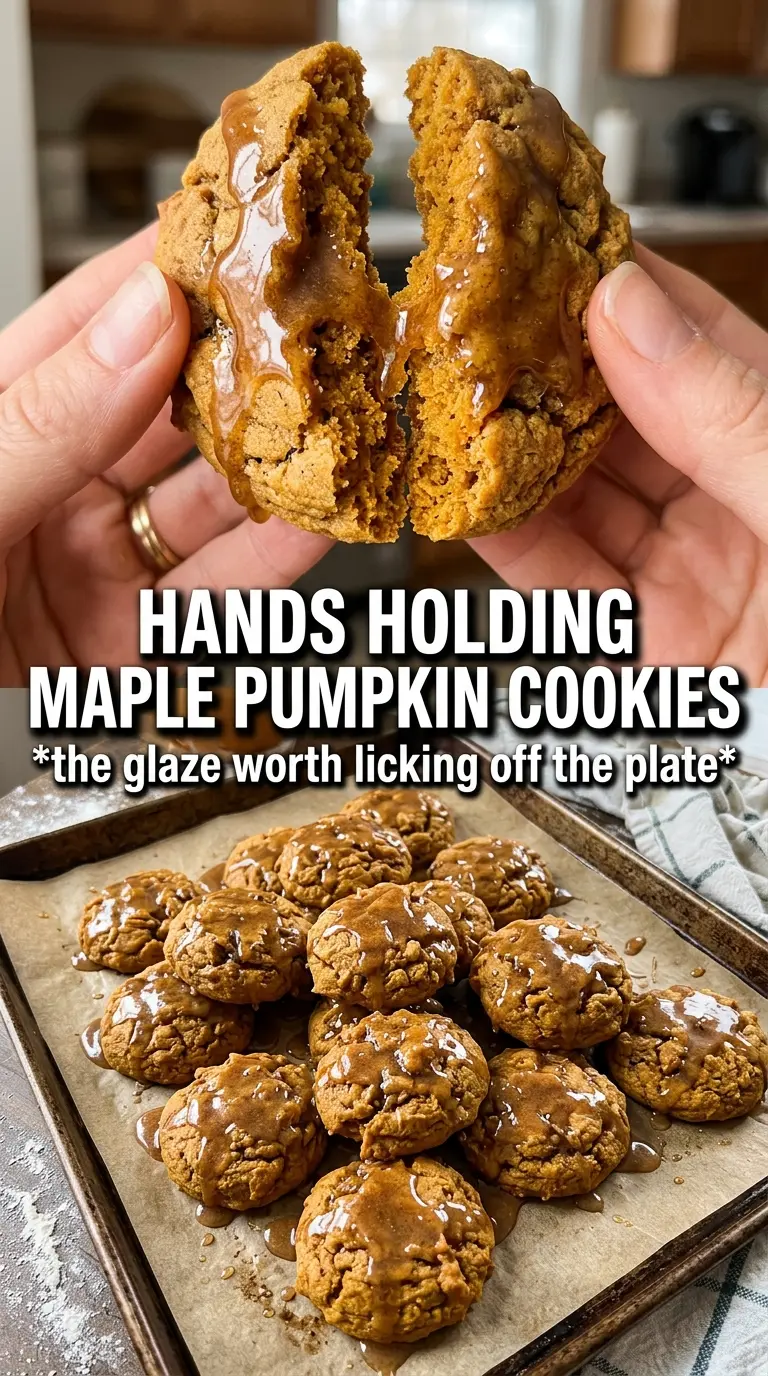
Maple pumpkin cookies bake up soft in the middle with crinkled tops, warm spice, and just enough maple to taste like the real thing instead of a generic fall cookie. The texture is the part that keeps them on repeat: tender and cakey at first bite, then finished with a thin maple glaze that sets glossy and sweet against the edges.
The trick is keeping the pumpkin dry and the dough balanced. Too much moisture turns these into puffy little cakes, so blotting the pumpkin first matters more than it sounds. The butter and brown sugar create the chewy base, while maple syrup and maple extract give the cookies a deeper maple note without making the dough wet enough to spread too much.
Below you’ll find the one step that keeps these cookies from turning soft and dense, plus the best way to glaze them so the tops stay craggy and pretty. The flaky salt at the end isn’t optional in my kitchen — it keeps the sweetness in check and makes every maple note stand out.
The cookies stayed thick and soft, and the maple glaze set up just enough that they didn’t get sticky when I stacked them. I loved the little hit of flaky salt on top.
Save these maple pumpkin cookies for the next time you want soft, spiced cookies with a glossy maple glaze and a little flaky salt on top.
The Moisture Trap That Makes Pumpkin Cookies Puffy Instead of Soft
Pumpkin cookie dough behaves differently from chocolate chip dough or sugar cookie dough. Pumpkin adds water, and that water turns into steam in the oven, which is why so many pumpkin cookies come out cakey, rounded, and a little bland. Blotting the pumpkin puree until it looks almost dry is what keeps these cookies tender instead of bready.
The other thing that matters here is balance. Maple syrup adds flavor, but too much of it makes the dough loose and encourages spread. That is why this recipe uses a small amount of syrup in the dough and puts the bigger maple hit into the glaze, where it can shine without changing the cookie structure.
What Each Ingredient Is Actually Doing in These Maple Pumpkin Cookies
- All-purpose flour — This gives the cookies enough structure to hold the pumpkin and maple without collapsing. A heavier flour like bread flour would make them tough, and cake flour would make them too delicate for the glaze.
- Pumpkin puree — Use plain pumpkin puree, not pumpkin pie filling, and blot it well. That step changes the texture more than any spice does.
- Pure maple syrup — This brings a clean maple flavor to the dough. It adds moisture too, so the amount stays modest; the glaze carries the stronger maple finish.
- Maple extract — This is the ingredient that makes the maple flavor taste obvious instead of faint. If you skip it, the cookies still work, but they taste more like pumpkin spice cookies with maple glaze than true maple pumpkin cookies.
- Brown sugar — It keeps the centers soft and adds a little molasses depth that pairs well with maple. Light or dark brown sugar both work; dark brown sugar gives a deeper finish.
- Egg yolk — The yolk adds richness without extra white protein, which helps keep the cookies tender. A whole egg would make the dough looser and more cake-like.
- Butter — Softened butter whips with the sugar and helps the cookies bake up with those crinkled tops. Don’t melt it; melted butter changes the spread and makes the dough greasy.
- Flaky sea salt — This isn’t just garnish. It cuts the sweetness of the glaze and sharpens the maple flavor after the cookies cool.
Building the Dough So the Cookies Stay Thick and Tender
Dry the Pumpkin First
Spread the pumpkin puree between paper towels and press until it feels thick and pasty, not wet. If you skip this, the cookies spread less predictably and bake up with a soft, almost muffin-like crumb. The puree should still look orange and smooth, just less watery.
Cream the Butter and Brown Sugar Properly
Beat the butter and brown sugar until it looks pale and fluffy, not just blended. That air gives the cookies lift and helps create the slightly crinkled surface on top. If the mixture looks greasy or dense, the butter was too warm and the texture will be flatter.
Mix the Flour in Last and Stop Early
Fold the dry ingredients in until the last streak of flour disappears, then stop. Overmixing builds too much gluten and makes the cookies tough at the edges. The dough should be soft and scoopable, not pourable.
Bake Until the Edges Set
Pull the cookies when the edges look set and the centers still look a little soft. They finish on the baking sheet as they cool, and that carryover heat is what keeps them tender. If you wait until the centers look fully dry in the oven, they’ll bake past soft and turn crumbly once cooled.
Make Them More Spiced
Add another 1/4 teaspoon cinnamon or a pinch of cloves if you want the spice to sit in front of the maple. The cookies will taste warmer and a little more old-fashioned, but the pumpkin will step back slightly.
Gluten-Free Version
Use a cup-for-cup gluten-free flour blend that includes xanthan gum. The cookies will still be soft, but they may spread a little less and bake up with a slightly more delicate crumb.
Dairy-Free Swap
Use a plant-based butter that behaves like regular butter in baking. Choose one in stick form, not a tub spread, or the dough can turn too soft and the cookies may spread unevenly.
Skip the Glaze for a Less Sweet Cookie
Leave off the maple glaze and finish with only flaky salt. The cookies will taste more like soft pumpkin spice cookies with a maple back note instead of a full dessert-style finish.
Storage and Reheating
- Refrigerator: Store in an airtight container for up to 4 days. The glaze will stay set, though the cookies soften a little more by day two.
- Freezer: Freeze the unglazed cookies for up to 2 months. Thaw at room temperature, then glaze after they come back to room temperature so the topping stays smooth.
- Reheating: Warm unglazed cookies briefly in a low oven for a fresh-baked feel. Once glazed, skip reheating or the glaze will melt and slide off.