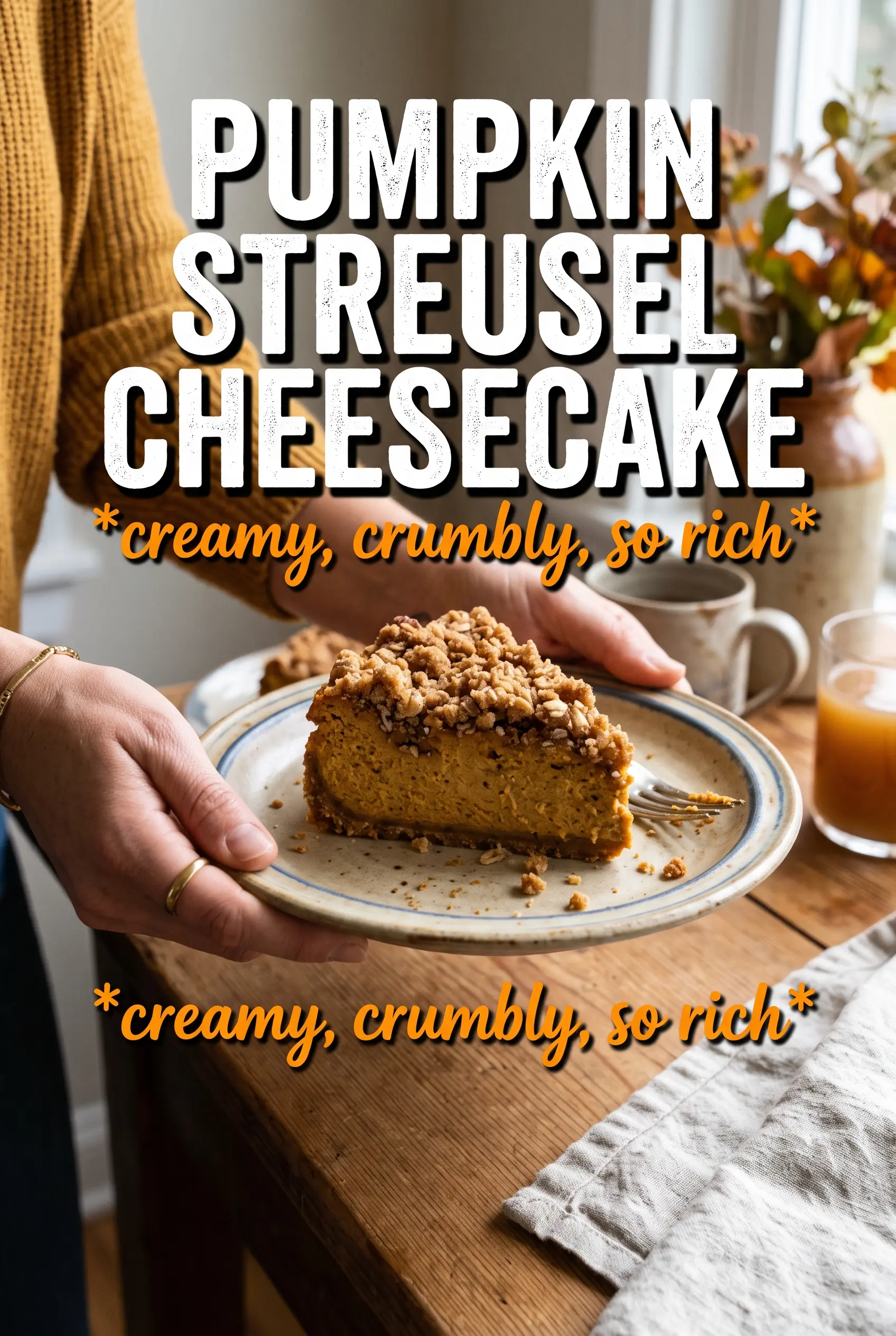
Pumpkin streusel cheesecake brings together three things that usually fight for attention and somehow makes them work as one dessert: a crisp gingersnap crust, a smooth pumpkin-spiced filling, and a buttery oat topping that bakes into little golden crumbles. The first slice cuts cleanly, the top stays slightly rustic, and the caramel drizzle ties the whole thing together without making it heavy.
The trick is balancing moisture and texture. Pumpkin adds flavor and color, but it also softens the batter, so this version leans on full-fat cream cheese, sour cream, and a water bath to keep the cheesecake dense and silky instead of dry or cracked. The streusel goes on before baking, which means it toasts right on top of the filling and gives you that bakery-style finish without any extra steps at the end.
Below, I’ll walk through the part that matters most: how to keep the cheesecake from overbaking while still getting a set center, plus the small ingredient choices that make the crust taste like it belongs with the filling.
The streusel stayed crisp on top and the cheesecake set up beautifully after chilling overnight. The gingersnap crust was the best part with the pumpkin filling.
Save this Pumpkin Streusel Cheesecake for the slice with the crisp gingersnap crust, creamy pumpkin center, and golden oat topping.
The Part That Keeps Cheesecake From Cracking Under a Streusel Top
The streusel looks simple, but it changes the bake. A loose topping can sink into the filling or turn greasy if the butter is too warm, so the butter needs to stay cold and the mixture should look crumbly, not paste-like. That texture lets the oat topping brown in place while the cheesecake underneath finishes gently.
The other thing that matters here is the water bath. Cheesecake batter bakes best with steady, even heat, and pumpkin makes the filling a little softer than a plain version. If the oven runs hot or the pan sits dry on the rack, the edges set too fast and the center never gets that smooth, custardy finish.
- Gingersnap crumbs — These give the crust a deeper spice than graham crackers and stand up better to the pumpkin filling. If you swap them, use graham crumbs plus an extra pinch of cinnamon and ginger so the base doesn’t taste flat.
- Cream cheese — Full-fat blocks matter here. Tub-style cream cheese has more moisture and can make the filling loose, which is a headache once the streusel goes on top.
- Sour cream — This keeps the filling tangy and soft without thinning it out. Plain Greek yogurt works in a pinch, but the cheesecake will taste a little sharper and may bake up slightly less silky.
- Cold butter for the streusel — Cold butter is what keeps the topping crumbly. If it melts before baking, you’ll lose those crisp little clusters and end up with a sandy layer instead.
What Each Ingredient Is Actually Doing in This Recipe
- Primary ingredient (the star) — Quality matters most. Choose the best you can find.
- Cooking medium (oil, butter, or broth) — This carries flavors and prevents dryness.
- Seasonings (salt, pepper, spices, herbs) — Layer flavors so nothing overpowers. Build depth gradually.
- Aromatics (garlic, onion, herbs) — Cook with fat to bloom flavors. Become the foundation.
- Supporting ingredients — Complement the main ingredient without overpowering it.
- Sauce or liquid (if applicable) — Brings flavors together. Balance richness with acid.
- Acid (lemon, vinegar, wine, or other) — Brightens and prevents flat-tasting results.
- Final finish (garnish, glaze, or sauce) — Prevents one-dimensional taste and adds visual appeal.
Building the Layers So the Center Sets Before the Top Overbakes
Pressing and Prebaking the Crust
Mix the gingersnap crumbs, sugar, and melted butter until the texture feels like damp sand, then press it firmly into the springform pan, especially up the sides if you want a more defined slice. Bake it for 10 minutes so it sets before the filling goes in. If you skip that step, the crust can go soft under the cheesecake and lose its snap.
Whipping the Filling Until It Turns Glossy
Beat the cream cheese and sugar until the mixture looks completely smooth before adding the eggs. Scrape the bowl well so there aren’t any hidden lumps, because those little bits don’t disappear later. Add the pumpkin, sour cream, spices, and vanilla only after the base is smooth; overbeating once the eggs go in can add too much air and lead to cracking.
Making the Streusel While the Batter Is Still Calm
Cut the cold butter into the oats, flour, brown sugar, and cinnamon until the pieces look uneven and pebbly. You want a mix of fine crumbs and larger clumps so the topping bakes into texture instead of a dry dusting. If the butter starts to smear, chill the bowl for a few minutes and keep going.
Baking Until the Center Still Has a Little Wobble
Scatter the streusel over the filled pan, set it in the water bath, and bake until the edges are set and the center still jiggles slightly when you nudge the pan. That wobble means the custard will finish as it cools. Pull it out too late and the filling turns dense and can crack as it contracts.
Cooling Slowly Before the Chill
Let the cheesecake cool at room temperature before refrigerating it for at least 6 hours, and overnight is even better if you want clean slices. Rapid temperature changes are what cause the surface to split. The caramel goes on right before serving so the topping stays crisp instead of soaking through.
What to Change When You Need This Cheesecake to Fit Your Kitchen
Gluten-Free Version
Use certified gluten-free oats and a gluten-free flour blend in the streusel, then swap the gingersnap crumbs for a gluten-free ginger cookie crumb. The texture stays just as rich, and the topping still bakes into a crisp, buttery crumble.
No Gingersnaps on Hand
Graham crackers work fine, but the crust will be milder and a little sweeter. Add 1 teaspoon cinnamon and a pinch of ground ginger to the crumbs so the base still matches the pumpkin filling instead of tasting like a plain cookie crust.
Dairy-Free Adaptation
Use a dairy-free cream cheese that bakes well and a plant-based butter for both the crust and streusel. The filling will be a little softer and less tangy, so chill it overnight before slicing and don’t skip the water bath.
Storage and Reheating
- Refrigerator: Store covered for up to 5 days. The streusel softens a little over time, but the cheesecake stays sliceable.
- Freezer: Freeze without the caramel drizzle for up to 1 month. Wrap slices tightly and thaw overnight in the refrigerator for the best texture.
- Reheating: This dessert is best served cold or at cool room temperature. If you want to take the chill off a slice, let it sit out for 15 to 20 minutes; microwaving will make the filling slump and the topping lose its crunch.