Stuffed pepper soup has the same comforting payoff as classic stuffed peppers, but with none of the fussy assembly. You get a rich tomato broth, tender rice, savory ground beef, and sweet bell peppers in every spoonful, with cheddar melting into the top just enough to make the whole bowl feel finished. It’s the kind of soup that tastes like it simmered all afternoon, even though it comes together fast enough for a weeknight.
What makes this version work is the order. The beef browns first, then the peppers and onion cook in the same pot so they pick up all that flavor left behind. Tomato paste goes in early and gets a minute or two on the heat, which deepens the broth instead of leaving it flat. The rice cooks right in the soup, so it absorbs the tomato and beef flavor instead of tasting separately boiled and added at the end.
Below, I’ve included the small details that keep the rice from turning mushy, plus the best way to store leftovers so the soup stays thick and satisfying the next day.
The rice stayed tender without turning mushy, and the broth picked up that stuffed-pepper flavor in just one pot. I added a little extra cheddar on top and my husband went back for a second bowl before I even sat down.
Save this stuffed pepper soup for nights when you want all the flavor of stuffed peppers in one cozy pot.
The Trick to Keeping the Rice Tender Instead of Blowing Up the Whole Pot
Rice is the part of stuffed pepper soup that can go sideways fastest. If it sits too long in a hard boil, it swells, softens, and drinks up so much liquid that what started as soup can turn into a thick, almost stew-like pot before you’re ready. The fix is simple: bring everything to a boil first, then lower the heat until the soup is at a steady simmer before the rice goes in. That gentler heat gives the grains time to cook through without falling apart.
Tomato broth matters here too. The crushed tomatoes and diced tomatoes give the soup body, but the broth keeps it spoonable. If the soup looks too thick near the end, add a splash of broth or water until it loosens back up. If it looks thin, let it simmer uncovered for a few minutes after the rice is done so the broth settles into the right consistency.
What Each Ingredient Is Actually Doing in This Pot
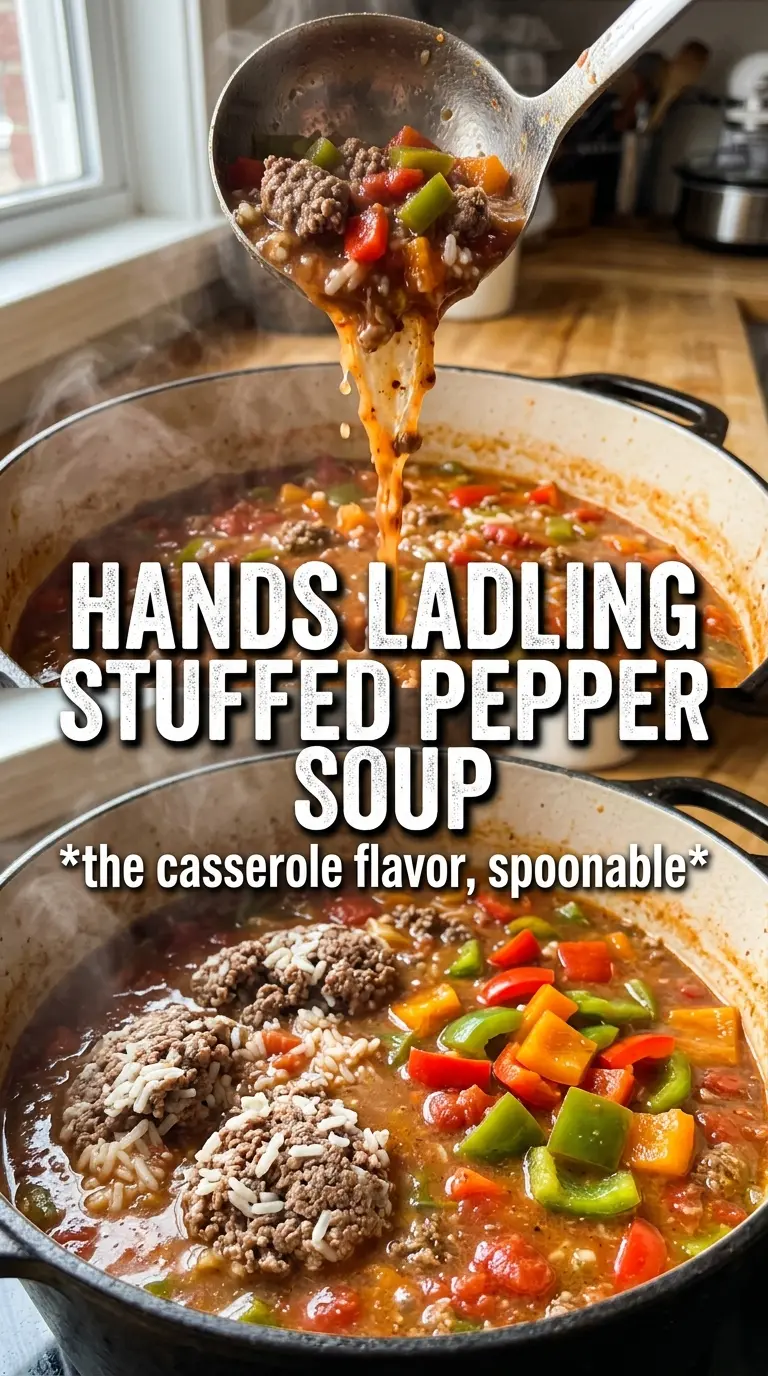
- Ground beef — This gives the soup its savory base and makes it taste like the filling from stuffed peppers. An 80/20 blend brings the best flavor, but leaner beef works too if you don’t mind a slightly lighter broth. Drain the excess fat after browning so the soup stays clean-tasting.
- Green and red bell peppers — The green peppers bring that classic stuffed-pepper flavor, while the red pepper adds sweetness that softens the acidity of the tomatoes. Don’t cook them until mushy at this stage; they should still have a little structure when the soup finishes.
- Tomato paste — This is the quiet ingredient that makes the broth taste deeper and more cooked. Let it sizzle with the garlic for a minute or two so it loses that raw edge and turns brick-red.
- Long grain white rice — Long grain rice holds its shape better than short grain, which matters in a soup that simmers with tomatoes. If you use brown rice, cook it separately first or expect a much longer simmer and a thicker final texture.
- Cheddar — The cheese should go on at the end, not in the pot. It melts into the hot soup and gives you that stuffed-pepper finish without turning grainy.
Building the Soup in the Right Order
Brown the Beef First
Start with the ground beef in a large pot and cook it until it’s no longer pink and you’ve got some browned bits on the bottom. Those browned bits matter; they’re flavor, not mess. If the pot holds a lot of fat after browning, drain it off before you move on so the soup doesn’t taste greasy. The beef should look crumbly and cooked through, not steamed.
Soften the Vegetables Before the Tomatoes Go In
Add the onion and bell peppers to the same pot and cook them until the onion turns translucent and the peppers start to soften, about 4 to 5 minutes. This step pulls sweetness out of the vegetables and keeps them from tasting raw in the finished soup. Stir in the garlic and tomato paste next and cook for 2 minutes; once the paste darkens a shade and smells richer, it’s ready. If the garlic starts to brown hard, the heat is too high.
Simmer the Broth Before the Rice Joins
Pour in the crushed tomatoes, diced tomatoes, broth, Italian seasoning, garlic powder, and smoked paprika, then bring the pot to a boil. Once it’s boiling, lower the heat before adding the rice. You want a gentle simmer, not a rolling boil, because that keeps the grains intact and prevents the soup from turning gummy.
Cook the Rice Until Just Tender
Stir in the uncooked rice, cover the pot, and simmer for 18 to 20 minutes. Check a grain near the end; it should be tender with just a little bite left, and the broth should still move easily around the spoon. If the rice is done but the soup seems thinner than you want, let it sit uncovered for a few minutes. If it thickens too much, loosen it with a splash of broth.
Finish with Cheese and Parsley
Season with salt and pepper after the rice is cooked, because the broth reduces as it simmers and the seasoning changes with it. Ladle into bowls and top with shredded cheddar and fresh parsley. The cheese melts best when the soup is piping hot, so don’t wait too long between ladling and serving. That final hit of green from the parsley keeps the bowl from feeling heavy.
How to Adapt It Without Losing the Stuffed-Pepper Feel
Make It with Ground Turkey
Ground turkey works well if you want a lighter version, but it needs a little help because it’s milder than beef. Use the same method, then taste the broth at the end and be a little more generous with salt and smoked paprika. The soup will still be hearty, just less rich.
Use Brown Rice with a Separate Cook
Brown rice needs longer than this soup can comfortably give it, and if you simmer it directly in the pot, the vegetables can overcook while you wait. Cook the rice separately and stir it into each bowl, or add fully cooked brown rice at the end. That keeps the soup brothy instead of overly thick.
Dairy-Free Serving Option
Skip the cheddar and finish each bowl with chopped parsley and a drizzle of olive oil if you want a dairy-free version. You still get the same tomato-beef-pepper base, and the olive oil adds enough roundness that nothing feels missing. A spoonful of dairy-free sour cream on top also works if you like a creamy finish.
Make It a Little Spicier
Add a pinch of red pepper flakes with the garlic, or stir in a little hot sauce at the table. The soup takes heat well because the tomatoes and beef keep it grounded. Don’t add so much that you cover the sweetness of the peppers, which is part of what makes this taste like stuffed peppers.
Storage and Reheating
- Refrigerator: Store in an airtight container for up to 4 days. The rice will keep absorbing broth, so expect it to thicken.
- Freezer: It freezes well for up to 3 months, but the rice softens more after thawing. For the best texture, freeze the soup before adding rice and stir in freshly cooked rice when reheating.
- Reheating: Warm it gently on the stovetop over medium-low heat, adding broth or water as needed. If you blast it at high heat, the rice can turn mushy and the bottom of the pot can scorch before the soup is hot through.
Answers to the Questions Worth Asking
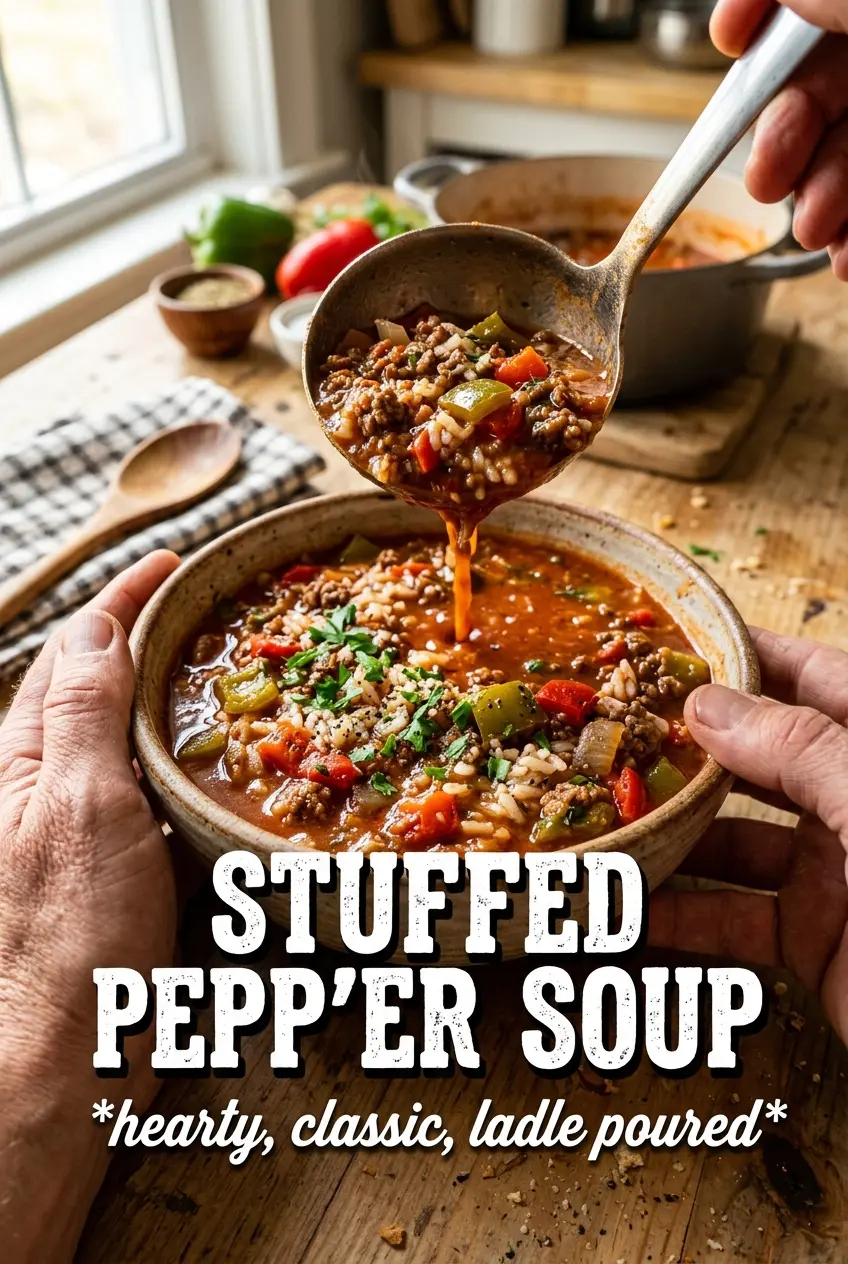
Stuffed Pepper Soup
Ingredients
Equipment
Method
- Brown ground beef in a large pot over medium-high heat, then drain the fat.
- Keep the pot and browned beef ready for the next step.
- Sauté onion and all bell peppers in the same pot for 4-5 minutes, until the vegetables start to soften.
- Add garlic and tomato paste and cook for 2 minutes, stirring until fragrant.
- Add crushed tomatoes, diced tomatoes, beef broth, Italian seasoning, garlic powder, and smoked paprika, then bring to a boil.
- Add uncooked long grain white rice, reduce the heat to maintain a gentle simmer, and cover.
- Simmer for 18-20 minutes, until the rice is cooked and tender, stirring if needed to prevent sticking.
- Season with salt and pepper to taste, then turn off the heat.
- Serve topped with shredded cheddar and fresh parsley.